Rafael Navarro’s $12M MLS Record Deal Is St. Louis CITY’s Proper Gamble
St. Louis CITY paid $12 million for Rafael Navarro because playing it safe is how clubs stay irrelevant.
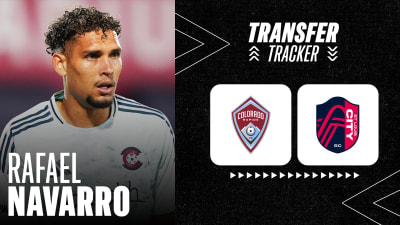
St. Louis CITY didn’t spend $12 million on Rafael Navarro because they needed another forward. They spent it because small ambition is a lovely way to remain a small club.
On September 3, St. Louis acquired the 26-year-old Brazilian striker from the Colorado Rapids for a club-record $12 million cash-for-player fee, with another $250,000 possible in conditional compensation and a sell-on percentage for Colorado. It is the biggest reported cash trade between MLS clubs. ([mlssoccer.com](https://www.mlssoccer.com/news/st-louis-city-acquire-rafael-navarro-from-colorado-rapids))
That is a serious cheque in a league still fond of congratulating itself for being sensible. Good on St. Louis for ignoring the applause line.
The deal: St. Louis bought output, not potential
Rafael Navarro is not a teenage lottery ticket from South America. He is not a former European wonderkid whose best clips are four years old. And he is not being sold to supporters as “one for the future.”
He is a productive striker in his prime, with actual MLS proof in the ledger.
Navarro scored 38 goals and delivered 15 assists in 97 regular-season MLS appearances for Colorado. In 2026, before the move, he had 10 goals and four assists in 22 league matches. He had also recorded double-digit goal seasons in each of the prior three campaigns. ([stlcitysc.com](https://www.stlcitysc.com/news/st-louis-city-sc-signs-proven-mls-goalscorer-rafael-navarro-as-a-designated-player-from-colorado-rapids))
That is what St. Louis bought: a known operating asset. In football, that matters more than people admit.
The fee is $12 million up front, not an airy headline figure that relies on every bonus, trophy and blood moon arriving on schedule. The deal can rise by $250,000, while Colorado retains a sell-on percentage. Navarro has signed for four years through the 2029-30 season, with an option for 2030-31, and occupies a Designated Player slot. ([stlcitysc.com](https://www.stlcitysc.com/news/st-louis-city-sc-signs-proven-mls-goalscorer-rafael-navarro-as-a-designated-player-from-colorado-rapids))
Put bluntly: St. Louis is making a long-term capital allocation decision around a player who has already demonstrated he can score in its market.
That is a far cleaner bet than dropping similar money on a player whose adjustment period is a mystery, whose injury record is buried in another language, and whose agent has convinced everyone a few good YouTube clips equal commercial value.
Why $12 million is a line in the sand for MLS
The important number here is not merely that St. Louis broke its own record. It is that one MLS club paid another MLS club $12 million in cash for a player.
For years, the league’s transfer market has been treated like a side show to the bigger European windows. Clubs bought abroad, developed academy players, swapped allocation money, found bargains, and occasionally sold talent out. Sensible enough. But it also created a perverse incentive: everybody wanted to look clever rather than build a serious domestic market for proven performers.
A functioning league needs internal pricing.
If Colorado develops, recruits or rehabilitates a player into a highly valuable asset, another MLS club should be willing to pay for him. Otherwise, clubs are effectively told that their best commercial exit is always overseas. That is not a league economy. That is a talent-export business with nicer stadiums.
St. Louis has now put a proper marker on the table. Navarro was acquired by Colorado on loan from Palmeiras in 2023 before his move became permanent in 2024. He then became one of the Rapids’ most productive attackers. Colorado is now exiting with immediate cash, possible additional compensation and a share of a future sale. ([mlssoccer.com](https://www.mlssoccer.com/news/st-louis-city-acquire-rafael-navarro-from-colorado-rapids))
That is how a sporting asset should work: recruit well, improve value, sell at the right time, recycle the capital.
The fee also matters because it makes every other MLS sporting director more accountable. Once a rival has paid $12 million for a 26-year-old league-proven striker, it becomes harder to hide behind “market constraints” every time a club needs goals.
Money was always there. Conviction was the missing ingredient.
St. Louis is not buying Navarro in isolation
The lazy read is that St. Louis splashed on one striker and hopes he fixes everything. That is not what the transactions say.
The club had already added Danish midfielder Carlo Holse as a Designated Player, then brought in U.S. international forward Damion Downs on loan from Southampton through the 2027 Sprint season, with an option to buy. St. Louis also paid Charlotte FC $350,000 in 2026 General Allocation Money for Downs’s Discovery Priority. ([mlssoccer.com](https://www.mlssoccer.com/news/st-louis-city-acquire-rafael-navarro-from-colorado-rapids))
That matters because a striker is only as valuable as the supply chain behind him.
Navarro gives St. Louis a reliable finishing and linking point. Holse adds another creative weapon. Downs gives the side pace, size and an alternative profile up front. This is not a one-player rescue plan; it is a deliberate rebuild of the attack.
Just as important, St. Louis moved players out. Marcel Hartel transferred to Hannover 96 and Eduard Löwen went to the San Jose Earthquakes. ([mlssoccer.com](https://www.mlssoccer.com/news/st-louis-city-acquire-rafael-navarro-from-colorado-rapids))
That is the bit most owners and operators get wrong in any business. They love adding. They hate subtracting.
But a good roster, like a good company, is not a warehouse. It needs clarity. Every expensive addition should answer a question: what are we now able to do that we could not do before? And every departure should answer another: what has stopped earning its place?
St. Louis appears to be answering both.
Colorado’s sale is not surrender — unless it wastes the proceeds
Colorado supporters are entitled to be filthy about losing their leading scorer. Navarro gave the Rapids 44 goals and 16 assists in 114 appearances across all competitions, and he leaves after another double-digit-goal league season. ([mlssoccer.com](https://www.mlssoccer.com/news/st-louis-city-acquire-rafael-navarro-from-colorado-rapids))
You do not replace that by chucking a few motivational quotes on the club website.
But selling is not automatically losing. Selling badly is losing.
The Rapids have already moved centre back Lucas Herrington to Hull City, and MLS reported that Colorado’s outgoing fees this summer could total around $35 million. ([mlssoccer.com](https://www.mlssoccer.com/news/st-louis-city-acquire-rafael-navarro-from-colorado-rapids))
That is meaningful money. The question is whether Colorado treats it as a windfall or as fuel.
A windfall gets scattered: a couple of stopgap signings, a wage bump here, an agent-friendly deal there, and six months later everybody wonders where the money went.
Fuel gets allocated against a plan: replace production, deepen the squad, improve recruitment infrastructure and retain enough upside to make the next sale bigger than the last one.
Colorado has effectively cashed in a mature asset. Fine. Smart, even. But the sale only earns its praise when the next version of the Rapids is visibly better funded, better recruited and harder to beat.
You do not get points for selling the family silver if dinner is still dreadful.
The overlooked angle: this is a governance test, not just a transfer
Here is the angle most football chatter misses: the Navarro trade is a test of whether MLS clubs can behave like independent, ambitious operators while still working within a highly structured league system.
St. Louis paid a premium for certainty. Colorado accepted a premium price for an asset it developed into something more valuable. Both clubs made decisions that fit their own competitive positions.
That sounds blindingly obvious. In sport, it often isn’t.
Too many teams confuse caution with discipline. They delay obvious investments until they are forced to pay more. Or they refuse to sell a player at peak value because they fear the optics, only to watch the contract run down and the asset lose leverage.
St. Louis has done the former well: pay up when the asset is right and the window matters. Colorado now has the chance to do the latter well: sell when the market offers an exceptional outcome, then reinvest with discipline.
There is risk for St. Louis, of course. Navarro has to keep producing. He has to fit the system, stay healthy and justify occupying a Designated Player slot for years. A record price does not make the ball go in.
But waiting for a risk-free deal is how clubs, companies and investors spend their whole lives watching other people win.
What this means for you
You probably do not run an MLS club. The lesson still applies on Monday morning.
First: pay for proof when the cost of failure is high. Navarro is expensive, but he is not theoretical. When the decision is central to your business — a key hire, a senior salesperson, a critical supplier, a product leader — cheap can become wildly expensive if it produces another year of mediocrity.
Second: do not mistake a big price for bad value. The relevant question is not, “Is $12 million a lot?” Of course it is. The real question is, “What does this asset produce, what does it unlock, and what does inaction cost?” St. Louis clearly decided that goals, momentum and competitive relevance were worth more than preserving a tidy spreadsheet.
Third: if you sell an asset, ring-fence the proceeds mentally before the money lands. Colorado’s test begins now. Decide what the capital is for before people start lobbying to spend it. Replacement revenue? Better systems? Growth? Debt reduction? Pick the answer, write it down and defend it.
Finally: build an internal market for excellence. If somebody in your organisation performs, make their value visible. If a team creates an asset, reward the system that created it. Great operators do not merely celebrate outcomes; they price them properly.
St. Louis CITY just paid $12 million to stop behaving like a club hoping to matter.
That is not reckless. That is what ambition looks like when it finally gets off its arse and signs the paperwork.