RCN/CJ Patrick Survey: 45% Say Housing Market Worsened
When 45% of housing investors say the market has worsened, don’t call it fear. Call it the bill arriving for every deal that only worked when money was cheap.
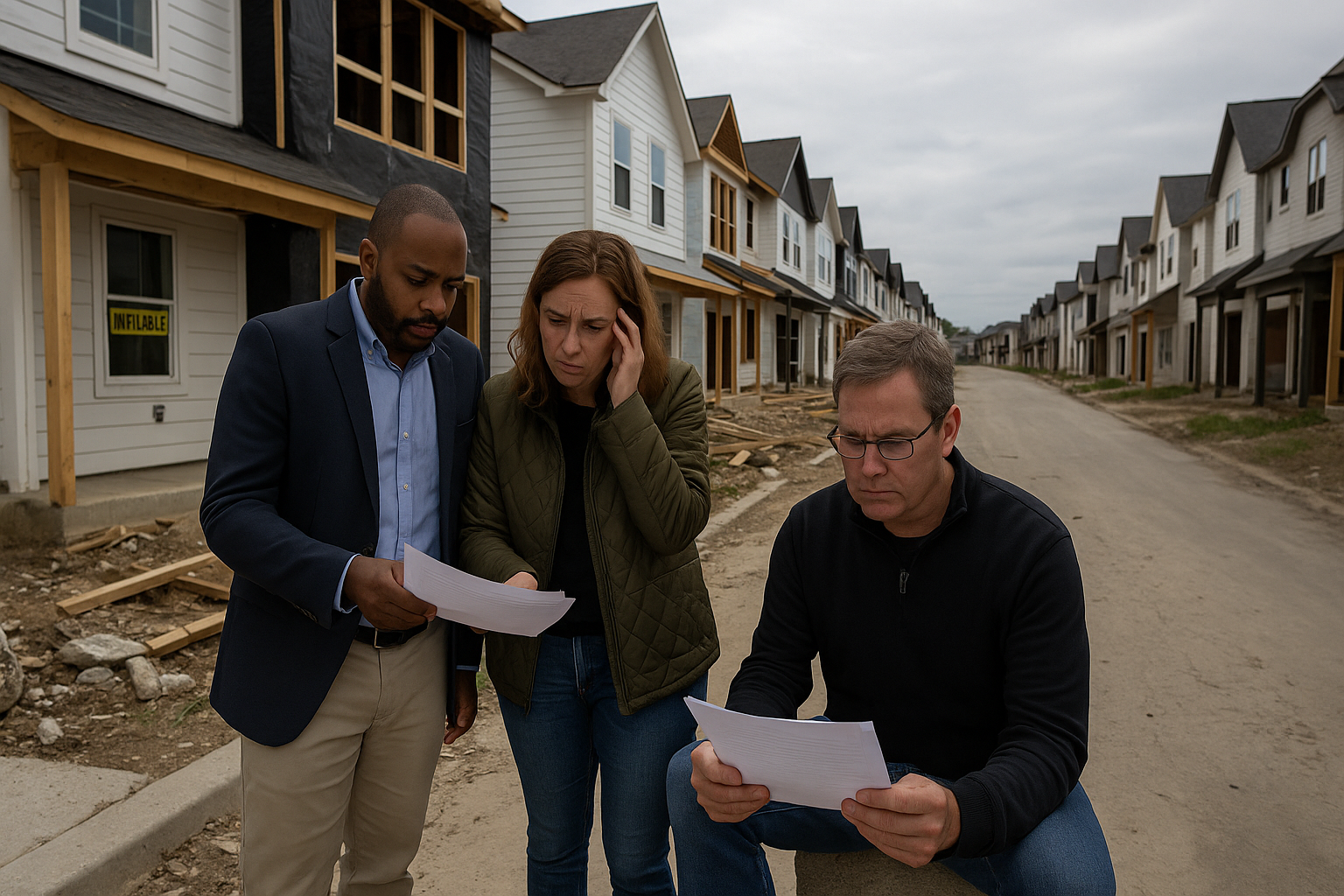
When 45% of investors say the market got worse, pay attention
When 45% of housing investors say the market has worsened, don’t call it fear. Call it the bill arriving for every deal that only worked when money was cheap.
CNBC reported on August 14 that the RCN Capital/CJ Patrick Company Investor Sentiment Index had dropped to an all-time low at the end of June. The survey covers more than 300 fix-and-flip and rental investors — not blokes on Twitter pretending they own 47 doors because they once watched a Grant Cardone clip.
Just 26% said conditions were better than a year earlier, down from 35% in the first quarter. Forty-five percent said conditions had deteriorated, the highest share in the survey’s history.
That is the important real-estate story as August closes: the people whose job is to buy houses for a return are finally being forced to admit that the spreadsheet is uglier than the Instagram reel.
This is not a property crash. It is a return of arithmetic.
For years, a mediocre property could be rescued by one of three things: falling rates, rising rents, or a higher sale price from the next buyer. Often all three showed up at once.
That made plenty of people look clever. It also trained a generation of investors to confuse a friendly market with investment skill.
Now the crutches are gone.
CNBC’s report pointed to the same list of pressures every serious operator is feeling: elevated financing costs, higher insurance bills, rising renovation and home-maintenance costs, and softer rental conditions in some markets. Mortgage rates had climbed to their highest level in more than a year after reaching a recent low at the end of February.
None of this is exotic. It is just expensive.
A deal purchased with bridge debt does not care about your vision board. A rental bought on the assumption that rents will bail out an aggressive loan does not care that the suburb is “up and coming.” And a flip with a thin margin becomes a very expensive hobby when the buyer has to finance the finished house at a rate they hate.
The single-family investor market has become less forgiving because the cost of being wrong has gone up sharply.
That is healthy, frankly. Painful, but healthy.
The buyer’s market has a dirty little secret: buyers are missing
Bloomberg put the broader housing problem neatly in an August 19 headline: the US is a buyer’s market, but there are not many buyers.
That is the bit people get wrong. More negotiating power for buyers does not automatically mean a flood of good transactions. It can simply mean sellers have run out of excuses and buyers still cannot make the monthly payment work.
Reuters reported on August 11 that US existing-home sales fell for a second straight month in July. At that pace, the available inventory of existing homes represented 4.6 months of supply, unchanged from June and a year earlier.
Meanwhile, Bloomberg reported that pending home sales had slid to their weakest point since the start of the year, while residential construction had also slowed.
Read those facts together. Transactions are weak. Builders are cautious. Buyers are cautious. Existing owners remain reluctant to give up ultra-cheap mortgages. The market is moving, but it is moving like a shopping trolley with one broken wheel.
This matters because prices can stay stubborn even while activity falls. That drives people mad because they expect every market to behave like the share market: bad news arrives, then the price instantly gets belted.
Property is slower and more personal than that. Owners can refuse to sell. Buyers can wait. Banks can extend. Builders can pull projects. The result is often a long period where transaction volume gets smashed before headline prices properly reflect the new reality.
So no, weak investor sentiment is not proof that every house is about to be sold for pennies on the dollar. Anyone confidently predicting that is selling fear the same way others used to sell FOMO.
But it does mean the old “buy anything, wait, refinance, repeat” playbook deserves a proper burial.
Why small investors are feeling it first
The RCN/CJ Patrick survey matters because it captures smaller and mid-sized operators: the people doing flips, acquiring rentals, using investor loans, conventional mortgages and bridge finance.
These investors are usually more exposed to the actual cost of capital than the biggest institutions. They cannot casually issue bonds, call a sovereign fund, or absorb a dud quarter with a giant balance sheet.
CNBC noted that real-estate investors bought 23% fewer homes in the first quarter of 2026 than they bought in both the prior quarter and the first quarter of 2025. It also reported that 28% of recent investor purchases were made in cash.
That cash figure tells you plenty.
When financing becomes unattractive, cash is not merely an advantage. It is a different sport. Cash buyers can close faster, negotiate harder and avoid the risk that an underwriting hiccup kills the deal. They can also wait for a seller to become realistic.
But here is the overlooked point: cash alone does not make a bad asset good.
I have seen wealthy people buy dreadful investments because they were proud of not needing debt. Congratulations — you have managed to overpay without a bank asking awkward questions.
Cash should increase your margin of safety, not lower your standards. If the rent does not justify the price, if insurance is racing away, if taxes are a mystery, or if the exit depends on somebody else being more optimistic than you, the deal is still rubbish. You just own the rubbish outright.
The contrarian opportunity is not cheap houses. It is better terms.
Most people hear “buyer’s market” and start hunting for a massive discount. Fair enough. Everyone likes a bargain.
But a lower sticker price is only one lever, and often not the best one.
In a slow market, sellers can be more flexible on repairs, settlement timing, vendor finance, rate buydowns, credits and conditions. A property bought at a slightly higher price with meaningful seller concessions can be a far better investment than one bought cheaply with brutal financing.
That is particularly true for operators. If you are buying a rental, your return is determined by the total system: purchase price, debt cost, vacancy, repairs, insurance, tax, management, rent growth and your ability to hold through a bad six months.
The amateur negotiates the number on the front page.
The professional negotiates the entire contract.
There is another opportunity hiding in the gloom: forced competence. In an easy market, speed wins. In this market, diligence wins. You need to know what the property earns today, not what a broker says it could earn after “minor cosmetic upgrades” and a miracle.
That is not exciting. It is how fortunes survive.
What this means for you
If you are a buyer, stop waiting for a television pundit to declare the exact bottom. You will not get a trumpet blast and a green light. Underwrite individual deals brutally instead.
Use these rules tomorrow:
1. Stress-test the debt. Model the deal with higher rates, lower rent and a vacancy period. If that breaks it, you are not buying an asset. You are buying a prediction.
2. Treat insurance and maintenance as core costs, not rounding errors. They are now large enough to wreck returns, particularly in markets exposed to rising insurance pressure.
3. Demand a real margin of safety. Do not make the deal depend on instant rent growth, a refinance at friendlier rates, or a perfect resale market.
4. Negotiate terms as hard as price. Ask for credits, repairs, timing flexibility or financing support. A stubborn seller may not cut the price, but they may still improve the economics.
5. Keep dry powder. The investor who can act without desperation has the advantage. That means cash, borrowing capacity, and the discipline not to tie every dollar up in one “can’t miss” deal.
6. Do not mistake a quiet market for a dead one. Good assets will still trade. Good operators will still make money. The difference is they will earn it through judgment, not through an accidental tailwind.
The headline is not that housing investors are miserable. The headline is that the market is demanding competence again.
Good. It was overdue.
If you own property, run the numbers honestly. If you want to buy, become the person who can say no. And if a deal only works in the best-case scenario, save yourself the trouble: it does not work.