RNDC’s $12B Collapse Is a Warning for Spirits Brands
At its peak, RNDC generated more than $12 billion in revenue. Now it is selling what remains and winding down markets nobody wants to buy. That is distribution risk.
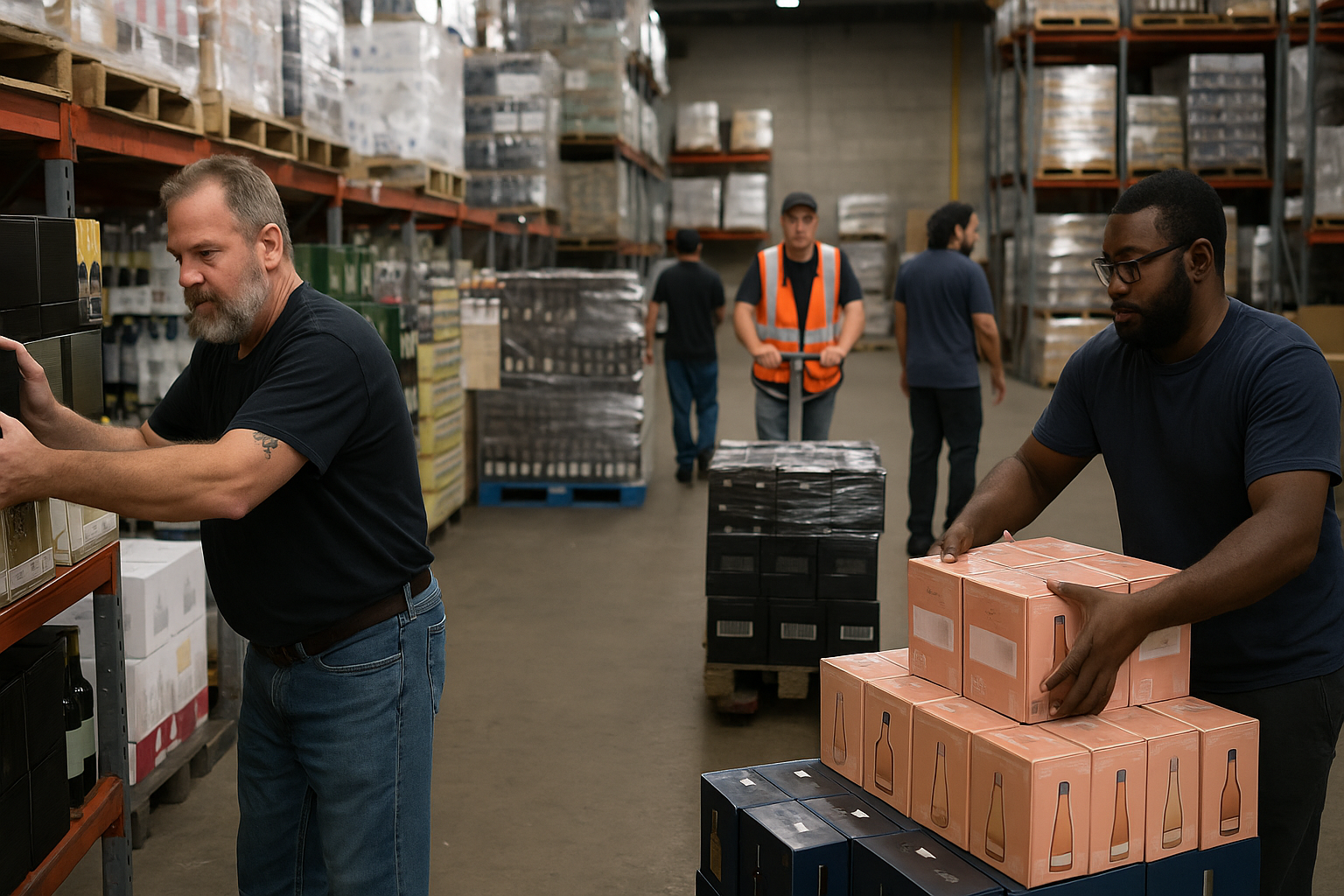
At its peak, RNDC generated more than $12 billion in revenue. Now it is selling what remained of its operations and winding down the markets nobody wants to buy.
A $12 billion distributor can collapse without a single drinker changing what’s in their glass. RNDC’s Chapter 11 is the bill for treating distribution like plumbing.
The bit everyone in spirits pretended was boring has just become the main event
On July 26, 2026, Republic National Distributing Company — RNDC — filed for Chapter 11 protection in Texas. This was not a tidy balance-sheet reset dressed up in bankruptcy jargon. RNDC said it entered court to sell what remained of its operations and wind down the markets nobody wants to buy.
That is a hell of a sentence for a business that, at its peak, operated in 40 states, had 45 warehouses and distribution centres, employed more than 10,000 people, served more than 2,000 suppliers and generated more than $12 billion in revenue.
Most consumers will never notice RNDC until a favourite bottle disappears from a shelf, gets harder to find, or suddenly costs more. Most founders will notice it when they realise their supposed route to market was not an asset on their spreadsheet. It was a dependency with a pulse.
The industry loves talking about liquid, celebrity founders, provenance, packaging and marketing campaigns that cost a small fortune. Fair enough. Brands matter. But none of that gets a case of tequila, bourbon or canned cocktails into a retailer’s back room on time, invoiced correctly and replenished consistently.
Distribution does.
And one of America’s biggest spirits middlemen has just shown what happens when that machinery breaks.
RNDC was not a small operator having a bad quarter
RNDC’s court filings describe a business built through more than a dozen acquisitions and joint ventures between 2007 and 2023. It was the familiar growth story: expand state by state, add warehouses, add suppliers, add complexity and keep rolling.
At the height of it, scale looked like safety.
It wasn’t.
The company’s own bankruptcy site says it is pursuing potential sales of remaining operations while facilitating an orderly wind-down where there is no buyer. Its case covers RNDC and certain affiliates; it does not include National Distributing Company Inc. or several joint ventures.
The filing is moving at pace. The debtors were required to pursue a Chapter 11 plan within five business days of the petition date and seek confirmation of a plan and/or sales of substantially all assets within 70 days. There are 18 debtors in the proceedings. A creditors’ meeting is scheduled for September 16, 2026.
That is not the timeline of a business leisurely searching for strategic options. It is the timeline of a company trying to preserve what value is left before the moving parts seize up.
Trade reporting on the filings put RNDC’s estimated assets between $500 million and $1 billion, liabilities between $1 billion and $10 billion, and creditor count above 100,000. The same reporting said the 30 largest unsecured claims totalled more than $300 million, while court materials refer to more than $400 million in general unsecured claims.
You do not need to be a restructuring bloke to understand the order of pain here. Secured lenders get a seat at the table. Suppliers, smaller brands, service providers and anyone relying on ordinary-course payments are left studying legal documents when they should be selling cases.
The real damage is not the bankruptcy. It is the broken commercial map.
The bankruptcy is the headline. The nasty part is what comes after it.
RNDC had already transferred substantial operations to competitors. Reyes Beverage Group completed an acquisition of RNDC operations across 11 markets, including Arizona, Colorado, Florida, Louisiana, Maryland, Oklahoma, South Carolina, Texas, Virginia and Washington, D.C. Columbia Distributing acquired key brand-distribution rights in Oregon and Washington.
Those transactions preserved more than 5,000 jobs, according to RNDC. That matters. Jobs saved are better than jobs lost.
But do not confuse continuity of employment with continuity of commercial execution.
Every handover creates work: new systems, new sales teams, new warehouse routines, new account relationships, new pricing files, new product data, new supplier expectations and new arguments about who owns the problem when an order goes missing. A national brand can absorb that friction. A smaller tequila brand with limited cash and one or two breakout markets can get flattened by it.
This is where founders make a costly mistake. They see distribution as a binary: either you are “in” a market or you are not.
Rubbish.
You are only truly in a market if your product is listed, stocked, visible, reordered, paid for and supported by someone who gives a damn. A distribution agreement can get you technically present in 500 accounts while commercially dead in all of them.
The three-tier system already gives US spirits founders plenty to deal with. You make the product, a distributor moves it, retailers and venues sell it. Add distributor distress, market transfers and supplier claims into that structure and the gaps get wider.
The contrarian view: this could be good for sharp brands
There is a temptation to treat a distributor collapse as universally terrible. That is lazy thinking.
It is terrible for brands that were asleep at the wheel. It can be an opening for brands that actually know their numbers and own their demand.
When a large distributor gets smaller, gets sold or gets distracted, shelf space and sales attention do not vanish. They get redistributed. Bigger competitors will fight for the best portfolios. Retailers will want reliable supply. New operators will be hungry to prove they can execute. Good brands with clean data, strong account relationships and a realistic margin structure can suddenly become more valuable partners.
The catch is brutal: you cannot turn up halfway through a crisis and discover whether your brand has pull.
If your entire growth plan relies on one distributor representative remembering your name, you have not built a brand. You have rented someone else’s attention.
This applies particularly to premium agave spirits. Tequila is no longer a category where a pretty bottle and a celebrity photo guarantee velocity. The market has become noisier, more price-sensitive and more competitive. The winners will be brands that can prove where they sell, who reorders, why consumers choose them and what they can contribute beyond another SKU in a crowded portfolio.
While building Agave Finder, I keep seeing the same opportunity from the consumer side: drinkers want better information, not more noise. The commercial version of that is even more important. Brands need a proper map of demand — accounts, menus, ratings, availability, replenishment, pricing and local advocates — rather than a hopeful deck full of vague “brand awareness”.
Diageo’s $1 billion cuts show this is not just an RNDC problem
RNDC did not fail because the industry is having one bad month. The sector is under real pressure.
In August, Diageo announced a plan to find roughly $1 billion in savings over three years, alongside approximately $1.2 billion in restructuring costs. The company reported a 2% fall in organic sales for the year ended June 30, 2026, and forecast broadly flat organic net sales growth for fiscal 2027. North America, its largest market, was expected to decline in the near term.
That does not mean Diageo and RNDC are the same story. They are not. One is a global supplier remaking its cost base; the other is a distributor in a court-supervised sale and wind-down process.
But they are connected by the same uncomfortable truth: the old assumption that premium spirits would keep growing simply because premium spirits had grown before is dead.
When consumer demand softens, suppliers push harder for performance. When suppliers push harder, distributors carrying too much complexity, too many weak brands or too much financial strain get exposed. When distributors pull back, smaller brands lose their route to market. Then everyone starts calling it a “challenging environment”, which is corporate language for “we failed to prepare”.
What this means for you
If you are a spirits founder, operator or investor, do these five things this week.
First, map your revenue concentration. Know exactly what percentage of sales sits with each distributor, state, retail chain and top account. If one relationship can put 20% of revenue at risk, treat it like a risk now, not a footnote for the board pack.
Second, get close to the actual buyer. Distributor relationships matter, but the retailer, bar manager and venue group decide whether your bottle moves. Build direct contact lists. Visit accounts. Know your reorder rate. Nobody can manage your brand better than you can.
Third, audit receivables and inventory exposure. Ask where title passes, where stock physically sits, what happens in a transition and what cash is outstanding. If you cannot explain that in plain English, you are taking risk you do not understand.
Fourth, make your data portable. Product details, pricing, account histories, depletion data, menus, sales contacts and inventory information should not live only inside somebody else’s system. Your commercial memory is an asset. Own it.
Finally, stop worshipping distribution scale. The biggest partner is not automatically the best one. The best partner is the one that pays, executes, communicates and has enough incentive to make your brand matter.
RNDC’s collapse is ugly, and plenty of good people will wear the consequences. But it is also a useful warning. In spirits, the bottle gets the attention. The route to market gets the money.
Ignore that, and you may discover your brand was never on solid ground at all.