RNDC’s 280 Illinois Layoffs Expose the $0 Distribution Risk Spirits Brands Ignore
A spirits brand can have a brilliant bottle, a celebrity and a fat marketing budget — then die because its distributor runs out of runway. RNDC’s 280 Illinois layoffs are the bill arriving.
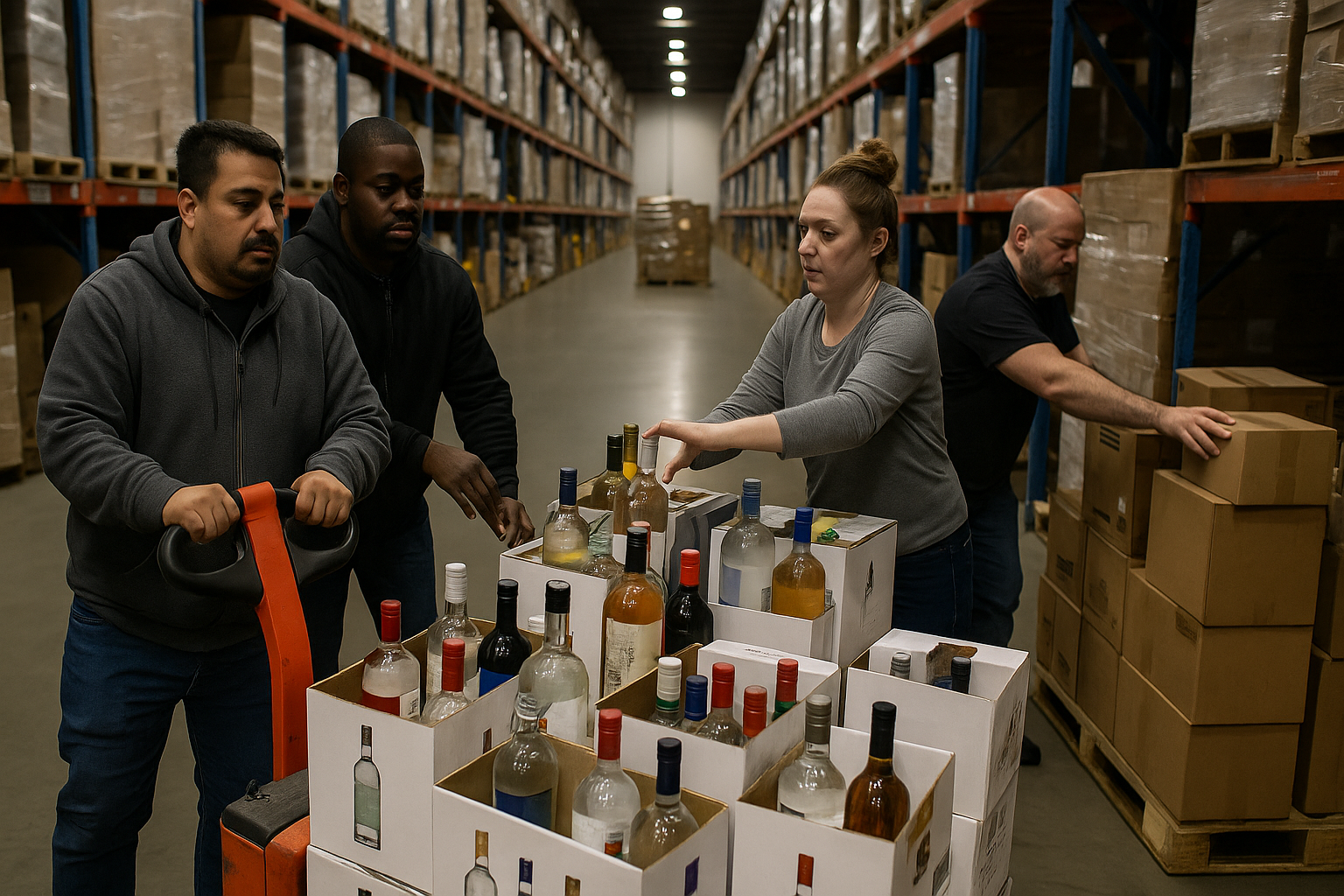
A spirits brand can have a brilliant bottle, a celebrity and a fat marketing budget — then die because its distributor runs out of runway.
That is the ugly lesson in Illinois today. Republic National Distributing Company’s WARN notices list 280 jobs ending on August 14, 2026: 180 roles in one filing and 100 in another. For most drinkers, this is invisible. For spirits founders, investors and anyone who thinks getting a distributor means you have “made it”, it should be bloody terrifying.
RNDC was not some tiny operator that ran out of room in a mate’s warehouse. It was one of the country’s major alcohol distributors. Now it is in Chapter 11, its remaining operations are being sold or wound down, and Illinois is staring at exactly what happens when the middle of the three-tier system breaks.
The lesson is not that distribution is hard. Everyone knows that.
The lesson is that distribution risk can destroy a brand even when consumer demand is fine.
RNDC’s collapse is not background noise
RNDC filed voluntary Chapter 11 cases on July 26, 2026 in the Southern District of Texas. The restructuring site lists RNDC and 17 affiliates as debtors. RNDC says the filing is designed to explore sale transactions and implement an orderly wind-down of its remaining operations.
That wording is corporate enough to put a bloke to sleep, so let’s translate it: a major route to market for wine and spirits brands is being broken apart in public.
RNDC had already sold operations in 11 markets to Reyes Beverage Group. The transaction closed on May 29, 2026. The completed markets were Arizona, Colorado, Florida, Louisiana, Maryland, Oklahoma, South Carolina, Texas, Virginia and Washington, D.C.; the Hawaii component remained subject to regulatory approvals.
Reyes has since built a dedicated spirits-and-wine business around those acquired operations. That matters because a distributor change is not merely a new logo on an invoice. It changes sales teams, account relationships, warehouse systems, ordering routines, supplier priorities and the person who decides whether your tequila gets pushed into 50 accounts or quietly gathers dust.
And Illinois was not included in the Reyes transaction.
In June, RNDC said it expected to permanently close its Illinois facilities because financing was not available to continue its Illinois operations. The company said there were no immediate day-to-day changes at that point. But WARN notices have an effective date for a reason. Today is that date.
The 280 people losing jobs are the human cost. The commercial cost is broader: retailers, bars, restaurants and suppliers are all forced to navigate a handover or a gap in one of America’s most important spirits markets.
The bottle is not the business. The route to market is.
Most founders treat distribution as a graduation ceremony.
You make a decent liquid. You get a beautiful bottle. You land a distributor. You put “now available in Illinois” on Instagram. Everyone has a tequila soda. Then you wait for the money to arrive.
That is amateur hour.
A distributor is not your customer in the way a drinker is your customer. It is your outsourced route to the customer. In the US alcohol system, that route controls an extraordinary amount of your fate: where product sits, which reps talk about it, how quickly it is delivered, whether samples appear, whether displays get built and whether your accounts can reorder without a circus.
If that machine is undercapitalised, distracted, restructuring or losing suppliers, your brand does not get a polite warning email before it becomes collateral damage.
It simply stops moving.
This is especially brutal in premium spirits. A tequila, mezcal or whiskey brand can spend years earning a place on a back bar. It can invest heavily in stock, packaging, trade spend and brand ambassadors. But when the wholesaler changes, the brand may need to rebuild the actual mechanics of sale from scratch: new commercial agreements, updated price books, inventory transfer arrangements, account education and field relationships.
Meanwhile, the bottle does not stop ageing in a warehouse and invoices do not stop arriving.
I am building Agave Finder, and one thing is painfully obvious from looking at this category: consumers care more about agave than ever, but the information and availability side is still a mess. You can create demand online in an afternoon. Turning that demand into a bottle on a shelf in the right suburb is a separate business entirely.
Founders who confuse those two jobs get hurt.
The second-order effect: big distributors will become more selective
The first-order effect of RNDC’s unwind is obvious: brands need new distribution arrangements.
The second-order effect is more important. The survivors get stronger, and stronger distributors get pickier.
Reyes is not buying these operations as a charity project. It is expanding its footprint and has explicitly established RBG Spirits and Wine. That gives suppliers another serious operator with a larger platform. For good brands, that can be useful: more scale, more infrastructure and more ability to serve large accounts across markets.
But scale has a price.
A bigger distributor has more brands competing for attention. A sales rep cannot passionately sell 300 things. In practice, a portfolio has a small group of commercial priorities, a middle group that gets competent service, and a long tail that gets precisely what the contract requires and not much else.
If you are a founder with a premium tequila that is selling 20 cases a month in a state, you are not a strategic partner. You are admin.
That does not make the distributor evil. It makes the economics honest.
The winners from consolidation are brands that can prove three things:
1. Their product turns quickly enough to justify sales attention. 2. Their margins and trade spend make the distributor money. 3. Their team creates pull-through demand instead of expecting the distributor to invent it.
The losers are brands that mistake a distributor appointment for a growth strategy.
The overlooked angle: this is an inventory and cash-flow problem first
People love talking about brand equity because it sounds glamorous. Cash conversion is less sexy, which is exactly why it ruins so many companies.
When distribution shifts, inventory becomes awkward fast. Product can be sitting in the wrong warehouse. Reorders can pause. Retailers can hesitate. A new distributor may not want the same stock profile or may need different compliance, data and fulfilment processes.
For an asset-heavy spirits business, that can trap cash at precisely the wrong time.
Take tequila. You may have paid for agave, production, glass, closures, labels, freight, insurance, storage and market activation long before a customer buys the bottle. If your route to market gets disrupted, your cash is not merely delayed; it may be sitting in cases that cannot move while you scramble to rebuild distribution.
That is why founders should stop measuring growth only by depletion charts and sell-in targets. Those matter, but they are incomplete.
You need to know, every week:
- How many weeks of inventory sit at the distributor? - How many cases are genuinely selling through to accounts? - Which accounts reorder without being chased? - How concentrated is revenue in one distributor, state or chain? - How long would it take to move your brand if that distributor disappeared? - Who owns the account relationship: your team or theirs?
If you cannot answer those questions, you do not have a scalable spirits business. You have an expensive hope with a barcode.
Contrarian view: consolidation is not automatically bad for small brands
Everyone will now say consolidation is terrible for independent spirits brands. That is lazy.
It is terrible for weak brands that have no reason to exist beyond a nice label and a founder’s optimism. Frankly, that is not a tragedy. The shelves are full of them.
For brands with genuine pull, a clean distributor transition can be an opportunity. A new wholesaler may have better logistics, stronger account coverage or a clearer incentive to win in categories the previous operator neglected. Suppliers that arrive prepared — with account data, a sharp commercial plan, compliant assets, market-specific pricing and a founder willing to work — can gain ground while everyone else is panicking.
The opportunity is not in the chaos itself. It is in being the most organised adult in the room while competitors are sending vague emails asking what happens next.
That is a proper advantage.
What this means for you
If you are a spirits founder, do this next week — not after your distributor has a problem.
First, build a distribution contingency file for every state. Keep current contracts, price lists, inventory locations, key account contacts, depletion data, compliance documents and brand assets in one place that your company controls. Not in the inbox of one sales manager who may leave.
Second, set a hard rule: no distributor relationship is allowed to be a black box. Demand a monthly account-level view of inventory and depletions. If your distributor cannot provide useful data, build your own field reporting around your top accounts.
Third, keep direct relationships with your best bars, retailers and restaurant groups. Do not undermine your distributor — that is stupid — but do not outsource every customer relationship either. When a transition hits, those relationships are your oxygen.
Fourth, model a 90-day disruption. Ask: if sales in a state stopped tomorrow, how much cash is tied up? What stock can be redirected? Which expenses can be cut? Which accounts would support a relaunch with a new partner?
Finally, investors should ask one brutal question before backing any beverage brand: what happens if its distributor stops caring?
If the answer is “we’ll figure it out,” don’t invest.
RNDC’s 280 Illinois layoffs are not just a distributor story. They are a reminder that in spirits, the middleman is often the business model. Ignore that because the brand looks pretty on a shelf, and you may discover too late that nobody can get your product onto one.