Robotaxis Won’t Be Won by Robotaxi Companies
The clever bloke who builds the self-driving car may not make the real money. Moove’s $250 million raise is a bet that the boring work—cleaning, charging and fixing the fleet—will own the robotaxi boom.
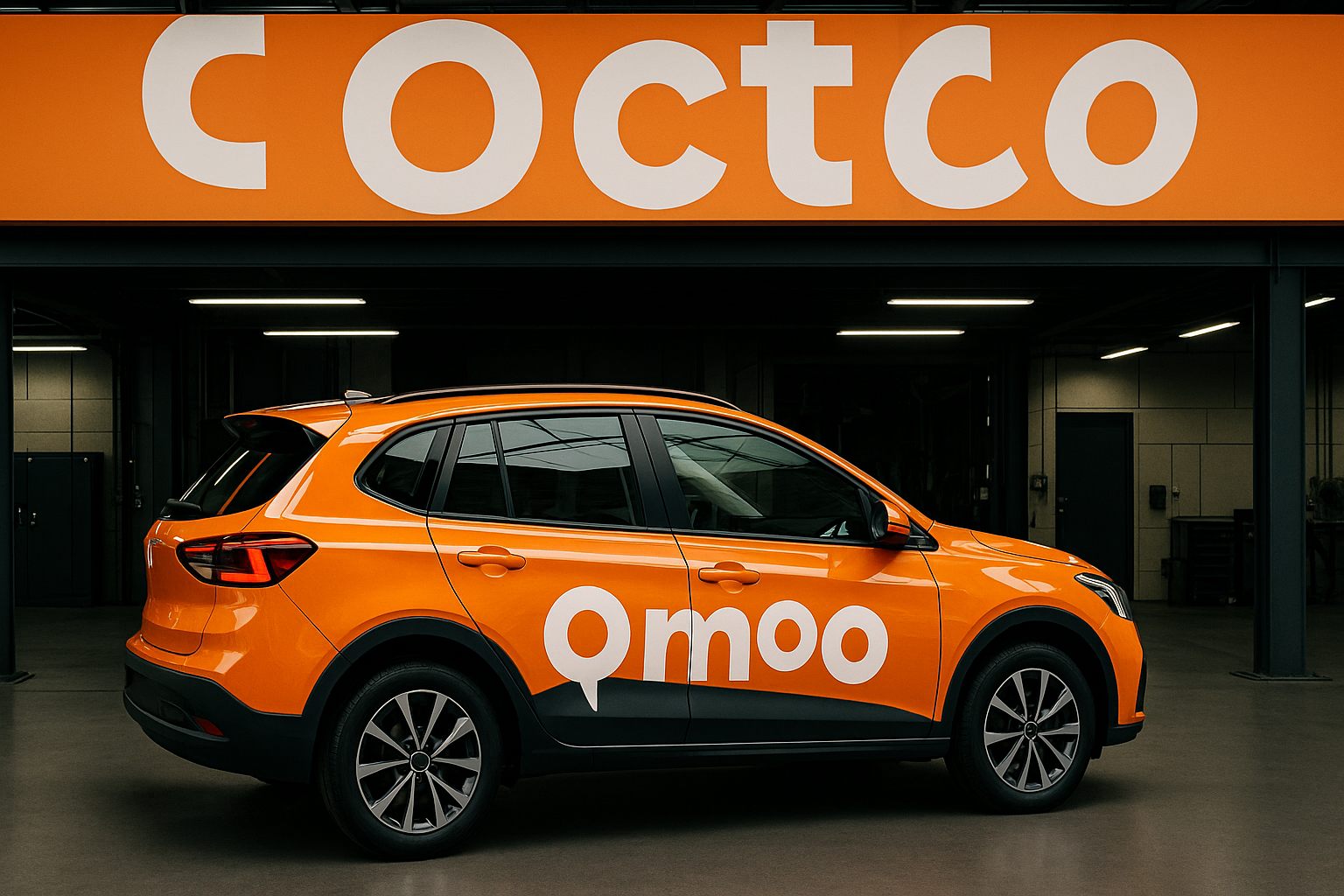
Most founders are still chasing the shiny thing. The smarter money is buying the bloke with the mop, the charging cable and the keys to the depot.
Moove just raised $250 million at a $2.1 billion valuation, and I reckon it is one of the more important venture stories this week—not because another startup raised a truckload of cash, but because of what the money is actually backing. Moove is betting that robotaxis will not be won by the company with the flashiest autonomous-driving model. They will be won by whoever can keep tens of thousands of expensive vehicles clean, charged, repaired, insured, parked, dispatched and commercially useful.
That sounds boring. Good. Boring is often where the money lives.
The $250 million bet on the unsexy layer
Moove was founded in Nigeria in 2020 as a vehicle-financing business for ride-hailing drivers. It now has headquarters in Dubai, runs a 42,000-vehicle ride-hailing fleet across 14 countries and employs 3,300 people globally. It is still in the human-driven mobility game, but its Series C marks a much larger pivot: becoming the operating infrastructure behind autonomous fleets.
Mubadala Investment Company led the round. Woven Capital and Ion Pacific co-led, with investors including Uber, BlackRock, MUFG, Franklin Templeton and others also participating. That investor list matters. This is not a few VCs punting on a tidy slide deck. It is serious institutional capital financing an asset-heavy operating business.
Moove already operates Waymo fleets in Phoenix, Miami and Las Vegas, with London in the pipeline. It does not currently own the Waymo cars it manages, but co-founder and co-CEO Ladi Delano says the company intends to use debt financing to buy robotaxis over time.
That is the gutsy bit.
Most software founders have been trained to fear assets. “Asset-light” became business gospel because investors adore high margins, low capex and simple stories. Fair enough. I like a clean software business as much as the next bloke. But there is a category error in applying that logic to every industry.
If the underlying service requires a physical machine to earn revenue, someone has to own, service and finance the machine. In autonomous mobility, that machine is a very expensive car sitting in a very complicated regulatory and operational environment. You can write brilliant autonomy software and still lose money if the vehicle is stranded, filthy, flat, damaged, badly routed or off the road waiting for a minor repair.
Moove’s pitch is simple: the autonomous-vehicle developers build the brain; Moove makes the body earn.
Robotaxis have a far less glamorous problem than driving
The public conversation around robotaxis is obsessed with whether a vehicle can navigate a tricky intersection without a human. That is obviously important. It is also only one part of the commercial job.
A real robotaxi fleet needs somebody to deal with maintenance, charging, cleaning, servicing, parking, lost property, fleet deployment and the whole messy circus that begins after a passenger closes the door. Moove calls its planned automated depots “nests.” The company says those sites are intended to run around the clock, using robotics to automate charging, maintenance and servicing. About 15 depots are in some stage of development.
This is where founders need to pay attention. The moat may not be the product customers see. It may be the operating system behind the product—the ugly, repetitive, expensive work competitors dismiss until it strangles them.
I am building Agave Finder in spirits, and the same principle applies in a less capital-intensive form. People see an app. I see data quality, producers, distributors, retailers, product information, trust and the unglamorous infrastructure required to make discovery genuinely useful. The visible interface gets the applause. The plumbing makes the business durable.
In Moove’s case, the plumbing comes with tyres, insurance and a depot lease. That is harder to scale than code. It is also much harder for a competitor to copy once you have the relationships, operating processes and fleet data.
This is what the venture market is rewarding now
The wider funding backdrop makes Moove’s round more interesting. U.S. companies raised $412.7 billion in venture capital in the first half of 2026, according to PitchBook-NVCA data reported by Axios. That was already more than any full year on record, with more than 81% of the money going into rounds of $100 million or more.
Read that number carefully. Venture capital is not broadly “back.” It is concentrated.
The market is showering capital on companies that can tell one of two stories: either they own a crucial piece of the AI stack, or they can turn AI into a real-world industrial advantage. Travis Kalanick’s robotics venture Atoms raised $1.7 billion in July, led by Andreessen Horowitz. Moove’s $250 million is smaller, but it belongs to the same category: capital pouring into businesses that want to digitise and automate physical industries.
The difference is that Moove has begun with a business that already knows fleet operations. It did not wake up one morning, slap “autonomous” into a pitch deck and decide it was a robotics company. It learned to finance vehicles and run human-driven ride-hailing fleets first. That experience may be more valuable than it looks.
There is a brutal lesson there for startup operators: adjacent capability beats fashionable ambition.
A company that has spent years solving financing, driver onboarding, vehicle uptime, servicing and fleet economics has earned the right to attack robotaxi operations. A company with a slick AI demo and no operational scars has not.
The contrarian angle: owning the metal may be the advantage
Here is the bit many VCs will hate hearing: asset ownership is not always a weakness. Sometimes it is the price of having real control.
Moove intends to use debt to buy robotaxis. Done badly, that is a cracking way to blow yourself up. Debt does not care about your product roadmap. It wants to be paid whether your fleet is producing revenue or sitting in a depot waiting for a software update.
But done well, financing vehicles with debt can match the asset to the capital structure. Equity should fund the risky work: technology, expansion, hiring, market development and the uncertain bits. Debt should finance assets with useful lives and reasonably predictable cash flows.
The trap is pretending the cash flows are predictable before they are. Plenty of founders have confused a theoretical unit-economics spreadsheet with actual operating history and handed the business a loaded gun.
Moove says its traditional mobility business is set to achieve full profitability this year. If that happens, it matters more than a glossy valuation. It means the company may be building its autonomous operation from a base that understands the discipline of making money from vehicles, not merely raising money around vehicles.
That is a more credible starting point than the standard venture script: burn a fortune, call the losses “investment,” then hope someone bigger buys the problem.
What could go wrong? Plenty.
Let’s not get carried away after one big round.
Robotaxi deployment remains constrained by regulation, public trust, vehicle economics and the sheer difficulty of making autonomous fleets available at scale. Moove is also dependent on partners such as Waymo for autonomous-driving technology and, at least for now, for vehicles. If deployments slow, operating partners wear some of that pain too.
Then there is the old fleet-business headache: utilisation. An idle robotaxi is not a software subscription quietly renewing in the background. It is a capital asset depreciating while producing precisely bugger-all.
Automated depots could improve that equation, but they are themselves an execution challenge. They require property, power, equipment, local approvals, operational systems and people who know how to run them. Moove plans to hire about 350 people as it scales this business. That is a sensible acknowledgement that “automation” does not mean no operations. It means operations become more leveraged—and more demanding.
Still, I would rather back a team that understands this mess than a team that has never had to get a car back on the road before breakfast.
What this means for you
Whether you run a startup, invest in one or want to become a sharper operator, nick these four lessons.
1. Find the compulsory work. Do not ask only what customers love. Ask what must happen for the product to work every day. The compulsory work is often a better business than the sexy feature.
2. Build from earned adjacency. Your next move should make frighteningly good sense based on what you already know, own or can do better than outsiders. Moove’s robotaxi move grew from fleet financing and operations. That is a proper adjacency, not a random pivot.
3. Treat capital structure as strategy. Equity is expensive. Debt is dangerous. Neither is morally superior. Match the money to the risk. Do not fund a long-lived productive asset with panicked equity forever, and do not put debt onto a business that has not proved it can reliably service it.
4. Measure the ugly economics weekly. Uptime. Utilisation. servicing time. customer support. churn. returns. bad debt. Whatever your version is, put it on one page and stare at it every week. The metric you avoid is usually the one quietly eating your margin.
The robotaxi gold rush will produce plenty of headlines about AI, sensors and self-driving wizardry. Fine. Let everyone else chase the fireworks.
I will keep watching the businesses that own the picks, shovels, depots and cash register. They are usually the ones still standing after the party ends.