Royal Caribbean’s $6B Sandals Bet: Buying Land Because Ships Aren’t Enough
A cruise company paying $3 billion for half a resort chain isn’t diversification. It’s an admission that owning the guest for seven nights at sea is no longer enough.
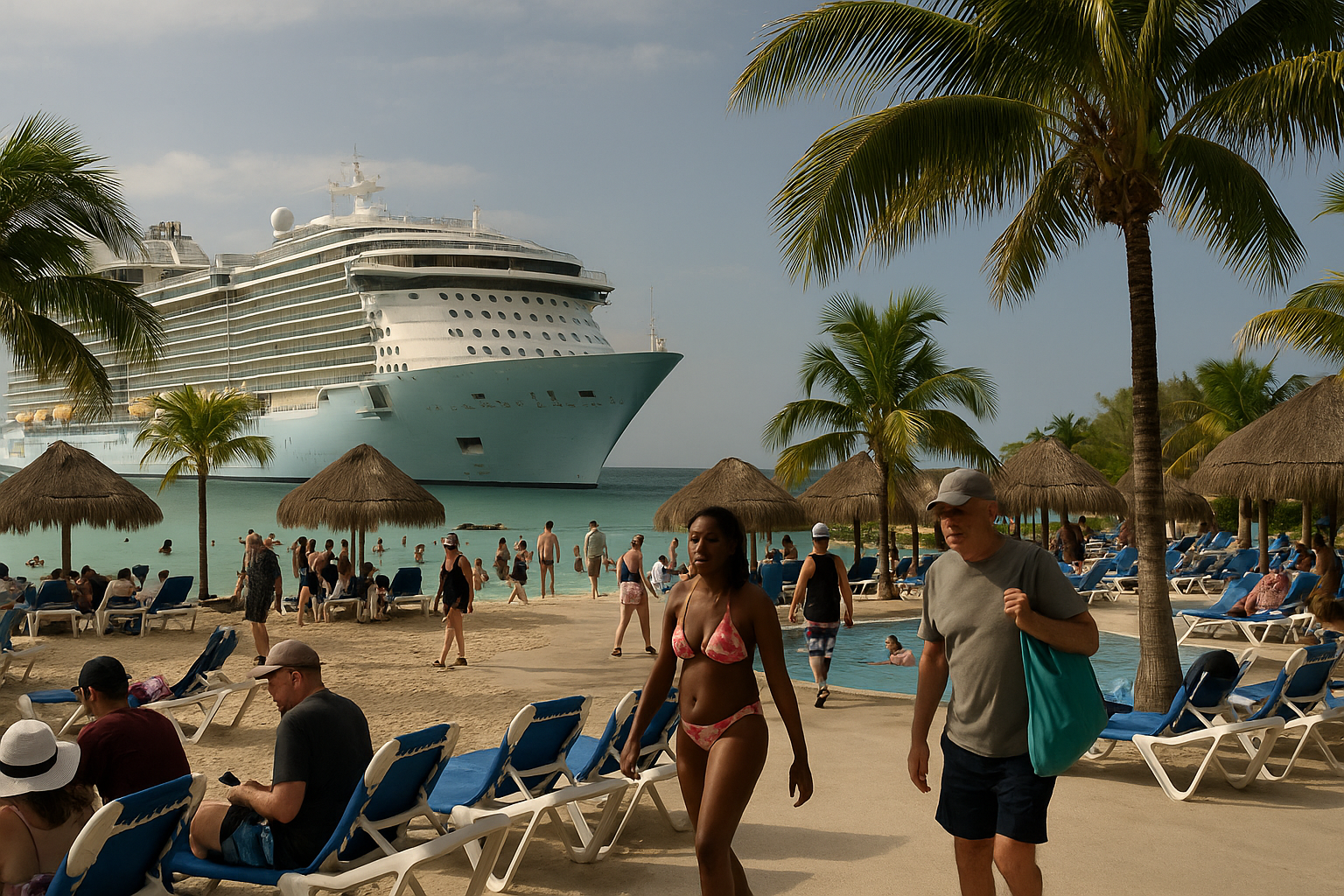
Royal Caribbean is reportedly prepared to pay about $3 billion for half of Sandals Resorts, implying a valuation near $6 billion. That is not a cute add-on for a cruise operator. It is a very expensive confession: the real money is no longer in getting people onto the ship. It is in owning more of their holiday.
The reported deal is still being negotiated and could fall over. But the market’s early verdict was brutal enough: Royal Caribbean shares fell sharply after the news broke. Investors saw the obvious risk. A cruise company that can move a ship away from bad weather is considering buying fixed beachfront assets in hurricane country, at the point where leisure consumers are already watching their wallets.
Fair concern. But I think most people are looking at the wrong bit of the deal.
Royal Caribbean Is Reportedly Buying a Different Profit Pool
Reports on September 22 said Royal Caribbean Group was nearing a transaction involving Sandals Resorts International at a valuation of more than $6 billion. The Financial Times reporting described Royal Caribbean taking a controlling stake, while CNBC reported a structure closer to $3 billion for 50% of the equity. Both accounts agree on the important part: Royal Caribbean wants in, the Stewart family would retain an interest, and the deal is not signed until it is signed.
Sandals is not a random hotel chain. It operates the adults-focused Sandals brand and the family-focused Beaches brand across the Caribbean. Reports put the portfolio at roughly 20 resorts. Founder Gordon “Butch” Stewart built it from Jamaica into one of the region’s defining hospitality businesses before his death in 2021.
For Royal Caribbean, this would reportedly be its biggest deal ever. That matters because it tells you this is not management buying a slide for the investor deck. It is a strategic pivot with real balance-sheet consequences.
The obvious pitch is cross-selling. Sell a cruise guest a Sandals holiday. Sell a Sandals guest a cruise. Bundle flights, loyalty points, shore experiences, beach clubs, family trips and anniversary trips. Get the customer into one database, then stop handing their next holiday to Hyatt, Marriott, Carnival, Expedia or some bloke on Instagram selling luxury villas.
That is all sensible. It is also not the whole game.
Royal Caribbean is trying to become less dependent on a single, highly cyclical way of selling fun: putting thousands of people on floating cities. Ships are spectacular assets when demand is roaring. They are also expensive, fuel-hungry, operationally intense machines that cannot pretend a soft booking season is someone else’s problem.
Land resorts have different problems. But they give the company another way to monetise the same traveller, in the same region, under the same umbrella.
The Market Is Right to Worry About the Price
Let’s not get misty-eyed about “synergies.” That word has covered more bad acquisitions than bad management haircuts.
At a $6 billion valuation, Royal Caribbean would be paying up for an iconic private brand with limited Caribbean beachfront supply, established customer trust and a strong all-inclusive position. That may prove sensible. It may also prove that the buyer caught a bad case of strategic FOMO.
The key issue is not whether Sandals is a good business. It plainly owns valuable assets and a recognised brand. The question is whether Royal Caribbean can make Sandals materially more valuable than it already is without ruining what made guests pay a premium in the first place.
Cruise lines are experts at volume, logistics, revenue management and extracting spending from a captive customer base. Sandals is selling something different: an intimate, high-touch, adults-oriented resort experience, plus family resorts under Beaches. Those models can complement each other. They can also collide.
The fastest way to torch value would be to treat Sandals as a floating hotel that forgot to leave the dock. If Royal Caribbean tries to shove every process, pricing model and operating playbook from its ships into the resorts, loyal customers will smell it immediately. Premium hospitality customers are not stupid. They know when a brand has been financial-engineered within an inch of its life.
And then there is weather risk. A ship can reroute. A $6 billion collection of Caribbean resort assets cannot. Fixed assets bring exposure to storms, insurance costs, labour markets, local politics, infrastructure failures and destination-specific disruptions. You do not diversify away from operational risk by buying a different form of operational risk.
That is why the share-price reaction was useful. Markets often get things wrong in the short term, but they were right to ask a basic question: why put a giant cheque into a business with risks you do not currently carry?
The Overlooked Angle: This Is About Owning Demand, Not Just Selling Rooms
Here is the part I think people are underestimating.
The asset Royal Caribbean may really be buying is not the resort inventory. It is permission to sell a broader kind of holiday.
Every decent travel business wants more first-party customer data, more repeat bookings and less reliance on somebody else’s distribution pipe. If you own the brand relationship, you can sell before the trip, during the trip and after the trip. If you do not, you are just another supplier getting squeezed by the company that owns the customer.
Think about what happens when a couple books a Sandals anniversary holiday. There is an opportunity to sell them a premium cruise next year. When a family books a Royal Caribbean sailing, there is an opportunity to sell a Beaches resort holiday when the kids are older, or a land stay attached to a cruise. When a customer earns loyalty benefits across both, switching becomes less attractive.
That does not mean every package will work. Plenty of bundled travel products are rubbish because they are built by finance people who have never tried to take a toddler through an airport. But the commercial logic is real: acquire a customer once, then create more than one occasion to sell to them.
It also gives Royal Caribbean a stronger answer to the uncomfortable truth of modern leisure: consumers increasingly choose experiences, not categories. They do not wake up saying, “I am a cruise customer.” They say, “I want a decent holiday, in the sun, without stuffing around.”
The company that can credibly offer multiple ways to fulfil that request has a better shot at keeping the booking.
Sandals Is Also a Family-Controlled Asset With a Complicated Clock
This deal did not appear out of thin air. Sandals had been the subject of sale speculation for years. Founder Butch Stewart’s death in 2021 created estate and governance complexity, including disputes around family trusts. Reports say bankers were brought in to explore a sale process, with strategic and private-equity interest circling.
That context matters.
The best deals often happen when the buyer’s strategic need meets the seller’s ownership reality. Royal Caribbean gets a recognised Caribbean platform without spending years assembling resorts one at a time. The Stewart family gets liquidity while potentially retaining equity exposure to the next stage of growth.
That can be a better structure than a clean 100% sale, especially when the founders’ family still brings brand credibility, local knowledge and operating history that no spreadsheet can replicate.
But partial ownership has its own trap. If the family keeps a meaningful stake and Royal Caribbean gets control, the governance needs to be bloody clear. Who decides capital expenditure? Who controls brand standards? Who gets the final say on pricing, expansion and debt? “We will work it out” is not a governance model. It is how partners end up paying lawyers to explain emails back to them.
Don’t Confuse a Bigger Business With a Better One
There is a temptation to cheer any company that expands its total addressable market. Investors love a bigger acronym. Management loves a bigger empire. Bankers, shockingly, also tend to enjoy it.
But diversification only works when the new business improves the economics of the old one, or creates a genuinely defensible new profit pool. Otherwise, you have simply stapled two sets of problems together.
Royal Caribbean should not buy Sandals because “land vacations are big.” That is lazy strategy.
It should buy Sandals only if it can do three things:
1. Preserve the resort brands’ premium positioning. 2. Increase customer lifetime value without discounting the brands into oblivion. 3. Run the fixed-asset business with discipline rather than assuming a famous logo makes every resort expansion a winner.
If it can do that, a $6 billion valuation might look smart in five years. If it cannot, this will become a case study in how a successful operator paid top dollar to enter a business it did not properly understand.
What This Means for You
Whether you run a startup, invest your own money or manage a mature business, steal the useful lesson here: do not ask only what you can sell. Ask what customer relationship you can own repeatedly.
Tomorrow, pull up your customer list and answer three questions.
First: what do customers buy immediately before or after buying from you? If you can solve that adjacent problem better than the market, you may have an acquisition, partnership or product opportunity.
Second: which customer data are you giving away to a distributor, marketplace or platform? That is often where your future margin is leaking.
Third: if you acquired an adjacent business, what must remain untouched for customers to keep loving it? Write that down before you do the deal, not after the brand starts bleeding bookings.
Royal Caribbean’s Sandals move is a big bet on customer ownership. That is the right ambition. The price of being wrong, though, is $6 billion worth of sun loungers that cannot sail away.