Santander’s $12.2B Webster Deal Is a Deposit Grab, Not Growth
Santander is paying $12.2 billion because growth means nothing if funding costs kill you. Webster’s deposits, customer trust and distribution are the real prize.
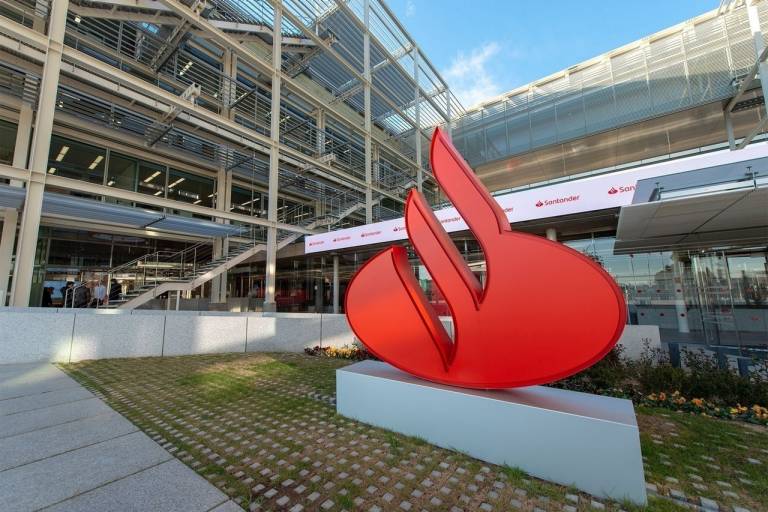
A $12.2 billion bank acquisition is what happens when growth is not enough. When money gets expensive, deposits beat strategy decks every time.
Banco Santander is expected to close its acquisition of Webster Financial Corporation on August 20, 2026, after clearing approvals from the U.S. Federal Reserve, the Office of the Comptroller of the Currency and the European Central Bank. The Spanish bank agreed in February to pay an implied $75 per Webster share: $48.75 in cash plus 2.0548 Santander American depositary shares. The deal values Webster at roughly $12.2 billion.
That is the headline. The real story is that one of Europe’s biggest banks is paying up for a properly built American customer base, a deposit franchise and a local commercial-banking machine. And every operator should be paying attention.
Santander is buying a funding machine
Banks sell a simple product with a very complicated spreadsheet behind it: they take deposits, lend money, earn the spread and try not to blow themselves up.
The boring bit — deposits — is the bit that matters most.
A bank with stable customer deposits has a cheaper, stickier source of funding than one relying heavily on wholesale markets, term funding or the kindness of institutional investors. That advantage becomes painfully obvious when interest rates rise, markets wobble or customers suddenly rediscover that cash can earn a return.
Santander already had a meaningful U.S. presence. Webster gives it greater scale in retail and commercial banking, particularly in the Northeast. Santander says the combined U.S. business will have approximately $327 billion in assets, $185 billion in loans and $172 billion in deposits, based on December 31, 2025 figures. That would put it among the top 10 U.S. retail and commercial banks by assets and give it a top-five deposit position across key Northeast states.
That is not a vanity acquisition. It is a balance-sheet acquisition.
The thing I like about this deal is that the buyer has said plainly what it wants. Santander expects the transaction to help its U.S. business reach around 18% return on tangible equity by 2028. It is targeting 7% to 8% earnings-per-share accretion and an estimated 15% return on invested capital by the same year.
Those are ambitious targets. But at least they are targets you can test. Far too many acquisitions are sold with phrases like “transformational platform,” “shared values” and “unparalleled opportunity.” Translation: management wants to buy something and hopes the arithmetic sorts itself out later.
Santander has put numbers on the wall. Now it has to earn them.
The $75-per-share price tells you where the confidence sits
Webster shareholders are set to receive a mix of cash and Santander shares. That matters.
The cash portion gives Webster investors certainty. The share component says Santander wants them to participate in the upside of the combined business, while also preserving some of its own capital and balance-sheet flexibility. A cash-and-stock deal is often less sexy than an all-cash bid, but it can be a sensible structure when the buyer believes its own shares have room to run and when it wants the acquired shareholders to have skin in the next chapter.
Santander said the deal values Webster at around 2.0 times tangible book value and roughly 10 times expected 2028 earnings. That is not bargain-bin pricing. Nor should it be.
You do not get a quality customer base, profitable lending relationships and a trusted regional brand at a distressed price unless something is badly wrong. Webster was not a broken asset being rescued from the gutter. Santander was buying a functioning business that could add scale where Santander wanted it most.
This is the bit amateur deal commentary misses. Price is not the same as value.
A cheap business can be wildly expensive if it requires years of management attention, customer repair, technology replacement and staff upheaval. A business bought at a premium can be cheap if it gives you a scarce asset that would cost more — or take a decade — to build from scratch.
Santander appears to be making the second calculation.
The real work starts after the champagne
The Federal Reserve approved the acquisition on August 4. The OCC approval arrived on June 12, and the ECB authorization came on July 21. That regulatory sequence matters because banking deals do not close just because executives shake hands and bankers send invoices.
But regulatory clearance is the easy part compared with integration.
Santander has said most of Webster’s businesses will become part of Santander Bank, N.A. John Ciulla, Webster’s chairman and chief executive, is set to become CEO of Santander Bank, N.A. Santander and Webster have also established a joint integration steering committee.
Good. Because the value of a bank is not its logo, its branch signs or a glossy presentation about “complementary capabilities.” The value sits in millions of tiny operational details: account migrations, product rules, credit approvals, compliance processes, call-centre scripts, frontline staff retention, cybersecurity controls and client relationships.
Get any of that wrong and customers do what customers always do when a large institution makes life harder: they leave.
The first test will be whether Santander can make the combined bank feel stronger without making it feel foreign. Webster customers have relationships with people, not merely a bank-routing number. Commercial clients especially care about response times, credit judgement and whether the person answering the phone understands their business.
A regional bank’s local trust is easy to underestimate from Madrid, New York or a boardroom full of PowerPoint. It is also hard to rebuild once damaged.
The overlooked angle: this is a distribution deal
Everyone will call this banking consolidation. Fair enough. But it is also distribution.
The best businesses own a route to the customer. For a bank, that route is a primary relationship: the operating account, the payroll account, the mortgage, the lending line, the treasury service, the local branch manager who answers the phone.
Once you own that relationship, you can responsibly offer more products. You can serve a business owner’s company accounts, personal banking, lending needs and wealth requirements. You can deepen relationships without spending a fortune reacquiring the same customer every year through advertising.
That is the commercial logic behind Santander’s claim that the two franchises are complementary. It is not just about having more branches or a bigger asset number. It is about increasing the number of useful products delivered through an existing relationship.
Founders should understand this cold.
Your valuation is not only a function of revenue. It is shaped by how you acquire customers, how long they stay, how much they trust you and whether you have permission to sell them the next useful thing. A business with direct, repeatable access to customers is worth more than one renting its audience from Google, Meta, Amazon or the latest app-store algorithm.
Santander is paying billions for a durable distribution channel disguised as a bank.
What this means for you
If you are a founder, stop obsessing over top-line growth in isolation. Ask three harder questions tomorrow morning.
First: what is my cheapest source of repeat business? For Santander, it is deposits and established banking relationships. For you, it might be subscriptions, a community, distribution partners, account managers or a product embedded in a customer’s workflow. Find it. Protect it. Build around it.
Second: would it be cheaper to build this capability or buy it? Do not buy businesses because acquisition sounds impressive. Buy when time, trust or distribution cannot be built quickly enough. And do the ugly maths before the press release: integration cost, management distraction, customer churn and the opportunity cost of not focusing on your core.
Third: am I measuring the return from a deal honestly? Santander has put down markers: 18% U.S. return on tangible equity, 7% to 8% EPS accretion and 15% return on invested capital by 2028. Do the same. Put dates and numbers beside your acquisition thesis. If you cannot explain exactly how the deal pays back, you are not making an investment. You are buying a story.
The headline says Santander is buying Webster for $12.2 billion. The sharper read is this: Santander is paying for stable funding, trusted customer relationships and a faster path to scale in the world’s biggest banking market.
That is not glamorous. It is better than glamorous.
It is what serious buyers do: pay dearly for the assets everyone else discovers they needed too late.
Sources
- Santander Gets Fed Authorization for $12 Billion Webster Deal - Bloomberg Law
- Santander Receives Federal Reserve Approval for the Acquisition of Webster Financial Corporation
- Federal Reserve Board Announces Approval of Santander’s Acquisition of Webster
- Santander to Acquire Webster Bank for $12.2 Billion