Sazerac’s €5.55 Berentzen Bid Says Spirits Are Now a Distribution Game
The spirits industry isn’t buying growth anymore. Sazerac’s €5.55-a-share bid for Berentzen is a blunt bet that owning the route to the customer matters more than owning another fancy bottle.
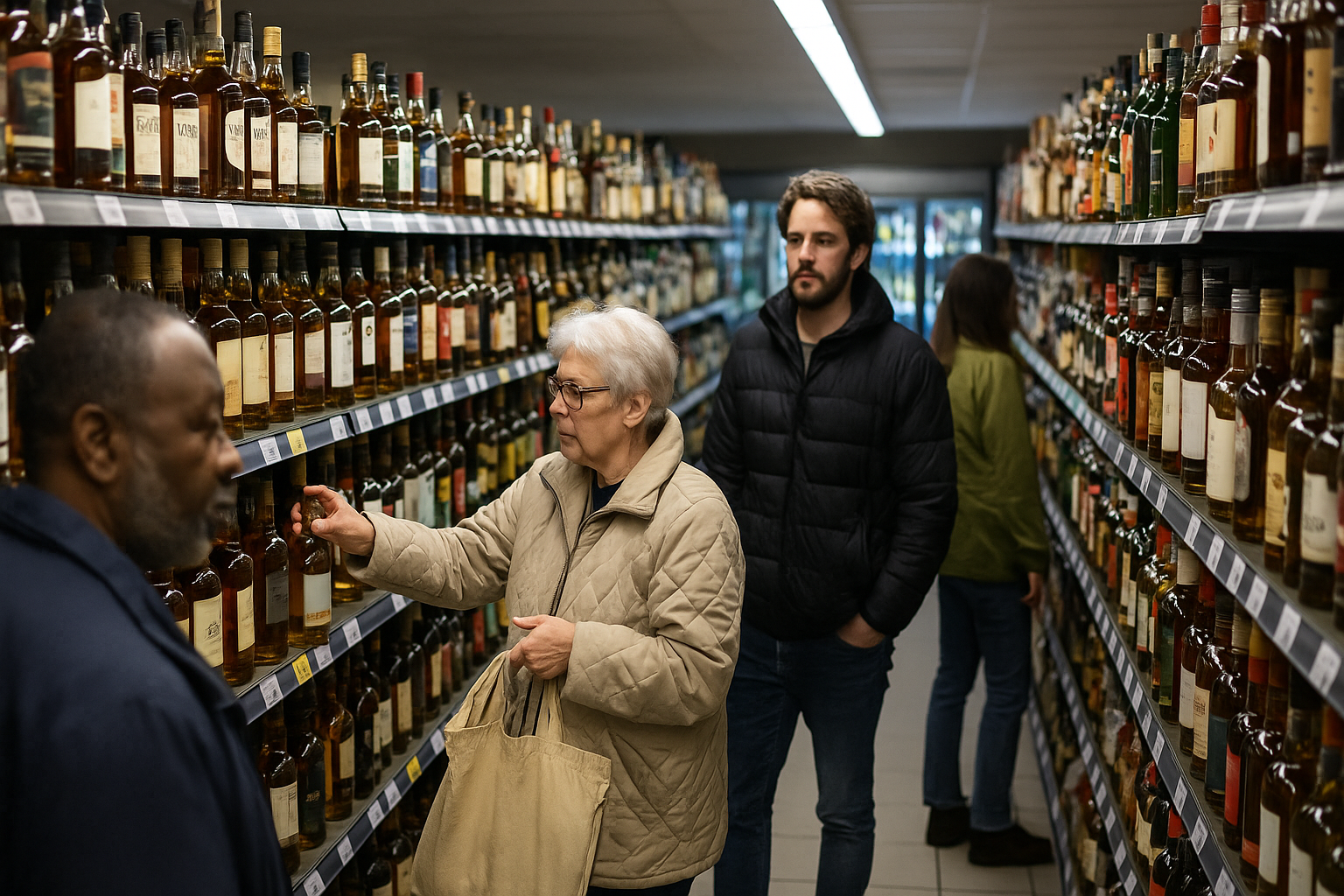
Sazerac is offering €5.55 a share for Berentzen — a 68% premium — because the spirits business has stopped rewarding brands that merely look good on a back bar.
That’s the uncomfortable bit. For years, founders have been told to build a gorgeous bottle, find a celebrity, buy some Instagram reach and wait for a multinational to write a cheque. The market has changed. In a slower drinking environment, distribution, operational muscle and a real path to repeat purchase are worth more than another “premium” story printed on a label.
Sazerac’s €5.55 bid is not a small deal in disguise
On September 21, 2026, Sazerac and Germany’s Berentzen-Gruppe signed a business-combination agreement. Sazerac plans a voluntary public takeover offer of €5.55 per Berentzen share, which Berentzen says represents roughly a 68% premium to the company’s unaffected three-month volume-weighted Xetra share price before September 16. The offer requires acceptance from holders of at least 50% plus one share. Both Berentzen’s executive and supervisory boards support it. ([berentzen-gruppe.de](https://www.berentzen-gruppe.de/en/investors/takeoveroffer?utm_source=openai))
Sazerac also intends to delist Berentzen if the transaction closes. That matters. A delisting is not the language of a tourist investor taking a punt on continental schnapps. It is the language of an owner that wants room to change the machinery without performing every move in public.
The formal offer document is still being prepared for German regulator BaFin. Reuters reported that Sazerac expects the transaction to close in the fourth quarter. ([investing.com](https://www.investing.com/news/stock-market-news/us-spirits-maker-sazerac-launches-takeover-bid-for-germanys-berentzen-4908271?utm_source=openai))
If you’re a Berentzen shareholder, the arithmetic is obvious: a large premium and board support are hard to ignore. If you’re a spirits founder, investor or operator, the more useful question is different:
Why is Sazerac buying now, when everyone agrees alcohol demand is softer?
Because downturns are when real operators go shopping.
The industry’s weak patch is creating a buyer’s market
Spirits companies have spent the past few years facing a nastier mix than the glossy brand decks suggest: softer consumer spending, lower enthusiasm for expensive bottles, distributor inventory corrections and a customer who has more alternatives than ever.
Pernod Ricard’s full-year FY26 numbers put that plainly. Organic sales fell 3.9%, with the Americas down 10% and the United States down 14%. The company cited a spirits-market slowdown, subdued consumer confidence and inventory effects in the trade. ([pernod-ricard.com](https://www.pernod-ricard.com/en/media/fy26-full-year-sales-and-results?utm_source=openai))
That is not a tequila problem. It is not a whiskey problem. It is not even exclusively an alcohol problem.
It is a value-for-money problem.
Consumers are still buying drinks. They are simply less willing to fund every brand owner’s fantasy margin. They are more selective, more promotional and quicker to switch. If the product is indistinguishable, the buyer has power. If it is expensive and forgettable, it gets left on the shelf.
This is why Sazerac’s move is worth watching. In a boom, companies buy assets because they are terrified of missing growth. In a slowdown, the good ones buy assets because they can see what will matter after the rubbish gets cleared out.
Berentzen gives Sazerac a German platform, established local market knowledge and a route into Europe that does not depend solely on exporting American brands and hoping the locals fall in love with them. The stated ambition is to build a leading European spirits platform. ([berentzen-gruppe.de](https://www.berentzen-gruppe.de/en/media/press-releases?cHash=a71d56124b1025294a566a228144dbf1&tx_news_pi1%5Baction%5D=detail&tx_news_pi1%5Bcontroller%5D=News&tx_news_pi1%5Bnews%5D=443&utm_source=openai))
That is a much more serious strategy than buying a fashionable label and calling it international expansion.
Sazerac is building a map, not collecting trophies
The Berentzen offer did not arrive in a vacuum.
Earlier this month, Sazerac completed its acquisition of UK spirits maker Au Vodka. Bloomberg Law reported the deal was worth more than £300 million, or about $404 million, according to a person familiar with the matter. ([news.bloomberglaw.com](https://news.bloomberglaw.com/mergers-and-acquisitions/sazerac-buys-uk-brand-au-vodka-to-bolster-overseas-portfolio?utm_source=openai))
Then there was the much bigger signal in April: Reuters reported that Sazerac had offered roughly $15 billion for Brown-Forman, the owner of Jack Daniel’s. ([investing.com](https://www.investing.com/news/stock-market-news/sazerac-offers-to-buy-jack-daniels-maker-brownforman-for-about-15-billion-wsj-reports-4616290?utm_source=openai))
Put those together and the pattern is obvious. Sazerac is not sitting around waiting for consumers to suddenly become thirsty for a $90 bottle again. It is trying to assemble reach: brands, markets, distribution relationships and operating infrastructure.
That is the playbook founders routinely underestimate.
Everyone sees the bottle. Almost nobody sees the boring stuff that decides whether the bottle becomes a business:
- the importer; - the distributor; - the listing with the right retailer; - the sales rep who can get a bartender to try it; - reliable supply; - pricing that leaves enough margin for every layer; - data showing where the product actually sells, rather than where people say they love it.
That final point is where the tequila world has been particularly silly. There are plenty of beautiful agave brands with compelling founders, celebrity associations and premium positioning. Some will win. A lot will discover that “we got into 200 accounts” is not the same thing as “we have a scalable company.”
Getting a bottle placed is distribution. Getting it reordered is product-market fit.
The overlooked angle: consolidation is good news for the best independents
Most founders hear consolidation and panic. They assume big players will suffocate every independent brand.
Sometimes they will. If your entire business is a generic liquid in an expensive bottle, you should be worried. There are too many of those already.
But consolidation also creates whitespace for the independents that are actually useful to customers.
Big groups are brilliant at scale, procurement, compliance and global activation. They can be painfully slow at niche communities, local credibility and product education. A focused founder can still beat them — but only if they stop confusing attention with demand.
The opportunity is not “launch another tequila.” That ship has sailed, hit an iceberg and is now being sold as a limited-edition collector’s decanter.
The opportunity is to own a precise customer problem.
Maybe that means additive-free tequila with credible production transparency. Maybe it means a genuinely good sub-$30 bottle when premium consumers are trading down. Maybe it means a hospitality-led brand that wins on-premise first. Maybe it means a discovery platform that helps drinkers find bottles they can actually buy nearby, rather than another content site telling them what is theoretically excellent.
That is part of what I keep seeing while building Agave Finder. The market does not suffer from a shortage of bottles. It suffers from a shortage of clean, useful information: what is available, where it is available, what it costs, what it is made from and whether it is worth your money.
A better information layer is not a side project in a crowded category. It is commercial infrastructure.
Premium is not dead. Lazy premium is.
The knee-jerk reading of weaker spirits results is that consumers have abandoned premium alcohol. I don’t buy it.
People have abandoned paying premium prices for a mediocre experience.
There is a difference.
A customer will still spend when the product is distinctive, trusted, easy to find and worth talking about. But the days of slapping “ultra-premium” on a bottle, charging double and expecting the market to clap are over.
That should make founders more disciplined, not more pessimistic.
If you are building a spirits brand, ask yourself whether the business still works if:
1. retail sell-through takes twice as long as your deck says; 2. distributors demand more support than expected; 3. consumers trade down by 20%; 4. customer-acquisition costs keep rising; and 5. the eventual buyer cares more about your distribution quality than your follower count.
If the answer is no, you do not have a growth business. You have an expensive marketing experiment.
Sazerac’s Berentzen move is a reminder that the eventual winners in spirits will not necessarily be the loudest brands. They will be the businesses that can move liquid efficiently, make money at sensible prices and earn repeat demand without setting cash on fire.
What this means for you
For founders: build your distribution strategy before you build your hero campaign. Know exactly who gets paid at every step, what makes an account reorder and how long it takes to turn a placement into cash. If you cannot explain that in one page, you are not ready to scale.
For investors: stop being hypnotised by celebrity, packaging and social reach. Ask for depletion data, reorder rates, gross margin after trade spend, distributor concentration and working-capital needs. A sexy brand with weak repeat purchase is not an asset. It is inventory wearing nice clothes.
For operators: use the slowdown. Negotiate harder. Tighten your SKU count. Fix the products that make money. Kill the ones that merely make you feel innovative. The market is giving disciplined businesses a chance to buy attention, talent and distribution more cheaply than they could in the boom years.
And for savers and drinkers: do not mistake a softer market for a dying category. It is a sorting mechanism. The rubbish gets exposed first. The businesses with real products, real margins and real routes to customers come out stronger.
Sazerac is not paying €5.55 a share for Berentzen because spirits are easy.
It is paying because hard markets are where the serious operators take ground.