Sazerac’s Reported £500m Au Vodka Deal Is a Bet on Attention, Not Vodka
A gold bottle, loud flavours and a reported £500m price tag: Sazerac hasn’t bought vodka. It has bought a machine for making young drinkers notice.
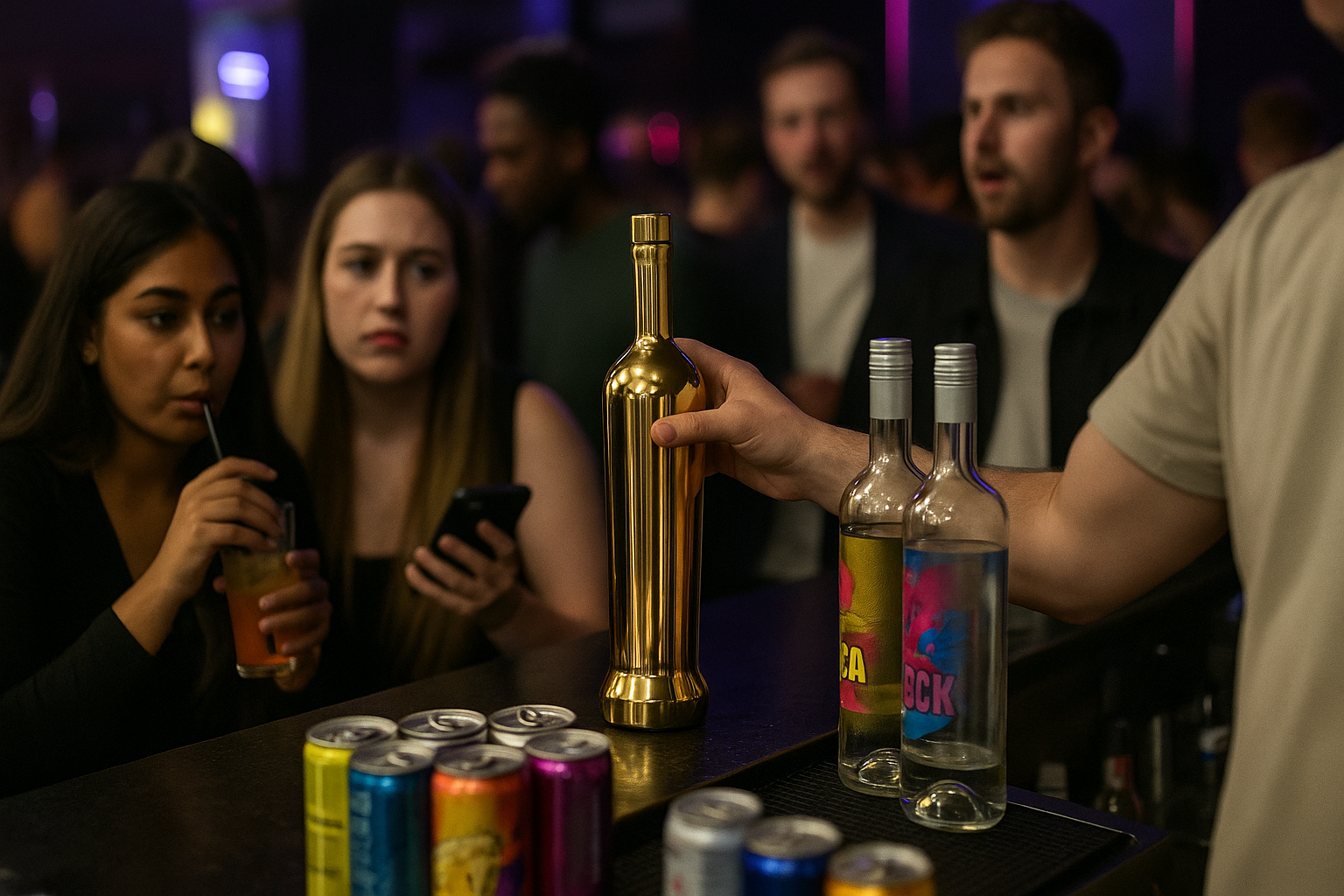
Sazerac is reportedly paying £500 million for Au Vodka, a Swansea brand built on gold bottles, blue raspberry, celebrity stunts and the sort of marketing traditional spirits executives pretend to hate right up until it starts printing money.
That number matters because it is not really a vodka deal. It is an admission that in 2026, distribution without attention is just expensive plumbing.
The deal: a reported £500m price for a brand built in public
On 17 August 2026, Sazerac announced a binding agreement to acquire Au Vodka, with completion expected in the coming weeks, subject to regulatory conditions. Sazerac has not publicly disclosed the price. Reports have put the deal’s value at about £500 million.
Au was started in 2015 by Swansea friends Charlie Morgan and Jackson Quinn. It makes flavoured vodka and ready-to-drink canned cocktails, and it has spent a decade doing something that legacy booze companies are structurally bad at: making the product look like a cultural signal rather than a liquid in a bottle.
That sounds frivolous until you look at the commercial result. Au employed more than 80 people and recorded £82.8 million in turnover in the year to April 2025. Its founders are reportedly set to net about £100 million each. Good on them. They built an asset, not a “personal brand” with a flashy Instagram account and bugger-all underneath it.
Au’s formula was blunt. Make the packaging impossible to miss. Give people flavours they already understand. Find the people with the audience before the big companies do. Put the brand in the places where a young buyer is making a social decision, not studying a tasting note.
The gold bottle was not decoration. It was the acquisition strategy in physical form.
Sazerac is buying reach, format and speed
Sazerac is best known for heavyweight spirits brands including Buffalo Trace, Fireball and Southern Comfort. But its recent behaviour says it knows the old playbook is not enough.
Earlier this year, Sazerac bought the canned-cocktail brand Dirty Shirley. In May it took a stake in Alix Earle-backed canned margarita brand Sipmargs and secured exclusive distribution rights. It also acquired a minority stake in Kendall Jenner-backed 818 Tequila. Now comes Au.
That is not random shopping. It is a portfolio construction exercise.
Sazerac is assembling exposure to the formats and audiences that the big, aged-spirit businesses do not automatically win: canned cocktails, flavoured products, creator-led brands, convenience occasions and younger legal-age drinkers who do not care that your distillery was established in 1870.
The lazy take is that Sazerac has gone soft for influencer booze. Wrong. The smarter read is that it is buying brands with an existing permission slip from consumers.
A big spirits group can buy production capacity. It can hire a sales team. It can pay distributors. What it cannot easily manufacture is genuine cultural relevance before the next trend rolls through. That takes repetition, instinct and a willingness to look a little ridiculous in public. Au had already done the messy bit.
Its US business gives Sazerac another reason to care. Au says it sold 50,000 bottles in its first week after launching in the United States in August 2022. It says the brand is now available online in 35 states and in physical stores in eight states. Those are company-reported figures, not audited gospel, but the strategic point is clear: this is not a brand starting from zero in America.
Sazerac has the route-to-market muscle. Au has the visual shorthand and consumer familiarity. Put the two together and you have a credible chance of turning a British social-media hit into a broader international business.
The spirits industry’s awkward truth: the bottle is now the media buy
For years, established spirits companies behaved as if brand building meant a heritage story, a well-lit bar ad and a famous face holding a glass at an event.
That still works for some categories. It does not automatically work in the fridge.
Ready-to-drink is a brutal shelf-level fight. A consumer is not standing there comparing production methods. They are deciding in seconds: Do I recognise it? Does it look good? Do I know what it tastes like? Is it easy?
Au’s gold packaging and candy-adjacent flavours answer all four questions fast. You may not personally want blue raspberry vodka. That is beside the point. The market does not pay you for having sophisticated preferences. It pays you for correctly identifying what someone else will buy repeatedly.
This is where founders get themselves into trouble. They confuse their own taste with a market insight. Then they spend two years creating a beautiful product for a buyer who does not exist.
Au did the opposite. It found a customer, created a very obvious product for that customer, and then rammed the message through culture until it became familiar. The brand’s own history points to direct outreach to influential figures, investment from DJ Charlie Sloth, and a stream of celebrity and creator tie-ins. Some of it was loud. Some of it was probably a bit cringe. All of it was recognisably Au.
Consistency beats tastefulness when you are trying to break through.
Why £500m may be either brilliant or bloody expensive
Let’s not get carried away. A reported £500 million valuation against £82.8 million of turnover is a serious price for a brand operating in a volatile category. And it is especially serious when the deal value has not been officially confirmed.
The risk is obvious: the thing that made Au desirable may be temporary. Loud packaging can be copied. Flavours rotate. Celebrity adjacency expires. Consumers who move fast into a brand can move just as fast out of it.
That is precisely why the acquisition will be judged on more than sales growth. Sazerac has to preserve the parts of Au that are difficult to put in a spreadsheet: speed, instinct, irreverence, creator relationships and a willingness to launch before every committee has finished polishing the deck.
Big companies are excellent at making a small brand available everywhere. They are also remarkably good at sanding off the weirdness that made it worth buying.
If Sazerac turns Au into a generic “premium flavoured vodka platform”, it will have paid top dollar for a bright gold shell. If it protects the brand’s distinct point of view while making its operations, distribution and compliance more professional, the reported valuation could look cheap in five years.
That is the entire game in consumer acquisitions: scale the system, not the soul out of it.
The overlooked angle: this is also a warning for tequila founders
Tequila founders should pay attention, even though Au is vodka.
Too many tequila brands are trying to win with the same three claims: additive-free, family-owned, traditional production. Those things can matter enormously. But they do not automatically create demand, especially outside the small group of enthusiasts who already care.
At Agave Finder, I see the gap plainly. More drinkers want to know what they are buying, where it comes from and whether the quality claim stacks up. That is valuable. But transparency is not a substitute for a brand people can spot, remember and ask for.
The lesson from Au is not “make tequila neon blue” — settle down. The lesson is that product truth and commercial relevance are separate jobs. You need both.
Build the liquid properly. Be honest about production. Then make the buying decision dead simple for a real, defined person. If your brand needs a five-minute explanation before anyone understands why it exists, you have not built a consumer brand. You have built a founder’s hobby with a freight bill.
What this means for you
If you are a founder, operator or investor, take three practical lessons from Sazerac and Au Vodka.
First, measure attention as an asset. Do not hide behind follower counts. Track whether people recognise the brand unaided, whether they search for it by name, whether retailers request it, whether customers post it without being bribed, and whether first purchase turns into repeat purchase. Attention that converts is valuable. Attention that merely looks good in a pitch deck is confetti.
Second, own a clear buying occasion. Au is not asking consumers to debate vodka terroir. It is offering a loud, convenient, social drink for a particular moment. Your business needs the same clarity. Name the occasion, the buyer and the competitor you are replacing. If you cannot, your sales team will make up the positioning store by store, and that is how brands become mush.
Third, do not sell distribution before you have pull. Sazerac can make Au more available because Au already has a reason to be bought. Founders often reverse that order: they chase national distribution, then discover nobody is pulling the product through. Start narrow. Win visibly. Get reorders. Then scale.
The reported £500 million headline will make people talk about gold bottles and influencers. Fine. The real lesson is tougher and more useful: in a crowded drinks market, the scarce asset is not another spirit. It is a brand that makes the right customer care before they reach for the shelf.
Au built that. Sazerac has paid handsomely for the chance to scale it. Now comes the hard part: proving that attention can survive adulthood.