Schneider Electric’s $22.6B PTC Deal Is a Bet on Owning the Factory
$22.6 billion is an absurd price to pay for software—unless the software becomes the operating system for every factory worth owning. Schneider Electric is betting it does.
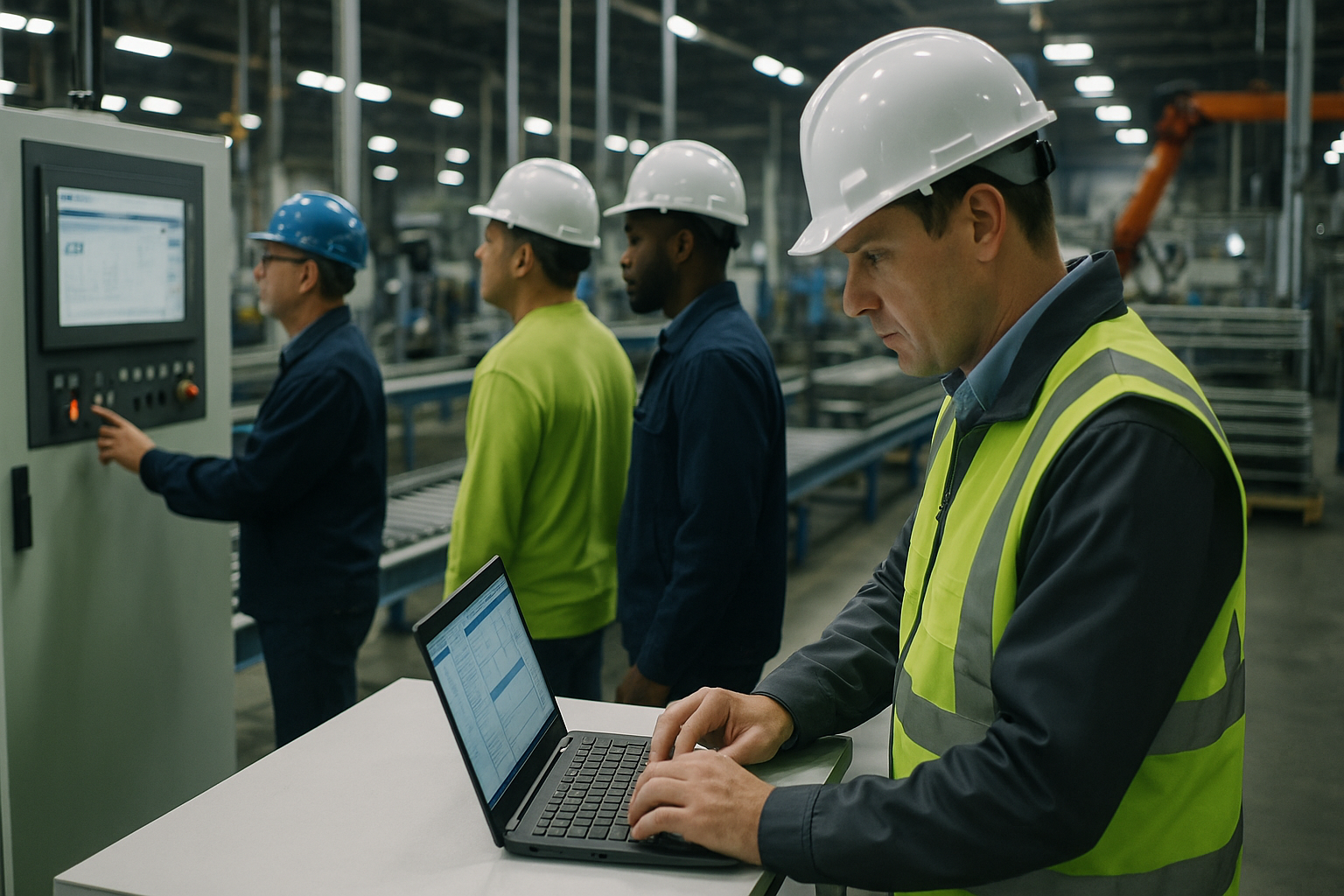
$22.6 billion is an absurd price to pay for software—unless the software becomes the operating system for every factory worth owning.
Schneider Electric is betting it does. Its all-cash deal for PTC is not a polite little software acquisition. At $205 a share, a 42.3% premium to PTC’s prior closing price, Schneider is putting roughly $23.7 billion of enterprise value behind a very blunt idea: the next industrial giant will own the data behind the physical world, not merely sell the wires, switches and machinery inside it.
That is either a bloody good move or a very expensive way to discover that industrial customers hate changing their software.
This is not really a software deal
PTC sells the unsexy but enormously valuable plumbing used to design, engineer, manage and service physical products. Its tools sit around product lifecycle management, engineering data and the information trail that follows a product from initial design through manufacturing and into the field.
That sounds dry. It is not.
If you make aircraft parts, medical equipment, cars, industrial machinery or complex electronics, the gap between “we have some data” and “we know exactly what is happening to this product, where and why” is where massive amounts of money disappear. Delayed launches, faulty components, warranty claims, inventory mistakes, compliance dramas and engineers wasting hours looking for the latest version of a design are not software problems. They are margin problems.
Schneider already has a serious position in energy management, automation, electrification, buildings, data centres and industrial operations. It also bought Aveva in a deal worth about $11 billion in 2023. PTC gives it another layer: the product and engineering data before that product ever reaches the factory floor.
In plain English, Schneider wants to be present from the first digital sketch of a machine through its manufacture, energy use, maintenance and eventual replacement. That is a much bigger prize than flogging a licence to one department.
The company says PTC will add the product and engineering-data layer to its existing process and energy-data foundation. That language is corporate as hell, but the strategy is simple: connect the blueprint, the factory, the energy bill and the operating asset in one commercial relationship.
The price tells you where the real fight is
Schneider is paying $205 a share in cash, valuing PTC’s equity at approximately $22.6 billion. The enterprise value is about $23.7 billion.
The buyer says the price represents 21 times estimated 2027 adjusted EBITA before full run-rate synergies, or 13 times with those synergies included. Those are not bargain-bin numbers. They are numbers you pay when you believe the asset becomes more valuable inside your system than it can ever be alone.
Schneider has forecast €250 million of cost synergies by year three and about €800 million of revenue synergies. It expects the transaction to beat its cost of capital by year five after closing, assuming those full synergies arrive.
Read that again: year five.
That is the important bit investors and operators should not gloss over. Schneider is not buying a cash machine it can immediately strip for parts. It is buying a strategic platform and promising that the returns will show up after a long integration slog.
The market’s initial reaction made that obvious. Reuters reported Schneider shares fell nearly 10% in early Paris trading after the announcement, as investors weighed the premium, the size of the deal and the still-heated valuation environment around AI-linked software. Reuters Breakingviews put it even more brutally: the buyer wiped out $18 billion of its own market value by agreeing to a roughly $24 billion acquisition.
That does not prove the deal is wrong. Markets regularly hate the first day of a serious acquisition because markets are very good at spotting immediate dilution and not always patient enough to value strategic control.
But it does tell Schneider something useful: it has no room to muck this up.
Schneider is borrowing conviction
The financing is as revealing as the purchase price.
Schneider has secured the approximately €22 billion cash consideration with a fully committed bridge facility from Morgan Stanley and Société Générale. It expects to fund the transaction with roughly €5 billion to €6 billion of equity and €16 billion to €17 billion of new debt.
That is not a management team using loose change from under the couch cushions. It is a company deliberately changing its capital structure to buy a position it believes will matter for decades.
The equity piece matters because it spreads some pain across existing shareholders. The debt piece matters because it creates a timer. Debt does not care about the elegance of your strategy deck. It needs cash flow, execution and discipline.
Schneider has also said it expects to pause its share-buyback program in 2027 and 2028, before accelerating it later and completing it by the end of 2030. Again: this is what a real strategic choice looks like. You do not get to buy the future and keep every near-term shareholder treat on the menu.
Too many executives talk about “long-term thinking” while protecting every quarterly comfort blanket. Schneider has chosen. Investors may disagree with the choice, but at least it is a choice.
The AI angle is real—but it is not the usual nonsense
Every second acquisition now arrives wearing an AI hat. Most of it is marketing dressed up as strategy.
This one has a more credible angle because industrial AI is useless without good underlying data. You can bolt a chatbot onto a messy factory operation and call it innovation. It will still give you polished nonsense if the engineering records, equipment data, bills of materials and maintenance history are fragmented or wrong.
The valuable question is not, “Can we put AI in the factory?” Of course you can.
The valuable question is, “Who owns the trusted data trail that allows AI to make a decision without creating a very expensive mess?”
That is why the PTC deal matters. Schneider is trying to acquire the context. If it can link product design data with operational technology, energy management and factory systems, it can offer customers an integrated answer to very expensive questions: Can we make this product cheaper? Can we make it faster? Which component is failing? How much energy is this line burning? Which plant should build the next order?
Those answers are worth far more than a generic AI assistant that writes a meeting summary.
The overlooked risk: customers do not buy a “digital thread”
Here is the contrarian bit: Schneider’s biggest risk is not the price. It is customer behaviour.
Industrial companies do not wake up desperate to replace core engineering systems because a vendor has a beautiful presentation about a digital thread. They have legacy software, years of custom workflows, cranky engineering teams, compliance obligations and plants that cannot afford downtime because somebody in head office wants a cleaner technology architecture.
The hard part will not be announcing cross-selling. The hard part will be convincing a manufacturer that already uses one vendor’s product-lifecycle tools, another vendor’s factory software and a third vendor’s asset-management system to move closer to Schneider’s stack.
That is why the €800 million revenue-synergy target deserves more scepticism than the €250 million cost-synergy target. Cutting duplicated costs is difficult but measurable. Creating new revenue from integration requires customers to change behaviour, budgets to be approved and sales teams to sell a more complicated story.
I have learned this the expensive way in business: the spreadsheet always makes the cross-sell look easy. Humans ruin it. Different buyers own different budgets. Sales incentives clash. Product teams promise integrations that take twice as long as planned. The customer says they love the vision, then renews the incumbent contract for another three years because no one wants to be responsible for breaking the factory.
Schneider has the scale, distribution and industrial credibility to make this work. But scale can also make integration slower, more political and less sharp.
Why this deal matters beyond Schneider and PTC
This deal is another signal that industrial software is no longer a sidecar to the real economy. It is becoming the control layer for the real economy.
For years, investors treated software as the glamorous bit and industrial businesses as the boring bit. Now the best industrial businesses are buying software because they understand that the control layer determines who captures the margin.
If you own the machine but someone else owns the data, workflow and customer interface around that machine, you are at risk of becoming a very sophisticated commodity supplier.
That should make every founder building in a physical industry pay attention. The big buyers are not only hunting for revenue. They are hunting for data rights, recurring customer relationships, technical workflows and the places where a customer cannot easily rip them out.
The boring words matter: workflow, integration, compliance, switching cost, installed base. That is where durable enterprise value lives.
What this means for you
If you are a founder, stop asking whether your product has an AI feature. Ask whether you own a critical data flow or workflow that a larger company would struggle to rebuild from scratch. Features get copied. Embedded systems that make customers money—or stop them losing it—get acquired at serious prices.
If you are an operator, map the information handoffs in your business this week. Where does data get re-entered manually? Where does a team rely on spreadsheets because the systems do not talk? Where do errors become expensive only after they reach customers? That is not admin. That is a profit leak and, possibly, the basis of your next product advantage.
If you are an investor, do not lazily cheer every company that says “AI.” Look for the businesses that own clean, proprietary and operationally important data. AI without trusted context is a party trick. AI attached to the workflow that runs a factory, a supply chain or a regulated product can become a toll road.
And if you are running a business that depends on physical operations, do not wait for Schneider Electric to prove this point at $22.6 billion. Work out now whether you control the data around your product—or whether someone else is quietly building the layer that will control you.