Shaq’s $100M Brand Lesson: Own the Asset Before You Buy the Ads
Most founders spend a fortune buying attention for brands they don’t actually own. Shaq turned that mistake into a $100 million lesson.
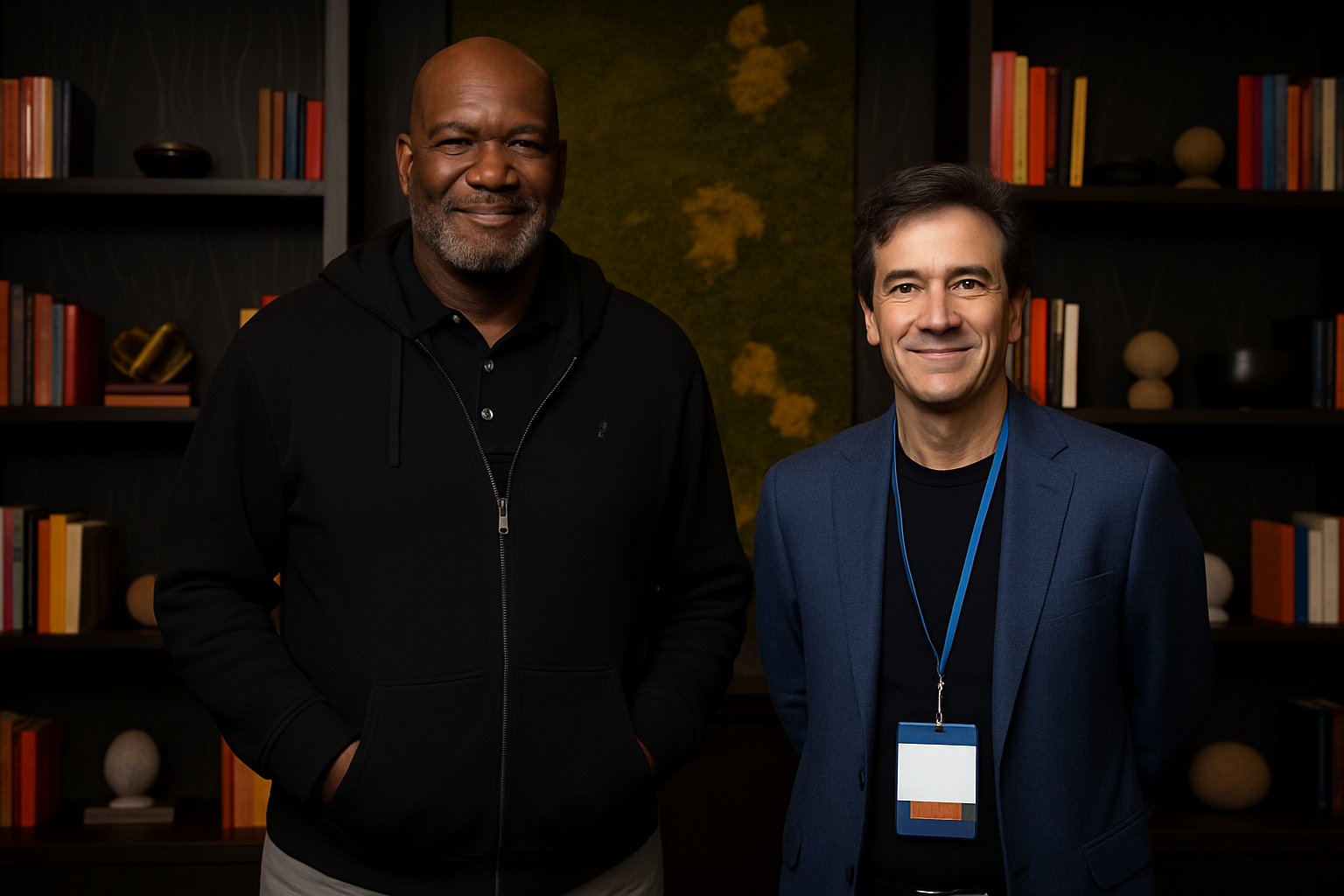
Most founders are renting their brand from the internet and calling it marketing. Shaquille O’Neal made more than $100 million by understanding the bit most people miss: the logo, the name and the trust are the asset — the ads are just the distribution.
That is the real marketing story this week. Not another breathless AI campaign. Not a new shiny platform promising frictionless reach. It is an old-school ownership lesson from a bloke who was smart enough to listen early, then disciplined enough not to sell out cheaply.
According to Fortune’s October 19 report, O’Neal and his first agent, Leonard Armato, agreed back in 1992 that Shaq would own his name and logo, while companies would pay to use them to build his profile. Later, Shaq sold part of that intellectual property for more than $100 million, according to Armato’s new book. The Dunkman logo has appeared on more than 400 million pairs of affordable shoes.
Read that again: 400 million pairs.
Not because Shaq discovered some revolutionary advertising trick. Because he owned the bit that travelled.
Shaq understood the difference between fame and property
Plenty of athletes become famous. Plenty of founders become visible. Plenty of creators rack up followers, do sponsorships, and convince themselves they have a “personal brand.”
Most of them have a job with better lighting.
A brand becomes valuable when it can keep earning after the original deal, employer, platform or product changes. That requires ownership. Shaq’s agent saw the trap in the usual model: a big company funds the marketing, controls the asset, and walks away with the long-term upside. Nike owned Michael Jordan’s Jumpman logo. Armato wanted Shaq to hold his own equivalent.
That decision mattered when Reebok, which Shaq chose over Nike, stopped supporting the footwear marketing after two years. Its apparent theory was that big men did not sell shoes. Fine. Reebok could pull the ad budget. Shaq still had Dunkman.
That is the sort of asymmetry I like. A partner can stop spending. A platform can change an algorithm. A retailer can delist you. None of them should be able to take the thing customers actually remember.
Founders get this backwards constantly. They hand their customer relationship to Amazon, their audience to Instagram, their reputation to a celebrity ambassador, and their creative files to an agency. Then they call it growth when the numbers jump for a quarter.
It is not growth if someone else owns the tap.
The $100 million result was built on a very unsexy rule
O’Neal’s best marketing lesson is not “be everywhere.” It is: only attach your name to things that make sense.
He told Fortune he turned down Wheaties because he did not eat Wheaties. He chose The General because, as a college student buying his first car, it was the insurer he could afford. His stated positioning is affordability, not luxury theatre. He also said he has renewed with Icy Hot 19 times.
That last number is the one operators should care about.
Nineteen renewals beats one massive launch cheque. Every time.
The amateur marketer obsesses over the first deal: the campaign announcement, the celebrity, the launch party, the reach screenshot. The professional asks a far more boring and far more profitable question: Will this still work well enough that both sides want to renew?
A renewal is a market verdict. It says the product fit, the audience fit, the economics and the relationship survived contact with reality.
This is why the flashy brand partnership that gives you a bump but confuses your customer is a bad deal. And why a modest partnership that reinforces exactly what buyers already believe about you can compound for years.
Shaq’s public image — huge, funny, accessible, not too precious — fits low-cost shoes, pain relief and practical insurance better than it fits some luxury fantasy. That coherence is not accidental. It makes the endorsement believable, which makes it repeatable.
You do not need to be famous to apply this. In fact, fame can make it harder because people start paying you to be incoherent.
Attention is moving faster. Ownership matters more because of it.
The timing here matters. Fortune reported earlier this month that social media had overtaken paid search as the world’s largest advertising channel by spend. WARC forecasts global advertising spend will rise 9.1% to $1.3 trillion in 2026, with nearly 80% concentrated in retail media, paid search and social platforms. Linear TV’s share, by contrast, was projected to fall from 41.3% of global ad spend in 2013 to 12.4% in 2025.
So yes, your customer’s attention is increasingly fragmented, fast-moving and rented from someone else.
That does not mean your answer is to spray more rubbish across TikTok, paid search and retail media. It means you need a clearer asset underneath the content machine.
A platform can deliver impressions. It cannot tell you what your brand should mean.
A creator can borrow you trust. They cannot build a durable category position for you if you have no clue what you stand for.
And an agency can produce 50 billion views — as the social-first agency Get Engaged says it has done for clients including Perplexity and Universal Music — but views are still not an asset unless they lead people back to something you control: a customer list, a repeatable promise, a distinctive product, a name people search for directly, or intellectual property with legal and commercial value.
The marketing world loves mistaking distribution for brand building because distribution has dashboards. Ownership is slower, harder and more annoying to measure in a Friday meeting.
It is also where the money is.
The overlooked angle: Shaq did not protect scarcity. He protected usefulness.
Here is the contrarian bit. Brand people often hear “protect the brand” and immediately become snobs. They raise prices, restrict access, make the packaging more minimalist and act as though ordinary customers are somehow bad for the aura.
Shaq’s Dunkman logo ended up on hundreds of millions of affordable shoes. His explanation for The General was affordability. That is not dilution. It is a decision about who the brand serves.
The lesson is not to be everywhere. The lesson is to be useful to a defined group of people, repeatedly, without pretending to be something you are not.
There is a massive difference between broad and blurry.
Broad is a clear promise reaching lots of the right people. Blurry is taking every cheque, saying yes to every channel, and hoping frequency becomes meaning.
Shaq could sell lots of things because the core idea stayed simple: large personality, practical value, family-friendly humour, no fake aristocrat nonsense. That is a brand architecture. Most businesses have a mood board instead.
What this means for you
Here is what I would do tomorrow if I were running your marketing.
First, write down the three assets you actually own. Not your followers. Not your ad account. I mean your trademarks, customer data, proprietary product advantage, distinctive visual cues, email list, community, or intellectual property. If the list is embarrassingly short, good. At least you have found the problem.
Second, audit every partnership and channel with one brutal question: if this disappeared next month, what would customers still remember about us? If the answer is “the influencer” or “that viral video,” you are funding someone else’s brand.
Third, choose a promise you can renew. Do not ask whether a campaign gets attention. Ask whether the same message could run 19 times without becoming a lie. If it cannot, the underlying positioning is flimsy.
Fourth, make your partnerships prove product fit. Shaq’s Wheaties rule is useful: if you do not use it, do not pretend. Customers are not idiots, and the internet has made fake enthusiasm a very expensive habit.
Finally, stop treating brand as decoration applied after the real business work is done. Brand is the commercial asset that lets you charge, retain, expand and survive when a channel, retailer or partner changes the rules.
Shaq did not win because he appeared in heaps of ads. He won because he made sure the ads built Shaq’s property, not just somebody else’s quarterly sales.
That is the standard. Build the thing people remember. Own it. Then let everyone else help you distribute it.