Silgan’s $3.4B Trivium Deal Is a $225M Synergy Bet With Teeth
Most “strategic” acquisitions are expensive excuses for executives to feel busy. Silgan is betting $3.4 billion that it can squeeze $225 million from Trivium without smashing the machine it just bought.
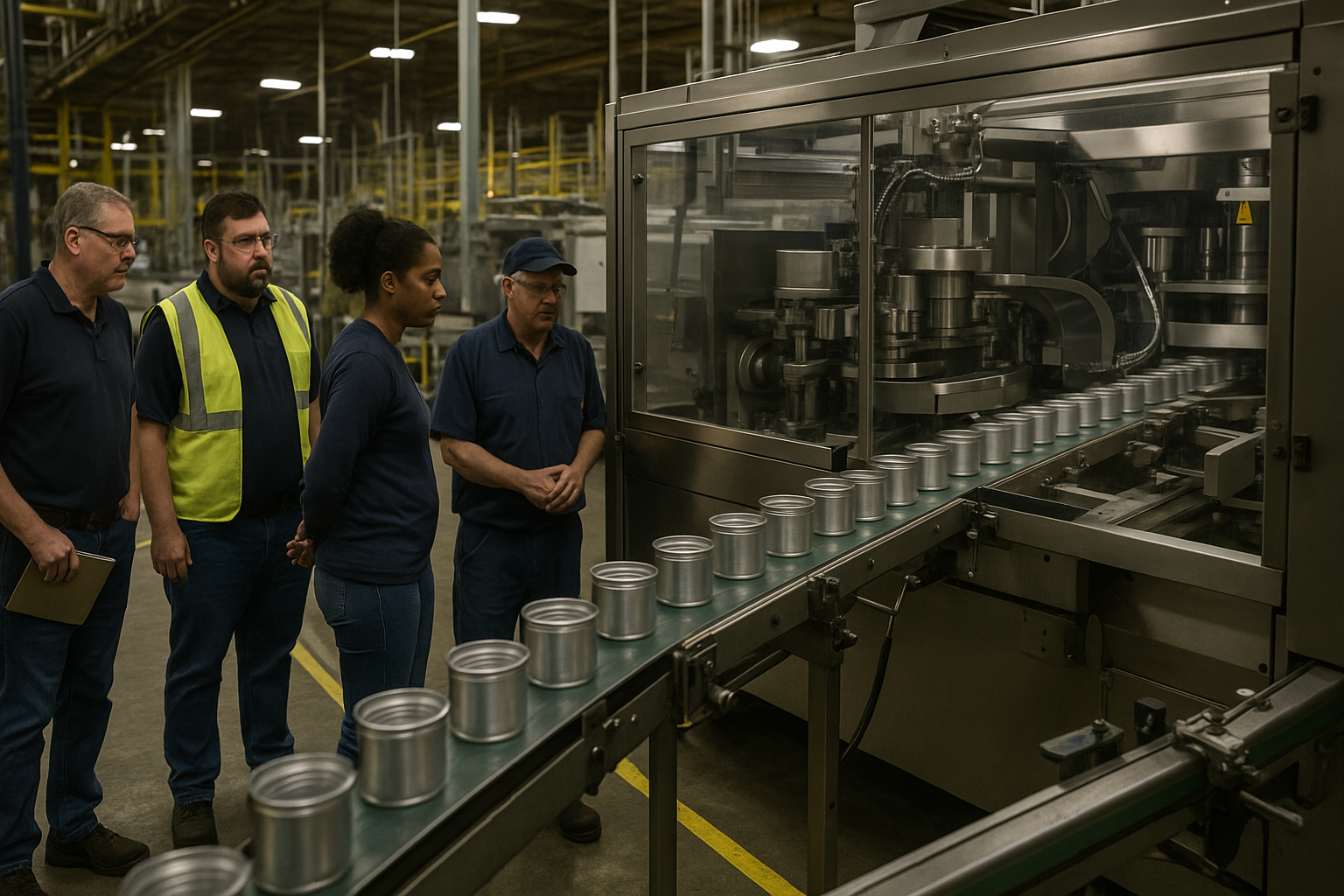
This isn’t a $3.4 billion packaging deal. It’s a public test of whether management can turn a spreadsheet full of “synergies” into actual cash without wrecking customer service, factories or morale.
Silgan Holdings announced on October 19, 2026 that it will partner with American Industrial Partners to acquire Trivium Packaging in an all-cash transaction valued at approximately $3.4 billion. But here’s the important bit: Silgan is not simply buying another business and adding more cans to the pile. It is reshaping itself around a new metal-packaging platform, taking $2.3 billion in cash while retaining 60% ownership of the combined operation.
That is clever dealmaking if it works. If it doesn’t, it is an impressively complicated way to discover that integration is harder than PowerPoint.
It is one of the more revealing M&A moves in the market. The terms are clear enough to judge the execution, not just admire the announcement. Not because the companies are household names. Because it shows how serious operators are using partnerships, carve-outs and balance-sheet engineering to buy scale without betting the whole farm.
Silgan Is Buying Trivium — But Selling Part of Its Own Story Too
The mechanics matter.
Silgan will contribute its Metal Containers segment and food-and-beverage flat-closures business into a newly created unit called Silgan Metal Containers and Closures, or Silgan MCC. That business will then acquire Trivium. Funds affiliated with American Industrial Partners, an industrial-focused private-equity firm with roughly $18 billion of assets under management, will invest about $1 billion in cash and own 40% of Silgan MCC. Silgan will own the remaining 60% and continue consolidating the business financially.
Silgan says the deal creates a $7.3 billion global metal-packaging business. The company expects $225 million in annual synergies by the end of year three, with roughly $75 million expected in year one and $150 million in year two. It says the transaction should deliver at least 15% adjusted EPS accretion once the expected full run-rate synergies are included.
Those are big promises. They also explain why the deal exists.
Trivium generated $3 billion in revenue in 2025 and serves more than 800 customers globally. It makes recyclable metal packaging including food cans and aerosol containers across categories from food and pet nutrition to beauty and personal care. Silgan brings its own container and closure operations to the party. On paper, the fit is obvious: overlapping procurement, plants, customers, logistics and back-office costs.
On paper, every acquisition is a genius.
The hard part is that savings do not appear because a banker writes “procurement optimisation” on slide 17. They come from renegotiating supplier contracts, moving production, consolidating systems, reducing duplicated overhead, rationalising capacity and making thousands of small operational decisions faster and better than competitors can. Each one has a cost. Each one has people attached to it. And some of them annoy customers who can take their business elsewhere.
Why the $225 Million Number Is Both the Opportunity and the Risk
Silgan is effectively valuing Trivium at 7.1 times last-twelve-month adjusted EBITDA through June 2026. Including the expected synergies, it says the multiple falls to 4.8 times.
That distinction should make every founder, investor and operator sit up.
The 7.1-times number is what Silgan is actually paying for the business as it exists. The 4.8-times figure is what it hopes it is paying after extracting $225 million of synergies. One is a fact of the deal. The other is a management forecast.
That does not make the forecast rubbish. Silgan has a long operating history in packaging, and this is exactly the sort of boring, repeatable industrial environment where scale can genuinely create savings. Metal is bought in bulk. Transport routes can be redesigned. Plants can be loaded more efficiently. Corporate overhead can be cleaned up. Procurement is not sexy, but it is where fortunes are made in mature industries.
Still, the gap between “identified” savings and banked savings is where many deals go to die.
The danger is particularly sharp in packaging because customers care about reliability more than corporate ambition. A food producer, personal-care brand or beverage company does not want an inspirational supplier. It wants the right packaging, to specification, on time, every time. If a cost program disrupts lead times or quality, a customer will not applaud your synergy target. They will find another supplier.
That is why I like the basic structure of this deal more than I like the headline financial theatre around it. American Industrial Partners is putting in capital and taking 40% of the new metal-packaging platform. Silgan keeps control, but it is not carrying every dollar of execution risk alone. The partnership gives Silgan cash now, preserves majority ownership and leaves it with upside if the combined business performs.
That is a far more grown-up approach than loading the parent company with debt, buying the target outright and hoping the integration gods are in a good mood.
The Real Deal Is a Portfolio Split
The overlooked part of this transaction is that Silgan is not merely getting bigger. It is separating two different strategic problems.
The new Silgan MCC will focus on metal containers and closures, where scale, factory utilisation and purchasing power are central to the game. Meanwhile, Silgan’s dispensing and specialty closures business, plus its custom-containers operation, remain wholly owned in a separate Dispensing Solutions segment.
Silgan says the structure gives it a pathway to eventually distribute the two entities in a tax-free transaction. That is not a promise that a separation will happen. It is a statement that management wants options.
Options are valuable when you run a big company. One business may deserve heavy investment, industrial partners and a different capital structure. Another may grow faster, need less debt or earn a better market multiple as a stand-alone operation. Jamming everything under one corporate roof can make reporting neat, but it often makes capital allocation lazy.
This is the bit smaller operators should steal: do not ask only whether an acquisition adds revenue. Ask whether it makes the combined business easier to run, easier to finance and easier to explain.
Too many founders buy things because they can. A competitor is available. A distributor has a cheap price. A software tool looks strategic. Then they spend three years managing a messy collection of businesses with no clear operating logic.
Silgan’s approach is at least coherent. The metal-packaging assets go together. The financial partner has industrial expertise. The parent gets liquidity. The company retains control. And the two resulting platforms can be judged on their own merits.
That is what a proper deal thesis looks like: simple enough to explain in one sentence, detailed enough to survive contact with reality.
Don’t Mistake Recyclable for Automatically Profitable
There is another fashionable angle here: metal packaging is recyclable, and recyclable packaging is in demand. Fine. But “sustainable” is not a business model. Plenty of companies have learned that the hard way.
Recyclability can strengthen the long-term case for metal over less recyclable alternatives. It may matter to consumer brands under pressure from customers, regulators and retailers. But it does not protect a supplier from commodity-price swings, energy costs, plant underutilisation, customer concentration or dumb capital allocation.
What makes this deal interesting is not that cans and containers are virtuous. It is that the buyers are trying to build enough scale to make a low-glamour industrial category more resilient and more profitable.
There is a beverage lesson in that, and I see versions of it while building Agave Finder. Spirits brands obsess over liquid, labels and launches — rightly — but the supposedly boring infrastructure around the bottle matters just as much. Closures, packaging availability, distribution data and supplier reliability can decide whether a brand scales smoothly or spends its best years apologising for stock-outs.
Consumers notice the fancy bottle. Operators should notice who can reliably make and deliver it.
What This Means for You
If you are a founder, do not use “synergy” as a polite word for “we have not worked out the plan yet.” Before buying anything, list the savings or revenue gains by owner, date, customer risk and upfront cost. If you cannot point to the person accountable for each benefit, it is not a synergy. It is wishful thinking.
If you are an investor, separate the deal price from the deal fantasy. Silgan is paying 7.1 times adjusted EBITDA for Trivium before synergies, not 4.8 times. The lower number only arrives if management delivers $225 million of annual savings. Watch the quarterly evidence: procurement wins, plant performance, cash conversion, customer retention and debt reduction. Ignore celebratory adjectives.
If you are an operator, study the structure. Silgan did not need to own 100% of everything to control the outcome. It brought in a partner, took cash off the table and kept majority ownership. You can apply the same thinking at a smaller scale: joint ventures, minority growth capital, asset partnerships and selective divestments can beat an all-or-nothing bet.
And if you are tempted to dismiss packaging as boring, good. Boring is where serious money often hides. The loudest businesses get attention. The businesses that deliver an essential product, every day, with better economics than the bloke next door get paid.
Silgan now has until mid-2027, when the transaction is expected to close subject to approvals and consultation requirements, to prove that its $225 million synergy claim is more than dealmaker perfume. That is the whole game.