SK Hynix’s $150B Solidigm IPO Is AI’s Next Reality Check
A business bought out of Intel’s NAND division for about $9 billion could now chase a $150 billion valuation. That is either brilliant value creation or the AI trade starting to drink its own bathwater.
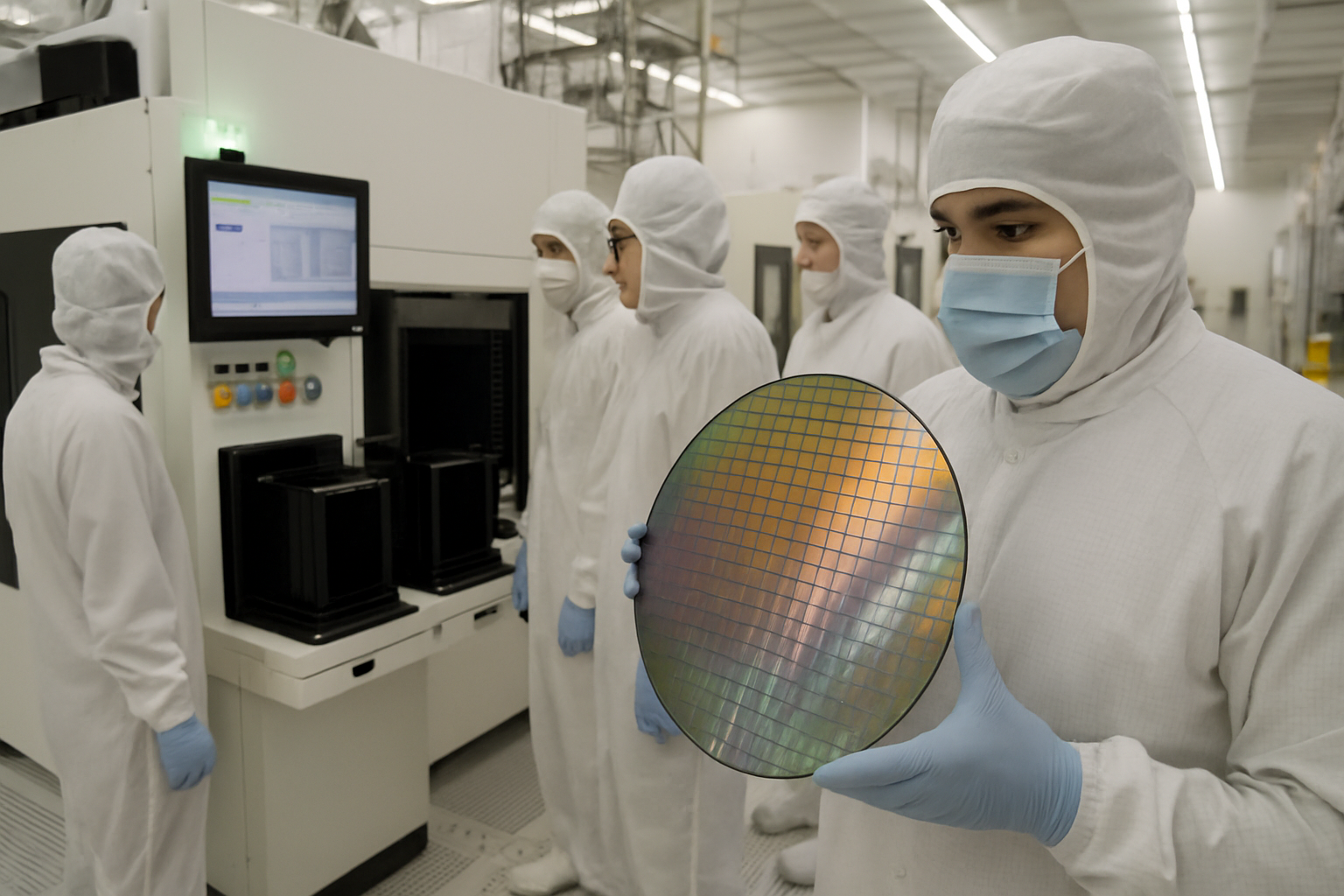
A business built from Intel’s old NAND and SSD operation for about $9 billion could now be floated at up to $150 billion.
That is not a typo. It is also not automatically genius. It is exactly the sort of number that makes sensible operators stop what they are doing, put the drink down and ask the only question that matters: what has genuinely changed in the business—and what has merely become fashionable to believe?
Reuters reported on September 25 that SK Hynix is weighing a US listing for its US-based subsidiary Solidigm as early as next year, potentially seeking a valuation of up to $150 billion and raising about $15 billion. The company has reportedly begun meeting banks for an IPO mandate—the famous Wall Street “bake-off.” Nothing is priced, nothing is filed and nothing is guaranteed. But the signal is loud enough: the AI infrastructure gold rush is looking for its next monster listing. ([streetinsider.com](https://www.streetinsider.com/Reuters/Exclusive-SK%2BHynixs%2BSolidigm%2Bweighs%2BIPO%2Bthat%2Bcould%2Bvalue%2Bthe%C2%A0unit%2Bat%2Bup%2Bto%2B%24150%2Bbillion%2C%2Bsources%2Bsay/27106117.html?utm_source=openai))
Solidigm is not selling software dreams
This is where the story gets interesting.
Solidigm sells data-centre storage. Not a chatbot. Not a prompt wrapper with a bloke in a black turtleneck explaining the future. Storage.
Its solid-state drives sit underneath the AI stack, where data is stored, moved and retrieved. That sounds dull until you remember the uncomfortable truth of artificial intelligence: the expensive GPUs everyone is fighting over are useless when the data pipeline is slow, inefficient or energy-hungry.
Solidigm pitches its products squarely at data centres, enterprise deployments, edge AI and what it calls AI factories. Its current portfolio includes a 122TB PCIe SSD, while the company argues that higher-density storage can cut power consumption, physical footprint and wasted GPU time. That is real operating leverage for a data-centre customer, not merely a slide deck promise. ([solidigm.com](https://www.solidigm.com/?utm_source=openai))
SK Hynix created Solidigm after acquiring Intel’s NAND and SSD business. The first phase of that transaction closed in late 2021 for $6.6 billion, including the Dalian manufacturing facility, IP and employees; Intel received a final $1.9 billion payment in 2025 as the deal was completed. Solidigm remains an independent US-based SK Hynix subsidiary. ([links.sgx.com](https://links.sgx.com/FileOpen/SK%20hynix%20Inc._2025%20-%20Final%20Offering%20Circular%20%289.4.25%29.ashx?App=Prospectus&FileID=67332&utm_source=openai))
So, yes, there is a serious asset underneath this potential IPO. This is not a business that emerged from a co-working space 14 months ago and suddenly discovered “AI” in the company name.
But $150 billion is not a compliment. It is a burden.
The number that changes the whole conversation
At a $150 billion valuation, Solidigm would not simply be a successful carve-out. It would become one of the defining public-market tests of the AI infrastructure boom.
Reuters reported that the IPO could raise $15 billion and potentially become the biggest-ever US semiconductor listing. That matters because a float of that size does not get sold to retail punters buying three shares on an app. It needs the world’s biggest funds to believe they are buying years of durable earnings power, not a one-cycle memory spike wearing an AI costume. ([streetinsider.com](https://www.streetinsider.com/Reuters/Exclusive-SK%2BHynixs%2BSolidigm%2Bweighs%2BIPO%2Bthat%2Bcould%2Bvalue%2Bthe%C2%A0unit%2Bat%2Bup%2Bto%2B%24150%2Bbillion%2C%2Bsources%2Bsay/27106117.html?utm_source=openai))
Here is the part investors should not ignore: memory and storage are not software. They are capital-intensive, cyclical and brutally competitive businesses. Demand can be extraordinary right up until it is not. Supply additions take time, then arrive together. Pricing gets strong, management teams convince themselves the good times are structural, everyone expands—and eventually somebody finds out that spreadsheets do not absorb excess inventory.
I have seen versions of this movie in plenty of industries. A great business in a hot market becomes an “inevitable” business. Then the market turns, margins get smacked, and the people who paid top dollar learn the difference between owning a good company and owning a good company at a stupid price.
The AI angle may make this cycle longer and bigger. It does not repeal the laws of supply, competition or customer concentration.
Why SK Hynix might be smart to sell now
Let’s give SK Hynix credit: if markets are willing to value AI infrastructure at a premium, separating Solidigm could be a sharp bit of capital allocation.
A standalone listing could give Solidigm its own acquisition currency, its own investor base and a cleaner story for US customers and policymakers. It could also let SK Hynix keep strategic influence while crystallising value in a business the market may value more richly on its own than inside a broader memory-chip group.
That is how serious parent companies think. They do not wait for the market to perfectly understand every division. They ask whether the pieces are worth more apart, whether they need fresh capital, and whether the current market window is too attractive to waste.
The timing is hardly subtle. AI data-centre spending has turned every bottleneck into a strategic asset: chips, power, cooling, networking, land, fibre and now storage. Solidigm is positioned in the less glamorous bit of the stack, which is often where the proper money gets made. The bloke selling shovels did not need to find gold.
There is another strategic benefit. A US-listed Solidigm could put a distinctly American wrapper around a business serving US data-centre demand, while SK Hynix retains exposure to its upside. In semiconductors, geography and political optics are no longer side issues. They are part of the deal thesis.
The overlooked risk: AI spending is not the same as AI profits
The lazy bull case is simple: AI needs more data, more data needs more storage, therefore Solidigm deserves whatever multiple bankers can get away with.
That is how people lose money.
AI spending is exploding because the largest technology companies are racing each other. But a customer spending billions today does not prove its own customers will generate enough return tomorrow. If the economics at the top of the stack weaken, the capex cascade runs downhill quickly. GPU orders get reviewed. Data-centre builds get delayed. Storage suppliers feel it.
Solidigm may have excellent products. Its high-capacity drives may genuinely improve a customer’s cost base. Both can be true while the IPO is still overpriced.
There is also an awkward valuation comparison nobody should dodge. A $150 billion target valuation is roughly 16.7 times the original approximate $9 billion transaction value for Intel’s NAND business. That is a staggering uplift in a relatively short period. Some of it can be earned through better execution, stronger product positioning and a dramatic change in the AI market. Some of it will plainly be the market placing a premium on anything connected to data-centre infrastructure. ([streetinsider.com](https://www.streetinsider.com/Reuters/Exclusive-SK%2BHynixs%2BSolidigm%2Bweighs%2BIPO%2Bthat%2Bcould%2Bvalue%2Bthe%C2%A0unit%2Bat%2Bup%2Bto%2B%24150%2Bbillion%2C%2Bsources%2Bsay/27106117.html?utm_source=openai))
Those are not the same thing, and founders should learn to separate them.
The contrarian take: boring infrastructure may be the better bet
Everyone wants to own the company with the dazzling model, the celebrity founder or the GPU-shaped chart. Fair enough. It is more exciting at dinner.
But the more interesting long-term businesses are often the ones that make the whole machine work cheaper, denser and more reliably. Storage is unsexy until you run out of it. Cooling is boring until a rack overheats. Power is forgettable until you cannot get enough of it.
That is why Solidigm is worth watching even if you would not touch an IPO at its first price. It is a reminder that the AI economy will create value well beyond the firms people name in headlines. The physical and operational plumbing matters.
For operators, there is a useful lesson here. Do not automatically build the flashy thing. Find the constraint. Then solve it better than everyone else.
The most valuable position in a boom is often not at the centre of the hype. It is one layer underneath it, charging everyone else for the infrastructure they cannot operate without.
What this means for you
If you are a founder, do not copy Solidigm’s proposed valuation. Copy the strategic logic.
First, build around a painful, recurring constraint. Customers pay properly for reduced cost, better uptime, faster delivery or less complexity. They do not pay properly for “innovation” unless it changes one of those things.
Second, know whether your growth is structural or cyclical. If one major customer, one commodity price or one fashion trend disappeared for 12 months, would the business still stand up? If the answer is no, price that risk into every hiring and capital decision now—not after the music stops.
Third, when markets offer you an absurdly good funding or exit window, do not get cute. Take enough money off the table to make sensible decisions later. The winners of a cycle are not always the people who believed the story hardest. They are usually the people who understood when they were being offered a price too good to refuse.
And if you are an investor, keep this rule close: a great asset can still be a terrible buy at the wrong valuation. Solidigm may become a cracking public company. A $150 billion IPO valuation would still need to earn its keep every quarter, in an industry with very little mercy for missed forecasts.
That is the real test ahead—not whether Wall Street can launch the float, but whether the business can justify the number once the AI party stops shouting and the invoices start arriving.