SkyCity Rejects Oaktree’s NZ$772M Bid: Why Cheap Companies Aren’t Bargains
A 44.2% EBITDA collapse does not automatically make a company cheap. SkyCity just proved that when it rejected Oaktree’s NZ$772 million bid.
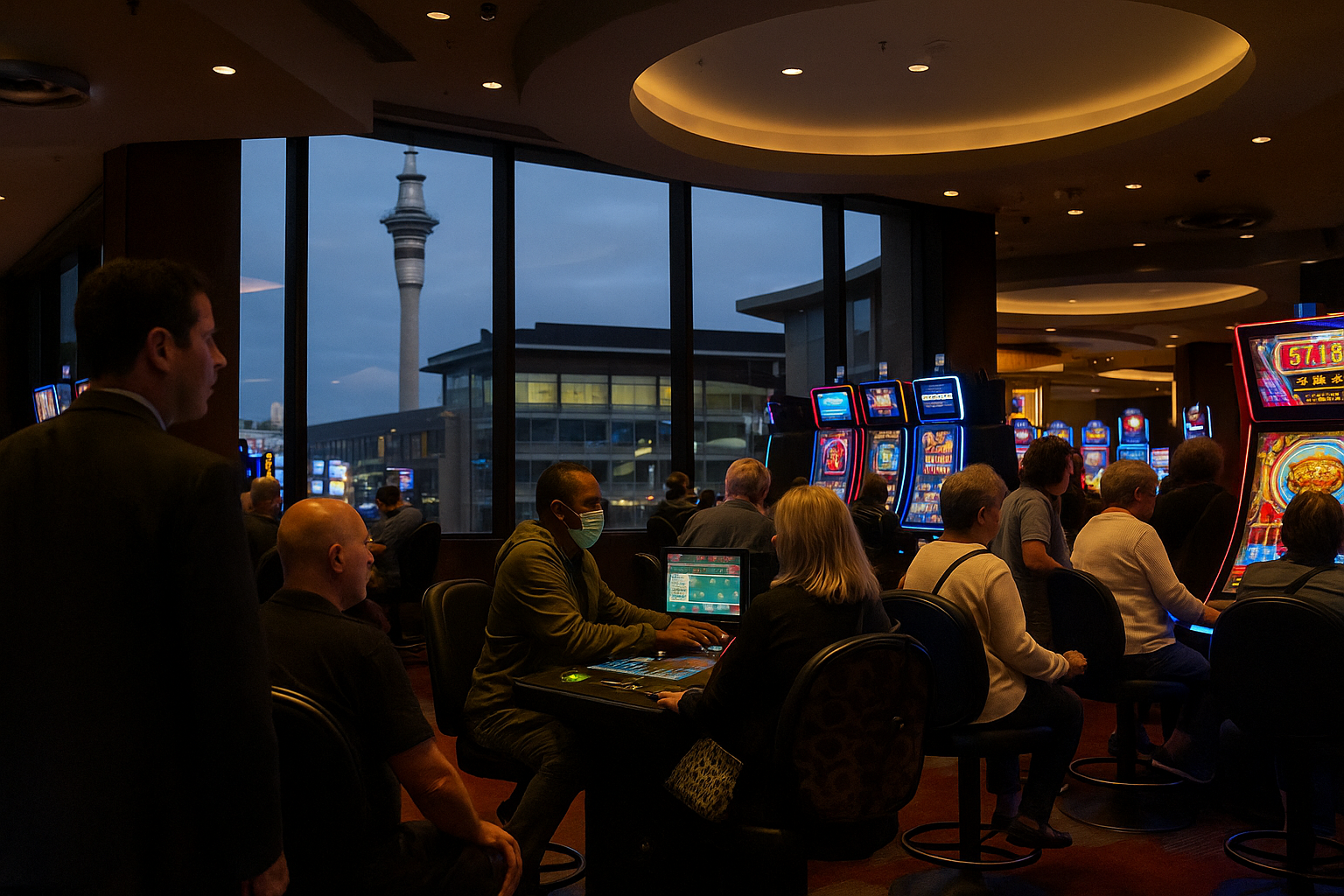
SkyCity’s EBITDA fell 44.2% and its net profit fell 37.6%—then the board rejected a NZ$772 million cash bid from Oaktree.
Most people will see that and say the board is dreaming. I see something more useful: a company refusing to sell its future just because its recent past looks ugly.
That does not mean SkyCity is a great business. It means the gap between a battered share price and the real value of an asset-heavy business can be enormous—and buyers know it.
The deal on the table was not a deal worth taking
SkyCity Entertainment Group disclosed on 25 August that it had received two unsolicited, conditional and non-binding takeover approaches in May. One came from a special situations fund managed by Oaktree Capital Management: NZ$0.70 cash per share, valuing SkyCity’s equity at roughly NZ$772 million.
A second, unnamed bidder offered an implied NZ$0.75 per share, or about NZ$827 million.
Both were rejected unanimously.
Now, a headline like “company rejects takeover bids” often gets dressed up as corporate theatre. Sometimes it is. Boards protect their jobs, advisers collect fees, and everyone pretends a lowball proposal is a moral insult.
But the terms matter here.
SkyCity said the approaches required at least eight weeks of due diligence, financing arrangements, board and shareholder support, regulatory approvals and internal buyer approvals. They also sought exclusivity, wanted SkyCity to retain its existing debt facilities, and would have restricted the company from entering binding asset-sale agreements.
That last bit is the kicker.
SkyCity is in the middle of an asset-monetisation program. It has unconditional sales of its 99 Albert Street and Victoria Street properties worth NZ$74.5 million, a non-binding agreement to sell Auckland’s Grand Hotel, and a stated target of NZ$275 million to NZ$300 million in gross proceeds from the program.
In plain English: the bidders wanted the right to poke around the engine bay while telling SkyCity not to sell parts, not to change the balance sheet, and not to do anything that might improve its negotiating position.
That is not a clean bid. That is an option disguised as a proposal.
Why Oaktree was interested after the numbers got ugly
SkyCity’s financial year to 30 June 2026 was rough. Group EBITDA dropped to NZ$120.5 million. Net profit after tax landed at NZ$18.2 million. Revenue actually rose 6.5% to NZ$878.9 million, which tells you the issue was not simply that customers vanished.
The problem was that the cash machine became more expensive and less efficient.
Mandatory carded play across its New Zealand casinos hurt gaming revenue and had a reported NZ$20 million to NZ$30 million negative impact on EBITDA. Premium play weakened. Visitation softened. SkyCity also wore higher labour, compliance and convention-centre costs, while continuing regulatory remediation work in Adelaide.
That is the kind of earnings mess that makes public-market investors run for the exits and special-situations buyers sharpen their pencils.
Oaktree does not need a company to look pretty. It needs the market to be excessively pessimistic relative to what can be fixed, sold, refinanced or operated better.
SkyCity has casinos, hotels, the Sky Tower, property assets, an Auckland convention centre, an Adelaide operation under review, and potential exposure to a regulated New Zealand online-gambling market. None of that makes the business risk-free. But it does make it much harder to value from one ugly year of earnings.
That is exactly why distressed and special-situations capital turns up when everyone else is having a sulk.
The board’s real job is not to reject bids. It is to create leverage.
Here is the part founders and operators should steal.
SkyCity did not merely say no. It said it was willing to engage further and provide due-diligence information if a revised proposal addressed the valuation and condition problems. Neither bidder came back with a better offer.
That is disciplined behaviour.
A weak board says yes because a credible name appears with a cheque book. An arrogant board says no because it believes its own investor deck. A good board understands the difference between price, certainty, and control of the process.
Oaktree’s NZ$0.70 proposal was cash. Cash is real. But a nominal cash price is not the whole value of a bid when it comes with exclusivity, financing uncertainty, a long due-diligence period and restrictions on the seller’s ability to improve itself.
I have seen founders get this wrong in both directions. They accept a flattering number from a buyer who then tries to retrade every clause. Or they reject a serious buyer because they are emotionally attached to a valuation they once put in a pitch deck.
Neither is sophisticated. The question is always: what is the buyer actually committing to, what are they getting in return, and what does saying yes stop you from doing?
SkyCity’s board decided the answer was not good enough. Fair enough.
The overlooked angle: regulation has become part of the operating model
People still talk about regulation as though it is an annoying externality. A compliance cost. A legal department problem. Something that sits in a drawer until it ruins your Thursday.
That is old thinking.
For SkyCity, regulation is now part of the product, the cost base, the customer journey and the valuation. Mandatory carded play changed gaming behaviour. Adelaide’s remediation has required money and management attention. The company recently agreed in principle to pay A$21 million to resolve outstanding regulatory matters with South Australia’s Liquor and Gambling Commissioner; total penalties imposed on Adelaide Casino reached A$88 million, according to reporting on the settlement.
Whether you run a casino, a fintech company, a marketplace, a health business or a spirits platform, the lesson is the same: if regulation can alter how customers transact, it is not a compliance footnote. It is core strategy.
Build around that early and you may look slower than rivals for a while. Ignore it and you may eventually become cheap enough for someone else to buy.
Do not confuse a turnaround with an acquisition thesis
SkyCity says its operating reset is targeting NZ$30 million in annualised benefits in FY27 and total benefits of NZ$70 million in FY28. That is meaningful—but it is not money in the bank yet.
This is where investors get silly. A buyer appears, the share price jumps, and suddenly every punter with a brokerage account becomes an M&A expert.
A takeover approach is not proof that a deal will happen. It is proof that somebody has done enough work to think there may be value at a particular price and under particular terms.
Those are wildly different things.
The contrarian take is that the rejected bids may be more valuable to SkyCity than an accepted bid would have been. They force the board to articulate the standalone plan, give the market a visible reference point for what a sophisticated buyer considered worth pursuing, and put management under pressure to prove the business can earn its way out of the penalty box.
But there is no free lunch. Once the market knows there were buyers at NZ$0.70 and NZ$0.75, SkyCity now has to demonstrate why those prices were inadequate. Asset sales need to complete. Cost savings need to show up in cash flow. Compliance needs to become boring. Adelaide’s strategic review needs a sensible outcome.
That is the scoreboard.
What this means for you
If you are a founder, operator or investor, nick these four rules.
1. Never grant exclusivity before you know the buyer can close. Ask for proof of funding, a clear timetable, named decision-makers and a narrow diligence list. Exclusivity is valuable. Charge for it with certainty and price.
2. Separate the headline number from the actual deal. A NZ$0.75 offer with lousy conditions can be worse than a lower but fully financed, fast and clean proposal. Read the restrictions, not just the press release.
3. Improve your business before the buyer gets the benefit. If you have assets to sell, margins to repair or costs to cut, do not casually hand a bidder the upside from work you are already capable of doing yourself.
4. Treat compliance as commercial infrastructure. If a rule changes customer behaviour or your cost base, put it in the operating plan. Do not leave it for the lawyers to explain after your valuation has been smashed.
SkyCity may yet receive a better offer. It may not. That is beside the point.
The useful lesson is that the best time to negotiate a sale is not when you are desperate for one. It is when you have enough discipline to tell a buyer: bring a real price, bring real certainty, and do not ask me to stop improving the business while you decide whether you want it.