Snorkel AI’s $350M Round Proves AI’s Real Moat Is No Longer Code
If your AI startup’s moat is the model, you may be building a very expensive feature. Snorkel AI just raised $350M because the scarce asset is now the data that makes models useful.
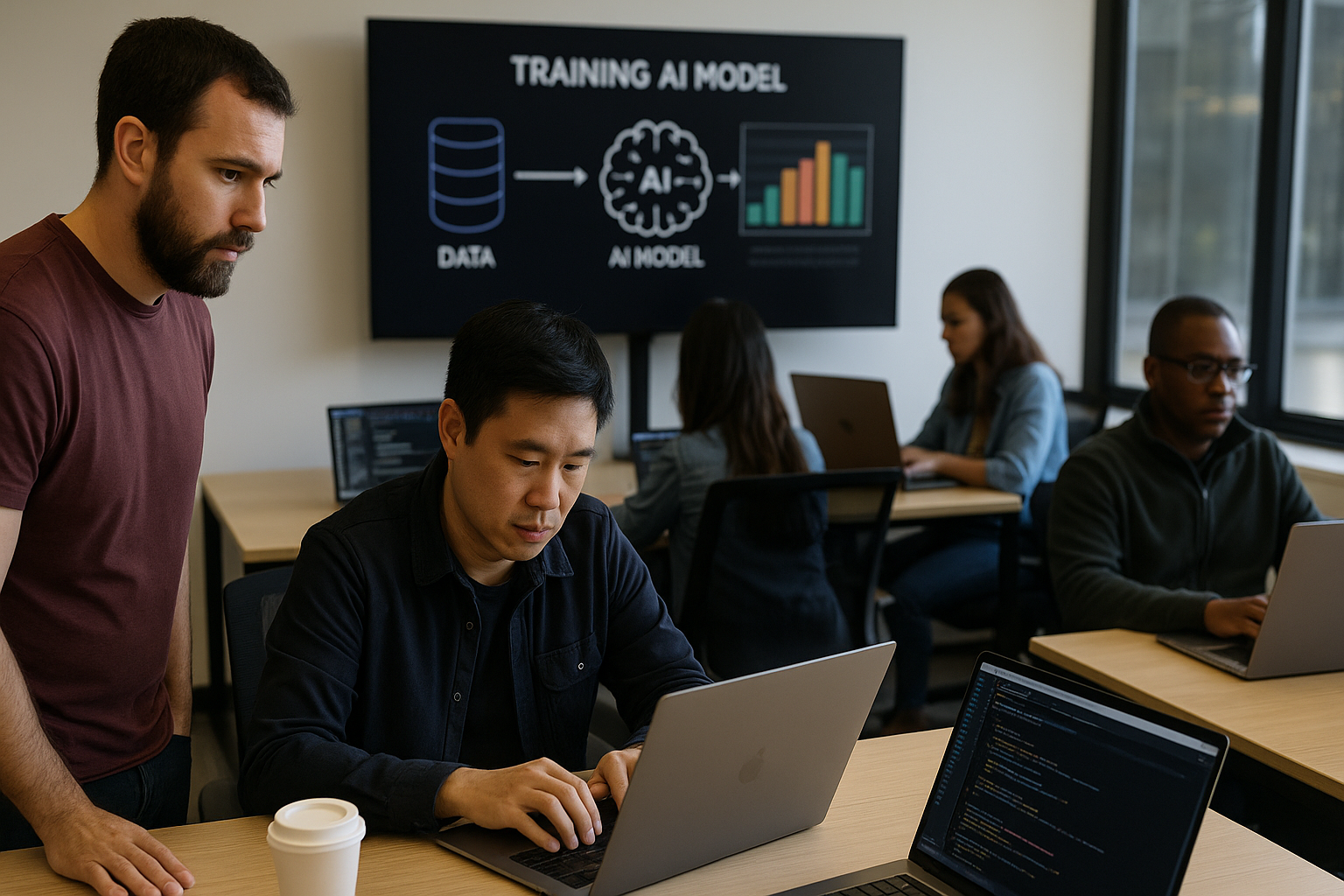
If your AI startup’s moat is the model, you may be building a very expensive feature.
Snorkel AI has just raised $350 million at a $3.5 billion valuation because the scarce asset in AI is no longer clever code. It is the hard, expensive, deeply unsexy work of creating the data, tests and simulated environments that make an AI system useful when the stakes are real.
That should make a lot of founders uncomfortable. Good. Comfort is usually where bad strategy goes to die.
Snorkel AI just put a $3.5 billion price tag on the plumbing
On September 22, Snorkel AI announced a $350 million Series E led by Insight Partners and S32. The round valued the San Francisco company at $3.5 billion, up from the $1.3 billion valuation attached to its $100 million raise in May 2025.
That is nearly a tripling of the valuation in roughly 16 months. More importantly, it comes with actual commercial momentum rather than the usual AI fog machine. Reuters reported that Snorkel’s annualised revenue run-rate had passed $350 million, up from roughly $20 million a year earlier. Snorkel itself says it crossed a $375 million run-rate this week and grew more than 18 times since launching its data-as-a-service offering nearly a year ago.
A run-rate is not audited full-year revenue, so don’t get carried away and start throwing confetti. But it is enough to explain why investors were prepared to write a very large cheque. At the company’s stated $375 million run-rate, the $3.5 billion valuation works out at roughly nine times annualised revenue. That is not cheap. It is also not absurd if the growth holds and the margins are real.
The investor list matters too: Third Point, March Capital, Blumberg Capital, Allegis Capital, Frontline, Standard VC and existing backers including Addition, Lightspeed, Greylock, GV, Factory, Prosperity7, Wells Fargo and Walden Catalyst participated.
This is not a tourist round. Serious money is making a serious bet that AI data has become strategic infrastructure.
The business changed when Snorkel stopped selling shovels
Snorkel began as a Stanford AI Lab spinout. Its early claim to fame was data-centric AI: helping businesses create better training data without manually labelling every last thing like it was 2012.
That was a solid software business. It was also not the business investors are paying up for now.
The sharper move was shifting into data-as-a-service. Instead of merely selling customers the tools to produce datasets, Snorkel now helps deliver the finished product: specialised datasets, evaluation systems, grading rubrics and reinforcement-learning environments for AI models.
That distinction sounds technical. It is commercial dynamite.
A customer can cancel a tool subscription, hire a few people and muddle through. It is much harder to replace a supplier that understands how to build a realistic environment in which an AI agent can practise a long, multi-step legal, medical or coding task — then assess whether the bloody thing actually got the answer right.
That is what Snorkel and its investors call “Data 2.0”. Ignore the branding for a second. The underlying point is sound: simple labelling work can be distributed to large contractor pools. Building difficult tasks, realistic operating environments and credible evaluation systems requires domain expertise, engineering and quality control.
In plain English: the model needs more than internet sludge. It needs hard tests.
AI’s next bottleneck is not compute alone
For the past few years, the loudest AI story has been chips, data centres and giant models. Fair enough. You cannot run frontier AI on good intentions and a MacBook.
But more computing power does not automatically make a model reliable enough to do valuable work. A model can write a convincing memo, then fail spectacularly when asked to use five tools, apply a company policy, interpret a contract and escalate a risky decision properly.
That is where specialised data and evaluation environments come in.
Snorkel says its platform combines human experts with specialised AI models and agents. Human specialists design scenarios, tasks and grading rubrics; automation does more of the quality-assurance grind. Reuters reported that the company draws on tens of thousands of specialists in areas including coding, law and medicine.
This is the real shift worth watching. The value is moving from “Can your model generate an answer?” to “Can you prove it performs reliably in a specific job?”
That second question is where budgets get serious.
If you are a frontier lab, a hyperscaler, a government agency or a large enterprise, getting this wrong is not merely embarrassing. It can mean bad financial decisions, broken software deployments, compliance failures or operational chaos. Paying a specialist provider to build better training and evaluation systems starts looking cheap very quickly.
Snorkel’s biggest demand area is coding data, according to Reuters. That tracks. Coding agents are commercially useful, easy to measure and brutally exposed when they fail. A slick demo can hide a lot. A production system that breaks your payments stack cannot.
The overlooked angle: this is a services business pretending to be software — and that is not automatically bad
Here is the contrarian bit.
Everyone loves software because software scales beautifully. Build once, sell many times, collect fat margins, buy a nicer boat. Services, by contrast, make investors nervous because revenue can rise only by adding people.
Snorkel sits right in the middle of that tension.
Its pitch is that it is not selling human hours. It is selling data products, using software and AI agents to make expert work more productive and quality assurance more efficient. If that works, it gets the pricing power and customer intimacy of a managed service without being trapped by the economics of a traditional consultancy.
That is a very attractive model.
It is also hard as hell to execute.
The risk is obvious: as work becomes more specialised, the company may need more expensive experts, more bespoke customer delivery and more hands-on oversight. If costs rise as quickly as revenue, the “AI data factory” becomes a labour business in a nice jacket.
Snorkel says it expects to reach profitability in 2026 while continuing to hire. That is the number I would watch now, not the headline valuation. Can it sustain growth while proving that automation improves gross margins rather than merely helping it keep up with delivery?
The other risk is customer concentration. Frontier AI labs can spend enormous amounts, but there are not thousands of them. A business that depends too heavily on a handful of very powerful buyers has less leverage than the valuation deck suggests.
Still, the company’s enterprise and government ambitions matter here. If Snorkel can turn its frontier-lab know-how into repeatable products for companies in regulated industries, it broadens the revenue base and strengthens the case that this is a platform, not a project shop.
Why founders should pay attention before they waste another year chasing features
There is a nasty lesson here for founders building AI products: intelligence is rapidly becoming cheaper; reliable workflows are not.
Plenty of teams are shipping thin wrappers around increasingly capable foundation models. Some will build good businesses. Many will discover that their “moat” is an API call, a polished landing page and a sales deck full of words like agentic.
The durable value sits closer to the messy truth of the customer’s work.
That can mean proprietary operational data. It can mean a workflow embedded so deeply that switching is painful. It can mean an evaluation system that captures what “good” actually looks like in a niche industry. It can mean a trusted distribution channel. Usually, it means all four.
Snorkel’s raise is a reminder that the picks-and-shovels metaphor is too simplistic. The winners are not always selling the shovel. Sometimes they are selling the map, the safety manual, the trained operator and the test that tells you whether the hole you dug is about to collapse.
Not sexy. Very valuable.
What this means for you
If you are a founder, stop saying your product gets better with more data unless you can answer three questions tomorrow morning:
1. What data improves the product in a way competitors cannot easily copy? “More user data” is not an answer. Be precise: transaction outcomes, expert feedback, workflow decisions, failure cases or proprietary benchmarks.
2. How do you know the product is improving? Build an evaluation set before you build another feature. Pick 50 to 100 real tasks that matter to customers. Score performance every week. If you cannot measure reliability, you are managing a magic show.
3. Does your margin improve as volume grows? If every new customer requires a room full of specialists, call it a service and price it properly. There is no shame in services. There is shame in pretending a labour-heavy business has software economics.
If you are an investor, be more suspicious of model demos and more curious about the data loop. Ask what happens after the initial model is deployed. Who supplies the feedback? Who designs the edge cases? Who owns the evaluation layer? That is where the real defensibility may be hiding.
And if you are an operator buying AI, do not buy a chatbot because it gives a good demo. Buy a system only after you have defined the work it must do, the failure modes you will not tolerate and the test it has to pass.
Snorkel AI’s $350 million round is not just another oversized AI cheque. It is a warning label for the whole market.
The easy part of AI is getting an answer.
The valuable part is making sure the answer is right when it counts.