SoftBank’s $6B 1X Bet on Humanoid Robots
$6 billion for a humanoid-robot company that has not proved it belongs in homes. SoftBank is reportedly chasing control of physical AI, not another flashy demo.
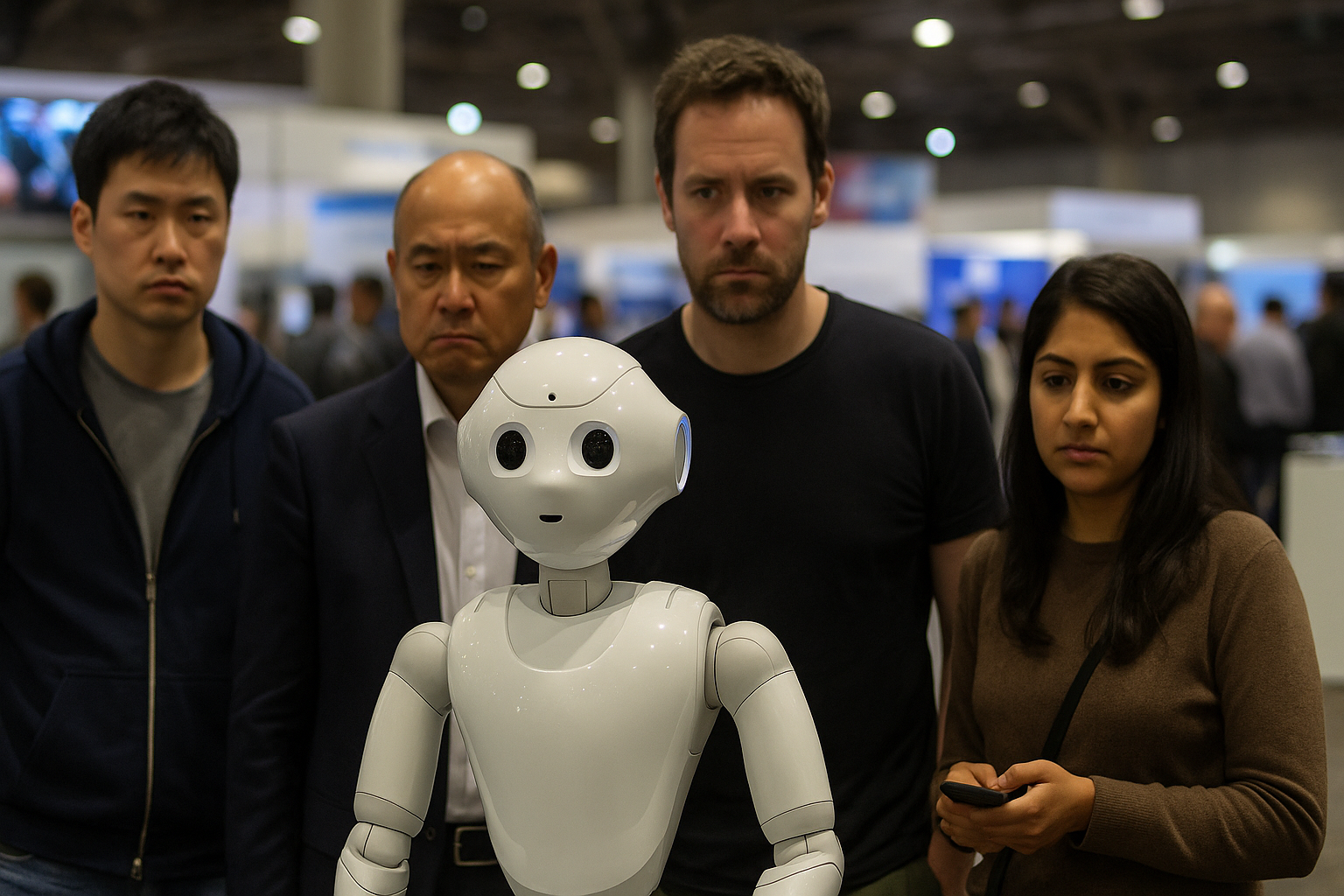
SoftBank is reportedly willing to value 1X Technologies at about US$6 billion before humanoid robots have proved they belong in ordinary homes.
That sounds insane if you think this is a bet on robot cleaners. It makes far more sense if you see what Masayoshi Son is actually trying to own: a position of control in the part of AI that still has to touch the real world.
This is not a signed deal—and that matters
As of August 30, 2026, SoftBank is reported to be in talks to buy a majority stake in 1X, the OpenAI-backed humanoid-robot developer. The talks are ongoing, the terms can change, Reuters could not independently confirm the report, and neither SoftBank nor 1X offered a substantive public comment.
Good. Keep that distinction clear.
Founders and investors get themselves into trouble when they read “in talks” and price the outcome as if the lawyers have already sent the closing documents. It is not a deal until it is a deal. A rumoured majority acquisition is still a rumoured majority acquisition.
But the report is important because of the price, the buyer and the structure. SoftBank is not reportedly looking to sprinkle a polite minority cheque into another AI startup. It is looking at majority control of a company valued around US$6 billion.
That is a very different animal.
A minority investor gets exposure. A control owner gets to decide what gets built, where the money goes, who gets hired, which customers matter, whether the company partners or competes, and how long it can keep spending before it needs to justify itself. In a category as immature and capital-hungry as humanoid robotics, that control is the whole bloody point.
SoftBank is assembling pieces, not collecting toys
The obvious lazy read is that SoftBank has once again found a shiny futuristic object and written an enormous cheque. Masayoshi Son has earned the right to be judged harshly when the facts warrant it. Big-tech investing has a long list of graveyards, and not every vision deserves to survive contact with payroll.
But there is a more serious pattern here.
SoftBank agreed last year to buy ABB’s robotics business for US$5.4 billion. It had already made a US$6.5 billion agreement in 2025 to acquire U.S. chip-design company Ampere. And it has continued to lean hard into AI investments, where outcomes can swing wildly because so much of the value sits in fast-moving, privately held companies.
Put those pieces together and the 1X talks look less like a random punt and more like an attempt to own layers of a stack: computing capability, AI exposure, industrial robotics know-how, and now a humanoid-robot platform aimed at the home.
That does not make the bet safe. It makes it legible.
The winners in the next technology cycle may not be the firms with the most impressive demo video. They may be the firms that own enough of the difficult bits to move faster than everyone else: hardware supply, motors, sensors, compute, models, manufacturing relationships, safety systems, distribution and capital.
Most startups own one of those. The big players are trying to own several.
Why 1X matters more than another chatbot
1X is not being pitched as another software layer that can be cloned over a long weekend by a motivated team with cloud credits. It is building soft-bodied humanoid robots designed, according to reporting, to help with chores in customers’ homes.
That is brutally hard work.
A chatbot can make a mistake and give you a dodgy answer. A home robot can make a mistake and drop a kettle, scare a dog, knock over a child, damage a floorboard or stop working halfway through the one job you bought it to do. The standard is higher because reality is less forgiving than a browser tab.
That is precisely why the prize is bigger.
AI software has raced ahead because the distribution was already there: laptops, phones, cloud infrastructure and millions of people sitting in front of screens. Physical AI needs all that intelligence, plus reliable hardware, cheap production, safety, maintenance, customer support and an answer to the basic question every customer will ask: “Why should I let this machine into my house?”
The company that solves those problems will not just sell a robot. It can potentially build a recurring relationship with the household: updates, maintenance, accessories, services and eventually an operating layer for physical tasks. That is the dream, anyway.
And dreams are where valuation discipline goes to die.
The overlooked number is not $6 billion. It is $10 billion.
The Information reported that 1X tried last autumn to raise US$1 billion at a US$10 billion valuation. The reported SoftBank discussion values the company at about US$6 billion.
Do not over-read that difference. We do not know whether the structures are comparable, how much capital may be included, what rights SoftBank would receive, what changed operationally, or whether the earlier fundraise ever had serious traction at that valuation.
But it is still a useful reminder for founders: a valuation is not a fact carved into stone. It is a negotiated opinion, valid only under a particular set of terms, at a particular moment, with particular buyers.
A founder who turns down real money because a spreadsheet says they are “worth” a bigger number is often not being ambitious. They are being precious.
If SoftBank gets control, the question for existing investors will not be whether the headline valuation feels flattering. The real question will be whether the transaction gives 1X enough capital, operational support and strategic patience to do a job that ordinary venture funding is poorly built for.
Humanoid robots may require years of ugly iteration before they become useful at scale. That does not fit neatly into the rhythm of quarterly updates, vanity metrics and founders pretending every prototype is one sprint from product-market fit.
The contrarian take: control could be the risk, not the reward
Everyone loves a strategic parent when the cheque arrives. The romance gets tested later.
A majority owner can give 1X a longer runway and access to a broader robotics strategy. It can also make the company less flexible. Other potential partners may hesitate to work deeply with a business controlled by a giant investor with competing interests across AI, chips and robotics. Top talent may love the resources—or decide the startup edge has vanished.
There is another uncomfortable point: OpenAI reportedly discussed acquiring 1X last year, and OpenAI’s Startup Fund invested in the company in 2023 alongside Tiger Global and Norway-based investors. If SoftBank becomes the controlling owner, 1X shifts from being a strategically interesting independent company with important AI relationships to part of a far larger owner’s agenda.
That may accelerate it. It may also narrow its options.
This is why founders should stop treating acquisition interest as a universal compliment. A buyer does not merely validate your business. A buyer changes your business. Your product roadmap, hiring plan, partnerships, customer trust and personal freedom are all part of the price—even when they do not appear in the headline number.
What this means for you
If you are a founder, do not copy SoftBank’s cheque book. Copy the useful bit of the thinking: identify the constraint that sits behind the fashionable layer.
Everyone is talking about AI models. Ask what has to be true for those models to create value in the real world. Is it proprietary data? Workflow integration? Distribution? Regulatory approval? Hardware reliability? A sales force that can actually get the product adopted? Build or buy around that constraint.
If you are raising capital, separate valuation from terms. A high headline price with restrictive control rights, impossible preferences or a partner who blocks your future options can be a terrible deal wearing a nice suit. Ask what happens if growth is slower than planned. Ask who controls the board. Ask whether strategic relationships survive the transaction. Ask before you need to ask.
If you are an operator, watch where large buyers seek control rather than access. That tells you where they believe future scarcity will sit. Software gets attention. Control of the infrastructure, supply chain or customer relationship is usually where the money compounds.
And if you are an investor, keep your head. A reported US$6 billion valuation does not prove humanoid robots are about to invade every living room. It proves sophisticated people are willing to pay heavily for an option on that future.
Those are not the same thing.
The money will be made by the businesses that turn physical AI from an impressive party trick into something boringly reliable, cheap enough to buy and useful enough that customers keep paying. Until then, enjoy the demos—but back the operators who understand that reality has a much higher customer-acquisition cost than the internet.