Southern Glazer’s $12.5M Bribery Deal Exposes Spirits’ Shelf-Space Racket
A $12.5 million penalty is cheap if bribery helped decide what millions of drinkers saw on the shelf. Southern Glazer’s deal exposes the ugly truth: distribution can beat a better bottle.
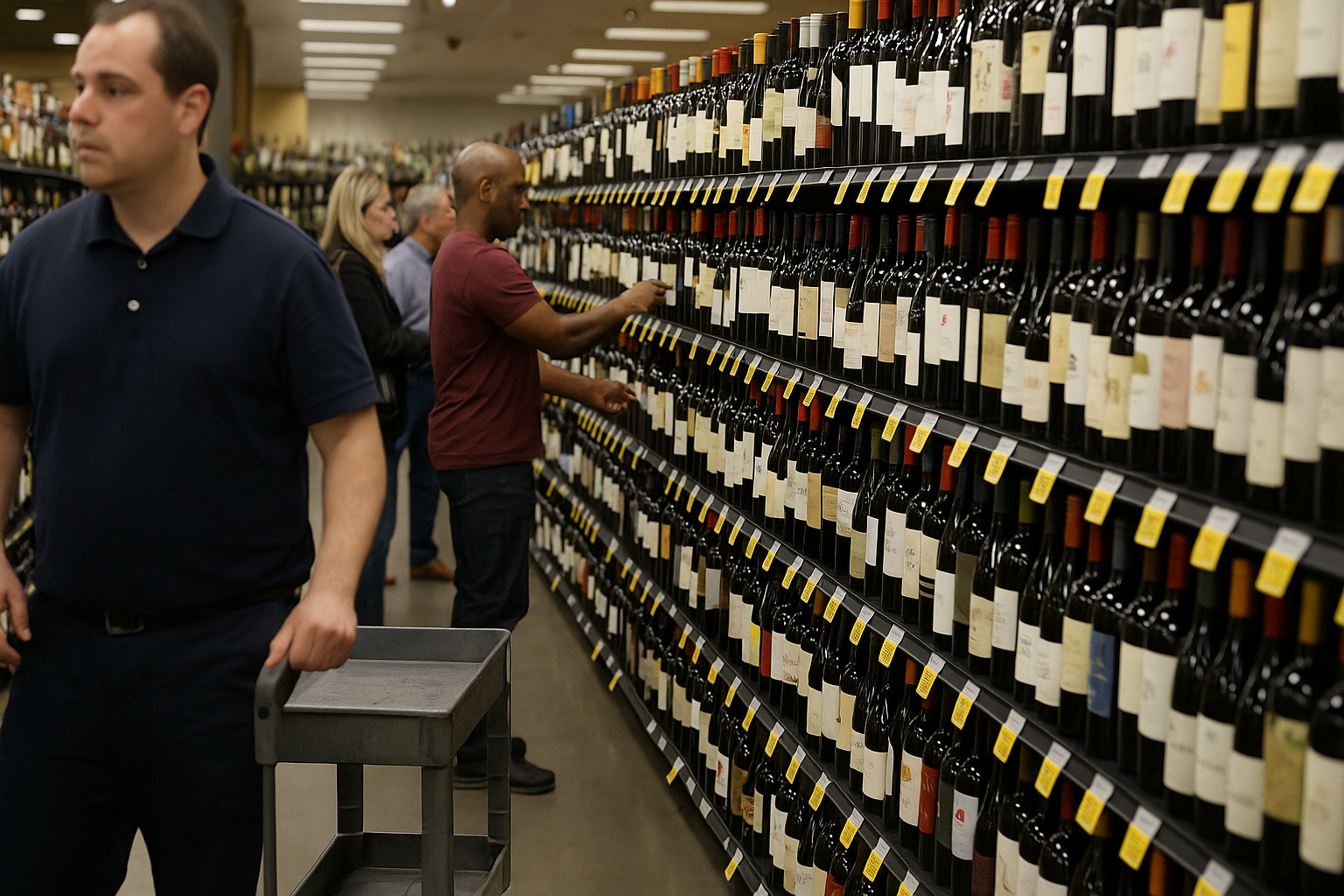
Southern Glazer’s has agreed to pay $12.5 million after federal prosecutors said its people used cash, gift cards, flights, golf trips, resort stays and luxury goods to influence alcohol retail buyers.
That isn’t a compliance story. It is a story about how a mediocre bottle can beat a great one before the customer has even walked into the shop.
On September 10, 2026, Southern Glazer’s Wine and Spirits entered a non-prosecution agreement with the US Attorney’s Office for the Northern District of California. The company admitted responsibility for conduct involving improper payments and benefits tied to the promotion, purchase, maintenance and placement of products it distributed. Prosecutors said third-party vendors and false invoices were used to conceal parts of the practice. ([justice.gov](https://www.justice.gov/usao-ndca/pr/nationwide-alcohol-distributor-agrees-pay-over-12-million-resolve-federal))
The booze industry loves to talk about provenance, craftsmanship, the founder’s story, the liquid in the bottle and the romance of a bloody good drink. All fine things. But anyone who has built a consumer business knows the harsher truth: if you cannot win distribution honestly, your wonderful product may as well be stored in your garage.
This case matters because Southern Glazer’s is not a tiny rogue operator. The agreement describes it as the country’s largest wine and spirits distributor, with more than 24,000 employees and operations across 46 states and the District of Columbia. When a business sitting that close to the gate gets its incentives wrong, the whole market gets bent out of shape. ([justice.gov](https://www.justice.gov/usao-ndca/media/1461006/dl?inline=))
What Southern Glazer’s actually agreed to
Let’s start with what is known, not what social media will invent by lunchtime.
Southern Glazer’s was not criminally charged under this agreement. In exchange for fulfilling its obligations, the US Attorney’s Office agreed not to prosecute the company for crimes related to the conduct laid out in the statement of facts. That does not protect other people or entities, and it does not stop other authorities from investigating. The company must cooperate with ongoing investigations and potential prosecutions involving current or former employees and others. ([justice.gov](https://www.justice.gov/usao-ndca/media/1461006/dl?inline=))
The payment is $12.5 million to the US Treasury: $6.25 million due within 15 business days of execution, with the remaining $6.25 million due within 12 months. It cannot be claimed as a tax deduction or insurance payment. ([justice.gov](https://www.justice.gov/usao-ndca/media/1461006/dl?inline=))
The agreement runs for 24 months. Southern Glazer’s must maintain specified compliance measures, make annual reports to prosecutors and the Alcohol and Tobacco Tax and Trade Bureau, or TTB, and ultimately have its CEO and chief legal and compliance officer certify compliance. A breach can expose the company to prosecution. ([justice.gov](https://www.justice.gov/usao-ndca/media/1461006/dl?inline=))
The company says the underlying misconduct primarily involved former employees and conduct from years ago. It says it cooperated, accepts responsibility for the lapses acknowledged in the agreement, and has strengthened its compliance systems with new staff, policies, monitoring, auditing and enforcement. ([week.marketminute.com](https://week.marketminute.com/article/bizwire-2026-9-11-southern-glazers-statement-on-resolution-with-us-department-of-justice))
Good. That is what a company should do when it finds rot.
But don’t confuse a more serious compliance department with a clean bill of health for an industry incentive problem.
The bottle on the shelf is not always there because it won
The US alcohol market is built around the three-tier system: suppliers make or import products, distributors move them, and retailers sell them. The basic idea is independence between the three groups. Federal prosecutors say the Southern Glazer’s conduct violated trade-practice rules meant to protect that independence. ([justice.gov](https://www.justice.gov/usao-ndca/media/1461006/dl?inline=))
That sounds like regulatory soup until you translate it into plain English.
A buyer at a supermarket or liquor chain controls scarce real estate. Eye-level shelf space. A promotional end cap. A catalogue feature. A seasonal display. A staff recommendation. Those positions can make or break a brand, particularly a young tequila, mezcal, whisky or ready-to-drink business with no money to burn.
So when decision-makers can be improperly influenced, the contest is no longer simply: Which product will customers buy?
It becomes: Which supplier or distributor is most willing to game the gatekeeper?
Federal prosecutors said Southern Glazer’s executives and employees funded and concealed benefits for retail employees, including grocery-chain alcohol buyers, in connection with product placement and promotion. The reporting around the broader investigation says the alleged activity helped influence which wines were stocked, shelf allocation and promotional features at hundreds of California grocery stores between 2016 and 2024. ([justice.gov](https://www.justice.gov/usao-ndca/pr/nationwide-alcohol-distributor-agrees-pay-over-12-million-resolve-federal))
That is why this is bigger than one company’s embarrassment. The consumer loses because choice gets quietly distorted. The ethical supplier loses because it has to compete against hidden spending. And the small brand loses because it may mistake a rigged process for a product failure.
I have no patience for founders who blame “distribution” every time their brand does not move. Sometimes the liquid is ordinary, the packaging is confused, or the economics are rubbish. Fair enough. Fix it.
But there is a real difference between losing a fair fight and being excluded from one.
The overlooked angle: $12.5 million is not the real cost
The headline number is $12.5 million. That will get repeated because numbers fit neatly in headlines.
The bigger cost is operational.
Southern Glazer’s has agreed to a two-year compliance regime. The agreement points to expanded compliance staffing, increased funding, a trade-practice audit program, mandatory training, a marketing-and-promotional-spending platform, and tougher third-party controls. Since 2023, the company says its compliance headcount rose 85% and funding increased more than 65% from 2022 to 2024. ([justice.gov](https://www.justice.gov/usao-ndca/media/1461006/dl?inline=))
That is expensive. More importantly, it slows things down.
Every vendor needs vetting. Every payment needs a paper trail. Every local promotion needs someone asking the annoying but essential question: “Why are we paying this, who benefits, and would we be comfortable reading it aloud in court?”
That last test is the one I use in every business, whether it is alcohol, technology or property. If the explanation becomes slippery when you imagine it printed in black and white, you do not have a clever commercial tactic. You have a future headache.
The other cost is trust. Suppliers hand distributors brands, pricing, market plans and often sizeable trade budgets. Retailers trust distributors to be a legitimate channel, not a black box full of favours. Once that confidence is damaged, the rational response is more scrutiny, more auditing and less discretion.
That is a pain for everyone, including the good operators. But it is necessary.
Why tequila and premium spirits founders should pay attention
Tequila founders will be tempted to view this as California wine drama. Bad read.
Premium spirits are especially exposed to the shelf-space problem because they sell aspiration before repeat purchase. A newcomer needs visibility to earn a first trial. It needs the right account, the right bartender, the right retailer, the right display and the right story at the right time. That is precisely where opaque incentives become dangerous.
While building Agave Finder, I see the same practical issue from another angle: discovery is still wildly fragmented. Consumers are looking for bottles, bars and experiences through a mix of retailer shelves, venue lists, mates’ recommendations and whatever the algorithm tosses at them. Distribution has enormous power because it determines what becomes discoverable in the first place.
The contrarian point is this: more compliance may actually help the best small brands.
Not immediately. It will create admin, and admin is the natural predator of entrepreneurial momentum. But a cleaner system reduces the advantage of whoever has the biggest entertainment budget, the best-connected fixer or the most creative invoice. That gives brands with genuinely strong products, sensible pricing and disciplined account support a better shot.
Provided they can prove their value.
If your sales pitch is “we need an end cap because our founder is famous,” you are not building a brand. You are renting attention. If your pitch is “we turn quickly, create repeat demand, deliver retailer margin and make the category more interesting,” now you are talking like an operator.
Don’t miss the governance lesson
The most uncomfortable detail in the agreement is not the golf trips. It is that the conduct was not framed as one bloke slipping an envelope under a table.
The DOJ said several California-based executives, including vice presidents, were directly involved. The agreement also refers to improper payments to Southern Glazer’s employees, including off-book “creative incentive” payments, and to benefits provided through third parties or directly by suppliers with the knowledge of certain Southern Glazer’s employees. ([justice.gov](https://www.justice.gov/usao-ndca/pr/nationwide-alcohol-distributor-agrees-pay-over-12-million-resolve-federal))
That is what weak governance looks like in the real world. Not a policy missing from a folder. A system where people know how to get around the policy, where intermediaries make accountability blurry, and where commercial targets quietly outrank the rules.
Every founder should take note: your culture is not the values painted on the meeting-room wall. It is what happens when a top salesperson says, “This is how we get the deal done.”
If nobody can challenge that person because they bring in too much revenue, you have already made the decision. You have just outsourced the timing and cost of the consequences.
What this means for you
If you run a spirits brand, a distributor, a retail group or any consumer business with channel partners, do these five things this week:
1. Map every dollar that touches a buyer or influencer. Marketing funds, consultants, event agencies, sampling partners, hospitality and rebates: list the lot. If you cannot trace the final recipient and commercial purpose, stop spending until you can.
2. Treat third parties as your own employees. “The agency did it” is not a defence worth having. Southern Glazer’s agreement makes clear that third-party vendors and false invoicing can become central to the problem. ([justice.gov](https://www.justice.gov/usao-ndca/pr/nationwide-alcohol-distributor-agrees-pay-over-12-million-resolve-federal))
3. Build a commercial case that survives daylight. For every major placement or promotion, document the retailer value: margin, velocity, new customers, category growth or measurable trial. If the deal only makes sense as a favour, it is not a deal.
4. Separate sales power from approval power. Your hungriest salesperson should not be able to approve spending, vendors and exceptions alone. Revenue is important. Controls are what let you keep it.
5. Make ethics a speed advantage, not a legal chore. Pre-approved vendors, clear budgets and simple rules let good people move quickly without guessing where the line is. Compliance that only says “no” is useless. Compliance that makes the right path obvious is a weapon.
The lesson from Southern Glazer’s is brutally simple. In a crowded spirits market, getting on the shelf is hard. Keeping the route to that shelf clean is harder.
Do both. The first builds sales. The second lets you keep the business you worked so hard to build.