S&P 500 at 7,798.99: Wall Street Is Cheering Prices You Still Can’t Afford
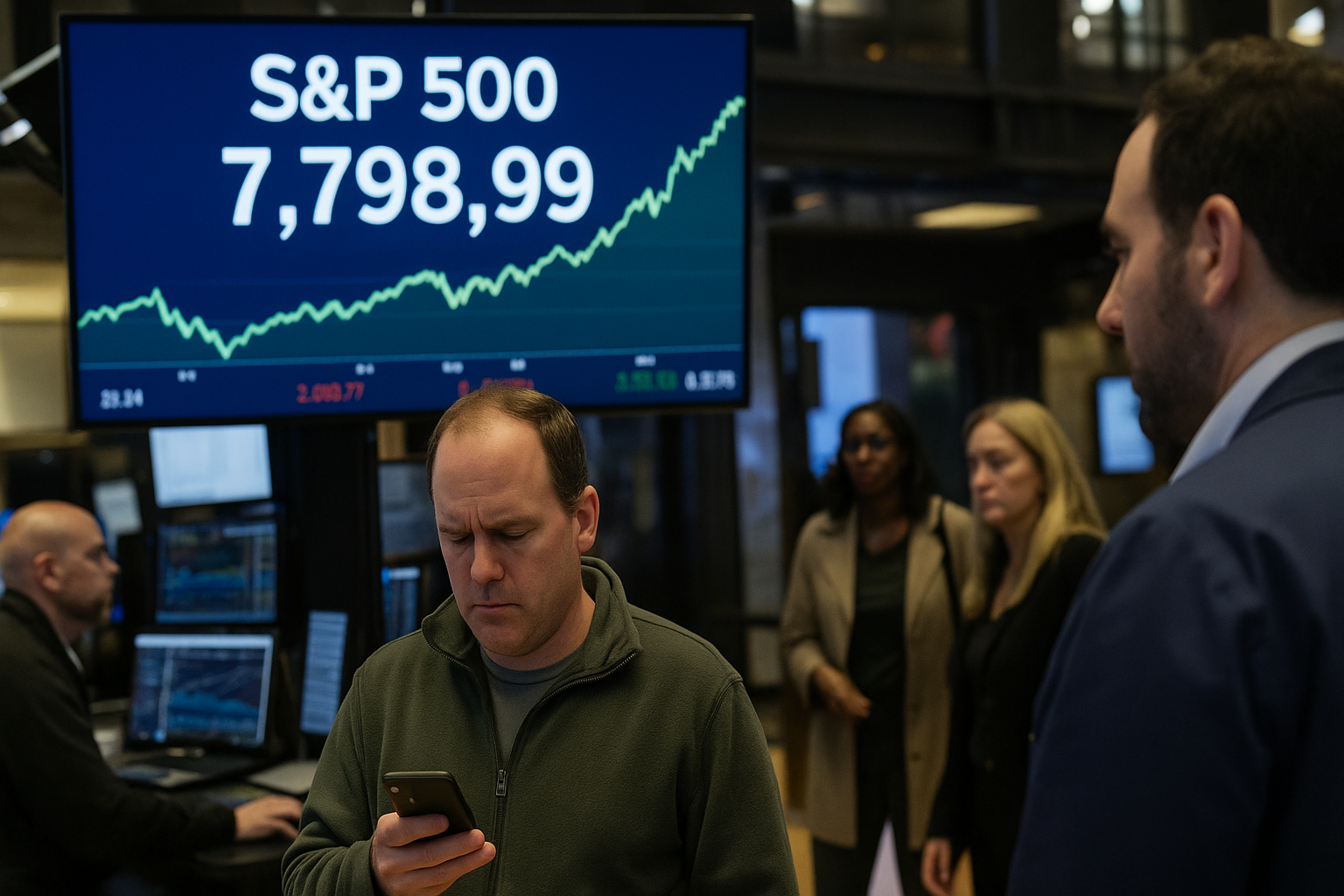
The S&P 500 just hit 7,798.99 because inflation got less bad. If that sounds like a win while your mortgage rate is 6.67%, you’ve spotted the problem.
Wall Street is celebrating inflation at 4.7%. That is not a typo, and it is not a victory lap most households should join.
On Thursday, August 13, the S&P 500 closed at a record 7,798.99, up 0.7% for the day and 13.9% for the year. Investors liked that July wholesale inflation slowed from 5.5% in June to 4.7%, while Brent crude fell 2.1% to $87.07 a barrel.
Fair enough. Markets price the direction of change. Your household budget pays the level of prices. Those are very different games.
The danger now is that ordinary investors see a record index, hear that inflation is cooling and decide everything is back to normal. Then they make a dumb move: pile into whatever has just gone up, take on a bigger mortgage because rates slipped a fraction, or leave their personal finances on autopilot because the headlines sound less awful.
Don’t confuse a slightly less bad macro print with a solved problem.
The 4.7% number Wall Street liked
The producer price index measures wholesale inflation: the cost pressure businesses face before some of it reaches consumers. In July, it rose 4.7% from a year earlier, down from 5.5% in June. On a month-to-month basis, wholesale prices were unchanged.
That was better than expected, and markets reacted exactly as markets do. The 10-year Treasury yield fell to 4.65% on Thursday, down from 4.72% on Monday. Lower bond yields reduce the pressure on stock valuations, particularly the expensive growth shares everyone has been treating like a national hobby.
Traders also trimmed their expectations of a September Federal Reserve rate hike. The market-implied probability fell to 35%, from roughly 50% two days earlier.
That is the core story: investors are betting the Fed may not need to make borrowing more painful.
But here is the bit that gets lost once financial television starts waving its hands around: 4.7% producer inflation is still high, and core wholesale inflation was 4.2% in July. It had been 4.7% in June, so yes, it improved. But “improved” is doing a lot of work in that sentence.
Consumer prices have also cooled somewhat, yet they have risen faster than wages for four straight months. That is not a technical footnote. That is why people feel like their pay rise vanished before it hit the bank account.
Record stocks do not mean cheaper money
The S&P 500 at 7,798.99 is a useful data point. It is not permission to become reckless.
The index is up 13.9% this year. The Nasdaq is up 15.3%. The small-company Russell 2000 is up 23%. Those are bloody good returns, and I’m not going to pretend otherwise.
But a market can be right about the next six months while you are still wrong about your own next six years.
Take housing. The average 30-year fixed U.S. mortgage rate dipped to 6.67% this week from 6.69%. That was the first decline in six weeks. Great — in the same way finding a $5 note in an old jacket is great.
It is still higher than the 6.58% rate a year ago. More importantly, it remains well above roughly 5.98% in late February, before the Iran war pushed oil, inflation expectations and long-term yields higher. The average 15-year fixed mortgage rate is 5.96%, also above its year-ago level.
A 0.02 percentage-point move is not a housing rescue. Do not let a headline turn into a commitment you have to service for 30 years.
Mortgage rates generally take their lead from the 10-year Treasury yield, not from whatever the Fed did at its last meeting. So a calmer inflation report can help, but oil can reverse it fast. Brent swung between $72 and $102 last month as hopes for a Middle East deal rose and fell. That is not a stable foundation for making a huge personal decision.
The overlooked risk: the market is pricing relief before households feel it
This is the uncomfortable angle. The market may be celebrating a future that consumers have not yet received.
Wholesale inflation can give an early read on consumer prices, but it does not travel in a straight line from a factory gate to your supermarket receipt. Businesses can absorb costs, pass them on, change product sizes, cut promotions or use a temporary drop in input costs to rebuild margins.
And fuel has already started rising again. Gas prices fell earlier in July, helping the inflation figures look better, then climbed later in July and into August. That means next month’s data could be less friendly.
The Federal Reserve’s preferred inflation measure, the personal consumption expenditures index, is due August 26. Economists cited in the latest coverage expect core PCE inflation to remain around 3.3% year-on-year for July. That is well above the Fed’s 2% target.
So the sensible interpretation is not “the Fed is about to save us.” It is: the Fed has a little more room to wait and see.
That matters. The July jobs report showed employers cut 23,000 jobs. A central bank staring at softer employment and still-elevated inflation does not have an easy decision. Rate hikes can hurt jobs and borrowers. Doing nothing can let price pressure get comfortable again.
Anyone claiming certainty here is selling entertainment, not insight.
Why chasing the record is the wrong response
I have made enough money — and watched enough money get torched — to know that confidence after a rally is expensive.
When the S&P 500 makes a record, people feel they need to act immediately. They start asking which AI stock will double next, whether to switch their whole portfolio into equities, or whether cash is now “dead money.” That urgency is precisely what gets people buying assets after other people have already made the easy gains.
Cisco offered the perfect small lesson on Thursday. It reported profit and revenue above Wall Street’s expectations, then fell 8.4% because investors worried about future margins. In a market priced for excellent news, merely good news can get punished.
That is not an argument to sell everything and hide under the doona. It is an argument to remember what investing is for.
If you have a 10-year-plus horizon, own diversified productive assets and can handle volatility, record highs are not a reason to stop investing. Markets hit records because businesses grow over time. Refusing to invest every time the market hits a high is just another form of market timing, and usually a costly one.
But if you are buying a home within two years, building an emergency reserve, carrying credit-card debt or funding a business with uncertain cash flow, your job is not to maximise your excitement. Your job is to protect your options.
The contrarian move is boring: build financial slack
The fashionable trade is to bet on rate relief.
The smart personal-finance move is to make sure you do not need rate relief.
That means separating money by purpose. Your emergency cash is not investment capital. Your house deposit is not a semiconductor fund. Your next 12 months of business payroll is not a punt on the Fed getting inflation exactly right.
Investors love the word “diversification,” then run a life where every major decision depends on one thing going right: a bonus landing, a refinance succeeding, a stock staying high or rates falling.
That is not diversification. That is optimism with paperwork.
The stock market’s rally is useful because it reminds us that capital markets look forward. Use that lesson properly. Build a balance sheet that can survive an outcome different from the one currently priced into markets.
What this means for you
Here is what I would do this weekend — not because it is sexy, but because it works.
1. Audit your expensive debt. Write down every debt, its interest rate and its required monthly payment. If you are paying high credit-card interest, that is your first investment problem. Fix it before you start trying to outsmart the Nasdaq.
2. Stress-test your mortgage or planned purchase. At 6.67%, calculate the payment. Then calculate it at 7.5%. If the second number turns your life upside down, you are borrowing too much. A tiny weekly rate dip changes nothing about that.
3. Keep short-term money out of shares. Money needed in the next one to three years should not depend on the S&P 500 staying at 7,798.99 or going higher. That is gambling with a deadline.
4. Automate long-term investing rather than chase the rally. If your emergency reserve is funded and your high-interest debt is under control, keep buying diversified investments on a schedule. Do not wait for a perfect entry point. Also do not suddenly double your risk because the index made a new high.
5. Watch August 26, not just today’s celebration. The next core PCE reading will tell us more about whether the inflation improvement is real or merely a decent July print helped by lower fuel costs.
Wall Street got a reason to breathe easier on August 13. Good. But wealth is not built by reacting to one decent number. It is built by having enough margin in your life that a bad number cannot knock you flat.
That is the game. Boring, durable and far more profitable than panicking at records or partying at 4.7%.