S&P 500 Jumps 1.6% as Brent Hits $100: Don’t Mistake Relief for Safety
A $100 barrel of oil is not cheap. The S&P 500’s 1.6% bounce says markets are celebrating a less-bad problem, not a solved one.
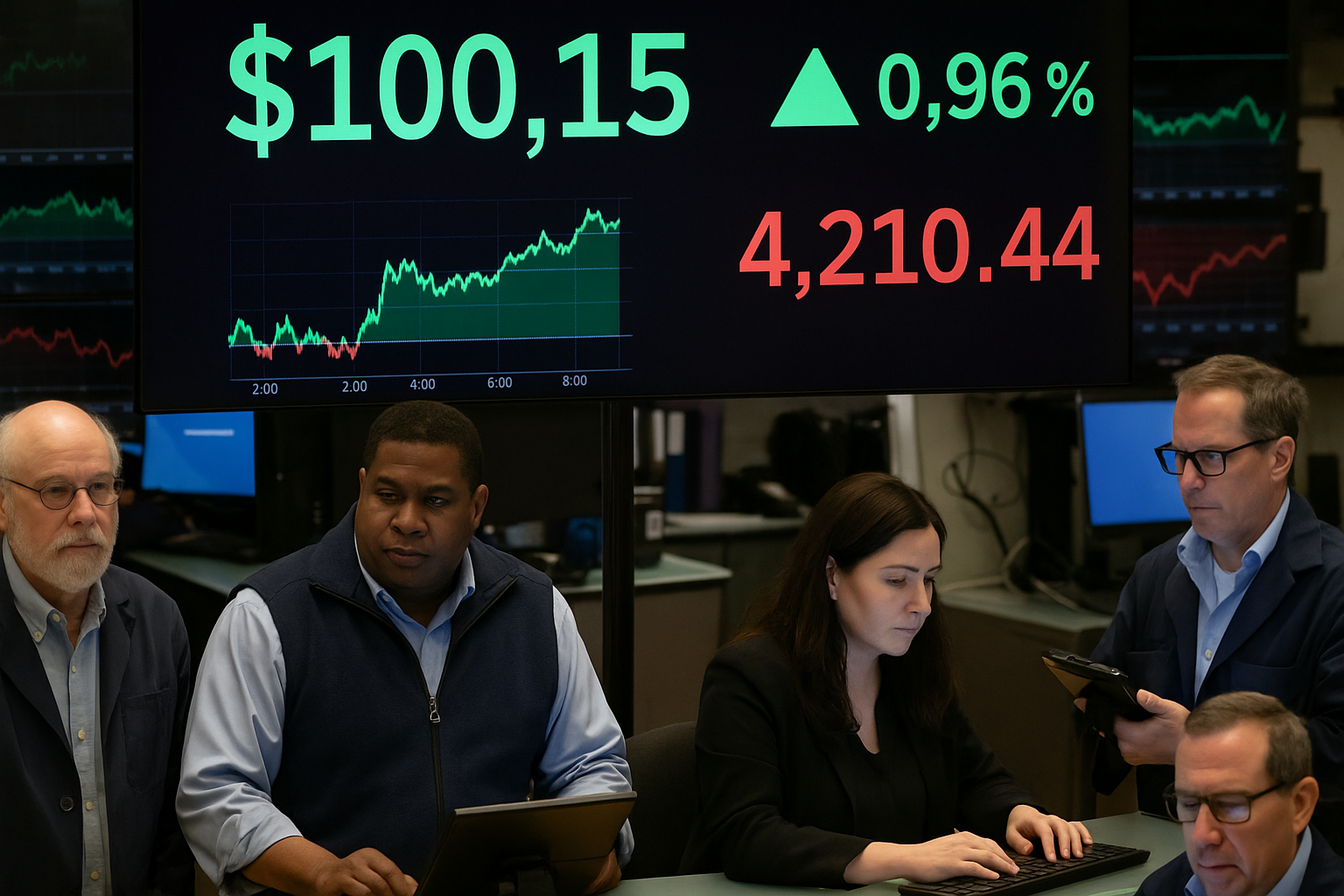
The S&P 500 jumped 1.6% on September 21 after Brent crude fell to about $100 a barrel. Plenty of people will call that a recovery. I call it a market getting drunk because the fire alarm stopped for five minutes. ([bloomberg.com](https://bloomberg.com/news/articles/2026-09-20/us-stock-futures-up-ahead-of-talks-dollar-steady-markets-wrap?utm_source=openai))
That distinction matters.
A week ago, investors were staring at oil above $109, rising bond yields, a Federal Reserve that had just raised rates, and the very real risk that a Middle East war would feed straight into inflation, freight costs, consumer confidence and corporate margins. On Monday, oil fell 3.4% to $100.34 as traders bet that diplomacy and a partial improvement in Saudi shipments could reduce the immediate supply panic. That is good news. It is not the same thing as cheap energy, subdued inflation or easy money. ([marketscreener.com](https://www.marketscreener.com/news/oil-hits-over-1-week-low-on-hopes-of-boost-to-diplomacy-in-iran-war-ce785adad08df727?utm_source=openai))
The market has done what it always does: taken one encouraging data point and tried to price a happy ending before the facts have earned it.
The bounce was real. So was the warning underneath it.
The tech-led rally was hard to miss. Bloomberg reported the Nasdaq 100 rose 2.8%, while Meta Platforms jumped 12% amid excitement around its new artificial-intelligence agent. Reuters reported that Intel was up 5.4% in early trading, with Marvell, Dell and other AI-linked names also gaining as oil slid and Treasury yields eased. ([bloomberg.com](https://bloomberg.com/news/articles/2026-09-20/us-stock-futures-up-ahead-of-talks-dollar-steady-markets-wrap?utm_source=openai))
Good businesses should be allowed to rally. AI investment is real, and the companies selling the picks and shovels can make serious money when capital expenditure remains strong.
But look at what actually powered the day: lower oil, lower yields and a return of enthusiasm for the same big technology names that have carried the market. That is not broad economic invincibility. It is a very expensive part of the market benefiting from a temporary release of pressure.
The S&P 500 finished close to its record high, according to the Associated Press. That tells you investors remain willing to pay up for equities. It does not tell you that the risks which caused last week’s sell-off have vanished. ([apnews.com](https://apnews.com/article/1f1a267bf4556c01513f506914eb6359?utm_source=openai))
Markets are forward-looking, yes. They are also impatient toddlers with a Bloomberg terminal.
When the immediate fear is an oil shock, a 3%-plus fall in Brent gives traders permission to buy. But a barrel at roughly $100 is still a serious tax on the global economy. It matters to airlines, logistics firms, manufacturers, retailers and any business with physical things moving from one place to another. It matters to households filling cars, paying utility bills and deciding whether to spend at a restaurant or hold onto the cash.
For operators, the lesson is painfully simple: do not build next quarter’s budget around one friendly trading session in oil.
Kevin Warsh just made money more expensive — and hinted he is not finished
The more important story is not Monday’s bounce. It is the change in the rules of the game.
On September 16, the Federal Reserve raised its target range by 25 basis points to 3.75%–4.00%, the first increase in more than three years. Reuters reported that 16 of 18 policymakers expected at least one further quarter-point increase by the end of 2026. ([reutersconnect.com](https://www.reutersconnect.com/item/fed-hikes-rates-in-search-of-timelier-drop-in-inflation-sees-more-tightening-ahead/dGFnOnJldXRlcnMuY29tLDIwMjY6bmV3c21sX1ZBMzI2OTE2MDkyMDI2UlAx?utm_source=openai))
That is a meaningful reversal from the rate-cut fantasy many businesses and investors had been nursing earlier in the year.
Fed Chair Kevin Warsh’s position is clear enough: economic activity is still expanding at a solid pace, spending has held up, capital investment is robust, and inflation has not cooled fast enough. Boston Fed President Susan Collins said persistent inflation and the renewed fighting in the Middle East were key reasons she supported the increase. ([reutersconnect.com](https://www.reutersconnect.com/item/fed-hikes-rates-in-search-of-timelier-drop-in-inflation-sees-more-tightening-ahead/dGFnOnJldXRlcnMuY29tLDIwMjY6bmV3c21sX1ZBMzI2OTE2MDkyMDI2UlAx?utm_source=openai))
You do not need to love the Fed to understand the problem. If oil stays elevated, tariffs keep lifting costs and AI investment continues pumping demand through parts of the economy, the central bank cannot pretend inflation is someone else’s mess.
The benchmark rate is not the only borrowing cost that matters, but it sets the tone. Higher policy rates eventually filter into business loans, credit cards, vehicle finance and refinancing decisions. Long-term yields can move independently, but they are hardly a gift either: the 10-year Treasury yield was still at 4.95% on September 21, even after easing. ([apnews.com](https://apnews.com/article/3cb34d37f609dde5fb94d695e9665869?utm_source=openai))
That is the bit founders and small-business owners tend to discover too late. You do not feel a tighter monetary regime on the day a central banker speaks. You feel it when a lender reprices your facility, a customer stretches payment terms, or a previously enthusiastic buyer decides that a 12-month payback period is suddenly too long.
The overlooked risk: the market is treating oil like a headline, not an input cost
Here is the contrarian view: lower oil is not necessarily bullish if it merely reflects hope rather than restored supply.
Reuters reported that Brent’s fall was linked to optimism around diplomacy and a partial recovery in Saudi shipments. The Associated Press noted that some crude was again moving through the Strait of Hormuz, though still nowhere near what the industry would prefer. ([marketscreener.com](https://www.marketscreener.com/news/oil-hits-over-1-week-low-on-hopes-of-boost-to-diplomacy-in-iran-war-ce785adad08df727?utm_source=openai))
That means the market is still hostage to logistics, military developments and political statements. None of those are reliable inventory-management systems.
If Brent remains around $100 rather than collapsing back to the levels businesses had budgeted for, the damage will be gradual rather than cinematic. Freight bills rise. Suppliers pass through surcharges. Consumers become choosier. Margins shrink because companies discover they have less pricing power than their spreadsheets assumed.
That is exactly why markets can get this wrong. Traders react to the rate of change. Operators have to live with the level.
A fall from $109 to $100 feels like a win on a chart. Paying $100 for oil still changes the arithmetic for a huge part of the economy.
The same logic applies to interest rates. A 25-basis-point hike is not catastrophic in isolation. But the direction matters. When the Fed has shifted from “when will cuts arrive?” to “how many more hikes are coming?”, every marginal project gets harder to justify.
The weak projects die first. Frankly, good. Cheap capital kept a lot of nonsense alive for too long.
This is a better environment for disciplined businesses
There is a silver lining, and it is not the usual motivational-poster rubbish.
A higher-cost environment rewards companies that know their numbers, control working capital and sell something customers actually need. It punishes businesses that confuse revenue with economics and call a pile of future promises “growth.”
If you run a business, this is not the time to slash good investment out of fear. It is the time to separate productive spending from vanity spending with a machete.
Keep investing where the return is measurable: salespeople who pay back, software that removes labour, inventory that turns quickly, marketing channels with proven contribution margin, and product improvements that increase retention or pricing power.
Be ruthless elsewhere. Long contracts you do not use. Bloated agency retainers. Stock sitting in warehouses because somebody bought “for scale.” Hiring plans based on optimism rather than workload. All of it gets more expensive when capital costs more and customers hesitate.
For investors, the message is equally blunt. Do not buy a share simply because it rose when oil fell for a day. Ask whether the company can protect margins if energy, transport, wages and funding costs stay elevated for another year.
The answer will not be the same for every technology company, industrial business or consumer brand. That is precisely the point. This is becoming a stock-picker’s market again, not a market where owning anything with an AI label automatically makes you clever.
What this means for you
Do three things tomorrow.
First, run a $100-oil stress test on your finances or business. If fuel, freight, inputs or consumer demand matter to you, assume elevated energy costs persist for six months. Work out what happens to margin, cash flow and pricing. Do not use the most optimistic version of the scenario.
Second, treat the Fed’s 3.75%–4.00% rate range as the current reality, not a temporary inconvenience. If you have floating debt, refinancing needs or a big purchase planned, model another quarter-point increase as well. If the deal only works with cheaper money, it may not work. ([reutersconnect.com](https://www.reutersconnect.com/item/fed-hikes-rates-in-search-of-timelier-drop-in-inflation-sees-more-tightening-ahead/dGFnOnJldXRlcnMuY29tLDIwMjY6bmV3c21sX1ZBMzI2OTE2MDkyMDI2UlAx?utm_source=openai))
Third, demand a return on every dollar. Investors should favour balance sheets, cash generation and durable pricing power over stories. Operators should put every expense through one question: does this create revenue, protect margin or reduce risk? If it does none of those things, cut it.
Monday’s rally was a reminder that markets can recover quickly. It was not permission to relax.
The adults will use this moment to tighten the ship while sentiment is buoyant. Everyone else will wait until oil spikes again, rates bite harder and the bill arrives. That is an expensive way to learn a very old lesson.