SpaceX’s 14 MHz Spectrum Deal Is a Warning to AT&T and Verizon
SpaceX’s 14 MHz spectrum deal has no disclosed price — but AT&T, Verizon and T-Mobile just got a clear warning: the sky is becoming a competitor.
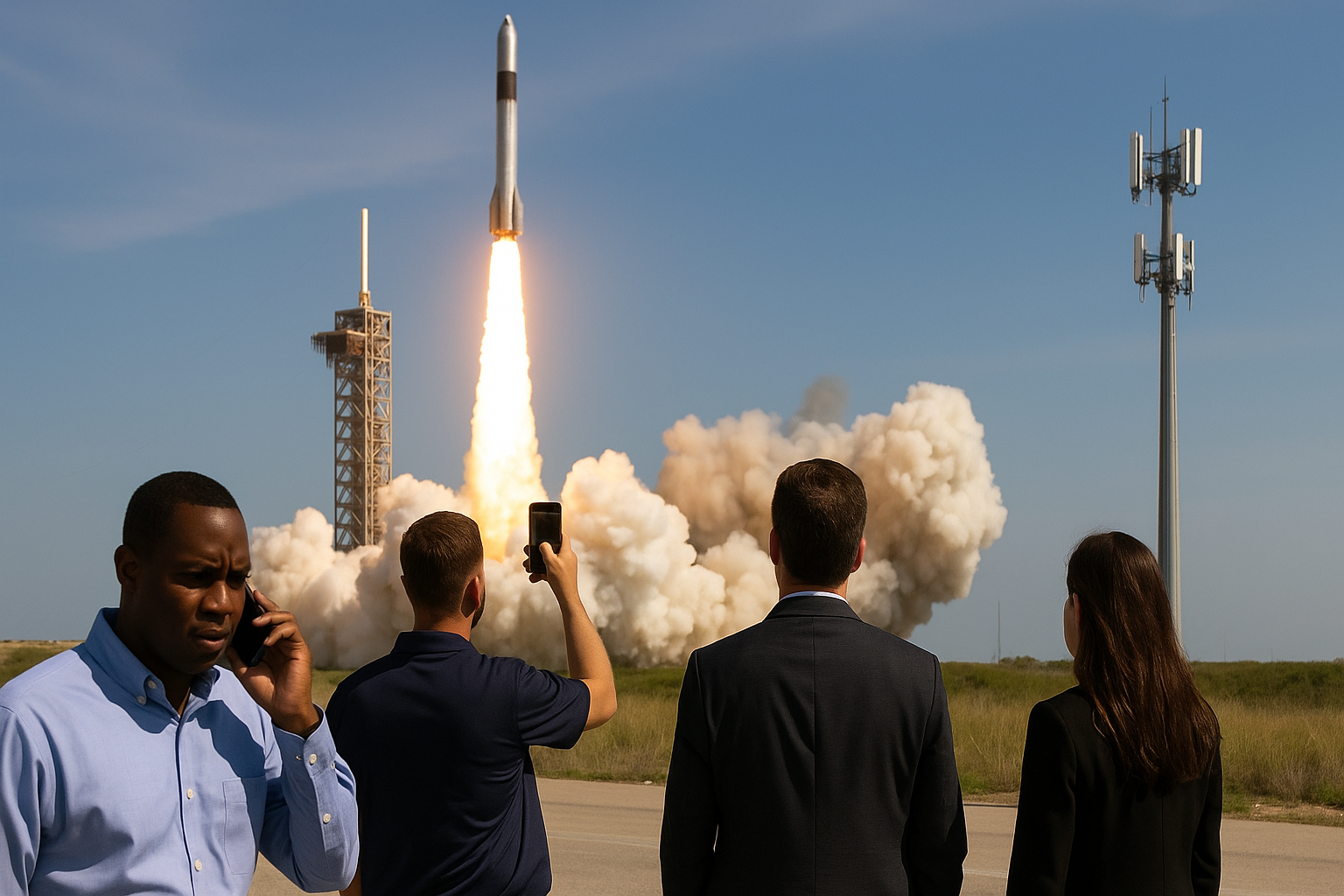
SpaceX’s 14 MHz spectrum deal has no disclosed price — but AT&T, Verizon and T-Mobile just got a clear warning. SpaceX did not buy this spectrum to become a cute add-on to your phone plan. It bought it to put a boot through the assumption that AT&T, Verizon and T-Mobile will always own the customer relationship.
On October 8, SpaceX announced an agreement to acquire a nationwide portfolio of up to 14 MHz of paired spectrum in the 800 MHz band from digital-infrastructure investor Grain Management. The deal still needs Federal Communications Commission approval, but the strategic intent was not hidden: SpaceX says the licences address a remaining technical gap on its path to making Starlink a major US mobile carrier.
That is why shares in the established carriers sold off after the news. The market did not suddenly decide satellites are fashionable. It understood that a company with rockets, thousands of satellites, deep engineering talent and an existing direct-to-cell product is assembling the ingredients to attack a massive, recurring-revenue market.
This is not another Elon Musk headline
Most people will read this as another Musk-versus-everyone story. That is entertaining, but it misses the commercial point.
Spectrum is the bottleneck. It is regulated, scarce and brutally difficult to recreate. You can hire more software engineers. You can build another app. You cannot simply wake up next Tuesday and manufacture nationwide rights to use valuable low-band radio frequencies.
The 800 MHz band matters because lower frequencies travel farther and penetrate buildings better than higher-band spectrum. That does not magically turn Starlink into a complete replacement for terrestrial networks overnight. Physics still has a say, thank God. But it gives SpaceX an asset that is far more useful for broad coverage than the sort of spectrum that looks terrific in a lab diagram and gets miserable once there are walls, trees and actual humans involved.
SpaceX has described this portfolio as up to 14 MHz of paired spectrum. “Paired” matters because mobile communications generally need separate channels for sending and receiving data. In plain English: this is working plumbing, not a shiny press-release ornament.
The seller is Grain Management, an infrastructure-focused investment firm. SpaceX has not publicly put a price tag on this transaction. That is worth saying clearly, because people love inventing numbers around a big deal. The known number here is the spectrum: up to 14 MHz of paired 800 MHz-band licences. The price is undisclosed.
The real story is a business model collision
Telecom incumbents have spent decades building businesses around a simple economic truth: coverage is expensive, spectrum is scarce, and customers hate switching.
SpaceX is coming at that model from an entirely different angle. It already has Starlink’s satellite network, launch capability and a global hardware-and-service operation. It is not starting from a standing start and hoping to raise enough money to build a mobile network. It is adding a strategic asset to a machine that is already in motion.
That is the sort of M&A buyers should fear most: not the buyer who merely gets bigger, but the buyer who removes a constraint.
Plenty of acquisitions are corporate cosplay. Management teams pay a premium, celebrate “synergies”, then discover they bought a fancier version of operational headaches they already had. This deal looks different because it potentially closes a specific capability gap. SpaceX is not acquiring revenue for the sake of reporting a bigger number next quarter. It is acquiring a regulated input that could help it offer a more complete mobile service.
Elon Musk called the spectrum the final critical piece needed for complete phone coverage in America. I would not take any founder’s victory lap as a finished business plan — including mine. “Complete coverage” is a huge promise. Network capacity, handset compatibility, regulatory permissions, economics, customer support and partnerships all still matter.
But the direction is obvious. SpaceX is positioning Starlink Mobile to compete more directly with the American carriers, rather than merely sell them a satellite capability they can package under their own brands.
That distinction is where the money is.
Why AT&T, Verizon and T-Mobile should care
The incumbents are not helpless. They have enormous customer bases, established networks, retail distribution, spectrum holdings, billing systems and decades of operational experience. Running a nationwide consumer telecom service is not as simple as lobbing satellites into orbit and firing up a landing page.
Still, the old advantages are less impregnable when a challenger can combine satellite coverage with its own spectrum position.
The immediate threat is not necessarily that millions of Americans cancel their existing mobile plans next month. The first threat is bargaining power.
If consumers can see a credible alternative for coverage in remote areas, during emergencies or outside the comfortable footprint of conventional networks, the carriers lose some of their ability to dictate terms. If Starlink becomes a meaningful mobile option, carriers may need to spend more on retention, pricing, partnerships and network investment. None of that is good for margins.
The second threat is product bundling. A business that sells satellite broadband, mobile connectivity and potentially other communications services can bundle in ways that change the customer’s calculation. Telcos have long relied on bundles themselves because bundling reduces churn. SpaceX is now building the raw materials to play the same game.
The third threat is narrative. Public markets price future profit pools, not just this quarter’s subscriber tally. The share-price reaction tells you investors think SpaceX’s competitive perimeter just got wider. That does not mean the incumbents are doomed. It means the easy version of their future got less likely.
The overlooked angle: SpaceX is buying optionality, not certainty
Here is the bit people get wrong with strategic deals: they demand proof that every dollar will produce a neat, immediate return.
That is not how the best asset purchases work.
SpaceX is buying the right to pursue several futures. It can deepen direct-to-cell service. It can negotiate partnerships from a stronger position. It can build a broader mobile offering. It can use the spectrum to improve resilience and reach. It can pressure incumbents into commercial arrangements that would have been harder to secure before.
The return may not show up as a tidy revenue line labelled “800 MHz acquisition benefit”. It may show up in lower customer acquisition costs, better wholesale terms, stronger bundling, more valuable Starlink subscriptions or an expanded strategic moat.
That is why founders should pay attention. A good acquisition is often not about buying this year’s earnings. It is about buying an option your competitors cannot cheaply replicate.
The catch is that optionality only has value when you can execute. SpaceX will still need regulatory approval, technical integration and a convincing consumer proposition. It will need to prove that satellite-to-mobile connectivity can deliver a service people will pay for at scale, not merely a brilliant demo for rural dead zones and emergency texting.
That is a sizeable task. But SpaceX has already proven it can execute difficult infrastructure projects that most companies would not dare put in a board deck.
Don’t confuse a licence with a finished network
The contrarian view is this: the market may be getting ahead of itself if it assumes this spectrum purchase instantly makes SpaceX a conventional nationwide mobile carrier.
It does not.
The deal is subject to FCC approval. Spectrum ownership is vital, but it is not the entire operating model. Mobile customers expect reliable voice, data, devices, support, billing and coverage in dense cities as well as empty highways. They do not care how clever your orbital architecture is when a call drops inside their apartment.
There is also a reason the established carriers’ infrastructure is expensive: cities are hard. High demand in crowded places requires capacity, not just coverage. Low-band spectrum is excellent for range and building penetration, but every network makes trade-offs between reach, speed and congestion.
So no, I would not short every carrier because of one announcement. That is casino behaviour dressed up as analysis.
But I also would not dismiss the deal because SpaceX cannot replace every tower tomorrow. Disruption rarely arrives as a clean substitution. It starts by taking the profitable edges, changing customer expectations and forcing incumbents to spend more defending territory they once owned cheaply.
What this means for you
If you are a founder or operator, steal the right lesson from SpaceX: identify the constraint that limits your next decade, then buy, build or partner your way around it before you desperately need to.
Do not acquire businesses because your board wants a headline. Buy assets that remove a bottleneck: distribution, licences, supply, trust, data, talent or a customer relationship that would take years to build organically.
Before you do any deal, ask four blunt questions:
1. What constraint does this remove? If the answer is “scale” or “synergy”, keep digging. Those are often polite words for “we haven’t thought this through.” 2. Can a competitor recreate it cheaply? If yes, you are probably buying a temporary sugar hit, not an advantage. 3. Does it improve our bargaining power? The best deals give you more choices with suppliers, partners and customers. 4. Can we actually integrate it? Strategy without execution is just an expensive pub conversation.
For investors, watch where companies spend money on scarce inputs rather than fashionable outputs. Software can be copied. Advertising can be bought. But spectrum, licences, distribution and infrastructure are often the bits that decide who gets paid for the next ten years.
SpaceX’s 14 MHz move is not proof that AT&T, Verizon and T-Mobile are finished. It is proof that no incumbent gets to sleep just because its industry used to be hard to enter. The moat is only a moat until someone finds a better way across it.