SpaceX’s $19.6B AI Capex Bought $431M in Profit. That’s Not a Win Yet
SpaceX spent $19.6 billion in one quarter to produce $431 million of AI operating profit. That isn’t an AI gold rush. It’s a very expensive promise.
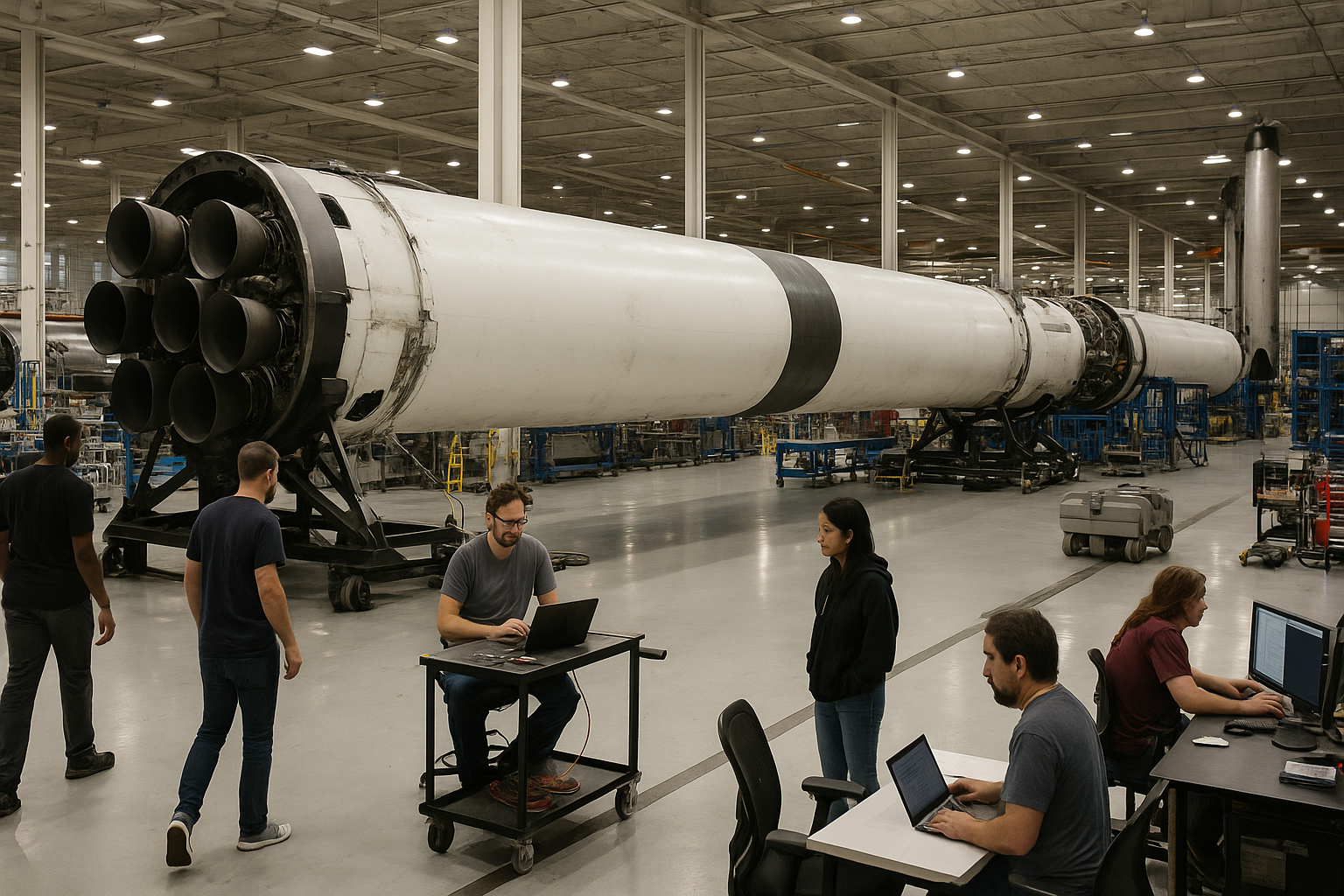
SpaceX spent $19.6 billion in capital expenditure last quarter and reported $431 million in profit from its AI business.
Before the Elon Musk fan club starts throwing rockets at me: that is not a victory lap. It is a bloody big cheque written against an even bigger promise.
SpaceX’s third-quarter numbers were undeniably massive. Revenue hit $14.58 billion, up 161% year on year. Net income swung from a $1.05 billion loss a year earlier to a $4.4 billion profit. Its AI division generated $7.56 billion in revenue, making it the company’s biggest business by revenue for the quarter.
That is real growth. It is also exactly where smart founders and investors need to stop clapping and start doing the boring bit: looking at what it costs to produce it.
SpaceX is no longer mainly a rocket company
The headline from SpaceX’s results is not that rockets are doing well. Rockets are almost becoming the side hustle.
The company’s AI operation — including Grok, X, its recently acquired Cursor coding tool and, most importantly, data-centre compute rented to customers — produced roughly 52% of total quarterly revenue. SpaceX is selling compute capacity to businesses including Anthropic, Google and Reflection AI.
That matters because it changes the business completely.
A launch company is an engineering and manufacturing business with lumpy contracts, hard assets and a fairly obvious unit of production: get payloads into orbit. Starlink is a connectivity business: build the network, add subscribers, manage churn, improve the economics.
AI infrastructure is another beast again. It is a capital-intensive utility with software lipstick. You need chips, yes. But you also need land, power contracts, substations, cooling, networking, turbines, backup generation, construction crews and customers prepared to sign long-term commitments before the next model makes today’s hardware look old.
That is why the $19.6 billion number matters more than the Grok headlines.
SpaceX’s AI revenue of $7.56 billion is impressive. Its reported AI operating profit of $431 million is also positive. But the company is spending at a pace that would make most infrastructure operators reach for a stiff drink. It expects capital expenditure of $35 billion to $40 billion in the fourth quarter alone.
And no, you cannot directly divide one quarter’s total company capex by one division’s operating profit and call it a return-on-investment calculation. That would be accountant cosplay. The spending supports Starlink, Starship and data-centre expansion, while accounting profits and cash flow are different things.
But you can say this: SpaceX has not yet proved that its AI machine earns anything close to the return required to justify its appetite for capital.
That is the only question that counts.
The best AI business may be the boring one
Here is the overlooked angle: SpaceX’s most interesting AI asset may not be Grok at all.
It may be the ability to build physical infrastructure faster than everyone else.
Musk said the bottleneck for deploying advanced AI is increasingly power, cooling and infrastructure — not merely access to chips. That is directionally right. The easy narrative is that Nvidia owns AI because it sells the best hardware. The harder reality is that a GPU without available electricity is just an exceptionally expensive paperweight.
SpaceX says its neocloud operation has 1.7 gigawatts of compute capacity. It is also building a second data-centre project, Colossus II, in Memphis. Musk has pointed to delays of 12 to 18 months for turbine components and said SpaceX is using manufacturing capabilities developed for its space business to help secure them faster.
Now that is a genuine potential moat.
Most AI startups have a slide deck, a pile of rented GPUs and a founder telling you they have “proprietary orchestration”. Good luck to them. SpaceX has engineers who build rockets, operate a global satellite network, manufacture at scale and can direct enormous capital toward a bottleneck.
If it can turn that industrial muscle into faster power deployment, it could become a meaningful supplier of scarce AI capacity. Not because it has the cleverest chatbot, but because it can get a functioning data centre online before the other bloke finishes arguing with his power utility.
That is how fortunes are made in booms: owning the constraint, not merely participating in the excitement.
But capital intensity is where good stories go to die
The danger is obvious. Infrastructure businesses can look brilliant while they are growing and ghastly when growth slows.
SpaceX’s revenue beat expectations. Its AI revenue beat expectations. Its profit beat expectations. Great. But the company is also using staggering amounts of capital to chase an industry where demand forecasts are currently treated like gospel and depreciation is treated like an unpleasant administrative detail.
The AI market has become addicted to announcements measured in gigawatts and billions. Everyone assumes the capacity will be needed because everyone else is building capacity. That is not a business model. That is a queue outside a nightclub where nobody has checked whether the music is any good.
The real risk is not that AI suddenly becomes useless. It plainly will not.
The risk is that compute becomes more available, model efficiency improves faster than expected, enterprise buyers take longer to deploy useful products, and pricing comes down before infrastructure owners earn back their outlay. That is the classic boom-and-bust setup: demand is real, but the financial returns get crushed by too much expensive supply.
SpaceX is better placed than most to survive that game. Starlink remains its biggest profit generator, giving the group a valuable cash engine. The company also has launch services, government contracts and the long-term upside of Starship. A weaker player would not have those buffers.
But being better placed to survive is not the same thing as being guaranteed to earn a spectacular return.
Investors have already shown they understand this, at least a little. SpaceX shares had fallen from a peak near $201 after its IPO to $147.79 at Tuesday’s close, before rising after the results. The market loves growth. It loves cash generation more. And it gets nervous when growth requires capital expenditure that looks like a small country’s defence budget.
The contrarian take: this could be bad news for pure AI companies
Everyone sees SpaceX’s numbers and thinks, “Musk has another winner.” Maybe.
I see another implication: the companies selling AI software without control of distribution, power, data or infrastructure are about to have a much harder time.
SpaceX can bundle assets. It has Starlink connectivity, data-centre capacity, launch capability, a consumer platform through X, an AI product through Grok and industrial scale. That does not mean every part is brilliant. It means the group can subsidise, cross-sell and learn faster than a standalone AI startup paying retail prices for everything.
That is bad news for founders whose entire strategy is “we call an API and charge more than the API costs.” Those businesses are not moats. They are margin sandwiches waiting to be squeezed.
The better opportunity is in companies that help customers extract measurable value from AI without requiring them to own the infrastructure. Think workflow redesign, implementation, industry-specific data, security, compliance and distribution into customers who already trust you.
Do not try to outspend SpaceX, Microsoft, Google or Amazon on infrastructure. You will get flattened.
Build where their scale creates new messes for customers to solve.
What this means for you
If you are a founder, stop saying your AI strategy is “using AI.” That tells me nothing. Answer three far more useful questions:
1. What expensive problem does your product remove? Put a dollar figure on it. Time saved is nice; reduced headcount, fewer errors, faster sales or lower churn is better. 2. What do you control that gets stronger as AI gets cheaper? Customer relationships, proprietary data, distribution, workflow integration and trust all count. A prompt wrapper does not. 3. Can your economics survive a 50% fall in the price of AI output? If the answer is no, you do not have a business. You have temporary arbitrage.
If you are an investor, treat giant AI revenue numbers with the same suspicion you would apply to a property developer boasting about sales while ignoring the debt and construction costs. Ask about contracted demand, customer concentration, utilisation, depreciation, power pricing and cash flow. Then ask again.
And if you run an established business, do not wait for a perfect AI plan. Pick one ugly, repetitive workflow this week: sales proposals, customer support triage, reporting, internal knowledge search or compliance paperwork. Measure its current cost. Run a small implementation. Keep it only if the result is measurable.
SpaceX has proved there is huge money in AI infrastructure. It has not proved that $19.6 billion of quarterly capex will earn the sort of returns investors are imagining.
That gap between a great story and a great business is where adults make their money.