Spire Healthcare’s £1.03B Buyout Is a Bet on Britain’s Broken Health Queue
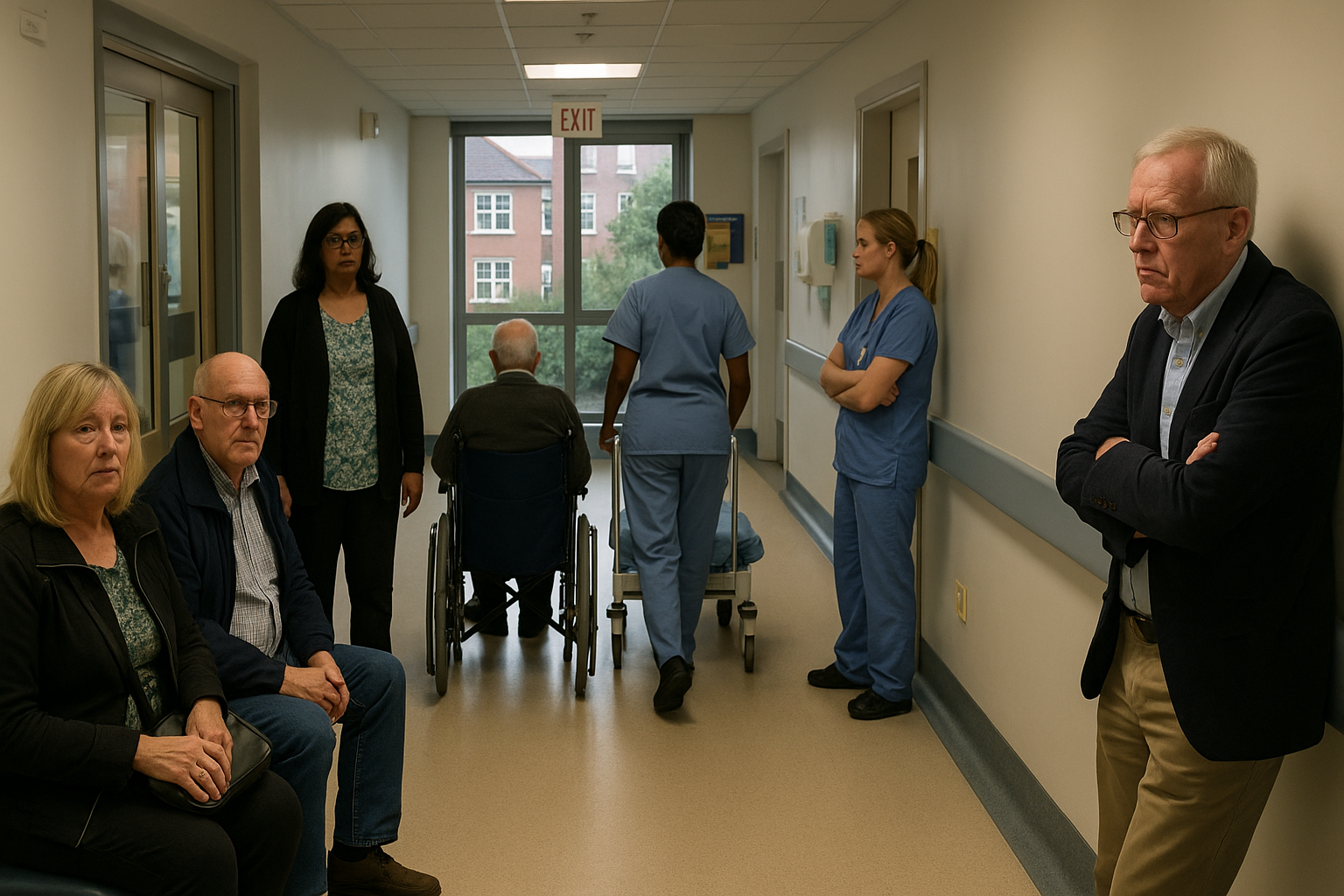
Spire Healthcare just accepted £1.03 billion to go private at the same 250p a share it rejected in 2021. That is not a victory lap. It is a price tag on Britain’s healthcare bottleneck.
Spire Healthcare has agreed to be bought for £1.026 billion — and the bit nobody should miss is this: shareholders are being offered 250 pence a share, exactly the same nominal price Ramsay Health Care offered them in July 2021.
Five years later, after inflation, more patients, more revenue and more operational work, the cash number has not moved a penny. If that doesn’t make you sit up, you’re not paying attention.
The buyer this time is a consortium of funds managed by Toscafund, Three Hills and Ares Management. Spire’s board has backed the all-cash offer, which came in just before the takeover deadline. The offer values the equity at about £1.03 billion ($1.39 billion), represents a 66% premium to Spire’s market value on May 13 — before the approach became public — and already has support from holders of 53.4% of the stock. ([live.euronext.com](https://live.euronext.com/en/financial-news/spire-healthcare-agrees-ps103-billion-takeover-toscafund-and-others?utm_source=openai))
This is not a glamorous deal. There is no AI mascot, no founder in a black turtleneck and no breathless claim that software will change civilisation by Tuesday. It is a bet on hospital capacity, operating discipline and a deeply inconvenient fact: when public healthcare is strained, reliable private capacity becomes a very valuable asset.
The deal is buying a machine, not a story
Spire operates 38 hospitals and more than 55 clinics across the United Kingdom. Its business serves private-pay patients, the insured market and NHS-funded patients. That mix matters. It gives Spire exposure to people willing to pay to get treatment sooner, while also making it a useful provider when the public system needs extra capacity. ([live.euronext.com](https://live.euronext.com/en/financial-news/spire-healthcare-agrees-ps103-billion-takeover-toscafund-and-others?utm_source=openai))
In 2025, Spire generated £1.58 billion in revenue, up 4.5% from 2024, and £268.6 million in adjusted EBITDA, up 3.3%. Its primary-care business grew faster: reported revenue reached £133.7 million, up 10.5%. It also delivered £30 million in efficiency savings during the year. ([prod-investors-cms.spirehealthcare.com](https://prod-investors-cms.spirehealthcare.com/investors/annual-report-and-accounts-2025/?utm_source=openai))
That is the actual asset here. Not hospital buildings in isolation. Not a ticker code. A functioning system for attracting patients, managing clinicians, scheduling theatres, purchasing equipment, billing insurers and navigating NHS demand.
Anyone who has run a serious operating business knows the truth: those systems are hard to build and bloody hard to copy. A hospital group is not a Shopify store. You do not hire five clever graduates, buy some ads and recreate 38 locations with established local referral networks.
The consortium is buying an established platform in an industry where demand is not a fashion trend. People delay buying sneakers. They do not happily delay a diagnosis, a knee replacement or a procedure that lets them get back to work.
Why 250p is both a premium and an insult
The 250p price is a 66% premium to Spire’s market value on May 13. For a shareholder who owned the stock before the bid emerged, that is a proper uplift. Cash in hand beats a hypothetical future every day of the week.
But it is also the exact figure shareholders rejected in 2021 when Australia’s Ramsay Health Care made a final 250p-a-share offer. That earlier deal failed because it did not get the required 75% shareholder approval: 72.07% of shares voted in favour at the court meeting. ([data.fca.org.uk](https://data.fca.org.uk/artefacts/NSM/RNS/4049304.html?utm_source=openai))
That comparison should sober up anyone treating this as a simple win for the board.
Spire is plainly a different business from the one Ramsay tried to buy. It has expanded its integrated-care push, grown revenue and added primary-care capability. It cared for more than 1.36 million people in 2025. Yet shareholders are again being asked to accept 250p. ([prod-investors-cms.spirehealthcare.com](https://prod-investors-cms.spirehealthcare.com/investors/annual-report-and-accounts-2025/?utm_source=openai))
The lesson is brutal but useful: a premium is not the same thing as a great price. Premiums are measured against where the market has marked a stock down to, not against the full value of the business over time.
If a business’s share price has been depressed by wage inflation, political uncertainty, cost pressure and investor boredom, a buyer can pay a handsome-looking premium without necessarily paying handsomely for the underlying machine.
That does not mean the offer is bad. It means shareholders need to separate two questions that lazy analysis mashes together:
1. Is 250p attractive compared with the undisturbed share price? 2. Is 250p attractive compared with holding a scarce healthcare operator through the next decade?
Those are very different questions.
Private equity sees what public markets often miss
The public market likes a clean quarterly story. Healthcare operators rarely provide one. They have staffing costs, regulators, political risk, insurance negotiations, long investment cycles and occasional unpleasant surprises. Investors see complexity and often apply a discount.
Private capital sees the same complexity and asks a more practical question: can we improve it?
Spire’s 2025 numbers show the tension perfectly. Revenue increased 4.5%, but adjusted operating profit rose only 0.7%, while reported operating profit fell 10.8%. The company pointed to material cost pressure, including higher national-insurance contributions and minimum-wage increases. ([live.euronext.com](https://live.euronext.com/en/financial-news/spire-healthcare-agrees-ps103-billion-takeover-toscafund-and-others?utm_source=openai))
That is precisely where financial buyers think they earn their keep. They do not need a miracle. They need a few hundred basis points from better procurement, tighter scheduling, lower administrative drag, disciplined capital spending, sensible pricing and more profitable use of fixed hospital capacity.
Now, I am naturally suspicious whenever a finance bloke says “efficiency” around a hospital. In plenty of industries, that is code for cutting the receptionist who actually knows how the place works. Healthcare is not a spreadsheet exercise. If the owners cut too close to the bone on nurses, maintenance, clinical governance or patient support, the supposed savings come back later as poor care, reputational damage and regulatory pain.
But let’s not pretend every efficiency initiative is evil either. Spire already found £30 million in savings in 2025 while maintaining an operating platform that handled more than 1.36 million people. Good operators can remove waste. Bad owners remove capability. The difference is everything. ([prod-investors-cms.spirehealthcare.com](https://prod-investors-cms.spirehealthcare.com/investors/annual-report-and-accounts-2025/?utm_source=openai))
The overlooked asset is not the hospital: it is the queue
The contrarian angle here is that Spire’s biggest advantage may not be private healthcare demand at all. It may be its ability to sit between multiple funding sources when the NHS needs capacity.
Spire reported NHS revenue growth of 11.4% in 2025, though that growth slowed in the second half as commissioning activity eased. This is a reminder that government-funded volume is useful but not fully within management’s control. ([data.fca.org.uk](https://data.fca.org.uk/artefacts/NSM/RNS/697fb477-0b8a-4f8b-8a3e-d7ee87102a2c.html?utm_source=openai))
That makes the company more interesting, not less.
A pure self-pay hospital operator is exposed to consumer confidence. A pure government contractor is exposed to budget decisions. Spire has a diversified revenue base across private patients, insurers, hospital services and primary care. No sensible buyer will want any one channel to become too dominant, but the blend creates resilience.
The real prize is optionality. If NHS demand accelerates, Spire has established clinical infrastructure. If insured demand grows, it has recognised locations and specialist capacity. If self-pay customers increase, it has direct routes to market. If primary care becomes more integrated with hospital services, it has already built a foothold.
That is why this deal should not be read as a punt on next quarter’s hospital admissions. It is a long-duration infrastructure bet on access to care.
What could still go wrong
The biggest risk is not whether Spire has patients. The business had revenue, growth and a meaningful EBITDA base before this deal. The risk is that the new owners mistake a regulated care business for a generic cost-out project.
Labour is the pressure point. Care quality is the pressure point. Politics is the pressure point. Any owner can make a hospital group look better for a year by deferring investment or overworking good people. That is not value creation. That is borrowing from the future at terrible interest.
There is also execution risk in the deal itself. Support from 53.4% is substantial, but it is not the same as completion. The 2021 Ramsay process is the warning: an agreed price and board recommendation do not guarantee shareholders will hand over the keys. ([live.euronext.com](https://live.euronext.com/en/financial-news/spire-healthcare-agrees-ps103-billion-takeover-toscafund-and-others?utm_source=openai))
And shareholders should remember that cash offers remove upside as well as risk. If Britain’s private healthcare market strengthens faster than expected, the consortium — not former public shareholders — gets the benefit.
What this means for you
For investors, stop getting hypnotised by takeover premiums. Pull up the five-year chart, compare the offer with prior bids, look at revenue and operating progress, then ask what you are surrendering for certainty. A 66% premium can still be a mediocre exit if the starting price was smashed down.
For founders and operators, Spire is a useful reminder that boring infrastructure businesses can be gold when they solve a permanent problem. Build something customers need repeatedly, make it hard to replicate locally, create multiple revenue channels and get operationally excellent. The market may ignore you for stretches. Strategic buyers usually do not.
For leaders, do not wait for a buyer to discover your waste. Spire’s £30 million of savings matters because it proves the business can improve itself. Every operator should know where cash leaks from procurement, scheduling, utilisation, rework and layers of management. Fix it before someone with a leveraged model does it for you.
And for everyone else: the deal is another reminder that queues create value. Wherever customers wait too long for something important — healthcare, housing, energy connections, permits, logistics — there is usually a business opportunity sitting in plain sight. Find the queue. Then build the honest, reliable way around it.