Sprite’s 40-Year Hip-Hop Bet Shows Why Most Brand Campaigns Fail
Most brands borrow culture for a quarter, slap it on a billboard, then wonder why people smell the desperation. Sprite has spent 40 years earning the right to show up.
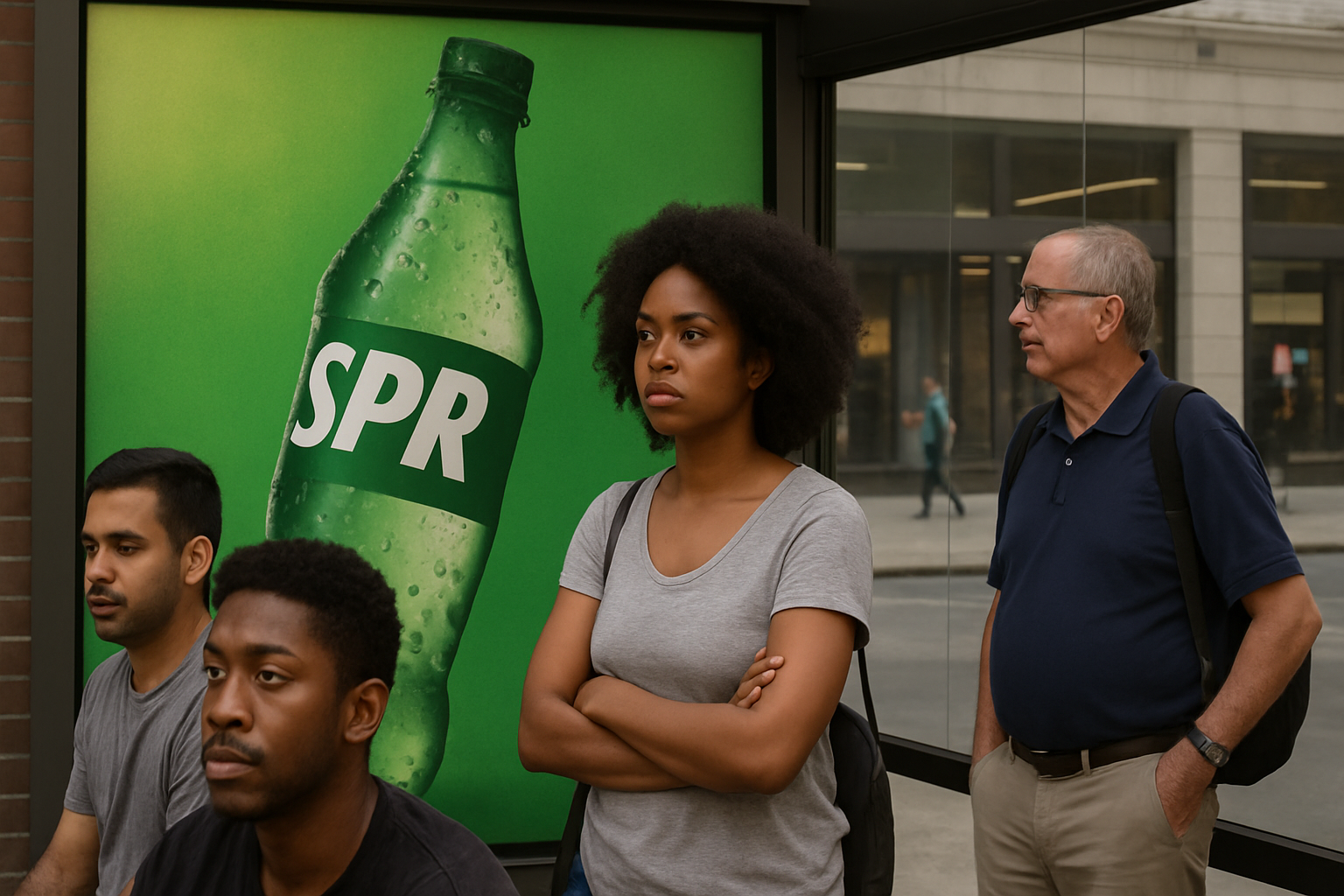
Most brands borrow culture for a quarter, slap it on a billboard, then wonder why people smell the desperation. Sprite has spent 40 years earning the right to show up.
That is the uncomfortable bit for every founder and CMO trying to manufacture relevance with an influencer brief, three TikToks and a brand guideline nobody reads. Culture is not a media channel you rent. It is a reputation you build slowly, then defend when the easy option is to chase the next shiny thing.
Sprite’s 2026 play is not really about a can
This summer, Sprite has put hip-hop history onto limited-edition packaging through its Living Tracklist campaign, linking physical cans to a Genius-powered digital experience and a broader conversation around influential songs across six decades of the genre. It is a tidy bit of modern marketing: product, digital utility, nostalgia and participation all connected in one idea.
But the clever QR code is not the story. The story is that Sprite can make this move without looking like the bloke at the pub who heard one Kendrick Lamar track and suddenly calls himself a hip-hop historian.
Sprite’s relationship with hip-hop goes back to 1986 and was cemented through its 1990s “Obey Your Thirst” work. The brand has kept showing up across music, basketball, fashion and youth culture in the decades since. In March 2026, Sprite also returned as the NBA’s official global soft drink partner, reconnecting a commercial relationship that carries its own long cultural memory.
That continuity is the asset. The campaign is merely this year’s expression of it.
Axios made the broader point neatly in July: as AI makes advertising easier and cheaper to produce, brands are being pushed toward a sea of sameness. Its examples included Sprite, Lemonade and Duolingo, each trying to enter communities in a way that feels less like conventional advertising. The line between participation and exploitation is now the whole game.
Sprite has a head start because it did not wake up in 2026 and decide that music was “a passion point.” It has history. History gives a brand permission. Permission gives creative teams room to do work that does not need to scream, “Please notice us.”
The expensive mistake: confusing attention with belonging
A lot of marketing teams have become very good at getting attention and very bad at earning a place in people’s heads.
Attention is cheap in concept. Pay a celebrity. Buy a trending sound. Create a deliberately provocative line. Feed it into paid social until the dashboard lights up. Then put the screenshots in a board deck and call it brand building.
Sometimes that works for a week. It can even move stock, site visits or sales for a campaign window. But a spike in conversation is not the same thing as a durable association in a customer’s mind.
Sprite’s Living Tracklist makes a more useful distinction. It does not just put an artist on a pack and hope shoppers care. The idea draws on songs and lyrics that already mean something to fans, then gives people a way to explore them through Genius. The brand is attaching itself to a living archive rather than trying to appoint itself the author of the culture.
That is a much harder job than buying borrowed cool. It requires people inside the company who understand the audience, know the history and can spot the difference between a credible collaboration and a cynical costume change.
For founders, this is particularly relevant because startups often mistake speed for permission. You can build an app in a month. You cannot build cultural legitimacy in a month. A fast launch is not the same thing as a brand.
AI is making blandness industrial-scale
I am not anti-AI. I am building a technology company myself. Used properly, AI can reduce the rubbish work: first drafts, asset variations, research organisation, customer-service triage and all the other jobs that steal time from good people.
But marketing has an obvious problem. If every brand uses the same tools, trained on the same internet, prompted by people with the same fear of offending anyone, the output starts to look and sound like it came from one enormous beige committee.
That is precisely why rough edges, specificity and actual cultural roots are becoming more valuable. Axios noted that Lemonade used graffiti-like signage in multiple cities, deliberately leaning into something less polished than the average insurance advertisement. Whether you like the creative or not, the instinct is right: perfect can now look synthetic.
Sprite’s advantage is slightly different. Its work may be highly produced, but the cultural reference is not new. The company is building from a familiar platform rather than inventing a personality every summer.
That should change how operators think about AI in marketing. Do not ask AI to find your brand’s soul. It has not got one, and neither has your competitor’s chatbot. Use it to make execution faster after you have decided what only your business can credibly say.
If your brand could swap logos with three competitors and nobody would notice, the problem is not your content calendar. The problem is that you have not done the strategic work.
The overlooked angle: consistency beats novelty
Marketers are paid to launch things, which means they are naturally biased toward novelty. New platform. New audience. New ambassador. New visual identity. New campaign name. New agency, usually after the old agency has finally learned what the business does.
Consumers do not experience brands that way. They remember fragments: a colour, a phrase, a distinctive sound, a repeated point of view, a feeling attached to a particular moment in their life.
Sprite’s 2026 work is useful because it turns consistency into new material. The company is not rerunning a 1990s ad and praying nostalgia does the heavy lifting. It is using a long-standing relationship with hip-hop as the foundation for packaging, digital exploration and current partnerships. The NBA deal adds another established cultural lane where Sprite has previous credibility.
That is how a brand becomes recognisable without becoming stale. You retain the core association, then update the delivery mechanism.
Duolingo offers another version of the same lesson. Its Japanese-language anime series did not come from nowhere: the company had observed that people were using the product to engage with anime. The brand followed a real user behaviour and expressed it in a format those users already value.
Notice what both examples avoid. Neither starts with, “What are the kids doing this week?” That question produces embarrassing marketing. The better question is: “Where do our customers already find meaning, and what right have we earned to help?”
The answer may be nowhere. That is fine. Better to admit it than force your logo into a community that did not invite you.
The guardrail every ambitious brand needs
There is a catch: cultural proximity can become a liability when it is careless.
Sprite’s own brand leaders have described the need to reject material that conflicts with the brand’s values. That is not corporate hand-wringing. It is basic stewardship. When a company enters music, sport, gaming or any other fast-moving community, marketing, communications and legal need to work together early—not after a campaign has been filmed, paid for and scheduled.
Legal should not be there to sand every sharp edge off an idea. That is how you end up with advertising nobody dislikes because nobody remembers it. Their job is to help the business understand the genuine risks: rights, reputation, audience fit, partner conduct and the difference between boldness and stupidity.
The best operators make this a design constraint at the beginning. They do not throw a concept over the fence to legal two days before launch and call the inevitable panic “process.”
What this means for you
Here is the practical version. You do not need Sprite’s budget, its 40-year history or an NBA partnership to build a better brand. You do need to stop treating marketing as a string of disconnected stunts.
First, write down the three associations you want customers to carry when they hear your company name. Not your mission statement. Associations. For example: trustworthy, obsessive about craft, and useful under pressure. If your team cannot agree on three, do not spend another dollar on a campaign.
Second, audit the proof. Where have you genuinely earned those associations? Customer stories, product decisions, founder behaviour, community involvement and service standards all count. A mood board does not.
Third, choose one cultural or professional community where you have a legitimate connection. Then show up repeatedly for 12 months. Make something useful. Sponsor something relevant. Publish knowledge that helps people in that community win. Do not arrive with a slogan and vanish when the engagement rate drops.
Fourth, use AI to accelerate production, not to outsource judgement. Let it help create versions. Do not let it decide what your company should stand for.
Finally, measure memory as well as clicks. Ask new customers how they heard of you, what they believe you do better, and what words they would use to describe you. Revenue matters most, obviously. But revenue becomes less expensive to earn when people already know what you are about.
Sprite’s lesson is dead simple: relevance is not something you announce. It is the compound interest on years of behaving like you belong.