Stan Kroenke’s Reported $4B Angels Deal: Why Arte Moreno Sold Baseball’s Best Fixer
$4 billion for a club that has not won a playoff game since 2009 is not a baseball deal. It is a brutal lesson in what a great market is worth when the owner finally stops getting in the way.
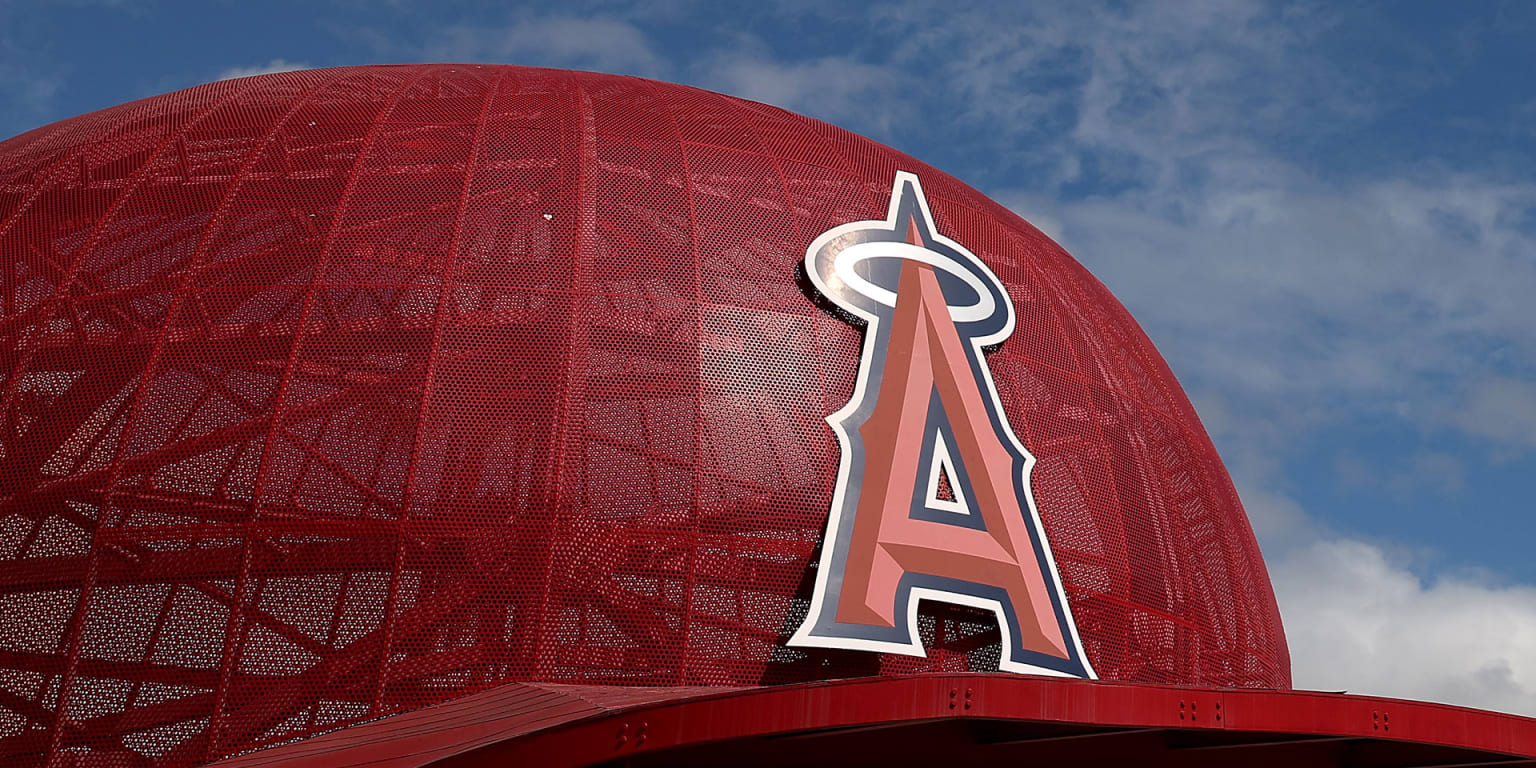
$4 billion for a club that has not won a playoff game since 2009 is not a baseball deal. It is a brutal lesson in what a great market is worth when the owner finally stops getting in the way.
Stan Kroenke has bought the problem Arte Moreno could not solve
Kroenke Sports & Entertainment has signed a definitive agreement to acquire a controlling interest in the Los Angeles Angels from Arte Moreno’s family. The deal is expected to close in the first quarter of 2027, subject to Major League Baseball approval and the usual closing conditions. The parties did not announce a price, but multiple reports put the valuation at $4 billion—an MLB record, narrowly ahead of the San Diego Padres’ recent $3.9 billion sale. ([mlb.com](https://www.mlb.com/news/stan-kroenke-purchases-angels-from-arte-moreno?utm_source=openai))
That number should make every founder and investor sit up straight.
Moreno bought the Angels from Disney in 2003 for $183.5 million. If the reported $4 billion valuation holds, he is walking away with roughly 22 times his purchase price. He did not produce a dynasty. He did not build the ballpark district he once wanted. He owned Mike Trout for his entire career and had Shohei Ohtani for the first five seasons of Ohtani’s American career, and still built a club that has not made the postseason since 2014. ([forbes.com](https://www.forbes.com/sites/zacharyfolk/2026/09/01/stan-kroenke-buys-los-angeles-angels-in-4-billion-deal/?utm_source=openai))
That is not praise for the previous regime. It is the opposite. It is proof that scarce assets in exceptional locations can become more valuable even when they are badly operated.
The Angels entered September at 53-85, tied for the worst record in the American League. They have not posted a winning season since 2015. By the time this sale closes, the franchise will have endured an 11th straight losing season and a 12-season playoff drought. That is a disgrace for a club in Southern California with Trout, a lucrative big-market identity and 23 years under one owner. ([mlb.com](https://www.mlb.com/es/dodgers/news/kroenke-sports-entertainment-acuerda-comprar-los-angelinos-de-los-moreno?utm_source=openai))
Kroenke has not bought a turnaround story. He has bought an under-managed platform with a massive ceiling.
The $4 billion price is really about location, not last place
People will look at the Angels’ on-field mess and call $4 billion irrational. That is how people miss the point.
Nobody is paying that figure for 2026 wins. They are paying for a permanent seat in one of America’s biggest sports and entertainment markets, a recognisable MLB brand, a corporate base, tourism, year-round weather and a fan base that has been frustrated—not extinguished.
KSE said the acquisition extends its Southern California footprint into a market of more than three million residents and creates the chance for a year-round local events calendar. That is the language of an operator who sees more than 81 home games. It is a statement about distribution, sponsorship, premium hospitality, consumer data, real estate optionality and cross-promotion across a sports portfolio. ([mlb.com](https://www.mlb.com/news/stan-kroenke-purchases-angels-from-arte-moreno?utm_source=openai))
Kroenke already owns the NFL’s Los Angeles Rams and developed SoFi Stadium plus the 300-acre Hollywood Park district in Inglewood. He also controls the Denver Nuggets, Colorado Avalanche, Colorado Rapids and Arsenal. When the Angels transaction closes, he will have a controlling franchise in each of the four major US men’s leagues. ([frontofficesports.com](https://frontofficesports.com/article/stan-kroenke-arte-moreno-angels-sale/))
That matters because Kroenke is not simply collecting trophies for the study wall. His best work has been turning sport into an ecosystem. SoFi is not valuable merely because it hosts Rams games. It is valuable because it is a venue, a content backdrop, a sponsorship machine, an events business and a piece of a broader real-estate district.
The Angels offer a different version of that puzzle. Anaheim is not Inglewood, and Angel Stadium is not SoFi. But the commercial question is obvious: how much value has been left on the table by a franchise that has spent a decade drifting while sitting on a major-market asset?
My guess: a bloody lot.
Mike Trout was never the business problem
Sports fans love to blame players because players are visible. Owners and operators prefer that arrangement because it keeps attention away from the boring stuff that actually decides whether a club compounds value.
Trout was not the Angels’ failure. Ohtani was not the Angels’ failure. The failure was treating superstars as the strategy rather than as an asset that needs a competent machine around it.
A star player can sell tickets, jerseys and a few more corporate packages. A functioning organisation turns that attention into a repeatable advantage: scouting, player development, medical systems, analytics, leadership, stadium experience, media and commercial partnerships.
The Angels had Trout and Ohtani and did not make the playoffs with either combination. Ohtani later signed his $700 million deal with the Los Angeles Dodgers, who went on to win two World Series titles, according to Forbes. The contrast is harsh because it should be. Talent does not rescue bad operating systems. It exposes them. ([forbes.com](https://www.forbes.com/sites/zacharyfolk/2026/09/01/stan-kroenke-buys-los-angeles-angels-in-4-billion-deal/?utm_source=openai))
Kroenke’s first test will not be whether he opens the chequebook for a shiny free agent. Any billionaire can do that once, then hold a press conference and wait for applause.
The real test is whether KSE builds a baseball operation that can make good decisions when no one is watching. Who gets hired as the permanent baseball boss after John Mozeliak’s interim tenure ends? How much authority does that person genuinely have? What changes in player development, performance and international scouting? Does the club stop confusing expensive with serious?
The fans do not need another owner who says winning matters. Every owner says that. They need an operating model that makes losing expensive internally.
The overlooked asset is Angel Stadium—and the risk is political
Here is the bit people will either ignore or wildly overstate: Angel Stadium.
The stadium is old—the fourth-oldest in MLB—and the club’s long-running redevelopment ambitions with Anaheim have been a mess. Moreno previously pursued a deal to acquire the city-owned ballpark as part of a larger development plan, but that agreement collapsed amid the corruption investigation involving former Anaheim mayor Harry Sidhu. A subsequent lease extension allows the Angels to remain at the stadium through 2038. ([frontofficesports.com](https://frontofficesports.com/article/stan-kroenke-arte-moreno-angels-sale/))
That means Kroenke has time. It does not mean he has a development entitlement wrapped in a bow.
This is where the casual “Kroenke will build another SoFi” chatter gets silly. Redevelopment around Angel Stadium could be enormously valuable, but public land, municipal politics, housing expectations, local approvals and community trust are not spreadsheet cells you can simply format green. Moreno’s failed attempt is the warning label.
Still, KSE has an edge few buyers possess: it has actually delivered a huge sports-and-entertainment district. That does not guarantee another win in Anaheim. It does mean Kroenke understands the work, the patience and the capital required better than the bloke whose entire plan is to slap luxury suites on an old stadium and call it transformation.
The contrarian view is this: the stadium is not yet the deal’s jackpot. It is an option. Options are valuable, but only if you do not delude yourself into pricing them as certain.
Why this sale matters beyond Anaheim
The reported $4 billion price is a warning shot across baseball.
It says mediocre performance is no longer enough to stop big-market franchises from becoming extraordinary financial assets. It also tells every owner of a sleepy, under-commercialised club that the market will reward scarcity and upside—sometimes handsomely—even after years of poor execution.
But it also raises the pressure on operators. A buyer who pays a record number cannot afford to run the asset like a family hobby. The return has to come from commercial growth, better baseball, improved venue economics or—ideally—all three.
There is another complication. The transaction is slated to close after MLB’s current collective bargaining agreement expires on December 1, and the league is heading into tense labour negotiations. Kroenke may inherit a new economic system, or a period of disruption, just as he takes over. That is not a reason to avoid the asset. It is a reason to have enough balance-sheet strength and operational discipline to buy through uncertainty. ([frontofficesports.com](https://frontofficesports.com/article/stan-kroenke-arte-moreno-angels-sale/))
That is the difference between rich and capable. Rich people can buy expensive things. Capable people buy them knowing precisely which assumptions must be right for the purchase to work.
What this means for you
You are probably not buying an MLB club this week. Good. The lesson is more useful at your scale.
First: buy platforms, not headlines. The Angels were a terrible current product but a superb underlying asset: market, brand, distribution, customer base and optionality. When you assess a business, separate the operator’s performance from the quality of the asset itself. A poorly run business can be a bargain. A fashionable business with no structural advantage is often just an expensive headache.
Second: do not confuse star talent with a system. If one great salesperson, creator, athlete or executive is carrying your company, you have a vulnerability, not a strategy. Build the machinery behind the talent: recruiting, training, incentives, data, process and accountability.
Third: treat optionality honestly. The Angel Stadium precinct could become enormously valuable. It could also remain complicated for years. In your own deals, price the base case on what you control today. Treat the upside as upside—not permission to overpay.
Finally, do not be impressed by the $4 billion. Be interested in the gap between what the Angels have been and what a ruthless operator believes they can become. That gap is where the money is made. Kroenke did not buy a baseball team because he loves box scores. He bought a valuable mess because valuable messes are where good operators earn their keep.