Starbucks’ $39B Chipotle Play Could Wreck Brian Niccol’s Turnaround
A $39 billion burrito purchase is not a growth strategy. It is what a CEO does when fixing the core business starts to feel too slow.
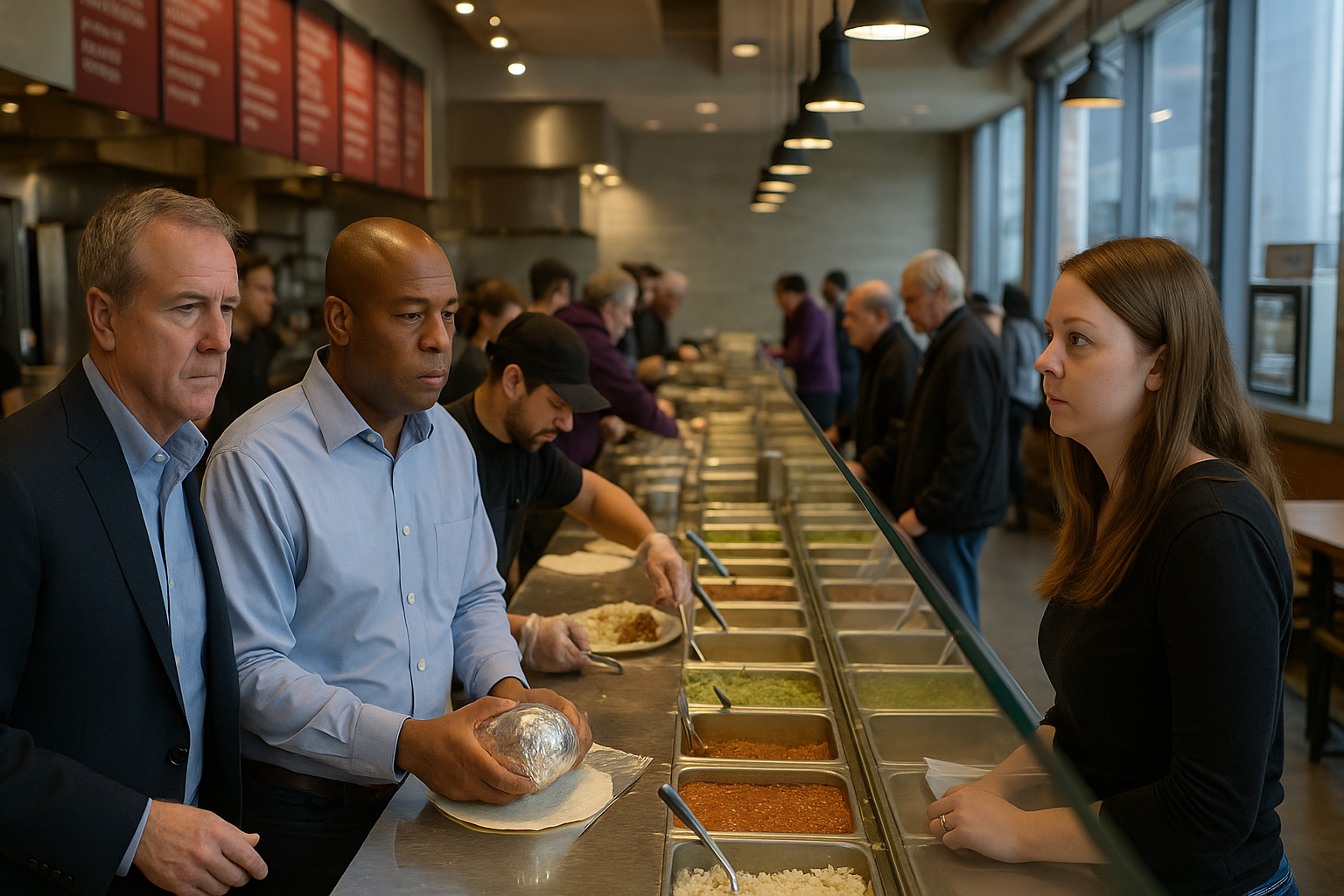
A $39 billion burrito purchase is not a growth strategy. It is what a CEO does when fixing the core business starts to feel too slow.
Starbucks has reportedly explored buying Chipotle Mexican Grill, the company its own chief executive, Brian Niccol, used to run. If it happens, it would be the biggest restaurant acquisition on record by a country mile. That is precisely why shareholders should be nervous, not impressed. ([Reuters](https://www.reuters.com/business/retail-consumer/starbucks-has-explored-chipotle-takeover-ft-reports-2026-10-08/))
I understand the seduction. Big deals make boards feel like they are doing something decisive. Bankers produce glossy slides. The strategic logic gets dressed up in phrases such as “adjacent occasions”, “portfolio diversification” and “cross-brand synergies”. Then someone says the combined business can own breakfast, lunch and afternoon coffee, and suddenly everybody is pretending they have discovered fire.
But Starbucks does not need a new empire. It needs to make a decent cup of coffee quickly, in a store people actually want to sit in, at a price that does not make regular customers feel like they have been mugged.
The reported deal is enormous — and still only an idea
Reuters reported on October 8 that Starbucks had worked with advisers in recent months on a takeover proposal for Chipotle. At the time, Chipotle had a market capitalisation of nearly $39 billion, while Starbucks was worth about $107 billion. Neither company commented to Reuters, and there is no public evidence of a formal offer, an agreed price or active negotiations. That distinction matters. This is reported exploration, not a signed deal. ([Reuters](https://www.reuters.com/business/retail-consumer/starbucks-has-explored-chipotle-takeover-ft-reports-2026-10-08/))
Still, the market took the report seriously because the people involved make it plausible. Chipotle shares rose about 4% in early trading, while Starbucks fell about 3%. Other reporting said Chipotle jumped as much as 8% during the day. Markets are not always wise, but they are usually clear on one point: the target’s shareholders expect a premium; the buyer’s shareholders worry about the bill. ([Reuters](https://www.reuters.com/business/retail-consumer/starbucks-has-explored-chipotle-takeover-ft-reports-2026-10-08/)) ([Axios](https://www.axios.com/2026/10/08/chipotle-starbucks-stock-brian-niccol))
The deal would bring together two of America’s best-known food brands. Starbucks has a massive global footprint and deep expertise in real estate, rewards, mobile ordering and international expansion. Chipotle has a sharper food proposition, a simpler menu and a company-operated restaurant model that has historically made expansion more controllable than the franchise-heavy model used by many competitors.
That is the tidy version.
The untidy version is that Starbucks would be taking on an acquisition likely worth well beyond Chipotle’s then-market value once a control premium is included — while its own turnaround remains unfinished. The price, funding structure and any regulatory posture are unknown. But at that scale, Starbucks would almost certainly have to make hard choices about debt, shares, buybacks, dividends, capital spending or some mixture of all five.
That is not “strategic optionality”. That is a massive wager.
Brian Niccol knows Chipotle — perhaps too well
Niccol is not some banker’s spreadsheet appointment. He built his reputation at Chipotle before Starbucks recruited him to lead its recovery. Reuters noted that he has spent the past two years simplifying Starbucks’ menu and cutting wait times, efforts that helped deliver four straight quarters of comparable-sales growth. ([Reuters](https://www.reuters.com/business/retail-consumer/starbucks-has-explored-chipotle-takeover-ft-reports-2026-10-08/))
That history creates the obvious bull case: Niccol knows the asset, knows the operating model and presumably knows where Chipotle’s bodies are buried. Buying a business you understand is infinitely better than buying a trendy business because the board is terrified of missing the next thing.
But knowing a company well can create its own trap. Founders, former operators and industry veterans often overestimate their ability to recreate an old success in a new setting. They see an asset through the eyes of the person who once fixed it, rather than through the eyes of the shareholder now being asked to fund it.
The question is not whether Niccol could run Chipotle well. He already did.
The question is whether he can run Starbucks better by owning Chipotle.
Those are entirely different questions, and boards routinely muddle them up.
The case for it is real, but it is not cheap
There is a genuine industrial logic here. Starbucks is strongest in coffee, breakfast, snacks and the morning routine. Chipotle gives it a credible lunch and dinner platform. Both companies have digitally engaged customers, thousands of company-operated sites and brands that can support higher prices when the product and experience justify them.
Starbucks’ overseas footprint could also give Chipotle a more serious path to international expansion. Chipotle has long been far more concentrated in the United States than Starbucks, which operates at a global scale. That is a plausible growth opportunity, not banker fiction. ([CNBC](https://www.cnbc.com/2026/10/08/why-a-starbucks-takeover-of-chipotle-would-and-wouldnt-make-sense-for-both-companies.html))
There may also be practical gains in procurement, property, payments, loyalty infrastructure and back-office spending. Not every synergy is nonsense. If two large operators buy food, build stores, negotiate leases, run apps and pay armies of accountants, there will be duplicated costs somewhere.
But here is the inconvenient bit: a $39 billion target is too large for cost savings to rescue a stupid price.
When a buyer pays a large premium for a business, “synergies” become the euphemism for years of pressure. Someone has to make the numbers work. That can mean fewer workers, smaller teams, slower store investment, tougher supplier negotiations, menu price rises or all of the above. You do not magically create return on investment by calling overhead “shared services”.
And Chipotle is not being discussed as a distressed bargain. Reuters reported that the burrito chain has faced muted demand and rising input costs amid still-high inflation. That might make it look more attainable than it did at its peak, but it does not turn a giant public-company acquisition into a clearance sale. ([Reuters](https://www.reuters.com/business/retail-consumer/starbucks-has-explored-chipotle-takeover-ft-reports-2026-10-08/))
The overlooked risk is not antitrust. It is distraction.
People will immediately ask whether regulators would approve Starbucks buying Chipotle. It is a fair question, but probably not the main one. They sell different core products. Coffee and burritos are not the same market, even if both end up in the same lunch bag.
The bigger risk is management attention.
Starbucks has spent years proving that scale can become a burden. The company needs operational discipline: better service, better stores, a cleaner menu, lower friction and a reason for customers to return more often. Niccol’s turnaround plan is working well enough to show early traction, but early traction is exactly when leaders should double down on the machine that is starting to work.
Instead, a Chipotle acquisition would demand months of board time, diligence, financing discussions, investor outreach, regulatory work and integration planning. Then comes the truly expensive part: years of combining systems while insisting publicly that each brand will remain wonderfully independent.
That is how good turnarounds get derailed. Not because management becomes incompetent overnight, but because it decides it can fix two complicated businesses while buying one of them at peak public scrutiny.
I have seen this in business more times than I care to admit. Operators get bored with the unglamorous work just before it compounds. The harder task is usually the right one: improve the core offer, recruit better people, cut the rubbish, listen to customers and repeat. A giant acquisition feels faster because it is louder. Loud is not the same as useful.
The market reaction gave the board the answer
The cleanest signal in this story was not a quote from an analyst. It was the share-price reaction.
Chipotle rose because its shareholders could get paid a premium. Starbucks fell because its shareholders saw a potential cheque with a very large number of zeroes on it. That is not proof a deal would fail. It is simply the market saying the burden of proof belongs entirely to Starbucks.
And it should.
If Niccol and the Starbucks board ever put a formal offer on the table, they need to answer four questions in plain English:
1. What exact problem at Starbucks does buying Chipotle solve that management cannot solve organically? 2. What is the total price, including the premium, financing costs and integration spending? 3. Which specific savings or growth gains pay for that price — and by when? 4. What will Starbucks stop doing to ensure its existing turnaround does not get neglected?
If the answers are vague, the deal is wrong. Full stop.
What this means for you
For founders and operators, there is a useful lesson here that has nothing to do with owning Starbucks shares.
When your core business begins to improve, do not immediately go looking for a shiny second business to buy, launch or bolt on. First, work out whether the existing machine can compound harder with another 12 months of focus.
Tomorrow, make a one-page “distraction audit”. Write down every expansion idea, side project, acquisition target or new product your team is discussing. Against each one, answer three brutally simple questions:
- Does it solve a customer problem our core business cannot solve itself? - Can we explain the financial return without using the word “synergy”? - What important work will get worse if our best people spend six months on this?
If you cannot answer those questions with numbers, kill the idea or park it.
For investors, remember the buyer-target rule: when a takeover story breaks, do not ask only whether the target is attractive. Ask whether the buyer has earned the right to be distracted. A brilliant asset can still be a dreadful acquisition at the wrong price, funded the wrong way, at exactly the wrong time.
Starbucks buying Chipotle could become a historic restaurant deal. That does not make it a good one. The best version of Starbucks right now may not be a bigger Starbucks. It may be a more focused one.