Starcloud’s $250M Raise: The $2.3B Bet on Starship
A startup just hit a $2.3 billion valuation for data centres in space — before the rocket it needs has proven it can carry the business.
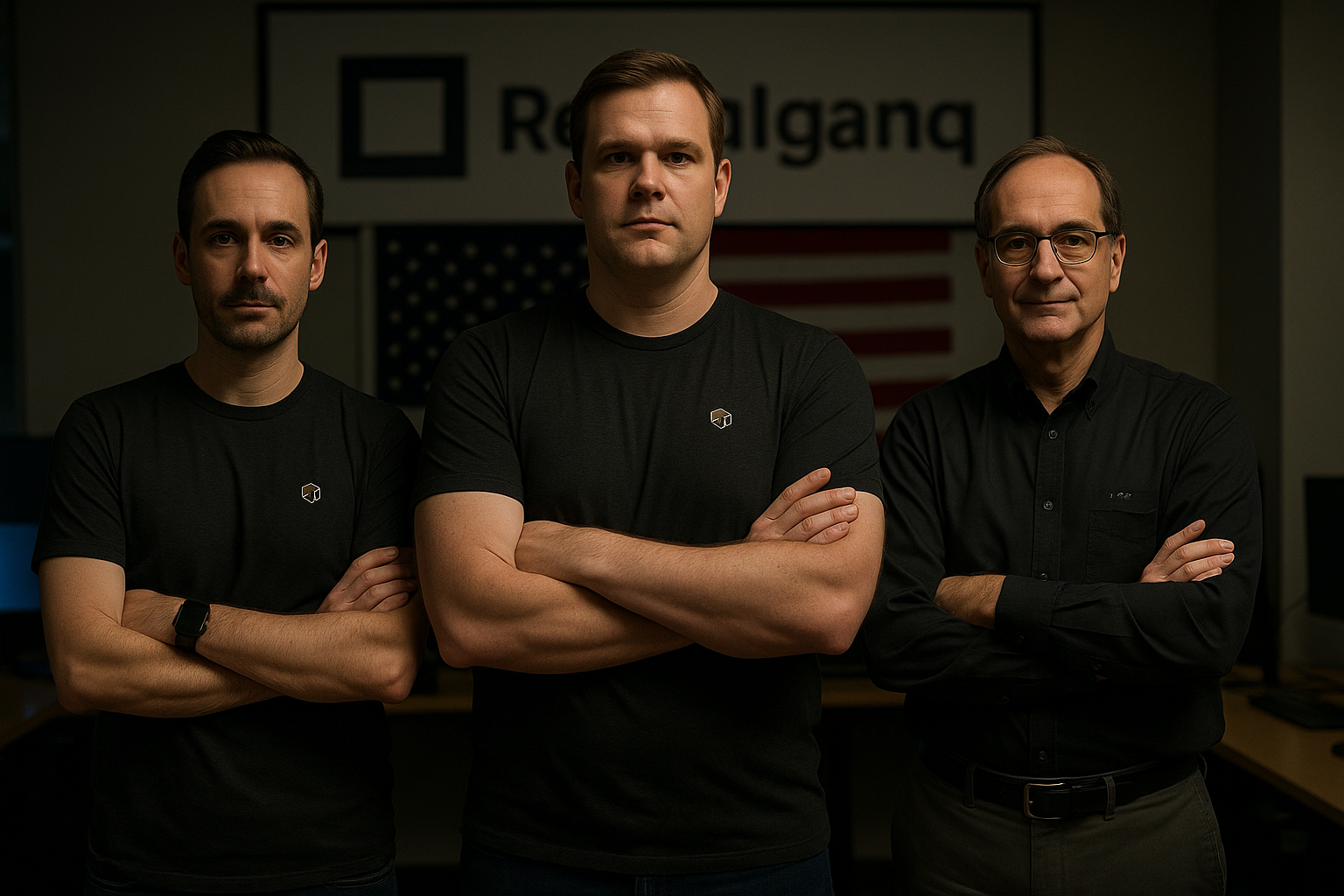
A $2.3 billion valuation for data centres in space is either visionary capitalism or a very expensive reminder that PowerPoint has no gravity.
Starcloud has just raised a $250 million extension to its Series A, only months after raising $170 million at a $1.1 billion valuation. That is a savage step-up in a short period of time. The company is now valued at $2.3 billion because investors think the next bottleneck in AI is not software, chips or clever prompts. It is power.
They may be right. But there is a bloody large catch: Starcloud’s big plan depends on launch capacity that is tight today and on SpaceX’s Starship becoming a reliable, rapidly reusable heavy-lift machine tomorrow.
Starcloud is raising money for a supply chain, not just a product
The headline is an orbital data centre. The practical story is much more interesting.
Starcloud, founded in 2024 and based near Seattle, is building satellites capable of running AI workloads in orbit. Its first satellite, Starcloud-1, launched in November 2025 with an Nvidia H100 GPU onboard. The company’s next systems are intended to be far more capable. Its forthcoming Starcloud-3 spacecraft is designed to fly on Starship.
The $250 million extension was led by Manhattan West Ventures. Nvidia and Cisco participated alongside returning investors including Benchmark and EQT. The new money follows Starcloud’s $170 million Series A announced on March 30, 2026. Put simply, the company has pulled together $420 million across those two Series A financings in less than five months.
That is not normal venture funding. It is infrastructure funding wearing a hoodie.
Philip Johnston, Starcloud’s CEO, has been unusually direct about where the money needs to go: manufacturing capacity and launch access. The company is opening a larger manufacturing operation, including a 100,000-square-foot facility in Woodinville, Washington. But satellites are not SaaS. You do not hit “deploy” and watch a graph go up and to the right. You build complicated hardware, qualify components, insure it, book a ride to orbit, launch it, then hope the bloody thing works in an environment designed to kill electronics.
The easy bit is raising the money while AI investors are throwing cheques at anything that sounds like a workaround for data-centre constraints. The hard bit is turning dollars into deployed, revenue-producing capacity before the economics or the launch calendar turn against you.
Why investors are taking the idea seriously
The problem Starcloud is pointing at is real.
AI data centres consume enormous amounts of electricity, require serious cooling and increasingly run into land, grid and permitting constraints. Every large AI company wants more compute. Every data-centre developer wants more power. Those desires are now colliding with the physical world: transmission queues, local objections, water concerns, equipment shortages and projects that take years rather than quarters.
Orbit has an obvious theoretical appeal. Solar energy is abundant. There is no local council meeting. There is no neighbour complaining about diesel generators. And there is no need to compete with a semiconductor plant, a city or a steel mill for the same patch of grid capacity.
That does not mean space is automatically cheaper. It means the constraint shifts.
On Earth, the constraint is power, permitting and construction. In space, it is launch cost, launch cadence, satellite manufacturing, radiation tolerance, thermal management, communications and operational complexity. Anyone telling you one is a magic fix for the other is selling fairy floss.
Still, this is why the round matters. Starcloud is not merely pitching a weird satellite business. It is pitching an alternative supply chain for AI infrastructure. That is a far bigger market if it works.
The company has also filed plans connected to an enormous ambition: an 88,000-satellite orbital data-centre constellation. The number sounds mad because it is mad. It is also useful because it tells you this is not a niche plan to host a few specialised workloads. Starcloud is aiming at scale where the company can matter to governments, cloud providers and AI companies.
That ambition is exactly why a normal venture-capital lens is inadequate here.
The real product is cheap, dependable access to space
Here is the overlooked bit: Starcloud is not fundamentally betting on solar panels or GPUs. It is betting on transport.
The company can build a terrific satellite. Nvidia can provide serious compute. Cisco can help make the infrastructure credible. None of that changes the central equation if getting mass to orbit remains scarce, costly or unpredictable.
Starcloud has said it may consider a dedicated Falcon 9 mission and contracts with other launch providers. Sensible. If launch is your raw material, you secure it early. But the long-term economics still depend heavily on Starship delivering on its promise of very large payloads and rapid reuse.
That is a strategic dependency, not a footnote.
For founders, this is an important distinction. Strategic partnerships look terrific in a funding announcement. Structural dependencies are what determine whether your company lives or dies. If one supplier, one regulator, one manufacturer or one unproven platform controls your unit economics, you have not eliminated risk. You have concentrated it.
Starcloud has raised enough money to buy time, hire talent, build a factory and reserve options. It has not raised enough to repeal physics or force a launch schedule into existence.
And that is why the $2.3 billion valuation deserves both respect and suspicion. Respect, because the team has identified a massive emerging constraint in AI. Suspicion, because markets have a habit of valuing the solved version of a business long before the business has solved its ugliest problem.
The contrarian view: this may be a better defence business than cloud business
The popular image is millions of AI queries being processed in space because Earth has run out of power. Maybe. But that is a long way off.
The nearer-term commercial case is narrower and more credible: processing data already generated in orbit.
Earth-observation satellites produce huge amounts of imagery and sensor data. Sending all of it down to Earth can be slow, bandwidth-heavy and costly. Processing some of it onboard or nearby in orbit could be useful for defence, intelligence, disaster response, maritime surveillance and remote sensing. In those cases, the question is not whether orbital compute beats a cheap terrestrial data centre in Virginia. It is whether it gets a mission-critical answer faster or avoids sending mountains of raw data through constrained communications links.
That is a much better wedge.
It is less glamorous than “replace terrestrial hyperscalers,” but it is where the company can prove reliability, earn revenue and learn what customers will actually pay for. Great infrastructure businesses nearly always start with a painful, specific use case before they become grand platforms.
The danger is founder theatre. When your end-market story is gigantic, it is tempting to talk only about the gigantic bit. Smart operators do the opposite. They obsess over the first customer, the first repeatable deployment, the first operational failure and the first gross-margin proof point.
If Starcloud can turn orbital inference for satellite and government customers into a real business, it earns the right to pursue the bigger data-centre vision. If it cannot, the 88,000-satellite dream is just an expensive screensaver.
What this says about venture capital now
The venture market is splitting into two games.
One game is software businesses getting funded on speed, distribution and early revenue. The other is strategic infrastructure getting funded because a small number of investors believe the underlying constraint is so large that being early matters more than conventional metrics.
Starcloud sits firmly in the second camp. Its valuation is not based on what its current revenue must be. It is based on the option value of owning capacity in a future where AI demand overwhelms terrestrial supply.
That is not irrational. But it is brutally unforgiving.
In software, you can pivot after six months of poor customer feedback. In hard infrastructure, a bad design choice can cost years. In space, a bad design choice can burn up, go silent or become a very expensive piece of rubbish travelling around the planet.
Investors know this. That is why the best thing in Starcloud’s announcement is not the valuation. It is the capital going into manufacturing and launch planning. The company is at least spending against the real bottlenecks rather than pretending a bigger brand campaign will solve them.
What this means for you
Whether you are building a startup, running a company or investing your own money, take three lessons from Starcloud.
First: find the real constraint, not the fashionable one. Everyone says AI needs better models. Starcloud is betting that AI needs power and physical capacity. In your business, ask what genuinely blocks growth: sales talent, customer trust, working capital, regulation, inventory, approvals or distribution. Fix that before spending another dollar on shiny tools.
Second: distinguish a partnership from control. A famous investor or supplier can make your pitch deck look impressive. It does not guarantee access when demand spikes. Identify every dependency that can break your business, then build options before you need them. Secure second suppliers. Lock in capacity. Negotiate terms while you still have leverage.
Third: make the first use case boringly real. Do not sell the ten-year vision before you can explain tomorrow’s customer. Starcloud’s believable near-term opportunity is processing satellite data in orbit. Your version might be a single customer segment, one product line or one painful workflow. Win there first. The grand story is useful. Cash flow is better.
Starcloud may become one of the defining infrastructure companies of the AI era. Or it may become a spectacular lesson in what happens when a valuation gets ahead of launch physics.
Either way, the lesson is worth stealing: when the crowd chases the next clever app, look for the bottleneck underneath it. That is usually where the serious money gets made.
Sources
- Starcloud raises $250 million for orbital data centers as launch options dry up
- Starcloud raises $170 million Series A to build data centers in space
- Starcloud Raises $250 Million at $2.3 Billion Valuation to Scale AI with Orbital Data Centers
- FCC Chairman Statement on Spectrum Abundance for Weird Space Stuff