Starman Optical’s $285M GoPro Deal Is a Public-Market Bet
GoPro wasn’t rescued for $285 million. It was bought because a dying camera brand, more than 2,500 U.S. patents and a Nasdaq listing are cheaper than building an AI optics platform from scratch.
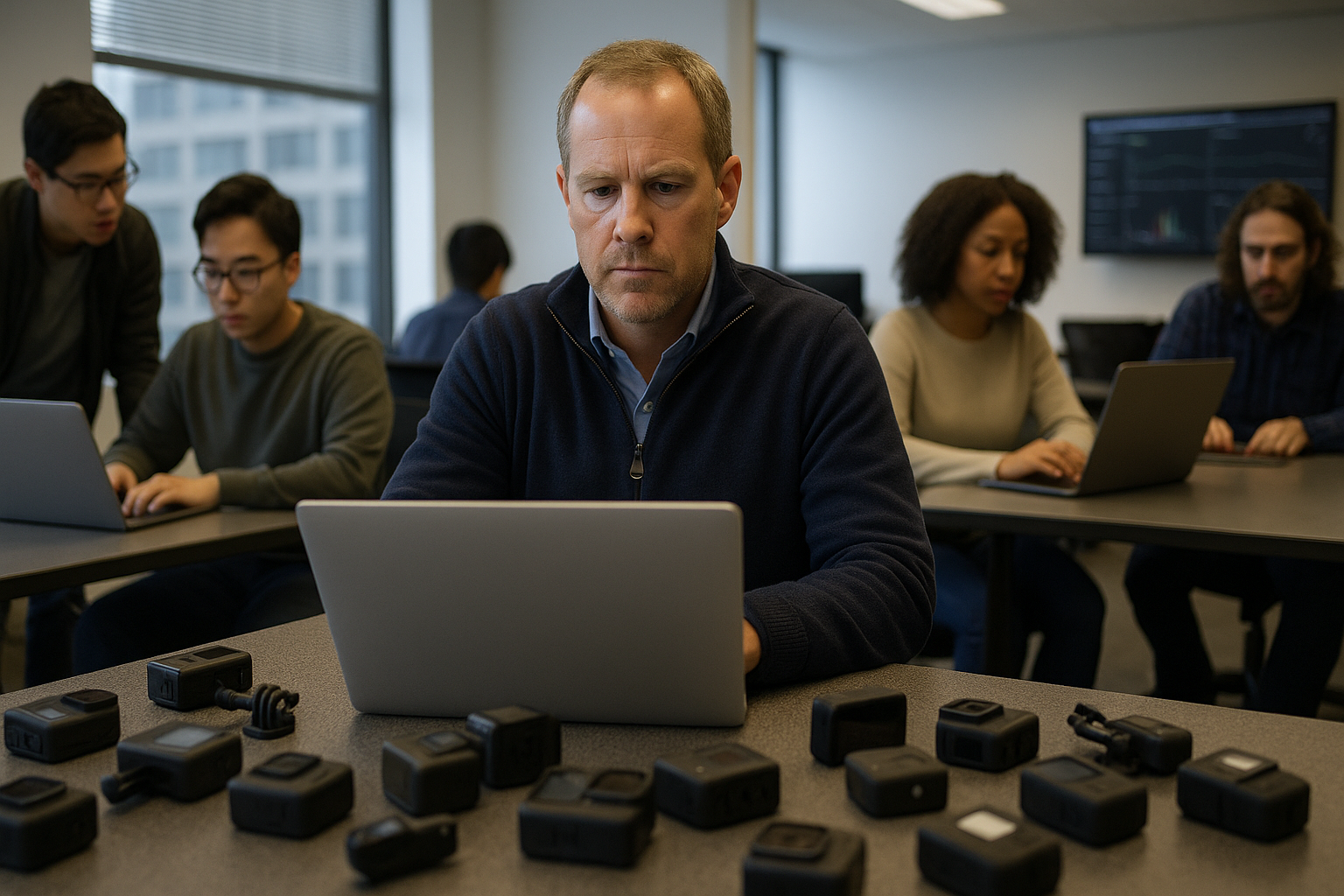
GoPro wasn’t rescued for $285 million. It was bought because a dying camera brand, more than 2,500 U.S. patents and a Nasdaq listing are cheaper than building an AI optics platform from scratch.
That sounds harsh because it is. But it is also the only useful way to read Starman Optical’s September 1 deal for GoPro.
A $285 million exit from the action-camera business
Starman Optical has agreed to merge with GoPro in a transaction that pays GoPro shareholders an aggregate $285 million in cash, or $1.14 per share, subject to a working-capital adjustment. Existing GoPro shareholders are expected to retain roughly 10% of the combined public company. The deal is expected to close by the end of 2026.
It also clears GoPro’s roughly $92 million of debt.
That last bit matters. Debt is not just an accounting line when a business is shrinking; it is a timer. GoPro had warned in June that there was substantial doubt about its ability to continue without additional funding. Founder and CEO Nicholas Woodman put $20 million into the company in July. That is not the behaviour of a business choosing between good options. It is the behaviour of a business buying time.
Starman gets 90% of the vehicle. GoPro holders get cash plus a 10% stub in a company that will now pitch itself as an American optics and imaging platform spanning consumer products, commercial markets, defence, robotics, aerospace and AI infrastructure.
That is a hell of a pivot from helmet cameras.
The legal mechanics are worth reading because they tell you what this actually is. Starman Optical, a subsidiary of Action Acquisitions LLC, merges into GoPro; GoPro survives as a subsidiary of the parent. In plain English: the listed company stays alive, but control moves decisively to Starman.
This is not Starman falling in love with the GoPro brand. It is a recapitalisation and reverse takeover wearing the more cheerful label of a merger.
Why GoPro became cheap enough to buy
GoPro was once one of the market’s loudest consumer-tech stories. It listed in 2014 and reached a valuation of about $4 billion on its first day of trading. For a while, the business looked almost absurdly simple: sell the best action camera to people who wanted proof they had jumped off something tall.
Then reality arrived.
The company tried adjacent categories, including drones and 360-degree cameras, without finding a second act. Competition intensified, particularly from Chinese rivals including DJI and Insta360. It cut jobs, narrowed its focus and continued selling cameras to pros, prosumers and athletes.
But a focused business is not necessarily a growing business. Reuters reported that GoPro’s share price had shed roughly 96% of its value from its post-IPO heights. Its June-quarter revenue was more than 80% below the company’s late-2014 quarterly peak of $633.91 million.
That is what makes this deal more interesting than the usual “legacy brand discovers AI” nonsense. GoPro did not wake up one morning and decide it wanted a piece of data-centre spending. It ran out of room to remain only GoPro.
The market’s initial reaction tells you investors saw optionality, not just the cash consideration. Shares rose above the $1.14 offer price, trading around $1.33 on the day of the announcement. That can mean traders expect a competing bid. More likely, they think the retained 10% stake may be worth something if Starman can turn its story into a real business.
That is a big “if”.
What Starman is actually buying
Starman Optical is described as a privately held U.S. maker of optical transceivers for AI data centres. These are the components that convert electrical data into light so network equipment can move information at high speed.
That is a legitimate growth market. AI data centres do not just need GPUs. They need power, cooling, fibre, switches, networking gear and optical interconnects. If you want to make money from the AI buildout without competing directly with Nvidia, the picks-and-shovels layers are where plenty of smart operators are looking.
GoPro brings a different bag of assets: optics, imaging know-how, patents, a recognised global brand, consumer distribution experience and a public listing. The companies say they want to use that combination to pursue domestic manufacturing and opportunities in AI, defence and commercial imaging.
I can see the industrial logic. Cameras, sensors, imaging systems and optical components are cousins. Defence and robotics buyers value reliable imaging. AI data centres value optical transmission. Governments value domestic supply chains.
But cousins are not the same as siblings.
Building a great action camera does not automatically make you credible at producing high-performance data-centre transceivers. Owning patents does not automatically mean those patents solve a buyer’s expensive problem. And saying “defence” in a press release does not produce a contract, a security clearance, a qualified manufacturing process or a procurement relationship.
This is why I would judge the transaction on three boring things, not the AI headline: product qualification, customer contracts and gross margin.
Until Starman can show those, this is a narrative with a public ticker attached.
The overlooked angle: the Nasdaq listing may be as valuable as the camera business
Here is the bit most people will miss because it is less fun than imagining GoPros in fighter jets.
For Starman, buying GoPro may be partly a fast route into public markets.
The combined company is expected to remain publicly listed. That gives Starman a currency for acquisitions, employee incentives and future capital raising without going through a conventional IPO process. It also gives the business an existing shareholder base, governance structure and global name recognition.
The irony is beautiful. GoPro became famous by putting cameras in places people could not normally go. Now it may become the vehicle that takes Starman somewhere it could not easily go: the public market.
That does not make the deal dodgy. It makes it rational.
Good operators buy assets. Great operators buy time, distribution, credibility and financing options. If Starman genuinely has useful photonics technology and U.S. manufacturing capability, the GoPro transaction may be a very efficient way to bolt those things together.
But shareholders need to be clear-eyed: they are not simply selling a camera company at $1.14 per share. They are accepting cash while rolling a small piece of their ownership into a far more speculative optics-and-infrastructure business.
The 10% retained stake is not a free lottery ticket. It is payment in uncertainty.
The AI label is not the strategy
The market has trained itself to clap whenever an underperforming public company says “AI infrastructure”. That is how you get companies with weak economics rebranding themselves toward the most fashionable pool of capital in the world.
Sometimes that is a genuine strategic shift. Sometimes it is a bloke putting a racing stripe on a lawn mower.
GoPro has a stronger case than most, because its historic expertise really does sit near imaging and optics. Starman’s transceiver business is also closer to AI infrastructure than a random consumer brand announcing an AI division from a spare meeting room.
Still, the danger is obvious: management tries to operate a consumer hardware brand, create a defence business, build a domestic photonics manufacturing platform and sell into AI data centres all at once.
That is not diversification. It can become a very expensive way to avoid choosing.
The contrarian view is that GoPro’s consumer business may be the least interesting part of the deal but still the most useful. A durable brand, existing sales channels and imaging expertise could provide cash flow, market feedback and a test bed for new products. The goal should not be to abandon the camera business because AI is fashionable. The goal should be to run it ruthlessly well while funding only the adjacent opportunities that clear a hard commercial bar.
No one gets rich from adjacent-market PowerPoint slides. They get rich from contracts that renew.
What this means for you
If you are a founder, do not wait until your debt and declining revenue make the strategic conversation for you. GoPro had valuable technology, a global brand and a public listing. Yet it still had to sell control from a position of weakness.
Build optionality before you need it. Keep your balance sheet clean. Know which parts of your business are assets, which are hobbies and which are expensive stories you keep telling yourself.
If you are an operator, steal the useful lesson from Starman: do not assume the fastest path to a new market is building everything internally. Sometimes buying a distressed but relevant platform is smarter. But be brutally precise about what you are buying. Is it technology? Customers? talent? regulatory access? manufacturing? a listed shell? If the answer is “synergies”, you have not done the work.
And if you are an investor, separate the $1.14 cash from the 10% retained equity. They are different bets. The cash has an agreement behind it, subject to closing conditions. The stub equity depends on Starman proving that optics, AI data centres, defence and GoPro can become one coherent business rather than four buzzwords in a trench coat.
My verdict: Starman may have bought a cheap and useful platform. GoPro shareholders may have avoided a worse outcome. But nobody should confuse survival with victory.
The winners from here will not be the people who say “AI” most often. They will be the ones who can make, qualify and sell the hardware that the AI boom actually cannot run without.