Strait of Hormuz Oil Crisis 2026: 8.3m Barrels Missing
8.3 million barrels a day of Gulf production is still missing — and a few more tankers moving through Hormuz does not make the inflation risk disappear.
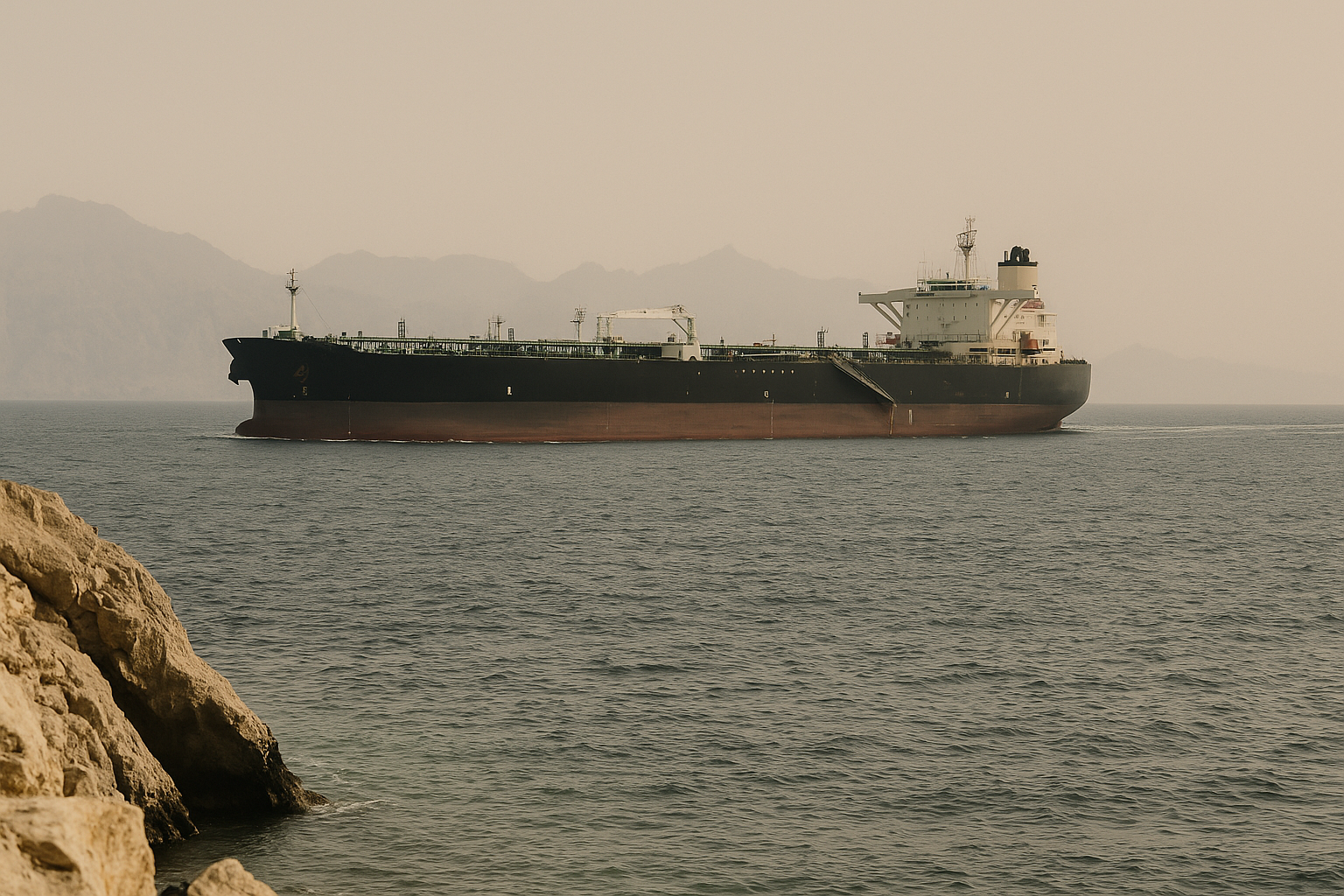
Brent crude can fall 5% in a week and still be a bloody problem.
That is the mistake markets are making with the Strait of Hormuz: seeing a few more tankers move, watching oil pull back, and deciding the energy shock has politely packed its bags. It hasn’t.
The number that matters is 8.3 million barrels a day
The International Energy Agency’s August report puts Gulf oil production in July at 23.9 million barrels a day. That sounds enormous because it is. But it was still 8.3 million barrels a day below pre-war levels.
Read that again. The world has not lost a rounding error. It has lost production equivalent to a major oil nation’s output, right as supply chains, refineries and freight operators are trying to work out which routes, tankers and insurance arrangements can be trusted.
The IEA says regional exports, including routes that bypass Hormuz, fell 2.1 million barrels a day in July to 15 million barrels a day after the key passage was effectively closed again in early July. Loadings started that month near 20 million barrels a day, then dropped to roughly 12 million later in the month.
That is the point. This is not a neat “open versus shut” trade. It is a messy, expensive and fragile operating environment where flows can improve on Monday and seize up by Thursday.
On Friday, August 28, Reuters reported that Brent was trading around $89 a barrel and heading for a weekly fall of 5.3%. West Texas Intermediate was on track for a 4.3% weekly decline. Good. Lower oil is better than higher oil. Nobody needs a lecture on that.
But a lower price after a spike is not the same thing as normality. The market had already seen oil hit $105 a barrel on July 23, according to the IEA. If you run a business and your input costs can move that violently because a narrow stretch of water remains contested, you do not call that stability. You call it risk.
More ships are moving. That does not mean the problem is solved
The encouraging bit is real. U.S. officials say the military has eroded Iran’s control over the Strait and helped create a protected route for tankers. Axios reported that the United Arab Emirates, Bahrain and Kuwait had joined the effort, with Saudi Arabia expected to do so as well. More oil moving through the Gulf is plainly better than less oil moving through the Gulf.
But there is an important gap between official optimism and commercial reality.
Axios also reported that tanker trackers and oil experts remain sceptical of some of the higher flow estimates cited by U.S. officials. Reuters, meanwhile, cited Goldman Sachs estimates of Gulf exports at 15 million to 16 million barrels a day recently — still 7 million to 8 million barrels below pre-war levels, even if that was 5 million to 6 million above the March low.
That is a recovery, not a repair.
And markets are terrible at respecting that distinction. Investors love a clean narrative: mines cleared, shipping resumes, crisis over. Reality is more annoying. A shipowner does not price risk based on a press conference. They price it on whether the route stays safe, whether insurance remains available, whether the cargo arrives on time and whether the next escalation makes the whole exercise look foolish.
The Strait carried oil and natural-gas shipments equal to about one-fifth of global consumption before the war began. That tells you why this matters far beyond petrol stations and energy traders. Hormuz is not merely a Middle East story. It is a global cost-of-living story, a factory-margin story and a central-bank story.
Cheap crude is not the same as cheap fuel
Here is the bit many investors miss: crude oil is only one price in a chain of prices.
The IEA says refining margins and product cracks — the gap between crude and the sale price of fuels such as diesel, jet fuel and petrol — reached new records in Europe during August. Diesel, jet fuel and gasoline margins surged amid supply shortfalls, depleted stocks and seasonally stronger demand.
That means a falling Brent price does not automatically mean the costs that matter to a business fall with it.
A transport operator pays for diesel. An airline pays for jet fuel. A manufacturer pays for freight, feedstocks and power. A retailer pays for every kilometre a product travels before it hits a shelf. And consumers eventually pay for all of it, usually with a lag and usually without getting a polite note explaining why.
This is why headline oil moves can make people complacent. They watch Brent retreat from a nasty number and assume inflation pressure is fading. Meanwhile, refined-product markets, shipping routes, freight premiums and inventories can keep squeezing the real economy.
The IEA has already cut its estimate of global oil demand for the second half of 2026 by roughly 550,000 barrels a day versus its previous report because the disruption is interfering with supply chains and reducing product availability. It now expects global oil supply to fall by 4.3 million barrels a day in 2026, to 102 million barrels a day.
That is not a forecast for a booming global economy. It is an admission that higher energy costs and disrupted trade are making the world poorer at the margin.
The contrarian angle: falling oil may be bad news
Everyone cheers lower oil. Usually, they should.
But in this case, part of the decline reflects expectations that flows through Hormuz may improve. Fine. Part of it also reflects weaker demand expectations. Less fine.
The IEA now expects global oil demand to decline by an average of 1.6 million barrels a day this year. It forecasts steep contractions in the second and third quarters before modest growth returns in the fourth quarter.
So do not blindly celebrate a lower crude quote. A lower oil price caused by ample supply is a gift. A lower oil price caused by businesses and households pulling back is a warning light.
This is where operators should be more disciplined than commentators. Do not ask only, “What is oil doing today?” Ask, “Why is oil doing it?”
If Hormuz flows recover and refined-product margins ease, that is genuine relief. If crude falls while diesel margins stay elevated and demand forecasts deteriorate, that is a different beast: weaker activity with stubborn costs. That is the ugly combination that ruins planning meetings and exposes businesses that confused revenue growth with resilience.
This is also a lesson in concentration risk
Founders love talking about diversification until it costs money.
They run one critical supplier because the price is sharp. They use one logistics route because it is efficient. They keep tiny inventory buffers because working capital is precious. They set pricing once a year because customers hate changes. Then a geopolitical choke point turns their “lean operation” into a hostage situation.
I am not suggesting every small business should build a war room around crude futures. That would be ridiculous.
I am saying you should know where your business is exposed before the invoice arrives. If you sell physical products, identify freight-sensitive lines. If you run vehicles, model fuel at materially higher prices. If you import, ask which shipping routes and suppliers sit behind your landed-cost assumptions. If you rely on fixed-price contracts, work out whether you have enough margin to wear a three-month shock without begging customers for a reprieve.
The businesses that survive volatility are rarely the ones that guessed the next headline correctly. They are the ones that were not forced into stupid decisions when the headline arrived.
What this means for you
First, stop treating an oil-price dip as an all-clear signal. Brent near $89 on August 28 is lower than the recent spike, but it is still well above the roughly $72 level seen when this war began in late February. The system is improving, not normal.
Second, build a simple exposure sheet this week. List your top 10 cost inputs. Mark which ones are directly or indirectly tied to fuel, freight, petrochemicals, electricity or imported goods. Then calculate what a 10% and 20% cost increase does to gross margin. Not your accountant’s gross margin six months from now — yours, today.
Third, give yourself options before you need them. Get a second freight quote. Speak to an alternate supplier. Review contract clauses. Hold a little more inventory of genuinely mission-critical inputs if the cost of running out is catastrophic. Optionality feels wasteful right up until it becomes the reason you are still trading.
Finally, as an investor, separate a market move from an economic outcome. The Strait of Hormuz is not fixed because a few tankers got through. The relevant facts are harder and less exciting: millions of barrels of Gulf production remain offline, exports are still below pre-war levels, and refined-fuel markets are under serious strain.
That is not panic material. It is a call to be sharper.
The people who make money through messy periods are not the loudest forecasters. They are the ones who see the risk early, price it honestly and refuse to be surprised by something the numbers were already screaming.