Strait of Hormuz: Why Chasing $110 Oil Could Wreck Your Portfolio
Brent has already briefly traded above $110 a barrel. Chase the next spike and you could turn a war thousands of kilometres away into a personal financial mistake.
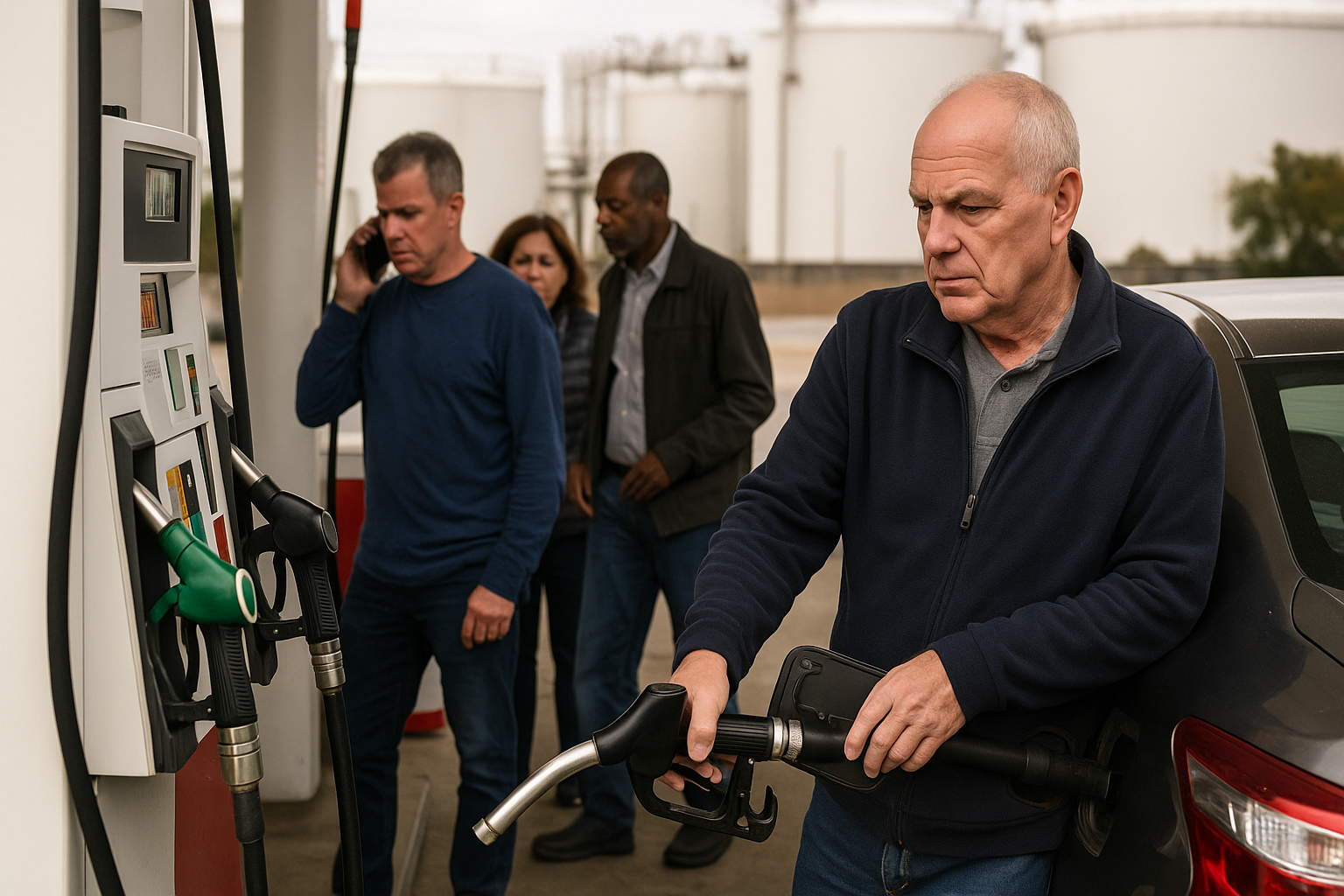
Brent has already briefly traded above $110 a barrel. Chase the next spike and you could turn a war thousands of kilometres away into a personal financial mistake.
Most people will wait until petrol gets properly ugly, their supermarket bill jumps again and the headlines scream about $110 oil before they look at their money. That is exactly how ordinary investors turn a geopolitical mess into a personal financial mistake.
On Tuesday, August 18, a vessel was struck while transiting out of the Strait of Hormuz, according to the UK Maritime Trade Operations centre. Iran has said the passage will not reopen fully unless the United States meets its conditions. That is not background noise. Hormuz normally carries roughly one-fifth of the world’s oil and liquefied-natural-gas shipments.
The immediate story is war, diplomacy and ships. The wealth story is simpler: a narrow waterway thousands of kilometres from your house can still tax your household, squeeze your business margins and tempt you into buying the wrong investments at precisely the wrong time.
The Strait of Hormuz is back in your budget
Oil markets have spent months bouncing between panic and relief. In July, Brent crude climbed above $78 a barrel after renewed hostilities threatened shipping through Hormuz. On August 7, Brent settled at $78.18 as traders tried to price the odds of a negotiated reopening. Earlier in the conflict, the market had briefly seen prices above $110 a barrel.
That is the bit most people get backwards. They look at the chart, see a possible spike, and decide they need to “get exposure to oil.” Usually after the easy money has already been made.
Oil is not a clean investment thesis. It is a volatile commodity priced in real time by physical supply, spare production capacity, refinery constraints, freight rates, inventories, currency moves, government intervention and traders trying to guess what a bloke with a missile launcher—or a president with a microphone—does next.
Goldman Sachs said in July that Brent could exceed $110 in the fourth quarter if Gulf export recovery kept stalling, but could also fall into the $60s by year-end if tensions eased and production recovered faster. That spread is the whole lesson. The same headline can support two completely different price outcomes.
If you think you can trade that cleanly from your phone between meetings, good luck to you. I have made enough investing mistakes to know that confidence and an actual edge are not the same thing.
What has changed since the earlier oil scare
In June, US average petrol prices slipped back below $4 a gallon as Iran-related pressure on oil traffic eased. That mattered because fuel prices are one of the few economic numbers people experience directly. You do not need a central-bank briefing to notice a more expensive tank of fuel.
But the relief was fragile. The latest threat to shipping is a reminder that supply disruption is not a one-day event. Even if a ceasefire appears on paper, shipping companies, insurers, refiners and traders need to believe cargoes can move safely and predictably. That takes time.
There is a second problem. Crude oil is only the first link in the chain. What households buy is refined fuel, delivered through a system with its own bottlenecks. Diesel matters to freight. Freight matters to food, retail stock, building materials and almost every business that moves physical stuff. Aviation fuel matters to travel. Natural gas matters to electricity and industrial production in plenty of markets.
So do not think only in terms of the bowser price. A prolonged disruption can show up as broader inflation pressure, weaker consumer spending, delayed rate cuts and more nervous equity markets.
That is not a prediction that everything is about to go to hell. It is a reminder that inflation is never really dead; sometimes it is just waiting for an excuse.
The second-order hit is where portfolios get caught
The obvious winners from higher oil are energy producers and, sometimes, the companies supplying their equipment and services. The obvious losers are airlines, transport businesses and fuel-intensive operators.
But personal portfolios are rarely that neat.
If energy prices push inflation higher for longer, bond yields can rise. Higher yields can put pressure on expensive shares, particularly businesses valued on profits supposedly arriving years down the track. That does not mean every technology company is suddenly rubbish. It means paying any price for distant growth becomes a more dangerous game when the cost of money rises.
For founders, the impact is even more direct. If your business burns fuel, buys inputs transported by truck, operates a physical supply chain or sells to price-sensitive consumers, you need to know whether your margins can survive a 5%, 10% or 20% jump in relevant costs. Not because you know it will happen, but because pretending it cannot happen is amateur hour.
Investors should apply the same logic to listed companies. Read the annual report. Find out whether management has pricing power, whether it hedges major inputs, how much debt it carries and when that debt needs refinancing. A business that can raise prices without losing customers is a different animal from one that absorbs every cost shock and calls it “temporary headwinds.”
Corporate waffle is often just a warning label with better branding.
The contrarian view: do not let a real risk become a bad trade
Here is the overlooked angle: the market already knows Hormuz matters.
Everybody knows it. The biggest oil traders know it. The companies physically moving barrels know it. The funds with satellite data, shipping data and teams of analysts know it. By the time a geopolitical risk becomes your mate’s confident pub tip, the easy part of the trade is generally gone.
That does not mean energy shares cannot rise further. It means buying them solely because you are scared of a headline is not an investment process.
A broad energy allocation can make sense as part of a diversified portfolio. A concentrated punt on oil producers, leveraged energy ETFs or short-term commodity products because Brent might hit $110 is something else entirely. It is speculation, and you should at least have the honesty to call it that.
There is another uncomfortable truth: a sharp oil spike is not automatically good for every energy stock. Governments can release strategic reserves, pressure producers, alter taxes, subsidise consumers or intervene in other ways. Broader market stress can also drag down good businesses alongside bad ones. Owning an oil share is not the same as owning a barrel in a warehouse.
The better question is not, “How do I profit from a crisis?” It is, “How do I avoid being financially forced into stupid decisions if this crisis lasts?”
That is less exciting. It is also how wealth is actually built.
Build the boring defences before you need them
I am not telling you to sell everything and hide in cash. That is the other side of the same emotional coin. Long-term investors should not torch a sound plan because the news cycle has found a new way to make their pulse race.
But your plan needs to survive reality.
Start with cash. If your household has no emergency buffer, your first oil hedge is not an oil ETF. It is enough accessible cash to cover a genuine disruption without whacking groceries, fuel or an unexpected repair onto high-interest debt. Aim for a sensible buffer based on your income stability, dependants and fixed costs. For many people, that means several months of essential expenses.
Then look at debt. A family with expensive floating-rate debt, no cash buffer and a habit of financing lifestyle costs is exposed to far more than a change in petrol prices. Reduce the debt that can hurt you fastest. Do not confuse a rewards-point strategy with a financial strategy.
For operators, run a proper stress test this week. What happens if fuel, freight or key inputs rise 10%? Can you pass it through? Which customers resist? Which contracts lock you into bad economics? What inventory do you need? Where are your single points of failure? If you do not know, you are not managing risk; you are hoping.
What this means for you
Here is the use-it-tomorrow version.
1. Do not make a one-headline trade. If you want energy exposure, decide its maximum role in your portfolio before you buy—not after a price spike.
2. Build an emergency buffer before chasing returns. A cash reserve gives you the ability to keep investing through volatility instead of selling when life gets expensive.
3. Stress-test your household. Add 10% to fuel, food and utility costs for three months. If that breaks the budget, fix the budget now.
4. Check your portfolio concentration. If one sector, one country, one speculative stock or one theme can ruin your year, you do not have a portfolio. You have a bet.
5. For business owners, price risk before your suppliers do. Review freight clauses, supplier terms, inventory coverage and customer pricing. The best time to negotiate is before the panic invoice arrives.
The Strait of Hormuz is a serious global problem. Treat it seriously. But do not hand it control of your financial life.
The rich do not get richer because they predict every shock. They get richer because they structure their money and businesses so a shock does not force them to do something desperate. That is the game. Play that one.