TCS HyperVault’s ₹70,000 Crore 1GW Bet: AI’s Real Moat Is Power
A 1GW AI campus is not a software bet. It is a ₹70,000 crore wager that electricity, water and land—not clever code—will decide who gets rich.
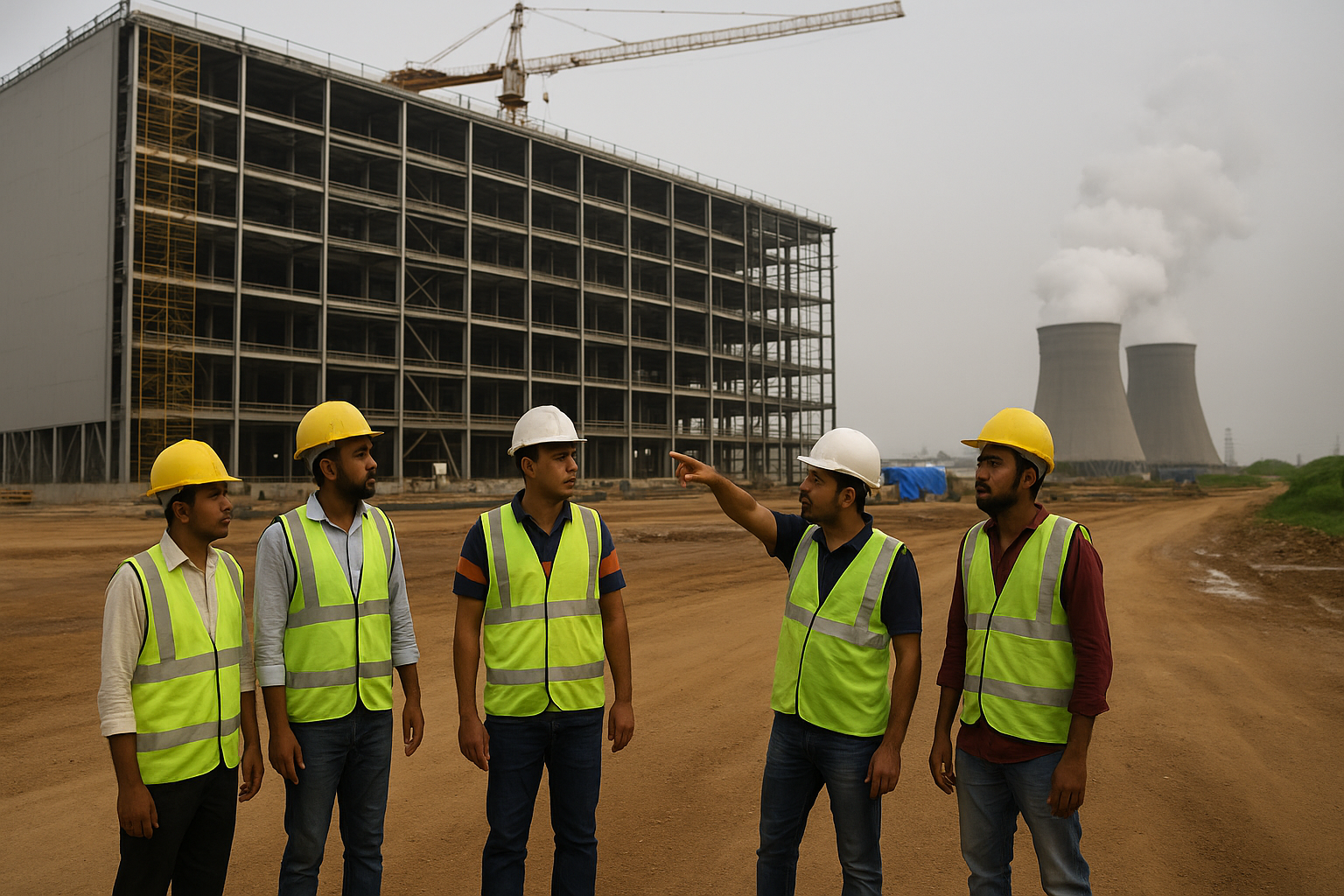
A 1GW AI campus is not a software bet. It is a ₹70,000 crore wager that electricity, water and land—not clever code—will decide who gets rich.
Tata Consultancy Services has just made that wager in Hyderabad. Its subsidiary, HyperVault, has secured 264 acres for an AI data-centre campus with capacity of up to one gigawatt. HyperVault and its partners expect to invest up to ₹70,000 crore, or roughly US$7.41 billion, and the site is aimed squarely at frontier AI companies and hyperscalers running high-density GPU workloads.
That is a proper number. Not another startup announcing a chatbot with a landing page, a logo and three blokes calling themselves “AI architects”.
But here is the part most people will miss: TCS is not merely trying to rent out computers. It is trying to own a place in the bottleneck economy.
TCS Has Put ₹70,000 Crore on the Least Sexy Part of AI
The glamour end of AI is models. Everyone knows the names: OpenAI, Anthropic, Google, Nvidia. They get the headlines because the public can see the product.
The money, though, is increasingly chasing the stuff nobody wants to discuss at a dinner party: substations, transmission, cooling systems, land approvals, fibre routes, construction crews and reliable electricity contracts.
HyperVault’s proposed Hyderabad campus is designed for high-density GPU deployment across AI training, inference and advanced computing. TCS says it will build the project in phases, based on customer demand and technology requirements. That last bit matters. A gigawatt is the destination, not a switch someone flicks next Tuesday.
At full theoretical utilisation, one gigawatt running continuously represents 8.76 terawatt-hours of electricity a year. Real facilities do not operate at a perfect flat line, of course. But the arithmetic makes the point: this is infrastructure at a scale that forces a company to think like a utility operator, property developer, engineering firm and cloud provider all at once.
That is why this is a much bigger strategic shift than it looks. TCS built its reputation as a global IT-services machine: consulting, implementation, talent, managed services. HyperVault is a move into owning and operating a scarce physical asset behind the services.
Software businesses are lovely when they work. High margins, recurring revenue, little concrete. But when the market’s central constraint becomes compute, the company controlling dependable compute capacity has a seat at the grown-ups’ table.
The Context: AI Has Turned Into an Industrial Race
For years, technology pretended it had escaped the physical world. Cloud computing made servers invisible. Software ate the world. Asset-light was treated like a moral virtue.
AI has ruined that little fantasy.
Training and serving advanced models requires enormous quantities of specialised hardware, electricity and cooling. The result is that AI is dragging tech back into the old economy: capital expenditure, permits, industrial supply chains and political relationships.
HyperVault was incorporated only in October 2025. In November 2025, TCS announced a strategic partnership with TPG to support the growth of its AI data-centre business and its plan for capacity exceeding one gigawatt over the coming years. This Hyderabad announcement turns that ambition into a physical site, with 264 acres and a stated investment ceiling.
TCS is not walking into this blind. Its broader pitch is what it calls “Infrastructure-to-Intelligence”: combine AI-ready data centres with its cloud, engineering, enterprise-transformation and AI capabilities. Translation: TCS wants to sell the building, the pipes, the implementation work and the ongoing operating relationship.
That is a smarter proposition than simply joining the queue to buy GPUs from someone else and hoping clients stay loyal.
There is also a local strategic angle. A giant AI campus in Hyderabad can help serve customers that care about data residency, latency, local support and access to compute within India. That does not automatically guarantee demand. But it gives TCS a more credible answer to global customers asking where the capacity will actually live.
And in AI, “we’ll find capacity later” is increasingly code for “we don’t have a product.”
The Second-Order Bet Is Not Compute. It Is Control.
The first-order story is easy: TCS is spending big on an AI data centre.
The second-order story is more interesting. The winners in AI may be the companies that reduce uncertainty for customers.
A major enterprise does not just want a model. It wants to know where its data sits, how quickly workloads can scale, whether the system will survive a supply squeeze, who answers the phone when something breaks, and whether the vendor will still be around when the board asks difficult questions.
A services giant with a campus, an integration practice and long enterprise relationships can package that certainty better than a pure infrastructure startup with a flashy deck.
That is the TCS advantage if it executes: it already knows how to get into the boardroom. HyperVault gives it a chance to own more of what happens after the PowerPoint.
The downside is equally obvious. This is a far more capital-intensive business. Data centres demand money before they deliver revenue. They depend on long project timelines, power availability, customer commitments and technology choices that can change brutally fast.
Buy the wrong equipment cycle, build ahead of demand, misjudge cooling needs or get caught without sufficient power, and a shiny AI campus becomes an expensive monument to executive optimism.
That is why “up to one gigawatt” and “developed in phases” are the most sensible words in the announcement. They suggest TCS understands the discipline required. Capacity is only valuable when it is contracted, powered and working—not when it looks impressive in a press release.
The Overlooked Angle: The Model Makers May Not Own the Best Economics
People keep treating AI as though the largest model automatically wins the largest prize. I would not be so sure.
Models get commoditised faster than their founders would like to admit. Capabilities spread. Open models improve. Customers use more than one provider. Prices get squeezed. A clever feature gets copied before the sales team has finished celebrating it.
You cannot copy a fully permitted, powered, connected, liquid-cooled campus on 264 acres overnight.
That does not mean every data centre is a gold mine. Far from it. These assets can become commodity warehouses if they lack cheap power, customer demand or technical flexibility. But scarce, well-located, AI-ready capacity is different from generic server space.
The question is whether HyperVault can turn its proposed one-gigawatt headline into a real commercial advantage before competitors build comparable capacity. Its own announcement says the campus will use green energy and water-neutral design principles. Good. Now comes the hard part: translating principles into resilient power supply, build speed, cost discipline and contracts customers will sign.
The real contest will not be won by the company with the most dramatic announcement. It will be won by the operator that brings usable megawatts online fastest without setting money on fire.
What This Means for You
If you are a founder, stop saying your AI product scales because it runs in the cloud. That is not a strategy. Ask where your inference will run, what it costs at ten times current usage, which supplier has leverage over you, and what happens when capacity gets tight.
If you are an operator, treat AI infrastructure like a supply-chain decision, not an IT procurement line item. Map your dependencies: model provider, cloud provider, chips, data, power, security and integration talent. The weakest link will invoice you eventually.
If you are an investor, be careful with the lazy view that all AI value sits in the model layer. Look for businesses that control a real constraint or help customers navigate one. Compute orchestration, cooling, grid equipment, networking, security, data governance and enterprise implementation may be less glamorous than a chatbot. They can also be far harder to replace.
And if you run a company with real customers, remember this: the next decade of AI will reward people who can deliver boring reliability at scale. Not the bloke with the best demo. The bloke whose system is on, fast, secure and affordable when everyone else is scrambling for capacity.
TCS has put ₹70,000 crore behind that proposition. Now it has to prove that a one-gigawatt ambition can become a functioning business, not just an enormous number with a nice backdrop.