Teletrac Navman’s $220M Reset: Ricardo Buranello Gets 23 Days to Take Over
A $220 million sale is not a strategy. Ricardo Buranello has 23 days before he becomes CEO of Teletrac Navman—and private equity will be measuring output, not intentions.
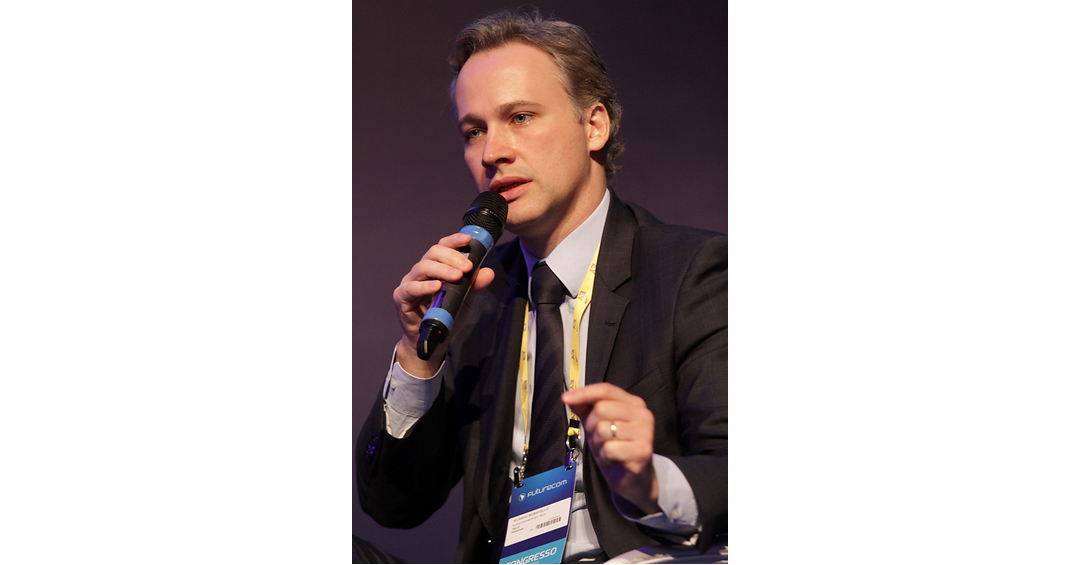
Private equity does not buy a business so everyone can keep having pleasant meetings. It buys one because it thinks the next layer of performance is sitting there, uncollected.
Ricardo Buranello has 23 days from Teletrac Navman’s September 8 announcement to becoming chief executive on October 1, 2026. That is the real story here. Not another executive appointment with the usual photo, handshake and corporate adjectives. This is a leadership handover immediately after a business valued at $220 million changed hands in a deal that put private-equity firm Respida Capital in control.
Buranello is replacing Alain Samaha, who remains CEO through September 30 and then stays on the board. Buranello is not a parachuted-in consultant with a 90-page transformation deck. He has been Teletrac Navman’s chief financial and operating officer, after arriving in 2024 from senior operating roles including Telit Cinterion, Siemens and Totvs.
That matters. But it also removes the excuses.
The core story: a new owner has made the job brutally clear
Vontier announced in May that it would sell a majority of Teletrac Navman to Respida Capital at a valuation of $220 million. Vontier said it would receive $80 million in cash, with the balance made up of an interest-bearing seller note and a minority equity stake in the business.
Read that again if you run a company: the former parent has not simply taken its chips off the table. It has kept a financial interest in what happens next.
That is a pretty clean signal. The business has been separated from a larger industrial-technology portfolio, handed to a software-focused investment firm, and given an internal operator as CEO. Nobody involved is pretending the next chapter is about preserving the furniture arrangement.
Teletrac Navman sells connected-mobility and fleet-management technology: software that helps operators manage vehicles and equipment through cloud-based data, with safety, efficiency and operating insight at the centre of the pitch. The company says its platform uses AI. Fine. Every second company on earth says that now. The useful question is whether the technology lowers an operator’s cost base, reduces incidents, improves asset utilisation or makes a manager faster at making decisions.
That is the standard Buranello inherits.
Samaha gets a proper transition rather than a ceremonial farewell. He stays in the chief executive role until the end of September, then remains on the board to support long-term planning. Board chair Jonathan Olefson has backed Buranello as someone who understands the business from the inside.
Good. Internal succession is usually better than a CEO beauty contest when the company’s immediate problem is execution. A new external chief often spends six months discovering where the bodies are buried. The internal operator already knows which cupboard to open.
But an internal promotion only works if it produces a different level of performance—not merely a familiar face in a larger office.
Why the $220 million matters more than the job title
Founders and managers often get this backwards. They see a sale as the finish line: shareholders get paid, staff get reassured, a new owner sends a nice note about the company’s heritage, and everyone breathes out.
In reality, the sale is when the stopwatch starts.
Respida’s thesis, according to the deal announcement and Teletrac Navman’s CEO release, is software-focused growth supported by operational discipline. That combination should make every executive in the business slightly uncomfortable—in a productive way. Software investors do not pay for a platform merely because it has customers and a decent logo. They pay because they believe revenue can become more recurring, product can become more scalable, sales can become more repeatable and costs can become less stupid.
Buranello’s previous job combined finance and operations. That is not a trivial detail. It means he has spent the past two years close to the machinery: pricing, delivery, staffing, product investment, cash conversion and the bits that make a business work after the sales team has finished celebrating a contract.
The upside is obvious. He should arrive on day one knowing the numbers that actually matter.
The risk is equally obvious. Finance-and-operations chiefs can become very good at measuring the engine without deciding where the car needs to go. A CEO has to do both. He must pick markets, make product bets, decide what not to build, recruit talent before it is desperately needed and say no to customers who consume resources without producing a return.
That is why this appointment is more interesting than the standard “CFO becomes CEO” headline. Teletrac Navman is not just changing leaders. It is moving from corporate ownership into an owner-led performance environment.
The background: fleet software is no longer a nice-to-have dashboard
Fleet and equipment operators have always cared about utilisation, safety, fuel, maintenance and compliance. What has changed is the volume of usable data—and the expectation that software turns it into an operational advantage rather than another dashboard nobody opens.
Teletrac Navman’s own 2025 driver-safety research found that 83% of fleets viewed AI as the future of safety. I would not treat that as proof that every fleet has solved its safety problems with artificial intelligence. Survey results are not gospel. But it does tell you where budgets and expectations are heading.
The real opportunity is not “AI” as a word slapped on a product page. It is the unglamorous work: identifying risky behaviour early, reducing wasted kilometres, improving maintenance timing, helping supervisors act on exceptions, and making data reliable enough that people trust it.
That is also why connected-mobility software is a management business, not just a technology business. The buyer is often trying to change human behaviour across hundreds or thousands of drivers, technicians, dispatchers and supervisors. If the product creates alerts but no action, it is expensive noise.
A good CEO in this sector must therefore balance three things at once:
1. Product credibility: the platform needs to work in messy real-world conditions. 2. Commercial discipline: customers need to see a payback, not just hear a demo. 3. Operational adoption: the customer’s managers and frontline teams need to actually use the thing.
That third bit gets ignored because it is harder to package into a sales slide. Yet it is where retention is won or lost.
The overlooked angle: Samaha staying on the board is either smart—or dangerous
Most coverage of CEO transitions treats continuity as automatically good. It is not automatically anything.
Keeping Alain Samaha through September 30 and then on the board is sensible if the company needs relationship continuity, institutional knowledge and a clean transfer of decision-making. The handover period gives Buranello access to the outgoing CEO while the baton is still physically in the building. That is far better than discovering in November that the biggest customer relationship lived entirely in someone’s mobile phone.
But there is a trap.
A former CEO on the board can become a shadow CEO if the role boundaries are fuzzy. Staff start wondering whose view really counts. Customers call the old boss when they do not like the new answer. Directors get two versions of the same issue. The new chief begins managing upward and backward instead of forward.
I have seen businesses waste a year this way. Everyone was polite. Nobody was clear. It is corporate beige paint: looks harmless, covers everything, kills the room.
The solution is blunt. Before October 1, Buranello, Samaha, Olefson and Respida should agree on a simple written operating contract: what Samaha owns as a director, what he does not own, which relationships he transitions, when he steps out of management discussions, and who has final authority on product, people and capital allocation.
No drama required. Just adult clarity.
The contrarian view: do not start with a big “transformation”
The temptation after a private-equity transaction is to announce a transformation program. New operating model. New values. New scorecards. New logo on the town-hall slide. Maybe a consultant gets a lanyard.
I would resist that for the first 90 days.
Buranello should not need a grand reinvention speech. He should need a short list of hard answers:
- Which customer segments have the best retention, margins and expansion potential? - Where does implementation fail or take too long? - Which product features drive daily use rather than occasional admiration? - What is the cost to serve by customer type? - Which leadership roles are genuinely essential, and which are meeting factories? - What are the three operating metrics every executive can influence weekly?
If he cannot answer those cleanly by the end of the first quarter, more strategy workshops will not save him.
The boring wins are often the valuable ones: a faster installation process, fewer custom product commitments, a clearer renewal motion, tighter sales qualification, fewer handoffs between teams, and managers who are accountable for a number rather than a vibe.
That is not glamorous. It is how companies become worth more.
What this means for you
Whether you run a startup, a family business or a division inside a big company, the lesson from Teletrac Navman’s $220 million reset is simple: succession is not an HR event. It is a commercial event.
Use this tomorrow.
First, identify your own “October 1.” What is the date when the excuses expire? A new quarter, a funding round, a product launch, a leadership handover—pick the moment and treat it as real.
Second, write down the five metrics that prove whether your business is improving. Not 25. Five. Revenue quality, retention, cash, delivery speed and customer outcomes would be a decent start for most operators.
Third, if you are promoting internally, do not confuse familiarity with readiness. Give the new leader authority, define the old leader’s role and make the decision rights painfully clear.
Finally, stop calling every change a transformation. Customers do not pay for transformations. They pay for better outcomes.
Ricardo Buranello gets 23 days to prepare for a job where the scoreboard has already been installed. That is not a problem. That is the job. The rest of us would be better operators if we acted as though our own scoreboard was already switched on.