Telix’s $1.65B ITM Deal: Owning Cancer Drug Supply
Telix has paid US$1.65 billion upfront for a cancer-drug supplier because clever science is useless if you cannot get the critical ingredient to patients on time.
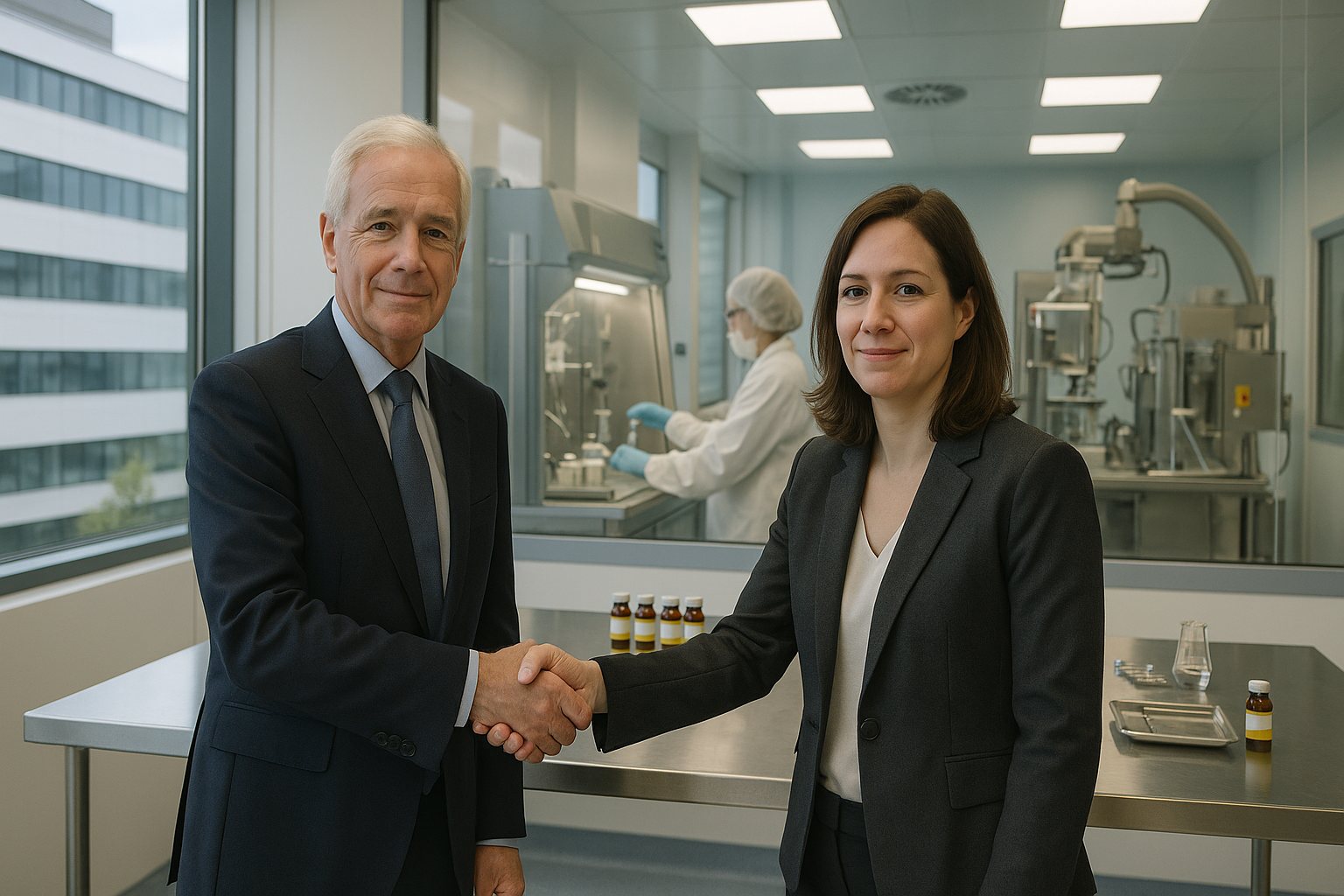
Telix has just spent US$1.65 billion upfront to buy a business most investors will struggle to pronounce.
That is exactly why the deal matters. The easy money in healthcare goes to companies with glamorous drugs, clever science and polished investor decks. The durable money often goes to the bloke who owns the bottleneck.
On 21 September 2026, Melbourne-based Telix Pharmaceuticals announced an agreement to acquire Germany’s ITM Isotope Technologies Munich. The headline price is US$1.65 billion on a cash-free, debt-free basis, with up to another US$700 million payable if regulatory and sales milestones are met for ITM’s lead drug candidate, ITM-11.
This is not Telix buying a story. It is buying control over a constraint.
Telix is buying supply, not just science
Radiopharmaceuticals are cancer treatments or diagnostic products built around radioactive isotopes. That sounds niche until you understand the commercial reality: if you cannot reliably make, handle and distribute the isotope, you do not have a product. You have a very expensive PowerPoint presentation.
ITM produces therapeutic radioisotopes including lutetium-177, actinium-225 and terbium-161. Those are mission-critical inputs for targeted radionuclide therapies — treatments designed to deliver radiation directly to cancer cells.
Telix already sells precision-medicine products and has a therapeutic pipeline. ITM brings the manufacturing and isotope-supply side of the equation, plus a late-stage therapy candidate. In plain English: Telix is trying to own more of the factory, the fuel and the finished product.
That vertical integration is the point.
ITM’s 2025 revenue was US$273 million, having grown at a reported compound annual rate of 40% since 2021. Telix says ITM’s isotope-manufacturing business is profitable and cash-generative. The combined company is expected by management to generate more than US$1.3 billion in pro forma 2026 revenue and income.
Those are management estimates, not money in the bank. But the structure tells you what Telix believes: demand for radiopharmaceuticals will keep growing, and isotope supply will remain too important to leave entirely in somebody else’s hands.
The price is big — and the structure is more interesting
The price tag will make plenty of people sit up. It should. US$1.65 billion is a serious swing for an Australian biotech.
But Telix is not writing a US$1.65 billion cheque. After adjustments, ITM shareholders are expected to receive about US$1.25 billion in Telix shares. Telix will issue 105.8 million shares, priced at US$11.84 each based on the 30-day trailing volume-weighted average price before signing. It will also assume US$302 million in ITM net debt.
After closing, existing Telix shareholders are expected to own about 76.3% of the combined group, while ITM shareholders will own roughly 23.7%.
That is not a minor bolt-on acquisition. It is a marriage where the seller gets a meaningful seat at the table.
And frankly, that is preferable to levering up to the eyeballs for an asset whose biggest value lies several years ahead. Telix is using equity to buy a strategic supply chain and a pipeline asset. Existing shareholders take dilution, sure. But ITM’s owners also take ongoing exposure to the upside and downside of execution.
That alignment matters. It is easy to sell a business for cash and leave the buyer holding the bag. It is harder to take shares and say, “No worries, we will ride this together.”
The extra US$700 million in contingent payments is also worth watching. ITM-11 has completed a Phase 3 trial in gastroenteropancreatic neuroendocrine tumours, and another Phase 3 study is expected to read out in the first half of 2027. The milestone structure means Telix is not paying the full optimistic price on day one for clinical and commercial success that has not yet arrived.
That is sensible dealmaking. Pay hard for what exists. Pay later for what might exist.
Why the bottleneck is worth more than the drug deck
Here is the overlooked bit: radioisotope supply is not ordinary manufacturing.
You cannot simply decide to make more next quarter because demand looks good. These materials are radioactive, often have short half-lives, require specialised production capacity and must move through tightly managed logistics. A delay is not just an annoying backorder. In some cases, time is literally the product.
That makes dependable isotope supply commercially powerful. It can protect a company’s own pipeline, improve its ability to serve hospitals and clinicians, and give it more control over cost, quality and delivery.
Every founder should understand this, even if you never touch biotech. Your business is only as strong as its least replaceable dependency.
For a software company, it might be data access, distribution through Apple or Google, cloud capacity, or the one enterprise customer funding half the payroll. For a spirits app like Agave Finder, it might be verified product data, retailer relationships or the trust of producers. For a cancer-drug business, it can be isotope supply.
The mistake is to call these things “operational details.” They are not details. They are the business.
Telix has been working with ITM for years under a supply arrangement for lutetium-177. Buying the supplier now says it has decided a commercial relationship is no longer enough. When the input is scarce, strategic and central to your promise to customers, renting access can become a mug’s game.
The contrarian angle: vertical integration can become a very expensive hobby
I like the strategic logic. That does not mean I would clap blindly.
Vertical integration is fashionable when everyone is worried about supply chains. But owning more steps does not automatically make you smarter, faster or richer. It can make you more complicated, more capital-intensive and much easier to screw up.
Telix is buying a German manufacturing business, specialised scientific capability, global regulated operations, debt and a late-stage drug programme. That creates plenty of ways for the deal to disappoint.
First, the transaction still needs Telix shareholder approval, regulatory approvals and other customary closing conditions. Telix expects closing by the end of 2026, with an extraordinary general meeting expected in November.
Second, the promised upside depends on execution. ITM-11 still needs to translate clinical progress into approvals and sales. Manufacturing synergies need to show up in real margins, not just conference-call adjectives.
Third, share-funded deals look brilliant when the buyer’s shares hold up and painful when they do not. Telix has effectively invited ITM shareholders onto its cap table in size. That is an aligned structure, but it also raises the stakes for Telix management. They now have to prove the combined company deserves a larger pie.
The risk is not that Telix bought a bad asset. The risk is paying a strategic price before proving it can run the strategy at scale.
Still, I would rather see a growth company spend big on an asset that strengthens its economic moat than spray cash at a dozen shiny startups because “innovation” sounds good in an annual report.
This deal is part of a bigger M&A lesson
Most mediocre acquisitions are purchased because the buyer wants growth.
The better acquisitions are purchased because the buyer knows exactly what constraint is stopping growth.
That distinction sounds small. It is enormous.
Buying revenue is often lazy. Buying a capability, channel, scarce input or regulatory position that lets your existing business compound harder can be very smart.
Telix is not merely adding ITM’s reported US$273 million of 2025 revenue. It is trying to reduce supply risk, deepen manufacturing capability, add a Phase 3 therapeutic programme and give itself more influence over a constrained part of the radiopharmaceutical value chain.
If it works, the return will not come from a spreadsheet line called “synergies.” It will come from being able to launch, supply and scale treatments while rivals are still trying to secure the ingredients.
That is what moat-building looks like in the real world: not a slogan, but a problem your competitors cannot fix quickly.
What this means for you
Whether you run a startup, manage a portfolio or lead a business unit, steal this lesson tomorrow morning: find the dependency that can kill your growth, then decide whether you should own it, lock it up or diversify it.
Make a list of the three things your business cannot operate without. Not the things you spend the most money on — the things that would genuinely stop you serving customers.
Then ask four blunt questions:
1. Can a competitor take this from us? If yes, you do not have a dependable asset. You have borrowed access. 2. Can we secure it with a contract? A long-term agreement may beat an acquisition if ownership is overkill. 3. Should we own it? Buy only when the dependency is strategic, scarce and central enough to justify the added complexity. 4. What are we paying for certainty? Do not confuse a high price with a bad price. Sometimes certainty is the bargain.
Telix has made its call. It is paying heavily for control over the hard bit of its industry.
Now it has to prove that owning the bottleneck is worth more than the bill.