Tenstorrent’s $1.5B Raise Is a $6.2B Bet Against Nvidia
If you think AI is a software game, you’re watching the cheap bit. Tenstorrent just raised $1.5 billion because the real fight is still fought in silicon, factories and brutal capital bills.
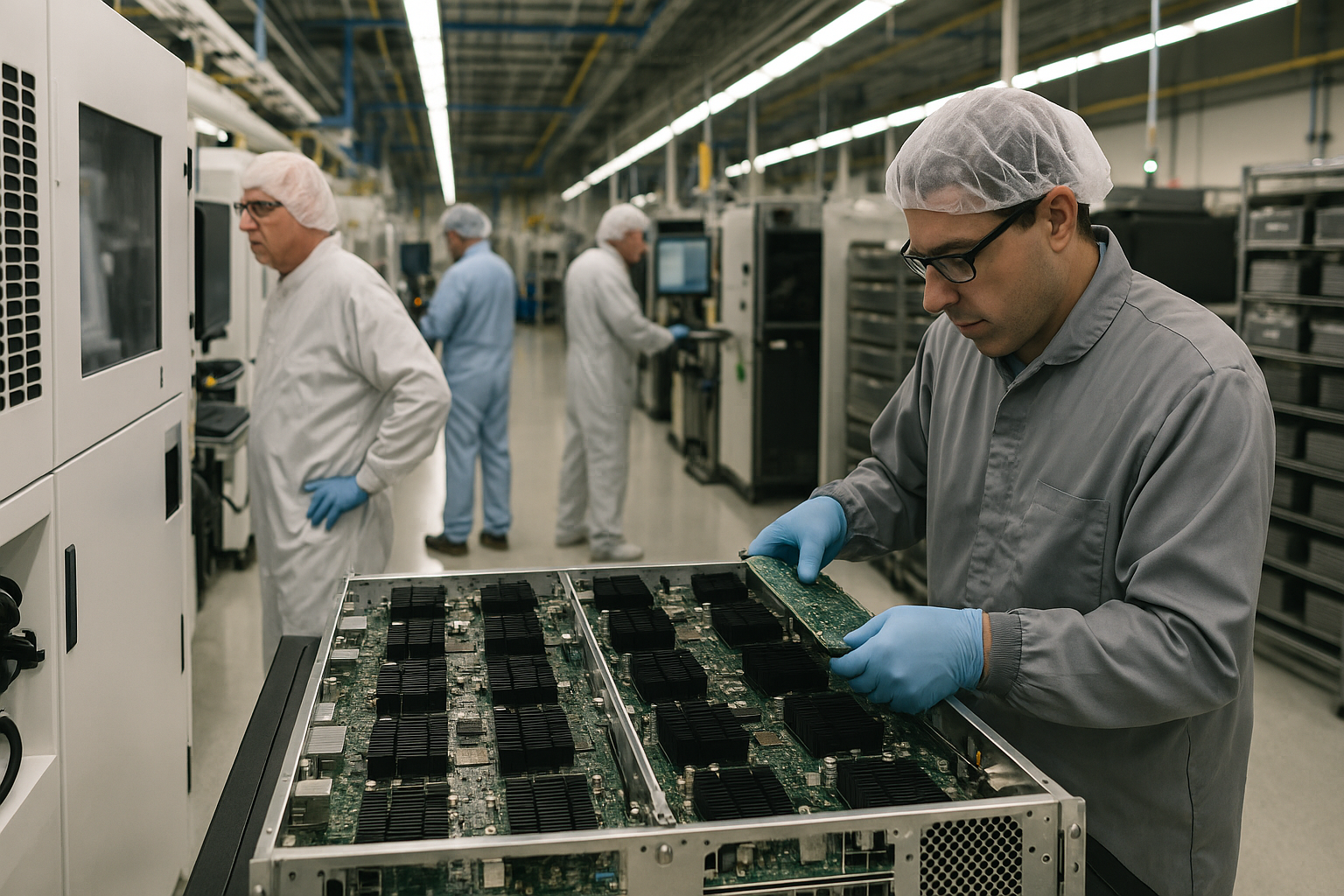
Most AI founders are building features on somebody else’s hardware and calling it a moat. Tenstorrent just raised $1.5 billion to remind them who owns the expensive end of the game.
On Monday, October 19, Tenstorrent announced a Series E round at a $6.2 billion post-money valuation, more than doubling its valuation from late 2024. The company is a 10-year-old AI-chip challenger led by Jim Keller, one of the most recognised chip architects in the business. Trace Capital and Innovation X led the round, with investors including ARK Invest, Cadence Ventures, Fidelity, Morgan Stanley, SanDisk, T. Rowe Price and Tether Investments also involved.
That is not a normal startup round. It is a very large cheque written for a very difficult job: building an alternative to Nvidia in the part of AI where the bills are real.
Tenstorrent is not selling a chatbot
Tenstorrent develops AI chips and software, with a focus on inference: the work done after a model has been trained, when millions of users start asking questions, generating code, making videos or running agents. Training gets the headlines. Inference is where a serious AI business can burn money every minute of every day.
The company says it will use the new money to scale production of its Galaxy servers, which combine dozens of Tenstorrent chips. Those systems are aimed at workloads including chatbots, coding assistants and video generation.
That matters because AI economics are turning from a theoretical exercise into an operating problem. Anybody can put a flashy model demo on a landing page. Far fewer companies can serve useful AI cheaply, quickly and reliably at scale. The winner is not necessarily the business with the prettiest demo. It is the one that can make the unit economics work when customers actually show up.
Nvidia remains the obvious giant in that room. It has the chips, the software ecosystem, the developer mindshare and a customer list full of businesses spending frightening amounts of money on compute. Tenstorrent is not pretending it can wave a wand and make Nvidia disappear. Its wager is narrower and more sensible: businesses that want alternatives, greater control or lower dependence on a proprietary stack may pay for a credible second option.
That is a much better business thesis than “we will beat the incumbent at everything.”
The real story is independence
Earlier this year, Tenstorrent reportedly received acquisition interest from Intel and Qualcomm at valuations of as much as $5 billion. Instead of selling, the company raised more money and stayed independent.
That decision tells you what management and its new backers think they are buying: not a tidy tuck-in acquisition, but a chance to build a standalone infrastructure company while demand for AI compute is still expanding.
It is also a very expensive decision.
A software startup can stretch a few million dollars a long way if it has a strong technical team and disciplined distribution. A chip company cannot. It has to design hardware, validate it, manufacture it, package it, build systems around it, support customers and keep improving while competitors are doing the same thing at a terrifying pace. One bad design cycle can wreck years of work.
This is why hardware investing sorts the tourists from the grown-ups. The returns can be enormous, but so can the capital requirements, the waiting time and the ways to be wrong.
Tenstorrent’s last round raised more than $693 million in December 2024 at a $2 billion pre-money valuation, according to Reuters. This new financing is a declaration that the company needs scale, not just survival. That is a meaningful difference. Survival capital buys time. Scale capital buys inventory, production capacity, systems and sales muscle — if the operator spends it properly.
RISC-V is the overlooked angle
The lazy version of this story is “small chip company takes on Nvidia.” True, but incomplete.
Tenstorrent’s technology is built around RISC-V, an open-source chip architecture. In plain English, that gives companies a route to design processors without paying licence fees to use a proprietary architecture such as Arm’s. That does not make chip design easy — not even close — but it gives sophisticated customers more room to tailor hardware to their needs.
That is the strategic appeal.
The biggest customers in AI do not love being trapped. They tolerate it when the incumbent is miles ahead, supply is tight and the product works. But the moment there is a credible alternative, they want leverage. They want negotiating power. They want a backup plan. They want to control more of their infrastructure rather than hand every layer to one supplier.
That is why a challenger does not need to “win” the entire market to create a valuable company. It may only need to become important enough that serious customers cannot ignore it.
For Tenstorrent, the job is to turn that strategic appeal into repeat orders. There is no prize for being the cleverest company in the chip lab if customers cannot deploy your gear at scale and get results they can measure.
The contrarian view: massive funding is not validation
Let’s not get carried away just because the number has three commas and a B after it.
A $1.5 billion round is evidence that serious investors believe Tenstorrent has a shot. It is not evidence that the shot will land.
Big rounds can make founders sloppy. They create the illusion that capital is strategy. It isn’t. Capital magnifies strategy. If the strategy is right, money lets you move faster. If the strategy is wrong, money merely enables a more expensive mistake.
There is another trap here. Inference is a great market only if the company can offer a genuine economic or performance advantage. AI customers are not buying processors to feel clever. They are buying throughput, reliability, latency, availability and cost per useful outcome. If Tenstorrent’s systems do not produce a sharp advantage on the workloads customers care about, the open architecture story will not be enough.
The company has a credible technical leader, fresh capital and a market that badly wants more supply and more choice. That is a strong starting position. It is not a finished business.
And that is exactly why this deal is worth watching. The next chapter will not be written in a funding announcement. It will be written in production schedules, customer deployments, gross margins and renewal rates.
What this means for you
If you are a founder, stop treating infrastructure costs as a problem for later. They are part of your product strategy now. Work out what it costs to serve a real customer, not a friendly beta user. Measure your AI usage, model spend, latency and gross margin before investors force you to explain them.
If you are building on a single AI provider, create an escape route. You may never use it, but understand what switching would involve: your data flows, model dependencies, prompts, evaluation systems and contract terms. Dependency is fine. Blind dependency is amateur hour.
If you are an investor, be careful with businesses claiming an AI moat when they are merely renting everyone else’s. Ask where the margin sits once model and compute costs are included. Ask what gets better as usage scales. Ask what remains if a larger platform copies the feature next quarter.
And if you run a normal operating business, do not wait for the final winner in the chip war. Your practical move is simpler: test AI tools against a commercial outcome. Faster sales follow-up. Fewer support tickets. Better forecasting. Less admin. Pick one workflow, set a baseline, run the test and keep it only if it makes or saves real money.
Tenstorrent’s $1.5 billion raise is a reminder that the AI gold rush still has a picks-and-shovels problem. The smart operators will not be dazzled by the funding figure. They will watch whether the company can turn silicon, servers and independence into customer value.
That is the only valuation that lasts.