Tequila’s World Cup Moment Was Really a Test of Its New Growth Playbook
Diageo’s World Cup tequila blitz showed where premium spirits is heading: fewer bets on bottle hype, more focus on occasions, format and distribution.
The big tequila story is what happened after the final whistle
The most consequential tequila story on July 31 is not a celebrity launch, a new extra añejo or another limited-edition bottle. It is the industry’s attempt to turn a major cultural occasion into repeatable consumption at a moment when the category’s underlying U.S. sales have softened.
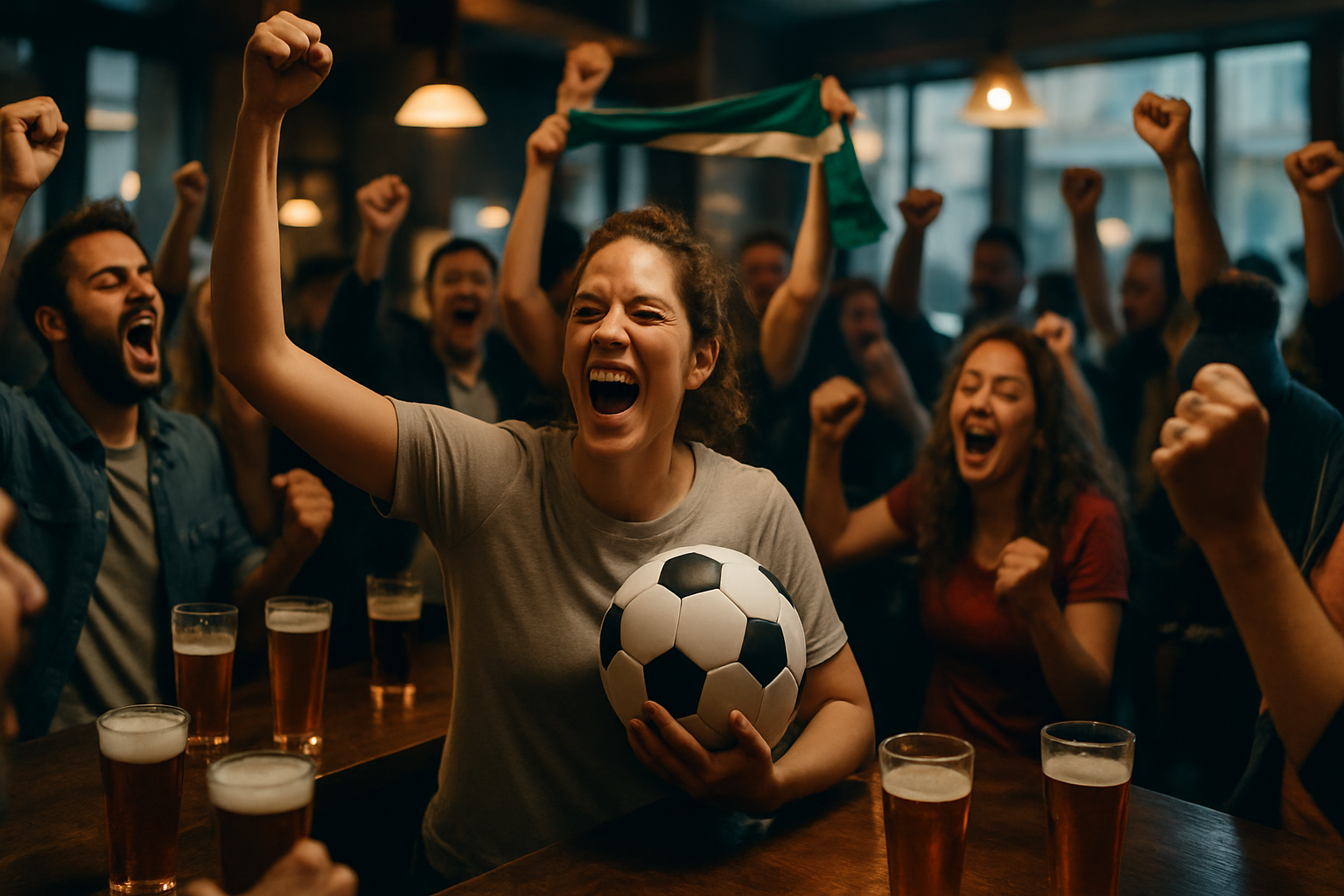
Diageo used the 2026 FIFA World Cup as the largest possible proving ground. The company activated Don Julio and Casamigos alongside Buchanan’s, Johnnie Walker and Smirnoff across the Americas, using tournament programming, on-premise partnerships, airport pop-ups, fan festivals, retail displays and limited-edition packs. Its campaign was designed to be present for six weeks across all 16 host cities.
That sounds like conventional sports marketing. It is more important than that.
Tequila and mezcal generated $6.4 billion in U.S. supplier sales in 2025, according to the Distilled Spirits Council of the United States. But sales fell 4.1% from the prior year. The broader U.S. spirits market declined 2.2% to $36.4 billion. Meanwhile, spirit-based ready-to-drink cocktails grew 16.4%, becoming a nearly $4 billion category.
Those numbers explain the strategy. Tequila does not need another argument that it is culturally relevant. It needs an answer to a harder question: how does a category built on premium bottles and aspirational pricing grow when consumers are more selective, more budget-conscious and increasingly interested in convenient, lower-commitment formats?
The World Cup offered an answer: sell tequila not simply as a liquid, but as the base layer of an occasion.
Diageo built a portfolio machine, not a tequila sponsorship
The important detail in Diageo’s FIFA program is that it did not ask one tequila brand to do every job.
Don Julio represented premium celebration: elevated serves, luxury hospitality and the kind of visual theater that supports a high-end bottle’s price and status. Forbes reported that Don Julio took over Pier 59 at Chelsea Piers during the tournament’s final week with a 200-foot-plus megayacht, tastings, dining and entertainment. The company also attached the event to a limited-edition Don Julio 1942 bottle.
Casamigos played a different role. Its campaign centered on the accessible, sociable margarita, including a rivalry between classic and spicy versions. More importantly, Diageo introduced Casamigos pre-mixed Classic Lime and Spicy Margarita products made with 100% Blue Weber agave tequila. That is a format decision, not merely a marketing one.
In a market where consumers may hesitate over a $50-plus bottle but will say yes to an easy shareable serve for a match-day gathering, format expands the addressable occasion. A pre-mixed margarita does not replace a premium blanco or reposado for every buyer. It captures consumers who value speed, portability and low-friction hosting.
That is why Diageo’s five-brand approach matters. Smirnoff can compete for casual, high-volume consumption. Buchanan’s can speak to multicultural whiskey occasions. Don Julio can protect premium tequila’s luxury cues. Casamigos can win at-home margarita territory. The portfolio meets a consumer across price points, drinking styles and venues without making a single brand carry the entire commercial burden.
For operators, this is the real takeaway: the winning beverage program is no longer built around the one "hero" SKU. It is built around an occasion map.
The market data says premiumization alone is no longer enough
For years, tequila was the spirits industry’s cleanest premiumization narrative. Consumers moved from mixto to 100% agave, from shots to sipping, and from a basic Margarita to high-margin pours, luxury bottles and reserve expressions. Brands could create value by telling a story of provenance, agave, barrel aging, craftsmanship and status.
That playbook is not dead. But it is insufficient by itself.
The 4.1% decline in tequila and mezcal sales during 2025 should be read as a warning against treating premium price as a strategy. Price can be an outcome of brand strength. It cannot be the entire growth engine when consumers are re-evaluating discretionary spending.
The industry’s temptation will be to interpret softer sales as a temporary hangover after an extraordinary growth cycle. There is some truth in that. Tequila grew so quickly that inventories, distributor expectations and shelf sets were all built for a continuation of boom-era demand.
But the deeper change is behavioral. Consumers are increasingly choosing where alcohol fits into their lives rather than organizing social life around alcohol. The fastest-growing segment in DISCUS’s 2025 data was not ultra-premium tequila. It was spirit RTDs.
That shift does not mean consumers have abandoned quality. It means convenience is becoming part of quality.
A consumer hosting friends for a match, a concert or a backyard dinner may still want a credible tequila-based drink. But they may not want to stock citrus, syrup, glassware and multiple modifiers. Brands that interpret that preference as inferior drinking are missing the point. The consumer is not rejecting tequila; they are rejecting unnecessary work.
The overlooked angle: this is a distribution story as much as a brand story
There is a less glamorous implication in the World Cup push. National campaigns only work if the product arrives in the right accounts, in the right format, with enough visibility to convert attention into a sale.
That is increasingly difficult in U.S. beverage alcohol. The distributor landscape has been under significant pressure, and Republic National Distributing Company’s retrenchment has created further disruption across states. Reyes Beverage Group completed the acquisition of RNDC operations in 10 states and Washington, D.C., in June, while further state-level transitions have continued.
For tequila brands, that changes the economics of growth. A broad cultural campaign can generate consumer demand, but smaller suppliers especially need disciplined market selection, distributor alignment and retail execution to benefit from it. A beautiful campaign without a reliable local route to shelf is simply an expensive awareness exercise.
The same principle applies to bars and restaurants. If a brand wants a World Cup-style occasion to translate into a lasting call brand, it needs menu placement, staff education, a fast serve and a replenishment plan. It needs to make money for the account, not merely look good in a social post.
This is why the large suppliers have an advantage. They can coordinate national media, retailer programs, on-premise activations and multiple package formats. Yet the same fragmentation creates room for nimble independent brands that focus on a few markets, build genuine local relationships and avoid paying for scale before they have earned velocity.
The contrarian view: limited editions are not the point
It is easy to look at gold bottles, yachts and FIFA marks and conclude that tequila is still running on spectacle. That reading misses the more useful lesson.
Limited editions are not a growth strategy. They are a demand accelerant. They work when they direct consumers toward a product they will buy again after the commemorative packaging disappears.
The real asset Diageo was building was not the bottle; it was a consumer habit. Match day becomes margarita day. A bar learns a fast Paloma build. A grocery or liquor retailer identifies a convenient tequila RTD as a reliable weekend purchase. A consumer who first encounters Casamigos through a ready-to-serve format may later trade up to a bottle. Or they may not. Either result can be valuable if the portfolio is designed correctly.
For premium tequila producers, the implication is not to chase canned cocktails blindly. It is to decide precisely which occasion they intend to own and what friction they can remove from it. Some brands should stay focused on sipping, provenance and high-touch on-premise education. Others should build cocktail credibility. Still others should enter RTD only if they can protect liquid quality and brand positioning.
The mistake is believing every tequila needs to be everywhere.
What this means for you
If you run a tequila or premium spirits brand, measure the next big activation by repeat behavior, not impressions. Track depletion after the event, reorder rates by account, menu permanence, RTD trial-to-repeat conversion and the mix between promotional sales and full-price sales. If the program cannot improve those metrics, it is entertainment rather than strategy.
If you operate a bar, restaurant or retailer, organize tequila around occasions. Offer one premium sipping cue, one high-margin classic cocktail, one fast premium-format option and one approachable entry point. The consumer does not need a 30-SKU tequila wall. They need a clear reason to choose tequila now.
If you are an investor, distinguish between brands that merely benefited from tequila’s prior premiumization wave and brands that can win in the next phase. The stronger businesses will have credible unit economics, flexible formats, disciplined distribution and a real answer to moderation and convenience.
The World Cup campaign made the category look celebratory. The numbers underneath it make the stakes clear. Tequila’s next chapter will not be won by the loudest bottle. It will be won by the brands that turn cultural attention into a durable, repeatable occasion.