Tesla Cybercab Robotaxi: $100B Camera Bet
Tesla’s expected September 3 Cybercab event is a $100B bet that cameras can beat more than 200 million miles of Waymo’s expensive caution.
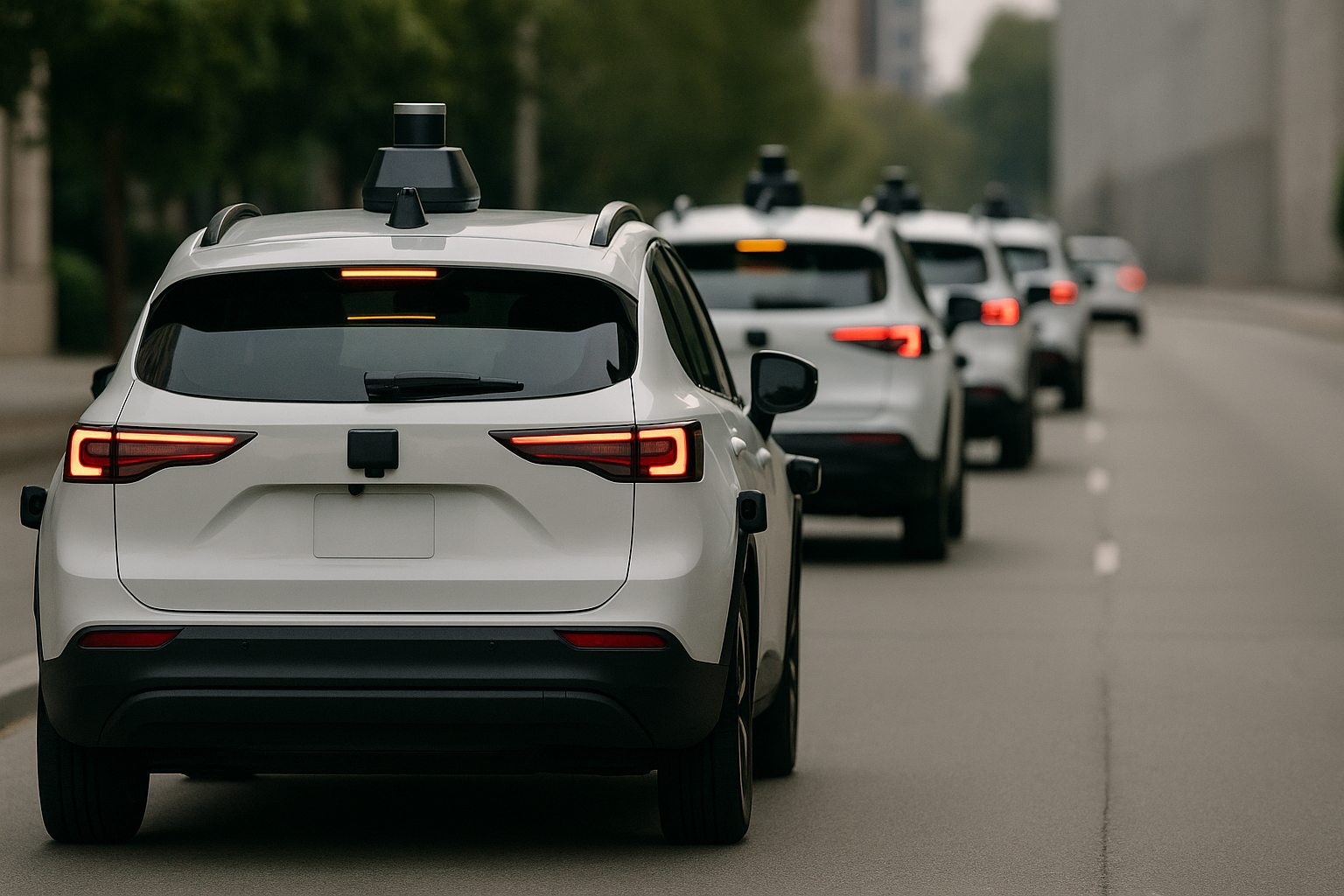
Tesla’s expected September 3 Cybercab event is a $100B bet that cameras can beat more than 200 million miles of Waymo’s expensive caution.
That is one hell of a bet. Before anyone gets carried away by gullwing doors and Elon Musk theatre, remember what is actually on trial: Tesla’s claim that a cheap, camera-first AI system can do the hardest job in tech better than a far more heavily instrumented machine.
Waymo thinks that claim is rubbish. Tesla thinks Waymo has built the autonomous-driving equivalent of an overpriced gas plant. One of them is about to look either very smart or very exposed.
Tesla’s expected September 3 Cybercab robotaxi event is not just a product launch
TechCrunch reported that Tesla is expected to formally introduce its two-seat Cybercab to its robotaxi operation in Austin on September 3, 2026. The car has no steering wheel or pedals. This is not another driver-assistance feature with a human sitting there ready to grab the wheel. It is a purpose-built vehicle for a driverless transport network. ([techcrunch.com](https://techcrunch.com/2026/09/01/waymo-goes-on-offense-ahead-of-teslas-cybercab-launch/))
That matters because Tesla is no longer selling a car feature. It is attempting to build a transport platform.
The prize is enormous. Robotaxis sit at the intersection of software, vehicles, energy, insurance, logistics and consumer behaviour. Get the unit economics right and you do not merely sell a car once. You own, or take a cut from, every ride that car performs for years. The market could be worth hundreds of billions of dollars, which explains why the argument between Tesla and Alphabet-owned Waymo has suddenly become a proper knife fight. ([techcrunch.com](https://techcrunch.com/2026/09/01/waymo-goes-on-offense-ahead-of-teslas-cybercab-launch/))
Tesla’s essential proposition is brutally simple: cars already have cameras, computers and electric drivetrains. Make the AI good enough, remove the driver, manufacture the vehicle at scale, and the cost of a ride falls hard.
If Tesla pulls that off, its advantage is not just better software. It owns the manufacturing stack. Waymo buys vehicles from other manufacturers, then fits them with its autonomous-driving hardware. Tesla wants to build the car and the intelligence together. That could give it a material cost advantage before the first fare is charged. ([techcrunch.com](https://techcrunch.com/2026/09/01/waymo-accelerates-robotaxi-expansion-with-launches-in-denver-san-diego-and-tampa/))
That is why investors should care about the Cybercab. The economic model only gets truly interesting if Tesla can make autonomy cheap enough to spread quickly.
Waymo has chosen the expensive answer because it thinks cheap can kill you
Waymo’s answer is that Tesla is trying to save money in precisely the wrong place.
Waymo says a genuinely safe autonomous vehicle needs cameras, lidar and radar: multiple ways to understand the physical world, with redundancy when one sensor gets it wrong. Its argument is not subtle. Cameras are excellent, but they are not enough on their own when you are moving a real human through rain, glare, roadworks, school zones, emergency vehicles and the beautifully stupid decisions made by other drivers.
Waymo says it has logged more than 200 million real-world autonomous miles, and that this evidence shows fully autonomous operation at scale needs a combination of sensors. The company has also warned that pure end-to-end AI systems can create black-box failures. ([techcrunch.com](https://techcrunch.com/2026/09/01/waymo-goes-on-offense-ahead-of-teslas-cybercab-launch/)) ([axios.com](https://www.axios.com/2026/08/26/waymo-ai-shortcut-self-driving))
Tesla, by contrast, is betting that vision-based AI can interpret the road well enough without the extra sensor stack. It is an audacious approach because it attacks Waymo where it hurts: cost.
Lidar and radar do not just add technical capability. They add hardware, integration, calibration, repair complexity and capital expenditure. They make every vehicle more expensive before it earns a cent. Waymo’s approach may be safer and more mature, but it also has to prove that its fares and fleet economics can work outside wealthy, dense, carefully selected urban areas.
This is the bit that gets lost in the online tribal warfare. Neither company is really debating whether AI is clever. Both know it is clever. They are debating the cost of being reliable when clever is not enough.
Waymo is expanding because it has something Tesla still needs: operations
While Tesla prepares the Cybercab event, Waymo is widening its footprint. It announced plans to launch in Denver, San Diego and Tampa, adding to a network that already serves riders in more than a dozen US cities. It also received approval in August to operate up to 1,000 autonomous vehicles over the following year in Clark County, Nevada. ([techcrunch.com](https://techcrunch.com/2026/09/01/waymo-accelerates-robotaxi-expansion-with-launches-in-denver-san-diego-and-tampa/))
That does not mean Waymo has won. It means it has a lead in the boring, brutal part of the business.
A robotaxi fleet is not a demo. It is a live operation. Cars need cleaning, charging, repairs, customer support, incident response, mapping, insurance, depot capacity, remote assistance and relationships with regulators and first responders. Every weird edge case that occurs on a public road becomes an operating problem, not an AI slide deck.
This is where founders should pay attention. The world loves the breakthrough and ignores the plumbing. But the plumbing is where the margin lives or dies.
Tesla may have a potentially superior manufacturing model. Waymo has something equally valuable: scar tissue. It has been running fleets and learning what fails when you put autonomous cars into the mess of ordinary urban life.
The company is also facing its own operational complications. Waymo’s expansion is tied to Zeekr-made vehicles, and Axios reported that it is on track to import 5,000 of them by year-end, exposing the business to a different kind of risk: geopolitics, imports and supply chains. ([axios.com](https://www.axios.com/2026/09/01/waymos-robotaxi-expansion-china-ojai))
So no, this is not a clean Tesla-versus-Waymo morality play. Tesla’s risk is technical validation. Waymo’s risk is that its technically cautious model becomes too expensive and too slow.
The contrarian view: Tesla does not need to beat Waymo everywhere
Here is the overlooked angle: Tesla does not need a perfect autonomous-driving solution for every road, every city and every weather condition to build a serious business.
It needs a repeatable system that works in enough profitable places.
That might mean dry, sprawling, regulation-friendly cities first. It might mean tightly defined geofenced routes, airports, business districts or suburbs where fleet utilisation is high and edge cases are manageable. Texas has become an important proving ground partly because its regulatory framework allows commercial automated-vehicle operators to maintain state authorisation and active vehicle records rather than navigate a separate municipal rulebook in every market. ([txdmv.gov](https://www.txdmv.gov/AVprogram))
That is not a criticism. It is how real businesses scale. Uber did not begin by solving every transport problem on Earth. Amazon did not start by selling everything. A sensible operator finds a wedge, makes the economics work, then expands.
But there is a nasty catch for Tesla: the public will not judge Cybercab like a normal startup wedge. It will judge it as a safety claim. A software bug that breaks a food-delivery app is annoying. A failure in a driverless car is front-page news, regulatory scrutiny and potentially years of reputational damage.
The standard is different because the downside is different.
And that gives Waymo an unusual strategic weapon. Its extra sensors may make each vehicle dearer, but they may also buy it the credibility needed to win regulatory approval and public acceptance in difficult markets. Cheap hardware is only cheap if it does not prevent you from operating.
The real race is not AI versus AI. It is cost versus trust.
The lazy framing is that Tesla is the AI innovator and Waymo is the cautious incumbent. That is too neat.
Waymo is using advanced AI, enormous amounts of real-world data and an aggressive expansion plan. Tesla is taking an aggressive product and cost position, but it still has to show that its system can operate reliably at meaningful scale without the redundant sensing Waymo considers essential.
Tesla’s upside is therefore spectacular. If a camera-first system works, it could produce a robotaxi that is cheaper to manufacture, simpler to deploy and easier to scale across a massive installed base and manufacturing footprint.
Its downside is equally obvious. If cameras alone cannot consistently handle the ugly tail risks of driving, Tesla has not merely chosen a different sensor package. It has built its entire operating model around the wrong assumption.
Waymo’s upside is steadier. It already has operational experience, a growing city network and a safety thesis grounded in redundant sensing. Its downside is that it could win the safety debate and still lose the economic war if its vehicles remain materially more expensive than Tesla’s.
That is why the expected September 3 event matters. Not because one event settles autonomous driving. It will not. It matters because Tesla is moving the argument from promise to product.
What this means for you
If you are a founder, stop confusing technical elegance with a business model. Tesla’s Cybercab matters because it is trying to turn AI capability into radically better unit economics. Ask the same question of your own AI project: does it lower the cost of serving customers, increase output per employee, improve retention, or merely make a slick demo?
If you are an operator, study Waymo as closely as Tesla. The hard part of AI deployment is usually not selecting the model. It is building the processes around failures, exceptions, accountability and customer recovery. Build those before scale forces you to.
If you are an investor, be wary of both kinds of story. “AI will solve everything” is nonsense. So is “the safe incumbent always wins.” The money will go to the company that can earn trust at a cost customers will actually pay.
And if you are just trying to get sharper with money, remember this: the biggest opportunities often sit where a technical argument meets an unglamorous operating detail. Tesla is betting on cheaper hardware. Waymo is betting on redundancy. The winner will not be decided by who has the better slogan. It will be decided by who can put safe cars on roads, keep them busy, keep regulators comfortable and make a profit after all the boring bills arrive.
That is business. The flashy bit gets the headlines. The ugly maths takes the money.