The $67 Billion Branded-Residence Boom Is Real Estate’s New Pricing Power Test
Luxury brands are moving from handbags and hotels into condos. The $67 billion branded-residences market is less a lifestyle story than a test of whether developers can turn scarcity, service, and trust into durable pricing power.
The story is not the car elevator. It is the margin
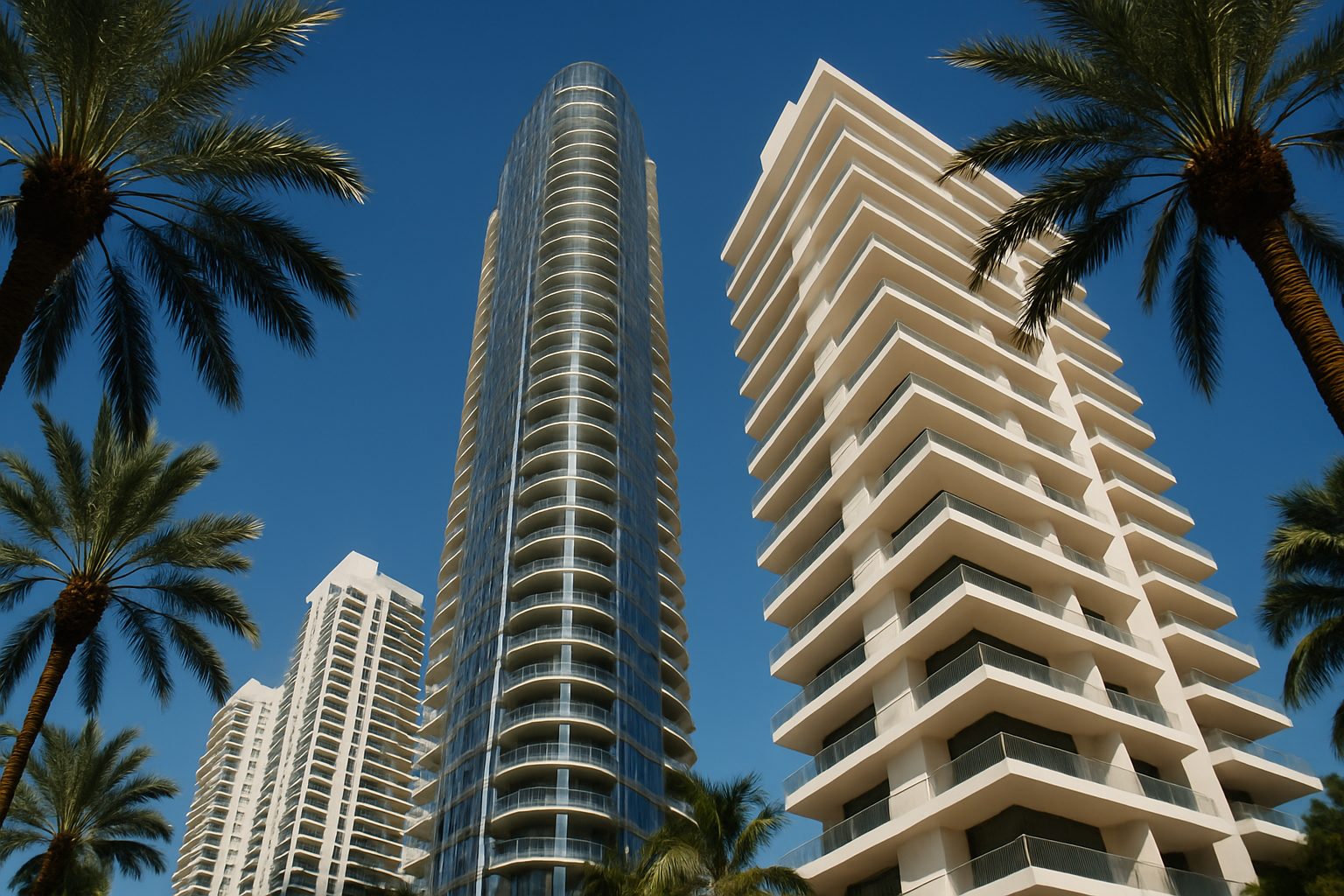
A Porsche can now ride an elevator directly into a condominium more than 60 stories above Sunny Isles Beach. That is the detail designed to go viral—and it has. But it is not the real investment story.
The important development is that branded residences have matured from an occasional hotel-adjacent luxury product into a global real-estate category valued at roughly $67 billion, according to Sotheby’s International Realty data cited by Fortune on August 4. By the end of 2025, there were 1,907 active and pipeline branded-residence developments worldwide, according to Global Branded Residences. If all planned projects materialize, supply could more than double during the next decade.
That deserves investors’ attention because it signals a different form of real-estate competition. Developers are no longer selling only square footage, views, finishes, and a neighborhood. They are selling a recognizable identity before the buyer has even decided whether they trust the developer, the city, or the local market.
In an ordinary condominium cycle, a tower must earn its premium through location, execution, amenities, and scarcity. In a branded project, a developer tries to add an existing global consumer relationship to that equation. Porsche, Bentley, Aston Martin, Fendi, Armani, Nobu, Bugatti, Mercedes-Benz, Elie Saab—these are becoming distribution channels as much as design partners.
My read: branded residences are becoming a serious pricing-power strategy precisely as conventional luxury development gets harder to differentiate. But they are not a free premium. They are a concentrated bet on brand relevance, international wealth flows, and delivery discipline. Get those three things right and a project can widen its buyer pool. Get one wrong and the logo becomes a very expensive facade.
From hotel service to brand-extension real estate
Luxury hotels created the original template. A Four Seasons or Ritz-Carlton residence bundled ownership with concierge service, housekeeping, food and beverage, spas, and a hospitality operating model. The buyer was paying for an apartment, certainly, but also for a reliable level of service in a market where absentee ownership is common.
The new wave takes that model beyond hospitality. Fortune points to the Porsche Design Tower in Florida, Bentley Residences nearby, Fendi-branded apartments in Dubai, and Nobu projects in Manhattan, Abu Dhabi, Los Cabos, Al Marjan Island, Cairo, and Tulum.
This matters because the non-hotel brands are selling something more abstract: affiliation. An automaker’s customer is not necessarily looking for a better building system. A fashion house’s customer is not necessarily looking for a more efficient floor plan. They are buying a physical extension of a brand they already use to signal taste, status, or belonging.
That can be economically powerful. A familiar marque reduces the information burden for an overseas buyer evaluating an unfamiliar city. The buyer may not know the local developer or the micro-market. They know Bentley. They know Nobu. They know Armani. In global luxury markets, that recognition can substitute—at least partly—for local knowledge.
It also changes the sales conversation. The unit becomes an experience product. The Porsche tower’s private car elevator and sky garage are extreme examples, but the underlying tactic is broader: build a feature that is intrinsically shareable, then let social media perform part of the marketing work. Fortune reported that one short Porsche Tower video received nearly 50 million views. The building is not merely housing its owner; it is generating an audience around the owner.
That is useful for developers because luxury real estate has always depended on narrative. The difference now is that the narrative can travel globally at almost no marginal distribution cost.
The premium has a ceiling—and that is the key underwriting fact
The most useful number in the August 4 reporting may be the least flashy one. Ziad El Chaar, chief executive of Dubai-based luxury developer Dar Global, said a co-branded project can support a price increase of around 20% to 30%. He warned that developers attempting 50%, 60%, or 70% increases often fail to sell out—and, in many cases, fail to build.
That is the central discipline investors should apply to this theme.
A brand can improve a project’s appeal. It cannot repeal price elasticity. The market may reward a luxury label when the label is authentic to the product, the location matches the buyer base, and the operating promise is credible. But the brand does not turn a mediocre site into a trophy address, nor does it rescue an overlevered development budget.
In fact, the faster branded residences expand, the more this distinction will matter. The industry is moving from a scarcity premium to a selection problem. Early projects benefited from novelty. The next decade will separate brands with a believable relationship to design, hospitality, wellness, food, mobility, or service from brands that simply license their names.
That is why a Porsche or Bentley concept has a more intuitive narrative in a car-centric South Florida luxury tower than a random consumer brand would. It is also why Nobu has a natural advantage where its restaurant and hospitality ecosystem can support a genuine resident experience. The value is not the logo alone. The value is whether the logo changes the lived product.
Operators should treat that as a hard investment-committee question: What is this brand adding that a well-executed unbranded building cannot? If the answer is limited to a name on the marketing brochure, the premium is fragile.
The overlooked risk is execution, not demand
The popular view is that these projects are insulated because they serve ultra-wealthy buyers. That is only half true. Wealthy buyers have more options, not fewer, and their expectations are exacting.
Fortune’s reporting illustrates the point. In February, unit owners at Aston Martin Residences sued developer German Coto, alleging self-dealing, fraud, construction defects including water damage, and failures to provide promised amenities. The suit seeks more than $5 million in damages and an accounting of the building’s finances. Those allegations remain allegations, but the episode captures the structural risk: a brand can accelerate pre-sales, yet it also raises the cost of disappointment.
That is a crucial second-order implication. In a normal condominium, an operational miss damages the developer and the building’s reputation. In a branded residence, it can damage the developer, the brand licensor, the homeowner association, future phases, and potentially the value proposition of comparable branded projects. The luxury promise is not optional once it has been sold.
This is why I would be more cautious about treating branded residences as a standalone asset class than many glossy market reports do. It is better understood as a development strategy with unusually high execution sensitivity. The brand may improve demand formation. It does not make construction, governance, warranties, reserve funding, or amenity operations any easier.
A contrarian view: the boom may reward the brands more reliably than the developers
The obvious winner is assumed to be the developer because it sells units at a premium. But the cleaner economics may sit with the brand.
A global luxury company can extend into real estate without taking on the full operational intensity of developing and managing a tower. It gains geographic reach, recurring exposure to affluent customers, and a physical showroom that residents themselves help market. The brand receives the upside of cultural relevance while the developer carries far more of the entitlement, construction, delivery, and local-market risk.
For the developer, the deal is worth it only if the license fee, design requirements, and added complexity are outweighed by faster sales, broader international demand, or a sustainable price premium. That is a high bar. A brand can create attention; it cannot reduce the cost of capital or fix a bad project schedule.
There is a parallel here with the broader housing market. Washington’s new 21st Century ROAD to Housing Act is designed to encourage construction and relax local constraints, but it does not solve high mortgage rates or the rise in home prices, as Axios reported. The same divide applies at the luxury end: policy and capital-market conditions still set the backdrop, while branding determines who captures the marginal buyer.
In other words, branded residences are not a substitute for real-estate fundamentals. They are an attempt to extract more value from favorable fundamentals—and to survive when those fundamentals are merely adequate.
What this means for you
For investors: Do not invest in the category just because branded-residence supply is growing. Underwrite project by project. Look for a premium that is plausible relative to unbranded comparables, a brand with authentic relevance to the resident experience, and a location with deep international demand rather than one dependent on a short-lived local boom.
For developers: The brand should be a distribution advantage, not a crutch. Demand-test the premium before committing to the license and the customized design program. The best partnership is one that produces tangible resident value—service, food, design, mobility, wellness, or community—not simply better launch-event photography.
For brands: Protect the customer promise. A failed tower can create a reputational liability that travels faster than any advertising campaign. If a name is going on the building, the brand needs meaningful influence over the product and service standards that buyers are actually receiving.
For buyers: Treat the name as a feature, not an investment thesis. Pay for a branded residence only if you value the service, design, and location independently of the badge. A 20% to 30% premium may be defensible when the product is genuinely differentiated. A much larger premium demands exceptional evidence.
The branded-residence boom is real. So is the temptation to confuse visibility with value. The winners will be the projects that convert a recognizable name into a better asset—not merely a more expensive one.