Tilaknagar’s ₹22 Crore Tequila Bet on a Company Worth Less Than Zero
Tilaknagar Industries just put ₹22 crore into a tequila company with negative net worth. That is either disciplined option-buying—or proof that distribution now matters more than the bottle.
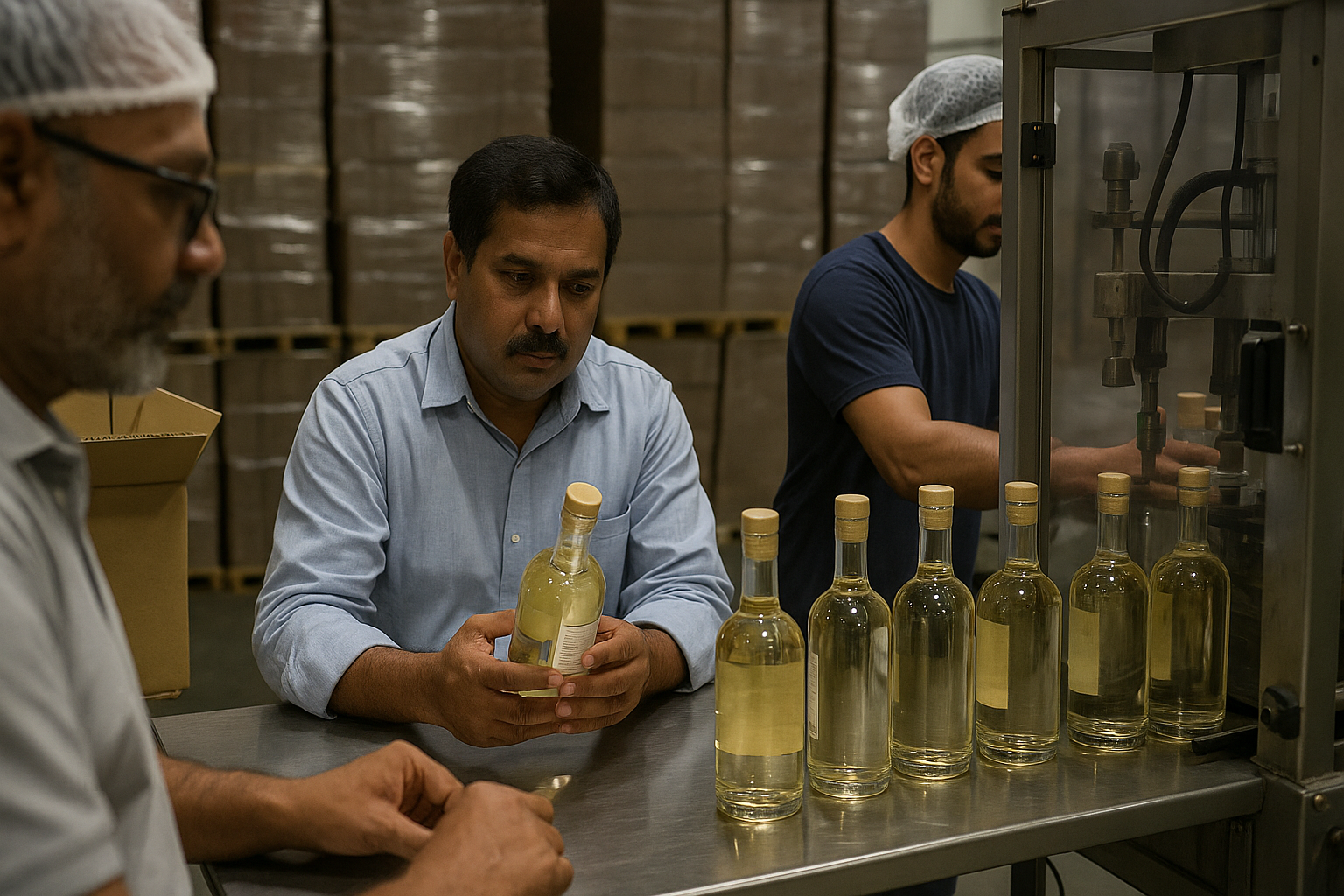
Tilaknagar Industries has put ₹22 crore into a tequila company whose disclosed net worth was negative ₹20.83 lakh. If that makes you uncomfortable, good. It should.
On September 2, Tilaknagar announced it would take a 30% fully diluted stake in Black Tiger Distilleries, the company behind Bodega Suprema No. 5 tequila. A subsequent correction to the filing clarified that Black Tiger’s net worth at March 31, 2026 was negative—not positive, as initially reported.
Most people will see “negative net worth” and either panic or shrug. Both reactions are lazy. The better question is: what exactly is Tilaknagar buying for ₹22 crore, and can it turn a niche tequila brand into a serious Indian business without lighting money on fire?
This is not really a tequila deal
The headline says tequila. The real asset is access.
Tilaknagar is subscribing to shares in Black Tiger Distilleries through a mix of compulsorily convertible preference shares and equity. The ₹22 crore investment is split into two tranches: roughly ₹6 crore first, then roughly ₹16 crore within 12 months. In exchange, Tilaknagar gets 30% ownership on a fully diluted basis.
That structure matters. This is not a big bloke buying a vanity bottle brand after too many margaritas at a resort. It is a relatively small, staged investment into a company that needs capital, commercial muscle and a path to scale.
Black Tiger owns Bodega Suprema No. 5, a 100% agave tequila made through a partnership involving Productos Finos de Agave in Mexico. The brand gives Tilaknagar an entry point into tequila without forcing it to build Mexican production relationships, brand credentials and an import operation from scratch.
That may sound obvious. It isn’t. In spirits, production is only half the battle. Plenty of brands can source decent liquid. Plenty can make a gorgeous bottle. Plenty can hire someone to say “premium” 47 times in a launch deck.
Then they hit the brutal bit: getting approved state by state, priced properly, stocked by the right retailers, poured in the right bars, and reordered by consumers who have no reason to care about your shiny label.
Tilaknagar has spent decades doing the hard, unsexy work of selling alcohol in India. Its Mansion House brandy business gave it scale. Its 2025 acquisition of the Imperial Blue business from Pernod Ricard gave it a much larger national platform in whisky. Tilaknagar said Imperial Blue sold 22.4 million nine-litre cases in the 12 months to March 2025 and had presence across 27 states and union territories.
So no, ₹22 crore is not primarily a bet that tequila will save the company. It is a bet that a company with a heavy distribution machine can create more value from a small agave brand than the agave brand can create alone.
That is a far more sensible bet.
A ₹22 crore cheque is cheap if it buys an option on a category
India’s tequila market is still tiny by global spirits standards. Tilaknagar’s chief strategy officer, Ameya Deshpande, put it at roughly 250,000 cases. Tiny markets are dangerous because founders love to call them “early.” Often that is code for “nobody wants it yet.”
But a small market is exactly why this deal is interesting.
Tilaknagar is not spending ₹3,550 crore, as it did to acquire Imperial Blue. It is putting ₹22 crore into an emerging premium category where the upside could be meaningful and the tuition fee, at least relative to its balance sheet and prior acquisitions, is contained.
That is how sensible portfolio expansion should look: make the core business pay for the experiments, and structure the experiments so you can learn before you commit serious capital.
The staged investment does this nicely. Tilaknagar gets time to see whether Black Tiger can execute. Black Tiger gets capital and strategic support without pretending it has already earned a massive valuation. And both parties get a chance to prove whether Bodega Suprema No. 5 can build repeat demand beyond the novelty of “there’s an Indian company selling Mexican tequila.”
The company has also indicated it is open to investing more as Black Tiger grows. That is the right posture: earn the next cheque.
Too many spirits groups do the opposite. They buy growth at the top of the hype cycle, overpay for a celebrity name, then discover that Instagram impressions do not move cases after the launch party ends.
The negative net worth is a warning label, not a deal-breaker
Let’s not dance around the uncomfortable bit.
Black Tiger’s negative net worth means its accumulated losses and obligations exceeded its recorded equity at the end of March. It does not automatically mean the business is worthless. Early-stage consumer companies can have negative net worth while owning a brand, inventory pipeline, supplier relationships and future commercial potential.
But it absolutely means the investment deserves scrutiny.
A premium spirits brand can absorb cash at an astonishing rate. There are registration fees, import and excise complexity, inventory lead times, packaging, trade incentives, distributor margins, bar activations, tastings, sales staff, compliance and marketing. Then, just when you think you have traction, a larger company throws money at the same accounts and reminds everyone who owns the shelf.
The danger is not that Black Tiger has negative net worth. The danger is that it becomes one more premium brand whose business model is permanently “raise cash, discount stock, call it brand-building, repeat.”
Tilaknagar needs to avoid that trap. It should demand ruthless measurement: case velocity by city, reorder rates by outlet, gross margin after every trade spend dollar, working-capital turns, contribution margin by SKU, and how many consumers return without being bribed by a promoter or a free hat.
If a brand cannot answer those questions, it is not building equity. It is renting attention.
The overlooked angle: tequila may be the wedge, not the destination
Here is the more interesting possibility. Tilaknagar may not need Bodega Suprema No. 5 to become a giant tequila brand for this investment to work.
It needs a credible premium-agave platform.
That gives the company a way to learn a different consumer, a different price tier and a different occasion from its core brandy and whisky businesses. It also lets Tilaknagar test where premium imported spirits actually have pull in India: five-star hotels, high-end restaurants, premium retail, destination nightlife, gifting and consumers trading up for specific occasions.
This is useful intelligence. And intelligence is underpriced when you run a large consumer business.
I’m building Agave Finder, so I spend plenty of time looking at how drinkers discover bottles. The lesson is simple: consumers are getting better at spotting the difference between a real product story and a bottle that is just expensive because the label says it should be.
That creates an opportunity for Bodega Suprema No. 5 if the liquid, supply chain and story stand up. But it also creates a problem: tequila drinkers who care enough to pay up will eventually ask where it is made, who makes it, what agave is used and why this bottle deserves another purchase.
You cannot fake that forever with a black bottle and a nightclub tab.
Why Tilaknagar’s timing is better than it looks
Tequila globally has had a noisy few years. The premium end attracted celebrity brands, contract production and absurd mark-ups. In the US, higher-end tequila and mezcal volumes have softened as consumers became more selective about price.
That is precisely why India could be a more interesting long-term market than a copy-and-paste American launch strategy.
The Indian opportunity is not “sell tequila because tequila is fashionable.” That is amateur hour. The opportunity is to build a brand for consumers who are expanding beyond familiar whisky and brandy choices, but who still expect quality, authenticity and a reason to trade up.
Tilaknagar has a major advantage here: it knows Indian alcohol distribution is not a frictionless ecommerce funnel. It is a regulated, state-by-state operating game. Scale, local relationships, execution and patience matter.
The catch is that those capabilities only matter if management protects the brand from becoming generic. Flooding every possible outlet with discounted stock would create short-term volume and long-term damage. Premium spirits are not premium because the company says so. They are premium because the consumer believes the bottle is worth choosing again when there is no promoter standing nearby.
What this means for you
If you are a founder, do not copy the product. Copy the deal logic.
First: buy options before you buy certainty. Tilaknagar did not swing a massive cheque at a fully formed tequila empire. It made a staged minority investment in a small company where distribution and capital could change the outcome.
Second: do not confuse a weak balance sheet with a bad opportunity—but never ignore it. Negative net worth should trigger sharper due diligence, not blind optimism or automatic rejection. Ask what the losses bought, what the liabilities are, and whether the next dollar produces real commercial progress.
Third: distribution is a product. Founders obsess over what they make. Big companies win because they know how to get it bought repeatedly. If you have a great product but no route to market, you have a hobby with overheads.
Fourth: measure reorders, not applause. Media coverage, launch nights and social reach are lovely. Reorders pay salaries. If customers do not come back without a discount or a stunt, fix the offer before spending more on awareness.
My verdict: Tilaknagar’s ₹22 crore bet is smart only if it stays what it is today—a controlled wager on capability, category learning and access. The moment management starts treating tequila as a magic growth potion, it becomes another expensive bottle on a crowded shelf.
The winners in spirits will not be the loudest. They will be the operators who can get an honest bottle into the right hands, at the right price, often enough that people choose it without being sold to. That is the whole bloody game.