Tishman Speyer’s $235M Chrysler Building Bet Is a Warning to Office Bears
The Chrysler Building was bought for $151 million in 2019, then broken by the bill underneath it. Tishman Speyer’s $235 million rescue is not a nostalgia trade.
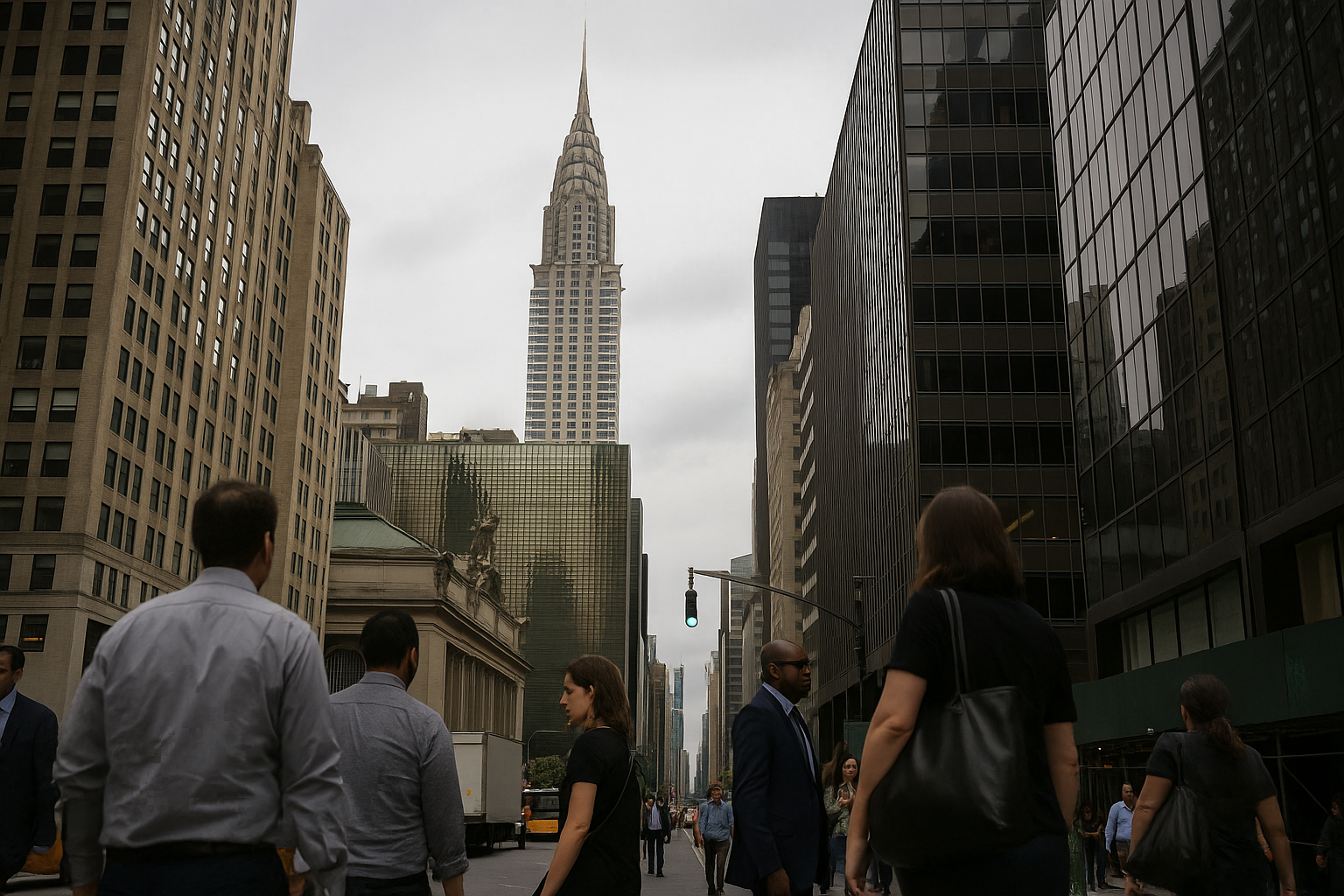
The Chrysler Building was bought for $151 million in 2019, then nearly wrecked by the bill underneath it.
That is the bit every property punter needs to tattoo on their forehead. A beautiful building is not an investment. A famous address is not an investment. Cash flow, capital structure and control of the land are the investment. Everything else is brochure material.
On October 7, Tishman Speyer, backed by institutional investors led by Canada’s PSP Investments, finalised a 150-year ground lease for Manhattan’s Chrysler Building with The Cooper Union. The deal includes a $235 million investment plus ongoing ground-lease payments, with the partners funding the lease and redevelopment using equity rather than debt. ([cooper.edu](https://cooper.edu/about/news/tishman-speyer-cooper-union-finalize-ground-lease-agreement-and-revitalization-plan))
That is a big, deliberate bet that premium office is not dead. But it is also a warning: the best assets do not save sloppy underwriting.
The $235 million deal is not buying a building. It is buying a second chance.
Tishman Speyer is taking control of a 77-storey, 1.3 million-square-foot landmark at 405 Lexington Avenue. It intends to restore the façade and crown, modernise lifts, mechanical, electrical and air-handling systems, improve cooling-tower efficiency, and turn the 61st floor into a hospitality and amenity space with food, beverage and outdoor access. It will also prebuild 75% of current and upcoming vacant space into ready-to-occupy office suites. ([cooper.edu](https://cooper.edu/about/news/tishman-speyer-cooper-union-finalize-ground-lease-agreement-and-revitalization-plan))
That sounds like a standard repositioning plan. It isn’t.
The Chrysler Building is the sort of asset that makes inexperienced investors say, “How could you lose money on that?” That is usually the moment they should put their wallet away.
The previous owners, RFR and Austria’s Signa, acquired the leasehold in 2019 for just over $150 million. That number looked cheap next to the roughly $800 million paid in 2008 for a 90% stake. But it was cheap for a reason: the business was carrying an escalating ground-rent obligation, a dated workplace product, capital expenditure needs and a worsening office market. ([bisnow.com](https://www.bisnow.com/news/new-york/office/tishman-speyer-chrysler-building-cooper-union-psp))
The annual ground lease jumped from about $7.8 million in 2018 to as much as $32.5 million. In the prior structure, it was expected to climb further, to $41 million by 2028. ([bisnow.com](https://www.bisnow.com/news/new-york/office/tishman-speyer-chrysler-building-cooper-union-psp))
That is the whole story in three numbers. You do not own an asset because you got a low entry price. You own its future obligations too.
Why the last owners got cleaned up
RFR and Signa were not beaten because the Chrysler Building suddenly stopped being iconic. It remained iconic while its economics got uglier.
The building needed meaningful work. Its office space lacked the modern systems and amenities tenants increasingly expect. Then the pandemic changed how office users thought about space, and vacancy added pressure. By the time the previous structure unravelled, the owners had stopped paying rent, Cooper Union began eviction proceedings in September 2024, and a court ultimately allowed the college to take control. ([bisnow.com](https://www.bisnow.com/news/new-york/office/tishman-speyer-chrysler-building-cooper-union-psp))
Signa’s November 2023 insolvency did not help, obviously. But blaming it all on Signa is too convenient. The property had a structural problem before that collapse: a long-dated obligation on land the operator did not own, combined with a building needing serious money spent on it.
This is why I am always wary when someone tells me they have found a “distressed bargain” in property. Often, they have found an asset where the pain is simply hiding below the line items they bothered to read.
A cheap purchase price can be the most expensive thing you buy.
The Chrysler Building case is particularly brutal because the ground beneath it belongs to The Cooper Union. The college has owned that land since 1902, and the lease income is designed to support its educational mission, including its plan to restore full-tuition scholarships for undergraduates. ([cooper.edu](https://cooper.edu/about/news/tishman-speyer-cooper-union-finalize-ground-lease-agreement-and-revitalization-plan))
In plain English: the operator cannot wish away the landlord. And the landlord has no reason to subsidise your fantasy spreadsheet.
Tishman Speyer is betting on scarcity, not a broad office comeback
Here is the contrarian bit: this is not necessarily a call that all offices are back.
In fact, I would read it as the opposite. Tishman Speyer is betting that the gap between great office and mediocre office keeps widening.
The Chrysler sits directly connected to Grand Central Terminal. The company says the Grand Central submarket has among Manhattan’s lowest office-availability rates, with premier towers at or near full occupancy and virtually no new supply added to the neighbourhood for decades. Bisnow reported that direct asking rents in the Grand Central submarket reached $113.45 per square foot in the third quarter. ([cooper.edu](https://cooper.edu/about/news/tishman-speyer-cooper-union-finalize-ground-lease-agreement-and-revitalization-plan))
That is not an argument for buying a random secondary office block because you can get it at a 60% discount to 2019. Quite the reverse.
The winners in this market are increasingly the buildings with the location, transport, design, services and capital to make a company want its staff there. The losers are the assets that can only compete on rent — right up until their rent is too low to cover the work they need.
Tishman Speyer’s play is to combine a globally recognised address with a modern product. Prebuilt suites matter because smaller and mid-sized tenants do not want to spend nine months designing an office before they can move. A polished crown is lovely. Faster occupancy and lower tenant friction are what make the economics work.
That is an operator’s mindset: remove the thing that slows a buyer down.
The overlooked angle: equity is the real headline
Most people will see the Chrysler Building and talk about Art Deco, Manhattan glamour and a famous skyline.
I see the financing choice.
Tishman Speyer and its partners say they will use 100% equity for the ground lease and redevelopment plan. ([cooper.edu](https://cooper.edu/about/news/tishman-speyer-cooper-union-finalize-ground-lease-agreement-and-revitalization-plan))
That is not a detail. It is the point.
Debt is brilliant when your cash flow is dependable, your costs are understood and you have room for error. It becomes a loaded gun when income is uncertain, rates are higher than your model assumed, and the building needs a serious turnaround.
The last owners had no margin for a messy reality. Tishman Speyer is bringing patient institutional equity — including PSP Investments, which reported C$320.6 billion in net assets under management as of March 31, 2026 — and a 150-year leasehold horizon. ([cooper.edu](https://cooper.edu/about/news/tishman-speyer-cooper-union-finalize-ground-lease-agreement-and-revitalization-plan))
That does not make the investment risk-free. It makes it survivable.
There is a massive difference between owning a problem asset with a five-year loan maturity staring at you and owning one with the money already committed to fix it. One forces decisions. The other allows decisions.
For founders, this should sound familiar. A decent business with bad financing can die. A difficult business with a strong balance sheet can buy time to become excellent.
Property people often get hypnotised by cap rates. I prefer to ask a simpler question: Who has the capacity to hold this asset through the ugly middle?
That is usually where the money is made.
Do not confuse a trophy with a strategy
Here is where I’ll be blunt: most investors should not take this deal as permission to go trophy hunting.
The Chrysler Building is investable because a specialist owner can improve an irreplaceable asset in a constrained, high-demand location, with deep equity backing and a detailed operating plan. It is not investable because it looks good in a photo.
The same logic applies whether you are buying a rental house, a small warehouse, a listed REIT or a private commercial property.
Ask the boring questions first:
- What are the non-negotiable costs that rise whether revenue does or not? - Who controls the land, financing, zoning or contract that can ruin the model? - How much capital expenditure is being politely called “upside”? - What must go right for the return to work — and what happens if it does not? - Can I fund the asset through a slow two or three years without selling at the worst possible time?
If you cannot answer those questions, you are not investing. You are admiring.
What this means for you
For investors, the lesson is simple: stop treating “commercial real estate” as one market. Premium, transit-connected, amenity-rich office is a different product from an outdated building in a weak location. Buy exposure accordingly. If you use listed REITs, read the portfolio, debt maturities, occupancy, lease expiries and redevelopment spend. Do not just buy the ticker with the biggest yield.
For property operators, underwrite the obligation before the asset. Ground rent, debt covenants, insurance, taxes, deferred maintenance and leasing commissions are not annoying footnotes. They are the business.
For founders, copy the part of this deal that matters: put capital behind the bottleneck. Tishman Speyer is not hoping tenants forgive a tired product. It is spending to remove the reasons they would say no.
And for anyone tempted by a “cheap” asset: remember the Chrysler Building. The last owners paid roughly $151 million for an icon and still lost control. Tishman Speyer is committing $235 million because it understands that the acquisition is the cheap bit.
The repair bill — financial, operational and reputational — is where the real investment starts.
Sources
- Tishman Speyer & The Cooper Union Finalize Ground Lease Agreement And Revitalization Plan For Chrysler Building
- Tishman Speyer Buys Control of New York’s Chrysler Building
- Tishman Speyer Retakes Chrysler Building, Plans $235M Renovation
- A Wrestling Match Over Control of the Chrysler Building in Manhattan