Together AI’s $800M Raise Shows Why AI Infrastructure Is Becoming Venture’s New Moat
Together AI’s $800 million Series C is bigger than one neocloud funding round. It is evidence that venture capital is shifting from backing AI apps to financing the infrastructure businesses that control access, cost and deployment.
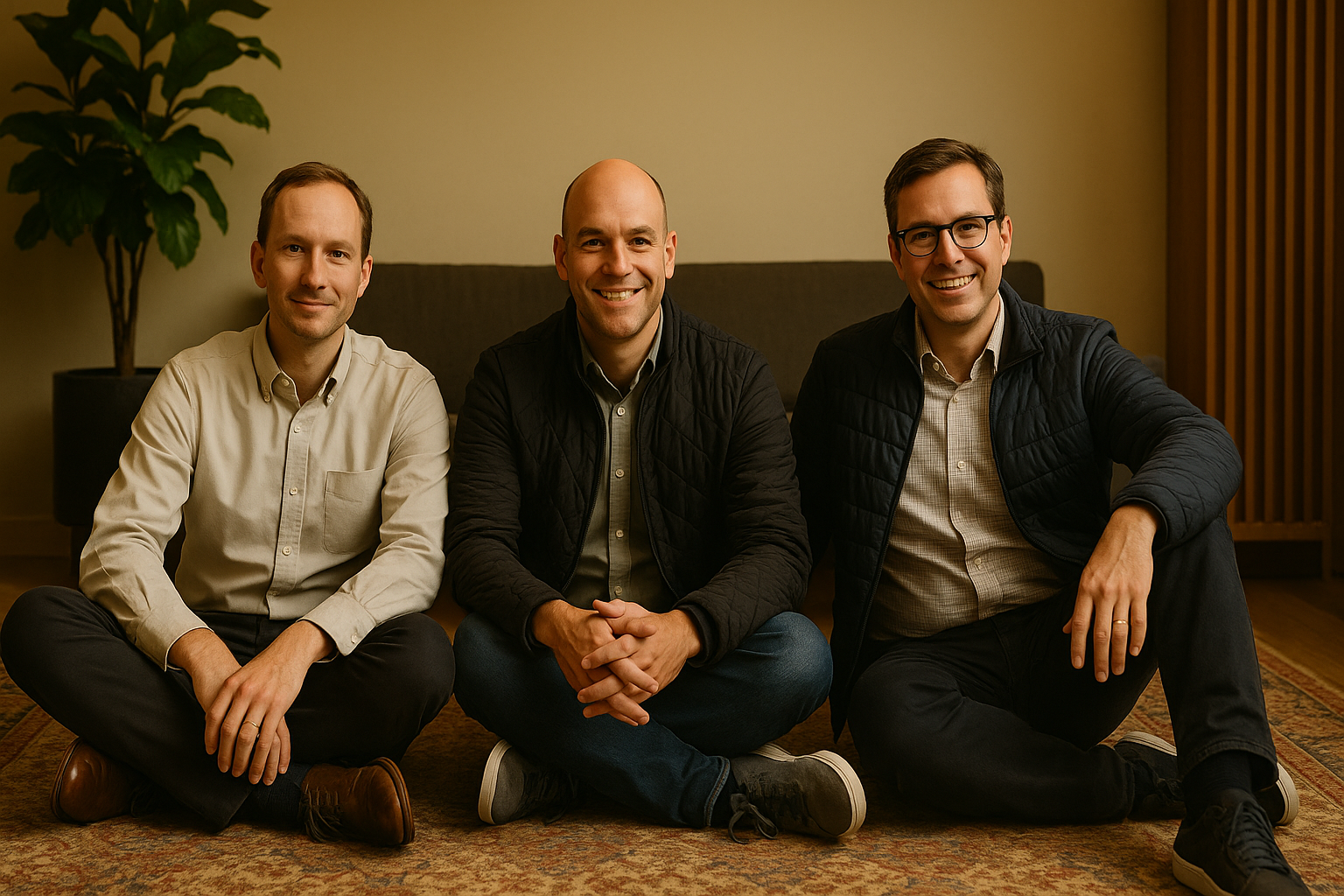
The $800 million signal
The startup story that matters most in venture right now is not another chatbot, coding copilot or polished AI demo. It is the escalating price of owning the infrastructure underneath them.
Together AI, an AI-focused cloud provider, raised an $800 million Series C at an $8.3 billion valuation in July. The round was led by Aramco Ventures and included Vista Equity Partners, General Catalyst, Emergence Capital, Nvidia and others. Sixteen months earlier, Together AI raised a $305 million Series B at a $3.3 billion valuation. That means its reported valuation has risen roughly 2.5 times in little more than a year.
On the surface, this is another giant AI round. In substance, it is a bet on a far more consequential proposition: the AI winners may not be only the companies building models or applications. They may be the companies that make large-scale AI capacity available to everyone else.
Together AI is part of the so-called neocloud cohort: startups that rent AI-optimized computing capacity, principally GPU clusters, to businesses and developers. These are not conventional software businesses. They are capital-intensive operators whose product is a combination of scarce hardware access, cloud orchestration, performance tuning, developer tooling and the commercial ability to secure power and data-center capacity.
That makes this funding round a referendum on a new venture category. Investors are no longer treating compute as a background utility. They are treating it as strategic infrastructure.
A venture market increasingly dominated by infrastructure economics
The numbers show how rapidly that view has taken hold. Together AI’s $800 million raise follows a wave of major funding for companies built around AI capacity. TechCrunch reported that Upscale AI raised a $500 million Series A extension at a $2 billion valuation, while TensorWave raised a $350 million Series B at a $1.55 billion valuation. Together AI itself had already secured more than $400 million before this latest round.
This is where the conversation gets uncomfortable for founders and investors accustomed to classic SaaS logic. AI infrastructure is expensive in ways SaaS never was. A company cannot simply write more code, turn on paid acquisition and let gross margins expand with usage. It must procure equipment, reserve data-center space, manage energy exposure and compete for hardware that remains strategically valuable across the market.
The payoff is equally different. If a neocloud becomes a dependable default supplier of AI capacity, it can develop a deeply embedded customer relationship. Once a customer has built workflows, fine-tuning pipelines, data practices and deployment systems around a particular infrastructure provider, switching becomes more complicated than moving from one seat-based software tool to another.
That is the strategic appeal of Together AI. The company is not merely selling access to chips. It is selling a potentially integrated layer for teams building with open-source and custom models: model training, inference, tooling and scalable access to compute. Its founding team also signals that this is not a purely financial construction. CEO Vipul Ved Prakash previously sold Topsy to Apple; cofounders Percy Liang and Ce Zhang bring serious research credentials from Stanford and ETH Zurich/the University of Chicago, respectively.
In a market where investors worry that many AI application companies will be copied, bundled or squeezed by model providers, infrastructure has become a cleaner place to underwrite differentiation.
Nvidia’s presence tells the real story
Nvidia participated in Together AI’s round. That fact deserves more attention than it usually gets.
It is tempting to interpret Nvidia’s investments in AI infrastructure companies as simple ecosystem support. They are more than that. Nvidia benefits when more companies build and operate GPU-heavy services, because every successful neocloud becomes a larger and more sophisticated buyer of AI hardware. But Nvidia’s presence also helps validate which operators may become meaningful distribution channels for its technology.
There is an important circularity here. Venture capital supplies the equity. The equity helps neoclouds buy or lease the capacity that depends heavily on Nvidia hardware. Those cloud operators then sell capacity to AI startups, which use the hardware to build products that attract more venture capital. This flywheel can accelerate innovation quickly. It can also make the entire startup ecosystem more exposed to the economics of one supply chain.
That is why neocloud funding is not simply a story about a hot category. It is a story about market structure.
For years, the startup ecosystem talked about cloud computing as if Amazon Web Services, Microsoft Azure and Google Cloud had settled the infrastructure question. AI has reopened it. The hyperscalers remain dominant, but specialized providers are arguing that general-purpose cloud is not always the best environment for model training and high-volume inference. Their pitch is specialization: better access, better performance and a stack built for AI workloads rather than adapted to them.
The wager is that the market will pay for that specialization at scale.
The broader capital boom is masking a sharper divide
The larger venture backdrop makes Together AI’s raise even more revealing. Global startup funding reached $297 billion in the first quarter of 2026, according to Crunchbase data reported by TechCrunch. But four deals — OpenAI’s $122 billion financing, Anthropic’s $30 billion round, xAI’s $20 billion raise and Waymo’s $16 billion financing — accounted for $188 billion, or more than 63% of that total.
That is not a broad-based recovery in the old sense. It is capital concentration.
The biggest checks are flowing toward businesses that require extraordinary amounts of capital: frontier-model companies, autonomous-vehicle operators and now AI infrastructure platforms. Meanwhile, the financing environment for a typical seed-stage or Series A company remains governed by more familiar tests: revenue quality, customer retention, technical differentiation and a credible route to efficient growth.
My read is that this creates two venture markets operating at once.
The first is a geopolitical, industrial-capital market. Here, the question is whether a company can secure enough money, compute, energy and talent to become a foundational platform. Valuations can look detached from conventional venture math because these businesses are being judged against enormous potential markets and strategic scarcity.
The second is the operating-company market. Here, founders still have to prove that they are solving a narrow, costly problem for customers who will keep paying. Capital is available, but the bar is far higher for companies without a credible claim on an AI bottleneck.
Together AI is notable because it sits near the boundary of those markets. It is venture-backed, but its economics increasingly resemble industrial operations. It has software-like ambitions, but it requires infrastructure-scale financing.
The overlooked risk: capacity is not the same as defensibility
The contrarian view is that neoclouds may be receiving credit for scarcity that will not last forever.
Today, access to advanced AI computing remains valuable enough that companies can command attention simply by assembling capacity. But hardware availability can improve. New chips can enter the market. Hyperscalers can adjust pricing or product strategy. Customers can multi-cloud. Open-source models can become more efficient, reducing the amount of compute needed for certain tasks.
In other words, a fleet of GPUs is an asset, but not automatically a moat.
The winners will have to prove they can turn hardware access into a durable operating advantage. That could mean superior orchestration software, meaningfully lower inference costs, high-quality support for model builders, proprietary deployment workflows or customer relationships that deepen over time. It could also mean disciplined capital allocation — a less glamorous quality than raw growth, but an essential one in a business where capacity investments are immense and demand can be volatile.
This is the question investors should press: if compute becomes less scarce, what remains unique?
It is also the question founders should ask before choosing a provider. The cheapest GPU hour is not necessarily the lowest total cost of ownership. But neither is the most heavily funded provider automatically the safest long-term partner.
What this means for you
For founders, the lesson is straightforward: treat AI infrastructure as a strategic decision, not a procurement footnote. Build portability where possible. Understand your inference economics before you scale usage. Avoid designing a product whose gross margin depends on permanently subsidized compute prices. And when negotiating with providers, value operational reliability, model support and data practices as seriously as headline pricing.
For operators, Together AI’s round is a reminder that AI cost management is becoming a core competency. Usage-based AI products can look attractive in a spreadsheet until customer behavior, model complexity and latency requirements collide. The best teams will instrument cost per task, cost per retained customer and cost per successful outcome — not merely total cloud spend.
For investors, the opportunity is real, but the underwriting needs to be sharper. Infrastructure rounds should not be evaluated with a standard software multiple mindset. Ask about hardware commitments, utilization, customer concentration, energy and data-center exposure, financing needs beyond the current round, and whether product differentiation survives a more competitive supply environment.
The important takeaway is not that every investor should chase neoclouds. It is that AI has made the infrastructure layer investable again — and expensive again. Together AI’s $800 million round is a powerful marker of that shift. The next phase of venture will not be defined only by who builds the smartest model. It will be shaped by who can reliably, profitably and defensibly put that intelligence to work at scale.