Torrente’s 100-Proof Win Lands as Diageo Tequila Sales Fall 21%
The tequila boom didn’t disappear. It got exposed. Torrente just won Best New Tequila of 2026 while Diageo’s tequila sales fell 21.1%—and that gap tells you where the money is moving.
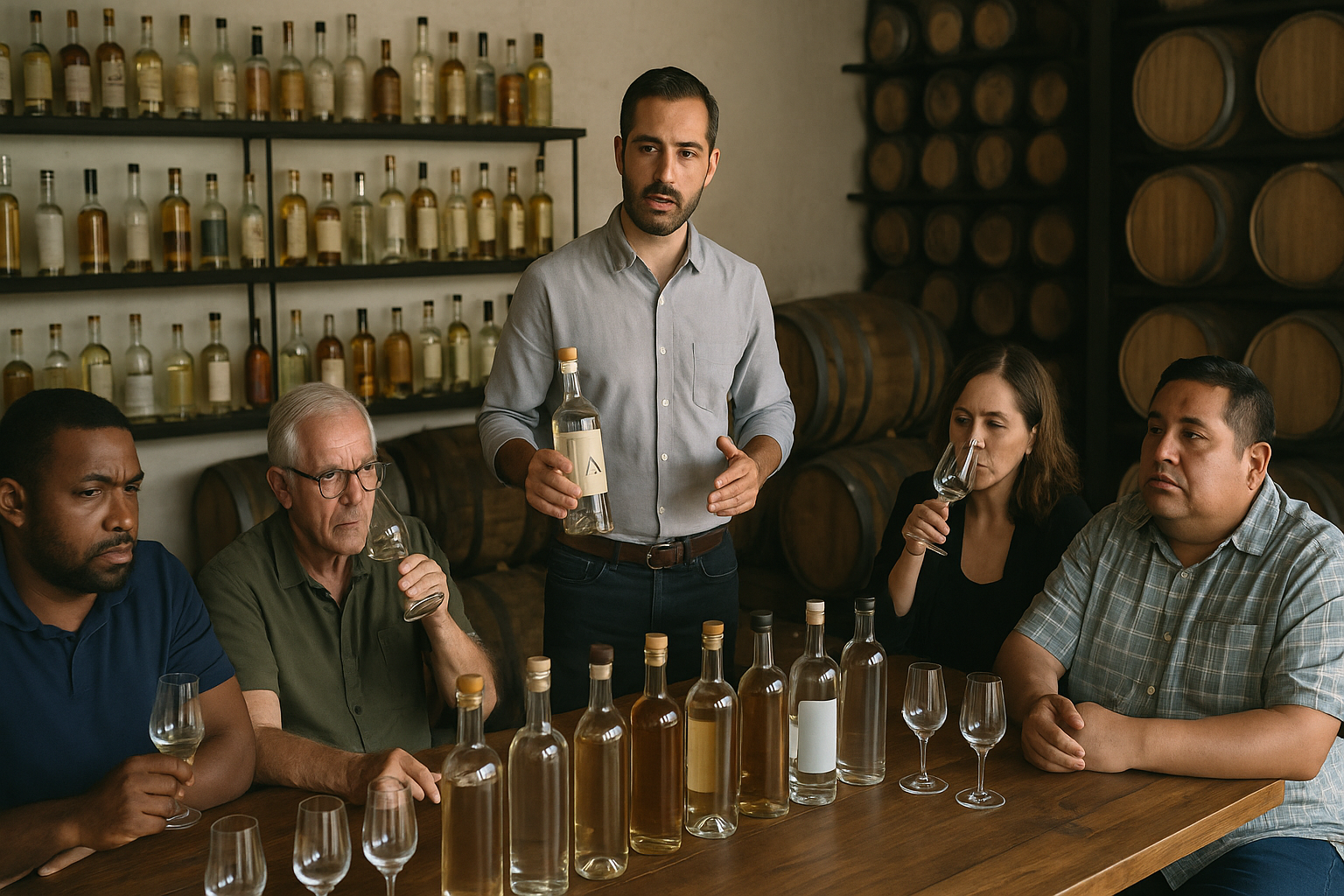
The tequila boom didn’t disappear. It got exposed.
Torrente High Proof Blanco has been named Best New Tequila of 2026 by the San Francisco World Spirits Competition at the exact moment Diageo’s tequila net sales have fallen 21.1%. That is not a cute industry coincidence. It is the market telling anyone paying attention that expensive logos and endless celebrity noise are no longer enough.
Torrente won a 2026 award. Diageo got a 21.1% reality check.
Forbes reported on August 30 that Torrente High Proof Blanco was selected as the San Francisco World Spirits Competition’s Best New Tequila of 2026. It is a 100-proof expression, or 50% ABV, from a small brand positioning itself around regenerative agriculture, its own Blue Weber agave and a more transparent connection between farm and bottle.
Now, an award is not a business model. Plenty of beautiful bottles win medals and quietly die on a retailer’s bottom shelf. But timing matters.
In Diageo’s financial year ended June 30, 2026, the company reported tequila net sales down 21.1%. Don Julio net sales declined 19.2%; Casamigos declined 27.7%. Don Julio depletions—the bottles actually moving through distributors into the market—fell 10.1%, while Casamigos depletions fell 23.1%.
That is not a rounding error. That is a giant operator admitting that two of the most recognisable tequila brands in America have run straight into a tougher consumer, more competition and the ugly maths of selling too much premium product into a market that has stopped clapping on command.
Diageo remains a monster: roughly $19.6 billion in reported net sales for fiscal 2026, more than 200 brands and distribution in around 180 countries and territories. Tequila represented 12% of reported net sales in its portfolio. So when tequila softens, it is not some bartender’s anecdote. It reaches the boardroom.
The important point is this: Torrente’s win is not evidence that consumers have abandoned tequila. It is evidence that the lazy version of tequila premiumisation is under pressure.
The old premium playbook has hit the wall
For years, spirits companies had a lovely little trick. Put a famous face on a bottle. Make it look expensive. Lift the price. Tell everyone it is “ultra-premium”. Then enjoy the margin while consumers, flush with post-pandemic cash and social-media anxiety, did the marketing for you.
That playbook worked until it didn’t.
Diageo itself has been unusually clear about what changed: a softer tequila category, increased competitive intensity and difficult comparisons with the prior year. Its interim results earlier in fiscal 2026 also described a weaker-than-expected US consumer, wallet pressure and stronger competition in tequila.
Translation: people are still drinking, but they are thinking harder before paying up. And there are now too many bottles asking to be the special one.
That is what happens when a category becomes fashionable. Everyone sees the growth chart, everyone launches a brand, every distributor takes meetings, and every founder discovers words like “heritage”, “craft” and “disruption”. Then the consumer walks into a store facing 80 tequilas and asks the only question that matters: why this one?
Most brands have a waffle-filled answer.
Torrente’s answer, at least on the surface, is more specific. The company says it is the world’s first certified regenerative tequila, produced under NOM 1588, using agave from farms managed to restore soil health rather than merely extract from it. Its High Proof Blanco is not trying to win by being another soft, vanilla-ed luxury prop. It is a 100-proof blanco being sold on raw material, farming practice, traceability and flavour.
That is a much harder story to fake.
Why a 100-proof blanco matters more than another celebrity añejo
Here is the overlooked bit: the most interesting product in this story is not an extra añejo in a crystal decanter. It is a high-proof blanco.
A blanco leaves the producer with fewer places to hide. Oak cannot do the heavy lifting. Fancy packaging cannot rescue thin liquid. If the agave is poor, the fermentation is sloppy or the distillation strips the character out, you find out quickly.
At 100 proof, the test is even harder. More strength can bring more aroma, texture and agave character, but it can also magnify every rough edge. That is why a high-proof blanco winning a major competition is commercially interesting: it signals that serious drinkers may be moving toward products where the liquid has to carry the argument.
This is where the tequila market starts behaving a bit more like wine, specialty coffee or good whisky. The winning product is not necessarily the one with the loudest marketing budget. It is the one with a credible answer to origin, production and taste.
That matters because the category’s real asset is not celebrity. It is agave.
Agave takes years to grow. It is not a flavouring you can manufacture next Tuesday when demand picks up. If you are building a business around it, your supply decisions, farm relationships and production standards have a long fuse. You cannot simply buy your way out of poor planning with an influencer campaign.
While building Agave Finder, I keep seeing the same thing: consumers are getting better at asking questions. Who made this? Which distillery? What is actually in it? Is the price justified? They do not all become tequila nerds, and they do not need to. But the era when a polished bottle could answer every question is ending.
The contrarian take: this is good news for tequila
Everyone loves saying a category is “over” when growth slows. That is lazy.
A 21.1% sales decline at a giant like Diageo is bad news for Diageo’s tequila division in the short term. It does not mean tequila is finished. It means the market is flushing out weak positioning, inflated expectations and pricing that got ahead of value.
Frankly, that is healthy.
The worst thing that could happen to tequila is for it to become a permanent promo aisle: a sea of interchangeable celebrity bottles, discounting against each other while pretending every launch is a cultural moment. That destroys margin, trust and eventually the agricultural base everyone depends on.
The better outcome is a more disciplined market with room for distinct products at distinct price points. Big companies can still win there, but they need to earn it. Diageo’s own response points in that direction: it is rolling out price repositioning and refreshed marketing for Casamigos, while also leaning into ready-to-drink formats and more accessible parts of the tequila ladder.
That makes sense. Consumers do not trade down because they suddenly hate quality. They trade down because the gap between price and perceived value becomes ridiculous.
The brand that gives them a clear reason to pay more still has a shot. The brand that just says “premium” is asking to be ignored.
What this means for you
If you are a spirits founder, stop leading with your branding agency’s adjective list. Write down—in one sentence—why your bottle deserves to exist when a buyer has 50 alternatives. If your answer is “premium, authentic and disruptive”, start again. Those words mean nothing without proof.
If you are an operator or retailer, do not confuse a famous label with guaranteed velocity. Watch depletion trends, repeat purchase and customer questions. A brand with a smaller audience but genuine product conviction can be more valuable than a heavily promoted bottle that only moves when discounted.
If you are investing in consumer brands, be especially suspicious of businesses whose whole thesis is price expansion. Price is not a moat. It is a test. Once consumers push back, you find out whether the business owns real demand or merely rented it.
And if you drink tequila, spend your money like an adult, not like a billboard. Try a good blanco. Ask where it was made. Look for a producer with something real to say about its agave, its method and its liquid. You do not need to worship every sustainability claim or pretend a medal settles the matter. You just need to stop rewarding lazy brands for yelling the loudest.
Torrente’s 100-proof win does not crown a new tequila king. But it does put a bright marker on where the next durable value may be built: better farming, clearer provenance, bolder liquid and a story that survives contact with the actual bottle.
That is where I would place my bet. Not on the next famous face. On the producer who can still explain the product after you take the label off.