Tradeweb’s $1.97B Trumid Deal Buys the Bond Trade Before It Exists
Tradeweb just paid $1.97 billion for Trumid because the best financial businesses don’t own transactions. They own the workflow before the transaction happens.
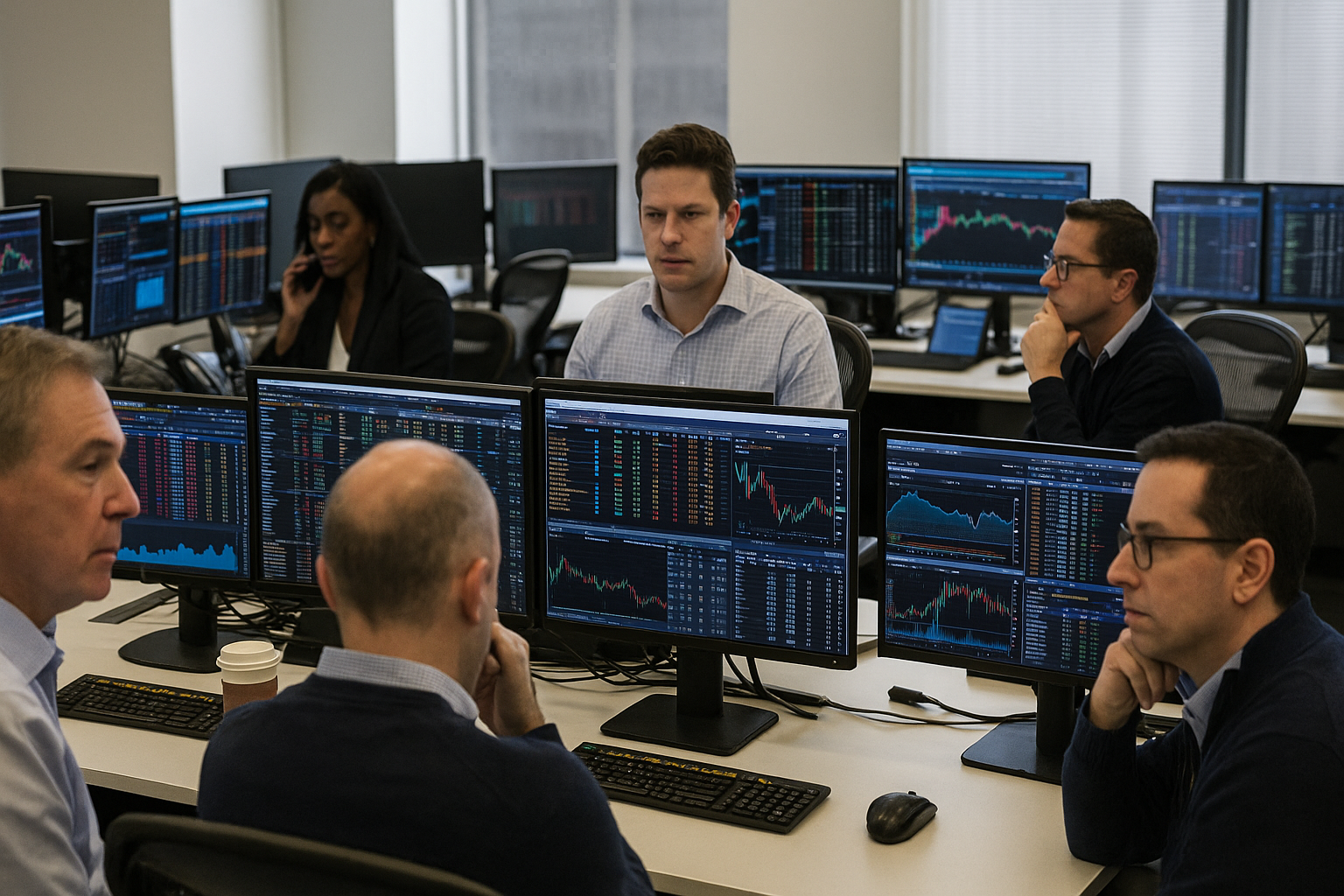
Tradeweb has just paid $1.97 billion for Trumid, and the lazy take is that it bought another electronic bond-trading platform.
Wrong. It bought a chance to get its hands on the customer before the trade is obvious, before the price is agreed, and before somebody else takes the economics.
That is where the serious money sits.
Tradeweb is paying for more than trades
On October 19, 2026, Tradeweb announced a definitive agreement to acquire Trumid, the electronic credit-trading marketplace, for about $1.97 billion. That figure comprises $1.75 billion for the business and roughly $220 million of tax assets. The consideration is approximately $1.89 billion in cash and $82 million in equity, with cash on hand expected to do most of the heavy lifting. Closing is targeted for the first half of 2027, subject to regulatory approvals and the usual conditions.
That is a proper cheque. Not a tuck-in acquisition you bury on page 47 of an investor deck.
Tradeweb says the deal should add to adjusted earnings per share in the first full year after closing, with the benefit increasing as expense synergies come through. Fine. Every buyer says some version of that. “Accretive” is one of the most abused words in business, right up there with “synergy” and “transformational.”
But the strategic logic here is much stronger than the financial slogan.
Tradeweb has built a formidable electronic-markets business across rates, credit, equities and money markets. It reported $81.6 trillion in total trading volume for September and $3.7 trillion in average daily volume. This is not a company hunting for relevance. It is already a major piece of market plumbing.
Trumid gives it a deeper foothold in the messy, relationship-heavy corporate-bond market: investment grade, high yield, distressed credit, emerging-market debt and, crucially, the grey market around newly issued bonds.
That last bit matters more than most people will realise.
The bond market is still full of expensive friction
People hear “electronic trading” and imagine shares changing hands in milliseconds. Corporate bonds are not like that. They are fragmented. There are thousands of securities, many trade infrequently, and liquidity can be scattered across dealers, asset managers, hedge funds and other institutions.
A trader trying to move a meaningful block of bonds does not simply press a button and receive the one true market price handed down from heaven. They work phones, messages, dealer axes, request-for-quote systems, pricing tools and relationships. It is a high-value problem precisely because it is still awkward.
Trumid was founded in 2014 by former traders and fixed-income specialists to modernise that workflow. It built a multi-protocol platform rather than betting the farm on one way of trading. Its Swarms protocol concentrates anonymous liquidity in particular securities; Attributed Trading supports dealer-to-client interaction; its RFQ and portfolio-trading tools handle other execution needs.
By its own figures, Trumid processed $1.7 trillion in total traded volume during 2025, with 1,000 onboarded global institutions and more than 1,400 monthly users as of mid-2026. Those are useful numbers, but the bigger asset is not the volume headline. It is the behaviour behind it.
Every time a participant searches for liquidity, requests a quote, assesses a basket, compares a dealer’s pricing, or decides not to trade, the platform learns something valuable about intent and market structure. That makes the platform better. Better tools attract more flow. More flow creates better data. And better data makes it harder for the next bloke to dislodge you.
That is the flywheel Tradeweb is buying.
The clever part is getting earlier in the lifecycle
Tradeweb describes the combination as connecting new-issue origination with secondary trading at scale. Strip away the press-release language and the point is simple: it wants to serve clients from the moment a bond is being brought to market, not merely once it is already bouncing around the secondary market.
Trumid has built meaningful capability in the grey market: the period after a new bond is announced but before it officially starts trading. That is where price discovery begins, liquidity forms and the market gets a first read on demand.
It is also where workflow becomes very sticky.
If you can be the system traders use to discover a price, signal interest, manage their risk and execute the trade, you are no longer just collecting a toll at the end of the road. You are helping draw the road map.
That is why this deal deserves more attention than a standard “fintech gets acquired” story. Tradeweb is not merely adding users. It is trying to make its network more central to the entire bond lifecycle.
The combination also looks complementary on paper. Tradeweb’s established institutional relationships sit alongside Trumid’s footprint among hedge funds and systematic market participants. Tradeweb brings scale, distribution and a large balance sheet. Trumid brings speed, specialist product design and a platform built around the gnarly corners of credit trading.
If it works, the combined business can offer more liquidity pools, more trading protocols, more data and a more complete workflow without forcing clients to leave the ecosystem.
That is the dream, anyway.
The overlooked risk: big companies are brilliant at buying, then ruining the thing
Here is the contrarian view: the $1.97 billion is not the risky part.
The integration is.
Trumid’s appeal has been its focus. It was built by credit-market people for credit-market users. In markets like this, product nuance matters. Traders do not care how gorgeous the corporate strategy slide looks. They care whether the tool helps them find liquidity, protect information, reduce market impact and get a trade done.
Large market-infrastructure businesses have advantages, but they also have a habit of sanding down the sharp edges that made an acquired company useful. Decision-making slows. Product teams get trapped in committees. Pricing changes. Sales teams cross-sell too aggressively. Customers sense that the once-independent platform is now another channel in somebody else’s empire.
Tradeweb needs to avoid that.
It should give Trumid distribution and capital while preserving the product pace and market intimacy that made it worth buying. That sounds obvious. It is also where plenty of otherwise sensible acquisitions go to die.
There is another issue: more integration is not automatically better for users. The deal thesis relies on clients believing that a larger combined network improves liquidity and workflow. If they worry it reduces choice, leaks too much information, or shifts bargaining power too heavily to the platform, they will keep using competing venues.
Network businesses win by becoming useful before they become unavoidable. Get that sequence wrong and customers push back.
This is a data acquisition wearing an M&A suit
The fashionable word is AI. I will spare you the ceremonial banging-on about it.
The relevant point is simpler: automation only becomes powerful when it has high-quality, real-world data and sits inside a workflow where users can act on it.
Trumid has been building precisely that. Its Full Self Trading tool is designed to coordinate execution across its Swarms, RFQ and Attributed Trading protocols within trader-defined limits. Its Fair Value Model Price product provides predictive pricing across more than 30,000 US corporate bonds using platform signals alongside external market data.
That is not magic. It is infrastructure.
But infrastructure with proprietary usage data, execution data, pricing data and an engaged user network can become extremely hard to copy. A competitor can build software. It cannot quickly recreate years of trust, trader behaviour and liquidity formation.
The best platform businesses do not just make an existing task faster. They become the place where decisions happen. That is the real target here.
What this means for you
If you are a founder, stop describing your product as a “marketplace” unless you understand what part of the customer’s workflow you actually own.
The valuable question is not: How do I take a fee when the transaction happens?
It is: How do I become useful before the customer is ready to transact?
Build the research tool. Build the pricing layer. Build the workflow that helps users decide. Build the place where the messy hand-offs occur. If you own the decision and the data around the transaction, the transaction has a habit of finding you.
If you are an investor, do not assess this deal by asking whether $1.97 billion sounds expensive in isolation. Ask whether Tradeweb has bought a defensible network with more ways to deepen customer usage, collect better data and increase its relevance across a large market.
And if you are an operator, nick the practical lesson: acquire capability only when it gets you closer to your customer’s hardest, most frequent problem. Buying revenue is easy to explain. Buying workflow is where the real compounding starts.
Tradeweb has made a big bet that the corporate-bond trade of the future will be shaped well before the trade ticket is filled in.
I reckon that part is dead right. The only question is whether it can keep Trumid sharp enough to prove it.