TSMC, Microsoft and 300,000 Maia 300 AI Chips: The Margin War
Buying 300,000 AI chips does not make Microsoft independent of Nvidia. It proves the bill for every AI answer is now too big to ignore.
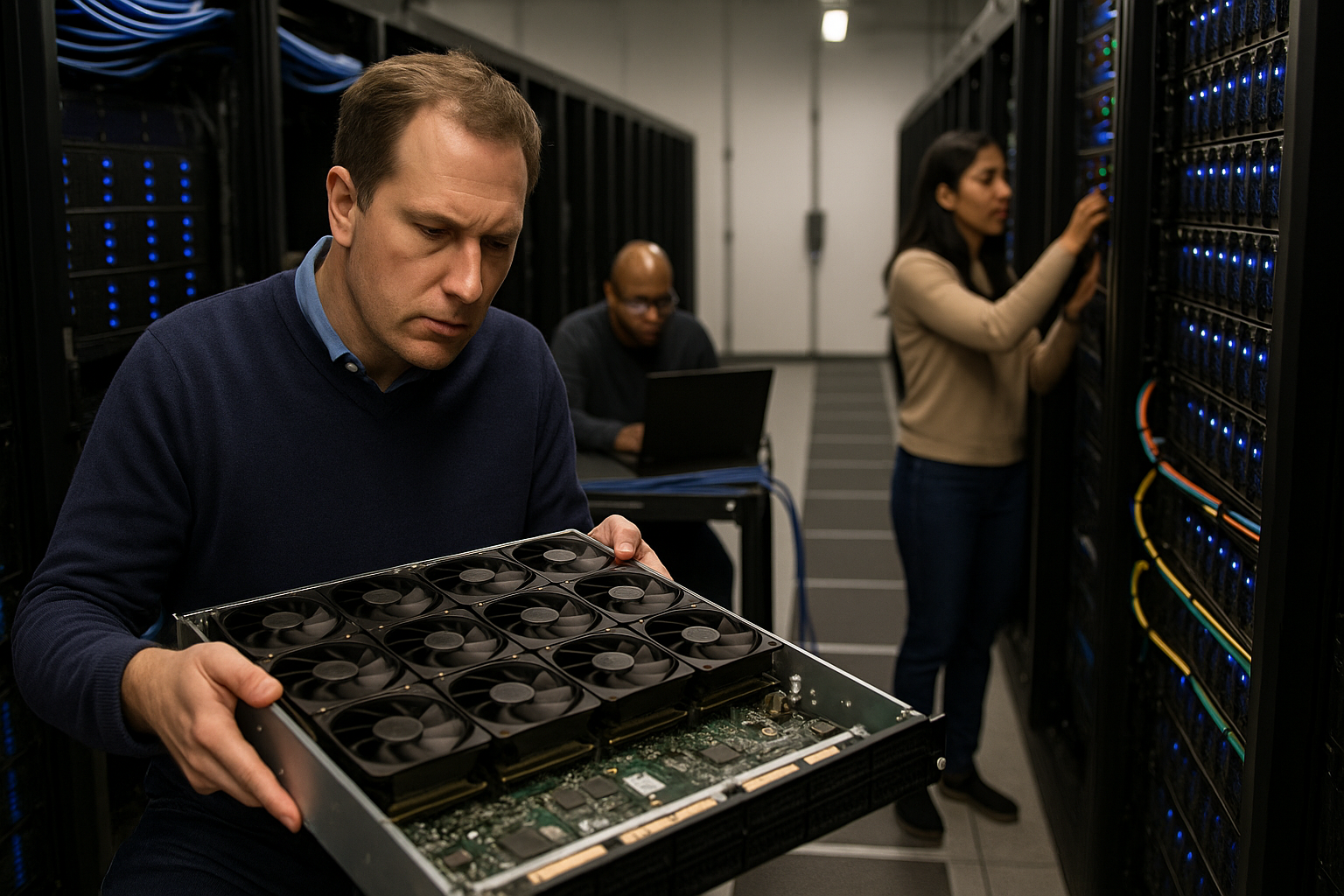
Buying 300,000 AI chips does not make Microsoft independent of Nvidia. It proves the bill for every AI answer is now too big to ignore.
Microsoft is reportedly lining up production capacity for more than 300,000 Maia 300 AI chips from TSMC for delivery in 2027. That is not a cute internal hardware project. It is a blunt admission that renting Nvidia’s toll road forever would eventually kneecap the margins of one of the richest companies on Earth.
Microsoft has worked out where the real AI pain lives
The reported plan is for Microsoft to unveil Maia 300 as soon as September, with TSMC manufacturing the chips. The number worth paying attention to is not the launch date. It is the production target: more than 300,000 units.
That is a proper industrial decision, not a demo-day prop.
For years, the market treated AI chips as Nvidia’s problem and AI products as everyone else’s opportunity. Nvidia makes the picks and shovels; Microsoft, Amazon, Google, Meta and the rest build the gold-rush towns. Simple enough.
But the winners of this game are now finding out that the shovel supplier owns a frighteningly large slice of their economics.
Every Copilot prompt, cloud model inference, image generation request and agent workflow has a cost. If the customer pays enough, terrific. If they do not, you have built a very expensive vending machine that gives away the product every time someone presses a button.
Microsoft’s Maia programme is about changing that equation. The company’s Maia 200 accelerator, introduced in January 2026, is built specifically for inference: the work of running trained models in production. Microsoft says Maia 200 delivers more than 30% better performance per dollar than the latest hardware already in its fleet. By its fiscal third-quarter update, Maia 200 was live in Microsoft data centres in Iowa and Arizona.
That tells you where the serious money is going. Training a frontier model creates headlines. Serving millions of people who ask it to rewrite an email, create an image, search company files or run an agent is what creates a permanent cost base.
I have built businesses where a tiny cost attached to every transaction looked harmless at first. Then volume arrives, everyone celebrates, and six months later you realise your “growth” is mostly a more efficient way to feed somebody else’s margin.
Microsoft is trying not to become that bloke.
A 300,000-chip target is not a victory lap
Let’s not get carried away. A big chip target is not the same thing as a working alternative to Nvidia.
Nvidia’s advantage is not merely that it has fast processors. It has years of software tooling, developer habits, system designs, networking and supply-chain relationships wrapped around those processors. That stack is incredibly hard to dislodge because enterprises do not buy a chip in isolation. They buy a system that must work at scale, stay available and not turn their AI initiative into an IT post-mortem.
Microsoft knows this. It is not pretending Maia means Nvidia disappears from Azure. In its own earnings commentary, Microsoft said it continues to modernise its fleet with first-party silicon alongside the latest Nvidia and AMD hardware.
That is the sensible approach.
The point of Maia is not to beat Nvidia everywhere. It is to win on the workloads Microsoft understands better than anybody else: its own high-volume, repeatable inference jobs. The company controls Azure, Copilot, Foundry and a growing group of first-party AI models. It can design the chip, software and data-centre setup around known demand instead of trying to sell a general-purpose miracle box to every customer on the planet.
That is how vertical integration actually works when it is done properly. You do not build everything yourself because you fancy your chances. You build the bit where dependency is costing you a fortune and where you have enough volume to justify the pain.
The background most AI commentary skips
Microsoft launched its first Maia AI chip in 2024. Maia 200 arrived in January 2026, fabricated on TSMC’s 3-nanometre process. Microsoft says each chip has more than 140 billion transistors, 216GB of HBM3e memory and memory bandwidth of 7TB per second.
Those figures are impressive, but they are not the main story either.
The crucial detail is that Maia 200 was designed around inference. This matters because AI economics are moving from a world of giant, occasional training runs to one where businesses need to serve a ridiculous number of small and medium requests cheaply, quickly and reliably.
A consumer asks Copilot to summarise a document. An employee asks an internal agent to compare contracts. A software team runs code assistance all day. A retailer deploys a customer-service bot. None of these tasks sounds like a moonshot. Stack them across hundreds of millions of users and suddenly token costs become a board-level issue.
Microsoft told investors that more than 300 customers are on track to process more than one trillion tokens on Foundry this year. That is what turns a 30% improvement in tokens per dollar from a nice engineering slide into something potentially enormous.
The best businesses do not just sell more units. They steadily lower the cost of delivering each unit while making the customer more dependent on the service. That is precisely the machine Microsoft is trying to build.
The overlooked angle: this is a defensive move against AI commoditisation
Here is the bit plenty of investors and founders miss: cheaper AI chips do not automatically mean more profit for AI companies.
They can mean the opposite.
As models become more capable and more interchangeable, customers will demand lower prices. They should. If five models can draft a sales email or classify a support ticket well enough, the customer will not pay a heroic premium because your model has a flashier benchmark score.
That means the real moat shifts below the model layer: distribution, workflow ownership, proprietary data, product integration and cost of service.
Microsoft has distribution in spades. It owns the workplace surfaces where AI can be embedded: Microsoft 365, Windows, Teams, GitHub, Dynamics and Azure. But distribution alone does not solve a bad cost structure. If every successful Copilot user makes the underlying compute bill balloon, the product becomes a margin hostage.
Maia is Microsoft buying insurance against that outcome.
There is another wrinkle. Reporting from The Information suggests Microsoft has had difficulty keeping its custom-chip roadmap on schedule and has adjusted its ambitions to make future designs more achievable. That is the part of the story that deserves respect. Building leading-edge silicon is brutally hard. The companies that win are not always the ones with the grandest roadmap; they are the ones that ship useful hardware repeatedly, at scale, without blowing up the economics.
A less glamorous chip that arrives on time and cuts real inference costs is worth far more than a supposedly world-beating design that turns up two years late.
That principle applies well beyond semiconductors, by the way. I would take a solid product customers can buy now over a magnificent roadmap that only exists in a founder’s keynote every day of the week.
What Microsoft’s move means for Nvidia, TSMC and everyone else
For Nvidia, this is not an extinction event. Not even close.
Microsoft will remain a massive buyer of Nvidia hardware, and it will need outside chips for plenty of workloads. The broader demand for AI infrastructure is still enormous. But the direction is clear: hyperscalers are not comfortable having their future profitability dictated entirely by one supplier.
Google has TPUs. Amazon has Trainium. Microsoft has Maia. Meta is investing in its own silicon. Each company has a slightly different strategy, but the shared objective is obvious: own enough of the stack to stop the compute supplier owning all the upside.
TSMC is the quiet winner in this particular fight. Whether the accelerator says Nvidia, Microsoft, Google, Amazon or something else on the label, the most advanced silicon still needs manufacturing capacity. That makes TSMC strategically important to nearly every serious AI hardware plan.
For smaller AI startups, the lesson is less comfortable. You will not outspend Microsoft on chips. You should not try.
Your job is to avoid a business model where you need to. Build products with clear willingness to pay. Measure the cost of serving each customer. Use cheaper or smaller models where they work. Route simple tasks to cheap inference and reserve expensive reasoning for problems that genuinely warrant it.
Too many founders are still using AI like it is free electricity. It is not. It is a variable cost with excellent marketing.
What this means for you
If you run a business using AI, do these three things tomorrow.
First, calculate your cost per useful outcome, not your cost per token. A $2 AI task that saves a staff member 20 minutes may be brilliant. A 20-cent task that creates rubbish and needs ten minutes of checking is not cheap at all.
Second, separate AI work into three buckets: cheap and frequent, valuable and complex, and pointless. Automate the first bucket aggressively. Charge properly for the second. Kill the third without holding a strategy workshop about it.
Third, do not outsource your entire margin structure to a vendor you cannot influence. You may not be designing Maia 300, fair enough. But you can avoid relying on one model, one cloud provider or one pricing assumption. Keep options. Build measurement into the product. Know exactly what grows when usage grows: revenue, cost, or both.
Microsoft’s reported 300,000-chip push is not really a hardware story. It is a warning from a company with more money than most countries: AI demand is terrific, but only if you can afford to serve it.
That is the game now. Not who has the loudest AI announcement. Who can make every useful AI interaction cheaper, better and harder to replace.