TSMC’s $100B U.S. Bet and 77% Profit Say the AI Boom Isn’t Slowing
If you still think AI is a software story, you’re looking at the shiny bit and missing the cash register. TSMC just made $22 billion in a quarter—and is spending another $100 billion because demand is still brutal.
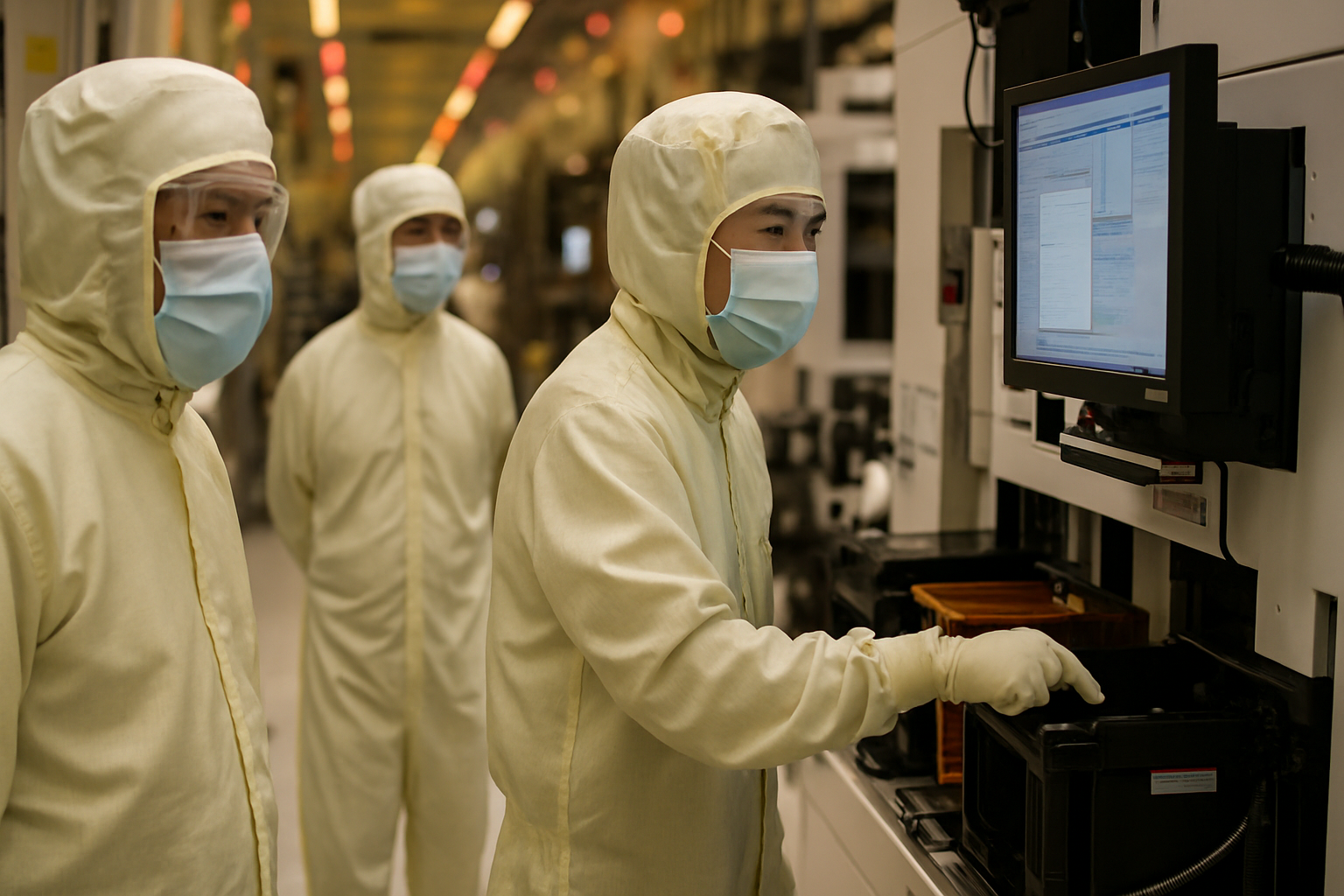
TSMC just made NT$706.56 billion (US$22 billion) in quarterly profit and decided that still wasn’t enough evidence the AI build-out is real.
So it committed another US$100 billion to American chip manufacturing.
That is not a press release. That is a very expensive vote of confidence from the company sitting underneath Nvidia, Apple, AMD, Broadcom and most of the modern economy. Taiwan Semiconductor Manufacturing Co. reported second-quarter revenue of US$40.2 billion, up 33.7% year on year, while net income rose 77.4%. ([investor.tsmc.com](https://investor.tsmc.com/english/encrypt/files/encrypt_file/reports/2026-07/a80d7933be643644081584087731f73b22ea5a2c/2Q26%20EarningsRelease.pdf?utm_source=openai))
Anyone telling you AI is already overhyped needs to explain why the bloke selling the shovels is adding another US$100 billion to the pile.
TSMC is not betting on AI. It is following purchase orders.
On July 16, TSMC said it would make an additional US$100 billion investment in US manufacturing capacity, taking its announced American commitment to US$265 billion. The company also lifted its 2026 revenue-growth forecast to slightly above 40%, from a previous expectation of more than 30%. ([apnews.com](https://apnews.com/article/ba05b1b952257d371acb9d070e7914ff?utm_source=openai))
That matters because TSMC is not some excitable software founder pricing a dream into a funding round. It is the world’s biggest contract chip manufacturer. Its business is built on capacity planning measured in years, giant customer commitments and equipment that costs more than most companies.
You do not casually build leading-edge fabrication plants because someone made a nice chatbot demo.
TSMC’s second-quarter numbers were obscene by normal industrial standards: NT$1.27 trillion in revenue, a 67.7% gross margin, a 60.3% operating margin and a 55.6% net-profit margin. Advanced technologies—7-nanometre chips and more advanced—accounted for 77% of wafer revenue. ([investor.tsmc.com](https://investor.tsmc.com/english/encrypt/files/encrypt_file/reports/2026-07/a80d7933be643644081584087731f73b22ea5a2c/2Q26%20EarningsRelease.pdf?utm_source=openai))
Read that again. The money is not merely coming from “chips” in the vague, CNBC-chyron sense. It is coming from the scarce, difficult, leading-edge manufacturing capacity needed for AI systems, premium phones and high-performance computing.
That distinction is where the money is.
The US$100 billion is about power, not patriotism
The political sales pitch will be jobs, resilience and bringing chipmaking back to America. Fine. Those things matter.
But strip away the flags and this is a commercial decision first. TSMC goes where its biggest customers need supply, where governments will help de-risk a strategically essential supply chain, and where it can protect its position as demand accelerates.
The new commitment follows earlier US plans and is expected to lift TSMC’s total announced American investment to US$265 billion. The company’s Arizona operation is already part of a broader push to spread advanced production across the US, Taiwan and Japan. ([apnews.com](https://apnews.com/article/ba05b1b952257d371acb9d070e7914ff?utm_source=openai))
That does not mean Taiwan becomes irrelevant. Anyone making that leap is getting ahead of themselves. Leading-edge semiconductor manufacturing is not a flat-pack barbecue. It requires years of supplier relationships, process know-how, specialised talent, reliable water and power, packaging capability, and a culture built around relentless yields.
A fab is not the building. A fab is the entire machine around the building.
The overlooked point is that US capacity is likely to make the AI supply chain less fragile, not suddenly independent of Taiwan. That is still a win. Reducing a single point of failure is sensible business. Pretending you can duplicate decades of industrial advantage with a ribbon-cutting ceremony is not.
Why this is a bigger signal than another Nvidia share-price move
Public markets can get drunk on a headline before lunch and sober up by Thursday. TSMC’s capital plan is slower, duller and much more useful as evidence.
Management expects third-quarter revenue of between US$44.6 billion and US$45.8 billion. It specifically pointed to continued demand for leading-edge processes and a steep ramp in its 2-nanometre technology. ([investor.tsmc.com](https://investor.tsmc.com/english/encrypt/files/encrypt_file/reports/2026-07/a80d7933be643644081584087731f73b22ea5a2c/2Q26%20EarningsRelease.pdf?utm_source=openai))
That is the key read-through: the AI race is moving from buying today’s capacity to reserving tomorrow’s. The winners are not just model makers. They are companies controlling bottlenecks:
- advanced chip design; - leading-edge fabrication; - advanced packaging; - memory; - data-centre power and cooling; - network equipment; and - the physical real estate where all this gear lives.
This is why lazy “AI is a bubble” versus “AI changes everything” arguments are a waste of oxygen. Both can be true in different places.
Plenty of AI applications will be rubbish. Plenty of software businesses will get their margins punched in the face by cheaper, more capable tools. Plenty of investors will overpay for companies that stick “agentic” on a slide deck and call it strategy.
But the infrastructure spend can still be entirely rational.
Think of it like the early internet. There were absurd valuations and real overbuilding. Yet the physical infrastructure changed the world anyway. The mistake was not believing in the internet. The mistake was buying every business with a modem.
The contrarian angle: AI’s biggest winners may be the least glamorous operators
The popular trade is obvious: buy the famous AI name, post a rocket emoji, wait for applause.
The more interesting opportunity is in the businesses that make the boom possible but do not get invited onto magazine covers. TSMC is one. ASML, packaging specialists, electrical-equipment suppliers, grid builders, power generators, cooling firms and data-centre operators are others.
That does not mean buy them blindly. It means understand the economic shape of the game.
The model builders are fighting a savage contest for users, distribution and pricing power. Their costs are huge, their products can converge quickly, and their customers are often happy to switch when a better model turns up.
The bottleneck owners have a different game. They sell scarce capacity into an arms race. If demand outruns supply, they can earn extraordinary returns—provided they do not overbuild just as customers pull their wallets shut.
TSMC’s 77.4% profit growth does not prove every AI investment will work. It proves that, as of its June quarter, the hard infrastructure behind AI was producing very real cash, not just PowerPoint optimism. ([investor.tsmc.com](https://investor.tsmc.com/english/encrypt/files/encrypt_file/reports/2026-07/a80d7933be643644081584087731f73b22ea5a2c/2Q26%20EarningsRelease.pdf?utm_source=openai))
That is a meaningful difference.
What this means for you
If you are a founder, stop treating AI as a branding exercise. Ask one brutal question: does this reduce cost, increase revenue, improve speed or create a capability my customer will pay for? If the answer is fuzzy, you are probably playing with a very expensive toy.
If you run an operating business, start mapping where AI removes bottlenecks in the next 90 days. Customer support, sales preparation, reporting, internal search, software testing and repetitive admin are better starting points than a grand “AI transformation” program run by 14 people in matching lanyards.
If you invest, separate the application story from the infrastructure story. The application layer may create huge winners, but it will also create brutal competition. The infrastructure layer has its own risks—cyclicality, regulation, power constraints and eye-watering capital needs—but scarcity is a much better starting point than hype.
And if you are a saver who feels left behind by all the noise, do not chase whatever ticker is trending this afternoon. Learn the supply chain. Follow where the money is actually being committed. Watch who has pricing power, who owns a bottleneck and who is generating cash now.
TSMC’s US$100 billion decision is not a guarantee that the AI boom lasts forever. Nothing is.
But it is a reminder that the people closest to the orders, factories and balance sheets are still spending like the next phase of AI has barely begun. I’d pay more attention to that than to another bloke on LinkedIn telling you his prompt template changed civilisation.