Uber’s $2.3B ezCater Deal Is a Bet That $400 Lunches Beat $25 Dinners
Uber didn’t spend $2.3 billion to deliver sandwiches. It spent it to escape the miserable economics of fighting over cheap dinners, one promo code at a time.
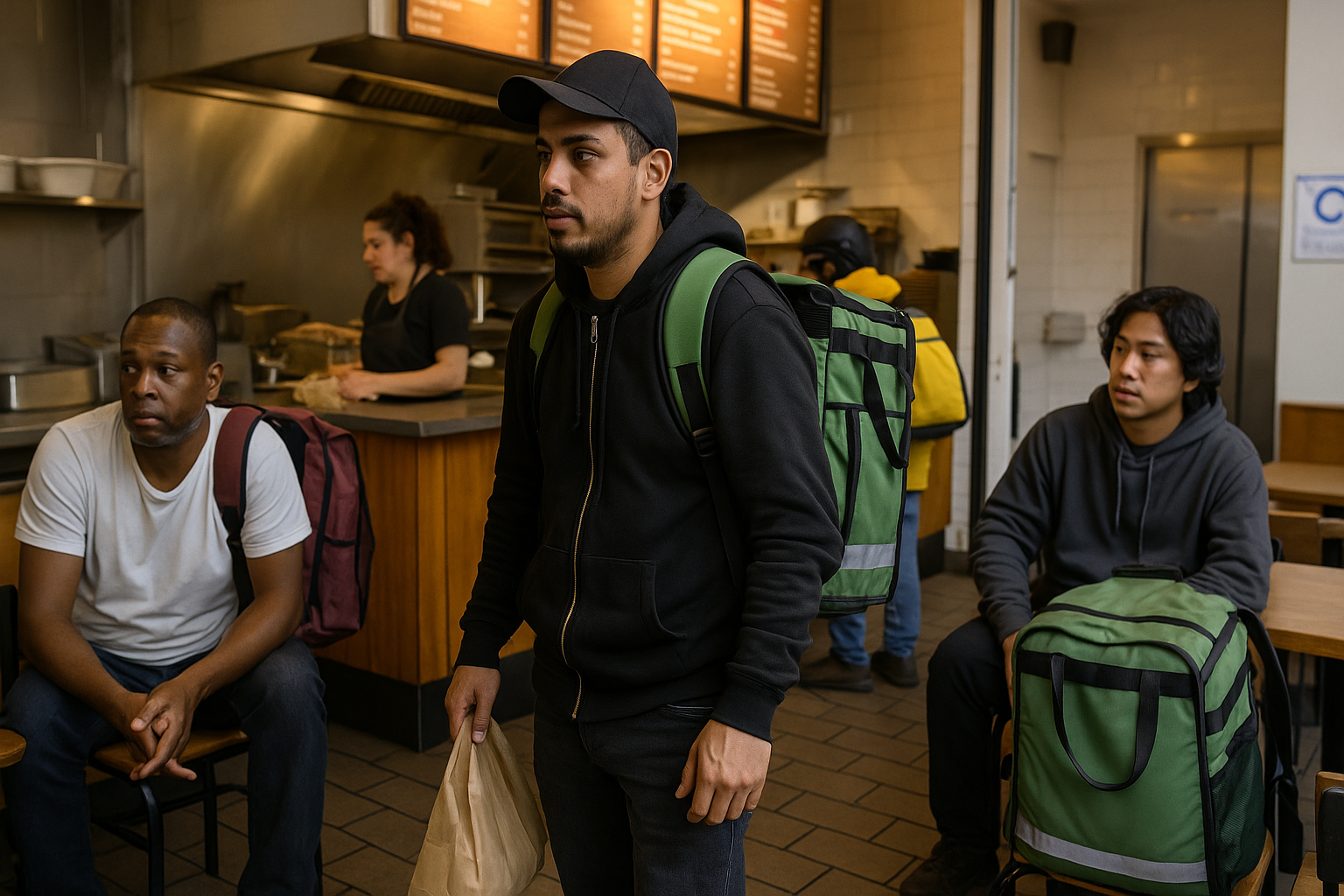
Uber just paid $2.3 billion in cash for ezCater because delivering a $25 dinner is a hard way to get rich.
The real prize is the $400-plus order placed by an office manager who needs lunch for 40 people, needs it on time, and will not comparison-shop across six apps to save three bucks.
Uber bought a better kind of food order
On October 6, 2026, Uber announced an agreement to acquire ezCater, the US platform for workplace meals and catering, for $2.3 billion in cash. This is not some little feature bolt-on for Uber Eats. It is Uber making a very clear admission: consumer food delivery is useful, but the best economics sit in bigger, recurring, business-funded orders.
Uber says ezCater generated more than $2.5 billion in gross bookings over the past 12 months, grew in the high teens year over year, and has an average order value above $400. The business is profitable on a non-GAAP operating-income basis and is expected to be margin accretive to Uber.
That last bit matters more than the press-release confetti.
Most businesses buy growth first and pray for margin later. Uber is buying an already-profitable platform with a huge average basket, more than 140,000 restaurant partners, workplace relationships, ordering tools, food-spend controls and round-the-clock support. In other words, it is buying the annoying bits that make a catering order work when the stakes are higher than someone’s Friday-night pad thai arriving 12 minutes late.
If you are feeding a board meeting, a construction crew, a sales conference or 150 staff on a recurring meal program, reliability is not a nice-to-have. It is the product.
This is a move upmarket, not just sideways
There is a lazy way to read this deal: Uber Eats wants more food volume.
Wrong.
Uber wants better volume.
A consumer delivery order is often a one-off transaction. The customer is price-sensitive, the merchant is price-sensitive, the courier is price-sensitive, and everybody gets cranky when the chips are cold. It is a low-ticket marketplace with plenty of competition and a constant temptation to subsidise demand.
Corporate catering is different. The person ordering is frequently spending company money. The order is larger. The event has a fixed time. A business customer may place repeat orders. And the operational value of getting it right is much greater than the tiny convenience value of getting someone a late-night burger.
That gives Uber three things it loves: higher order values, repeat behaviour and more chances to spread its platform costs across a more valuable transaction.
Uber has already shown it understands this playbook. In its second-quarter 2026 remarks, the company said delivery was helping lift average transaction values relative to mobility, while premium and business products were outgrowing parts of its core offering. Uber for Business is already a meaningful wedge into company spend. ezCater gives it a purpose-built B2B food operation rather than asking a consumer marketplace to pretend it understands procurement, invoicing, scheduled delivery and feeding 80 people without stuffing it up.
That distinction is where the money is.
The $2.3 billion price is really a demand-quality premium
Plenty of founders hear a number like $2.3 billion and immediately ask whether Uber overpaid.
That is the wrong first question.
The better question is: what kind of revenue and gross bookings did Uber buy, and how durable are they?
ezCater’s $2.5 billion-plus in trailing-12-month gross bookings does not equal revenue. Gross bookings are the total value running through the platform before restaurant payments, delivery costs and other economics are accounted for. But that figure tells us the marketplace has serious scale.
The average order value above $400 tells us something even more useful. Uber did not buy a business that needs millions of fickle consumers opening an app every week. It bought a business where one successful order can be worth the same as a stack of ordinary consumer deliveries.
And the company says the business is already profitable on a non-GAAP operating-income basis. I always treat adjusted figures with a healthy dose of suspicion; businesses can make plenty of sins disappear with an adjustment. But Uber is not merely claiming vague “strategic value.” It has explicitly said ezCater should add to margins.
That means management is putting a number, and its credibility, on the line.
For context, Uber reported $58 billion in gross bookings in the second quarter of 2026, up 22% year over year, alongside more than $10.1 billion in trailing-12-month free cash flow. It finished that quarter with $5.4 billion in unrestricted cash, cash equivalents and short-term investments, plus $12.5 billion in investments. This is a company with the firepower to make acquisitions. The more important question is whether it still has the discipline to make good ones.
On the facts available, this one passes the first sniff test.
The overlooked angle: restaurants may be the real winners — or the collateral damage
Uber is selling the deal as a way to bring restaurants bigger orders and new customers. That is plausible. A restaurant that can handle catering gets access to a valuable sales channel it may struggle to build itself.
But restaurant owners should not get misty-eyed just because a giant platform says it wants to help.
Big orders are attractive, but they are operationally brutal. A restaurant can make more revenue from a $1,000 catering order than from dozens of individual deliveries. It can also wreck an entire lunch service if the order arrives late, the menu is wrong, the kitchen lacks capacity, or the delivery handoff falls apart.
The best restaurant operators will treat this as a separate production line, not a lucky extension of normal service. They will have a catering menu designed for transport, clear lead times, reliable packaging, a specific person accountable for large orders and ruthless pricing discipline.
The bad operators will accept every order, underprice it, make the kitchen miserable and conclude that catering “doesn’t work.”
It works. Sloppy operations do not.
That is also the risk for Uber. Catering is not merely food delivery with more bags. It is scheduled, high-consequence logistics. A missing drink in a $22 consumer order is annoying. A missing lunch for 50 people in the middle of a client presentation is reputational damage. Uber is buying ezCater’s specialised operational knowledge because it needs it. The clever move now is not to smother that capability under generic Uber process.
Why this deal says something bigger about platform businesses
The age of winning by being broadly available is fading. Every decent platform can offer choice. The stronger businesses are trying to own a workflow where failure is expensive.
That is why Uber wants workplace meals. It is why its freight business leans into managed transportation. It is why business products matter. If you own a customer’s recurring workflow, you are harder to replace than if you merely supply another transaction.
Founders should pay attention here. The valuable question is not, “How can I get more users?” It is, “Where does my customer face a costly, recurring headache that they cannot afford to botch?”
That is where willingness to pay improves. That is where churn drops. That is where your product becomes part of the plumbing rather than a nice little app someone deletes during a cost review.
ezCater started in 2007 and, according to reporting on the deal, bootstrapped for seven years before raising its first $4 million in 2014. There is a lesson in that too. Not every great exit comes from setting fire to venture money and calling it momentum. Sometimes you build a boringly useful machine for nearly two decades until a bigger machine realises it needs you.
What this means for you
If you are a founder, stop worshipping small transactions simply because they make a flashy growth chart. Hunt for larger, repeatable orders where the buyer cares about reliability more than a discount. A $400 order handled brilliantly is often worth more than 20 cheap transactions held together by paid acquisition and optimism.
If you run an operating business, separate high-value work from everyday work. Build a premium workflow: different pricing, different service standards, different accountability. Do not let your best-margin orders get processed like ordinary ones.
If you own a restaurant, decide whether catering is a real business line or a distraction. If it is real, measure contribution margin by order, build menus that travel, set minimums, charge properly for labour and delivery, and say no to work that breaks the kitchen.
And if you are an investor, watch what Uber does after the deal closes in the coming months. The acquisition itself is sensible. The test is whether Uber preserves ezCater’s reliability while using its scale to lower customer-acquisition costs, deepen restaurant supply and win recurring corporate spend.
Uber is not buying sandwiches. It is buying a seat in the corporate expense account. That is a much better place to be when everyone else is still scrapping over dinner.