Unrivaled’s $650M Valuation Makes Players Nearly $200M Richer on Paper
Most sports leagues call players “partners” right up until the cap table appears. Unrivaled just put nearly $200 million of equity in players’ hands—and raised the stakes brutally.
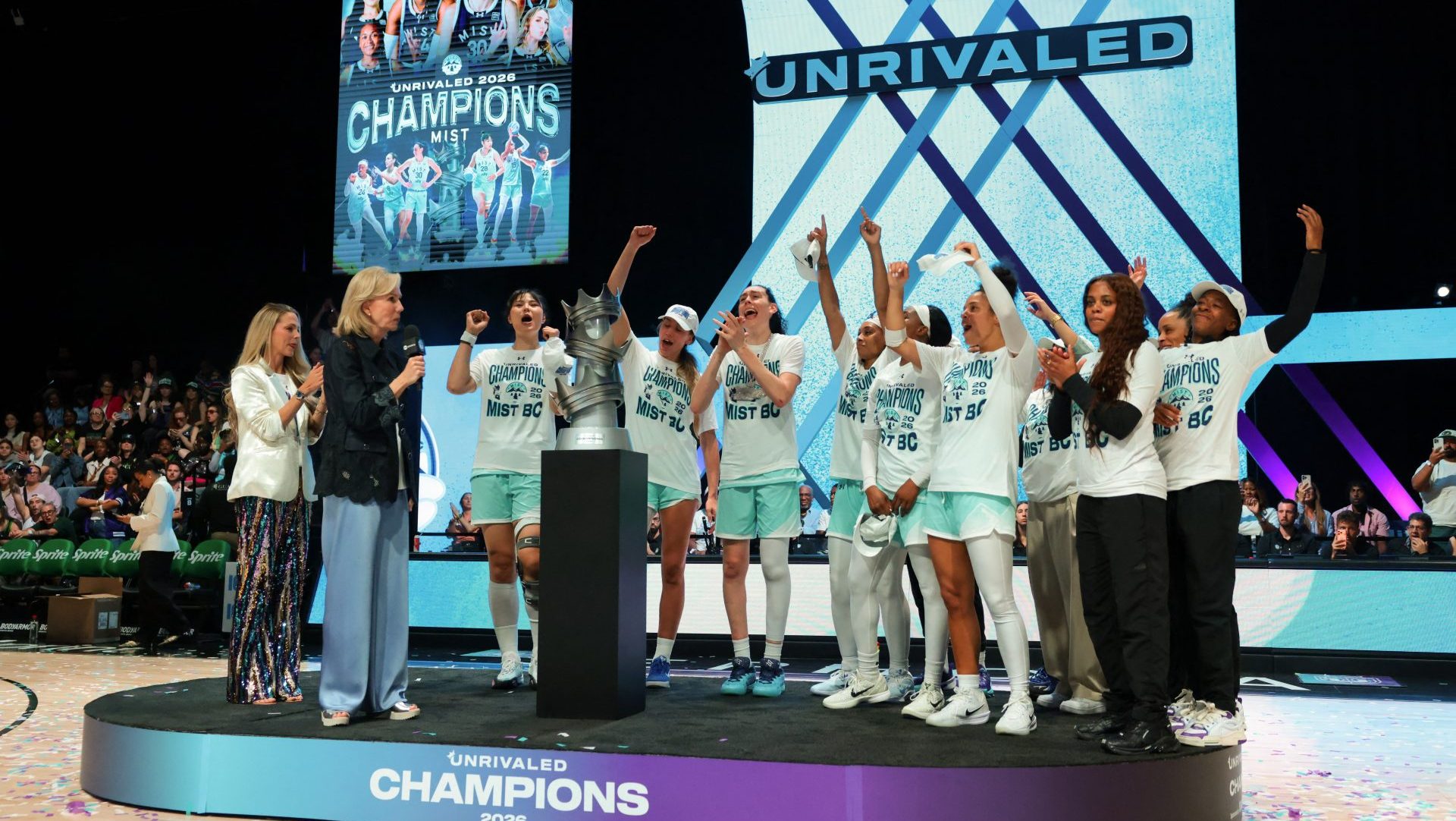
Most sports leagues call players “partners” right up until the cap table appears. Breanna Stewart and Napheesa Collier’s Unrivaled has just valued its player ownership pool at nearly $200 million. That is either the smartest move in women’s sport—or a very expensive promise.
Unrivaled just put a $650 million price tag on player alignment
Unrivaled, the 3-on-3 women’s basketball league founded by WNBA stars Breanna Stewart and Napheesa Collier, has raised more than $100 million in a Series C round and says it is now worth $650 million. Axios reported the new money at $106 million; Front Office Sports reported the round as more than $100 million. Either way, it is a serious cheque for a league that launched only in 2025. ([axios.com](https://www.axios.com/2026/08/26/unrivaled-womens-basketball?utm_source=openai))
The eye-catching bit is not the celebrity investor list, although Carmelo Anthony, Trae Young, Alex Morgan, Geno Auriemma, Ashton Kutcher and Bessemer Venture Partners all help sell the story. The bit that matters is ownership: players collectively hold roughly 30% of Unrivaled, a stake now valued at nearly $200 million. More than 95% of the league’s players own equity, according to the company. ([frontofficesports.com](https://frontofficesports.com/unrivaled-valued-at-650m-after-latest-funding-round/?utm_source=openai))
That changes the commercial conversation.
A player with equity does not merely ask, “What am I getting paid this season?” She also asks whether the ticketing strategy, media deal, merchandise range, expansion city and sponsor actually build enterprise value. That is the difference between renting talent and recruiting owners.
I’ve built businesses. The moment your best people own a meaningful slice of the upside, you stop needing motivational posters. They start noticing waste, protecting the brand and making introductions that matter. Not because they have suddenly become saints. Because the maths finally makes sense.
Unrivaled’s valuation has climbed from $340 million in September 2025 to $650 million now—nearly a doubling in less than a year. That is a loud vote of confidence from investors. It is not, however, cash in the bank for players, and it is not proof that the league has solved the hard part: turning fan excitement into durable, profitable revenue. ([frontofficesports.com](https://frontofficesports.com/unrivaled-valued-at-650m-after-latest-funding-round/?utm_source=openai))
The numbers are real—but they are not a victory lap
There is plenty underneath the hype.
Unrivaled says it generated $45 million in Season 2 revenue, up from $27 million in its first season. Its ticket revenue increased 204% year-on-year, merchandise revenue rose 130%, and it sold 249% more tickets than in Season 1. Those are excellent growth numbers for a young sports property. ([unrivaled.basketball](https://www.unrivaled.basketball/news/unrivaled-numbers-in-season-2-2xxhf3n3q35f?utm_source=openai))
The league also proved it could leave its Miami base and sell serious rooms. Its Philadelphia stop attracted 21,490 fans, produced $1 million in ticket revenue and $400,000 in merchandise sales. Brooklyn drew 18,261, generating $1.1 million in tickets and $405,000 in merchandise. Both were sellouts. ([unrivaled.basketball](https://www.unrivaled.basketball/news/unrivaled-numbers-in-season-2-2xxhf3n3q35f?utm_source=openai))
Those figures matter because sport is littered with “engagement” businesses that mistake social clips for a commercial engine. A packed arena is not enough. You need people buying tickets, buying jerseys, watching broadcasts, giving sponsors a reason to renew and returning when the novelty has worn off.
Unrivaled has started to show pieces of that engine. Its Season 2 playoffs averaged 258,000 viewers across TNT and truTV simulcasts, while the championship telecast drew 314,000 viewers. Its player salary cap grew 115% to $21 million in Season 2. ([unrivaled.basketball](https://www.unrivaled.basketball/news/unrivaled-numbers-in-season-2-2xxhf3n3q35f?utm_source=openai))
Good. But let’s not get drunk on a funding announcement.
A $650 million valuation is an investor’s estimate of future value, not a dividend and not an audited declaration of profitability. Private-market valuations can rise quickly when capital is abundant, strategic investors want exposure and an asset has momentum. They can also look silly later if revenue fails to catch up. That is not cynicism. That is the job.
The honest question is not whether Unrivaled deserves applause. It does. The question is whether it can turn a hot second season into a repeatable sports business without blowing through the new money trying to look bigger than it is.
Why Breanna Stewart and Napheesa Collier built a better bargaining chip
Traditional leagues have a blunt structure: owners own the thing, athletes supply the labour, and collective bargaining decides how much of the revenue gets handed back. That model can work beautifully once a league has decades of media rights, franchise scarcity and established demand.
But Unrivaled was not launched with that luxury. Stewart and Collier were building an off-season alternative for elite women’s basketball players—one that could compete with the economic pull of playing overseas. So the league offered strong salaries and equity rather than asking players to believe in a vague mission statement. ([frontofficesports.com](https://frontofficesports.com/unrivaled-valued-at-650m-after-latest-funding-round/?utm_source=openai))
That is the strategic masterstroke.
When a startup sports league gives its stars ownership early, it buys more than talent. It buys credibility. Fans follow Stewart, Collier, Kelsey Plum, Paige Bueckers, Chelsea Gray and the rest because these players are the product. Sponsors care because the athletes bring audiences and cultural relevance. Investors care because the players reduce the biggest risk in any startup league: that the best talent simply won’t show up.
And Unrivaled has a commercial advantage that older leagues should take seriously. It is not trying to copy the WNBA game-for-game, city-for-city, expense-for-expense. The format is different, the season is compressed, the product is built for television and social distribution, and the league can test road events before making permanent-market commitments.
Axios reported that the new funding should help Unrivaled build its Miami home-arena experience and quadruple its number of road shows. That is an intelligent direction—provided management treats road shows as experiments with ruthless measurement, not vanity tours for investors and celebrities. ([axios.com](https://www.axios.com/2026/08/26/unrivaled-womens-basketball?utm_source=openai))
The overlooked risk: player ownership can become a problem if it is only a headline
Here is the part nobody says because it spoils the party: equity is powerful only if it is understandable, protected and eventually liquid.
“Players own 30%” is a fantastic headline. But for every player, the important questions sit behind it. What are the vesting rules? What happens if she retires, is injured or joins another league? Are there dilution protections? Who controls a sale? Is there a buyback mechanism? What is the realistic path to liquidity?
I am not suggesting Unrivaled has mishandled any of that. I am saying the paperwork matters more than the press release.
Founders get this wrong constantly. They hand out equity because it sounds generous, then write terms so complicated that staff or talent have no real idea what they own. That is how a good alignment tool becomes a future argument.
Unrivaled’s player pool has grown sharply. The league said it was worth more than $120 million after Season 2, up from $30 million in 2025; after the new round, it is nearing $200 million. That sounds brilliant, and it may be. But it also means governance is no longer a side issue. It is central to the business. ([unrivaled.basketball](https://www.unrivaled.basketball/news/unrivaled-numbers-in-season-2-2xxhf3n3q35f?utm_source=openai))
The other risk is that a high valuation becomes a trap. Raising at $650 million means the next major round, strategic sale or exit has to justify a higher number for new investors to be happy. Management now has $100 million-plus of fresh capital and far less room for sloppy expansion.
The answer is boring, which is usually why it works: grow distribution, sell sponsorships that renew, protect broadcast quality, keep player availability high, control venue costs and build direct customer data. Do that for several seasons and the valuation becomes believable. Skip it, and the $650 million becomes a number people laugh about at the next down round.
The contrarian take: this is not primarily a women’s-sport story
Yes, Unrivaled is part of the explosive commercial rise of women’s basketball. Anyone pretending otherwise is asleep at the wheel.
But the bigger lesson is about asset design.
Unrivaled is attacking the sports-business model from the cap table outward. Rather than waiting for a mature league to share wealth with athletes, it started by giving athletes a stake in the wealth creation. That makes the players salespeople, recruiters, content engines and brand custodians all at once.
The comparison that should make traditional sports owners uncomfortable is the Connecticut Sun, which sold for $300 million earlier in 2026. Unrivaled’s $650 million private valuation is more than double that figure despite the league being vastly younger. These are not identical assets, so don’t be lazy and treat it as an apples-to-apples comparison. But it shows investors are putting a serious premium on growth, star access and scalable league economics. ([frontofficesports.com](https://frontofficesports.com/unrivaled-valued-at-650m-after-latest-funding-round/?utm_source=openai))
That premium will not last forever without execution. Still, it is a warning shot.
The old model says owners take the risk and athletes take the cheques. The emerging model says the athletes can take some risk too—if they receive genuine upside, not token options dressed up as gratitude.
What this means for you
If you are a founder, stop treating equity like confetti and start treating it like a performance tool. Give meaningful ownership to the people who can materially change the outcome—then explain the deal in plain English. If they cannot tell you what they own, when it vests and what it could become, you have not built alignment. You have built confusion.
If you are an investor, do not buy the $650 million number just because famous names are on the cap table. Look underneath it. Ask about revenue quality, sponsor renewal rates, media economics, customer acquisition costs, venue contribution margins and how much growth requires fresh capital. Excitement is useful. Cash conversion is better.
And if you are an operator, steal the best part of Unrivaled’s playbook: make the people creating the value feel it in their own pocket. Stewart and Collier have not merely recruited players. They have given them a reason to build the league when they are off the court.
That is not charity. That is smart business.
The sports world is full of owners asking athletes to care more. Unrivaled has tried something rarer: it has made caring financially rational. Now it has to prove that $650 million was the beginning of the story, not the punchline.