Uranium Royalty’s $1.1B Sweetwater Deal Buys Cash Flow, Not Just Uranium
Uranium Royalty’s $1.1 billion Sweetwater deal is a blunt verdict on uranium hype: cash flow beats a good story when the cycle turns.
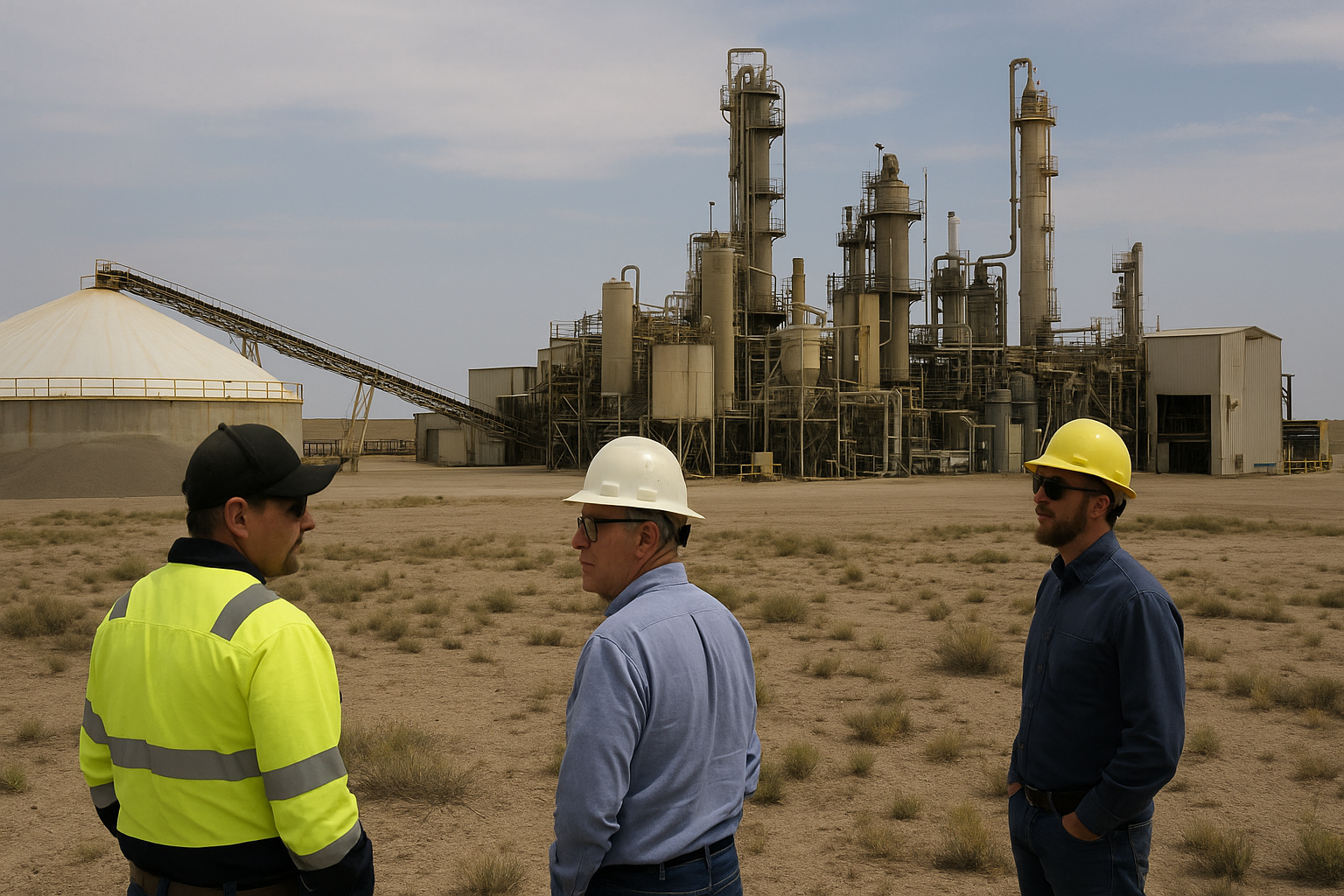
Uranium Royalty’s $1.1 billion Sweetwater deal is a blunt verdict on uranium hype: cash flow beats a good story when the cycle turns.
Most uranium investors are buying a story about future shortages. Uranium Royalty spent $1.1 billion buying something far less sexy and far more useful: cash flow now.
That is why its Sweetwater transaction matters. Not because it gives punters another ticker to spray about whenever uranium moves, but because it shows what serious operators do when a hot theme is full of businesses with weak economics: they buy the boring asset that pays for the next move.
This was a $1.1 billion bet on being less dependent on uranium hype
Uranium Royalty announced on April 16 that it would combine with entities holding a 92% interest in Sweetwater Royalties, a landholding and mineral-royalty business backed by Orion Resource Partners and Ontario Teachers’ Pension Plan. The equity value attributed to the acquired interest was about US$1.1 billion; Sweetwater’s implied enterprise value was about US$1.9 billion once roughly US$625 million of debt was included. ([uraniumroyalty.com](https://www.uraniumroyalty.com/news/uranium-royalty-orion-and-ontario-teachers-pension-plan-to-create-a-leading-royalty-platform-through-combination-of-uranium-royalty-and-sweetwater-royalties))
The transaction closed on July 27, 2026. Uranium Royalty became a Delaware corporation and acquired approximately 92% of the Sweetwater entities, which own royalty, mineral, surface, lease and related assets across Wyoming, Utah and Colorado. ([sec.gov](https://www.sec.gov/Archives/edgar/data/2143673/000119312526321135/uroy-20260430.htm))
Here is the bit people will miss because “uranium” is printed on the box: Sweetwater is principally a soda-ash and land-royalty platform. Soda ash is made from trona and goes into glass, chemicals, detergents, paper, pharmaceuticals and other industrial products. About half of soda-ash consumption is tied to glass manufacturing. It is not a moonshot. It is an industrial input with actual customers and actual invoices. ([uraniumroyalty.com](https://www.uraniumroyalty.com/news/uranium-royalty-orion-and-ontario-teachers-pension-plan-to-create-a-leading-royalty-platform-through-combination-of-uranium-royalty-and-sweetwater-royalties))
The sellers received about US$330 million in cash and US$813 million in new Uranium Royalty shares, initially valued at US$3.64 each. Orion was expected to own roughly 43% of the combined company and Ontario Teachers’ roughly 16%, before the effects of further financing. ([uraniumroyalty.com](https://www.uraniumroyalty.com/news/uranium-royalty-orion-and-ontario-teachers-pension-plan-to-create-a-leading-royalty-platform-through-combination-of-uranium-royalty-and-sweetwater-royalties))
That structure tells you plenty. Orion and Ontario Teachers’ did not simply take the cash and leg it. They kept a huge ownership position. That does not make the deal automatically brilliant — sophisticated people can be wrong too, God knows — but it does mean the vendors have meaningful skin in what happens next.
The real acquisition was a funding machine
Uranium Royalty has built its name around uranium royalties, streams, physical uranium and investments in uranium companies. It has exposure to assets including Cameco’s McArthur River and Cigar Lake operations, as well as projects in Wyoming, Namibia and Saskatchewan. That is a sensible way to get commodity exposure without operating every mine yourself. ([uraniumroyalty.com](https://www.uraniumroyalty.com/news/uranium-royalty-orion-and-ontario-teachers-pension-plan-to-create-a-leading-royalty-platform-through-combination-of-uranium-royalty-and-sweetwater-royalties))
But royalty businesses still need capital. Opportunities are no use if you cannot write the cheque when a distressed miner, developer or asset seller needs liquidity.
Sweetwater gives the combined group a more dependable earnings base. Uranium Royalty said the Sweetwater portfolio generated average adjusted EBITDA of about US$74 million in each of the two preceding fiscal years, on a 100% basis, and had roughly 50 years of stable historical cash flows. Its presentation described attributable pro-forma adjusted EBITDA of about US$74 million before potential volume or price gains. Those are company figures, not my forecast, so treat them accordingly. But the strategic point is dead right: recurring royalties from established industrial production are more useful than praying for the uranium spot price to save your valuation. ([uraniumroyalty.com](https://www.uraniumroyalty.com/news/uranium-royalty-orion-and-ontario-teachers-pension-plan-to-create-a-leading-royalty-platform-through-combination-of-uranium-royalty-and-sweetwater-royalties))
This is the grown-up version of thematic investing. The amateurs buy a clean narrative: nuclear revival, supply deficits, reactors, geopolitics, ticker goes up. The better capital allocators ask a harder question: what pays the overheads, protects the balance sheet and lets us buy when everybody else is stuck?
Sweetwater is that answer. It gives Uranium Royalty cash generation, land exposure and a bigger corporate platform from which to pursue more uranium royalties. The company’s stated rationale is that the stronger balance sheet and free cash flow can support further acquisitions. Whether management delivers is another matter. But the logic of using dull cash flows to finance cyclical upside is sound. ([uraniumroyalty.com](https://www.uraniumroyalty.com/news/uranium-royalty-orion-and-ontario-teachers-pension-plan-to-create-a-leading-royalty-platform-through-combination-of-uranium-royalty-and-sweetwater-royalties))
Why soda ash is more interesting than it sounds
Nobody is putting “trona royalty optionality” on a cap. That is precisely why it is worth paying attention.
Natural soda ash is generally regarded as cheaper to produce than synthetic soda ash because it requires less energy and fewer raw-material inputs. Wyoming is a major natural-trona jurisdiction, which gives Sweetwater exposure to an industrial product with a cost-position advantage rather than a purely speculative one. Uranium Royalty also points to expected production-capacity growth of more than 60% at underlying Sweetwater assets over coming years, based on operator disclosures, without requiring incremental capital from the combined company. ([uraniumroyalty.com](https://www.uraniumroyalty.com/news/uranium-royalty-orion-and-ontario-teachers-pension-plan-to-create-a-leading-royalty-platform-through-combination-of-uranium-royalty-and-sweetwater-royalties))
There is also a second layer. Soda ash goes into solar-panel glass and lithium production, while the land package offers possible future exposure to uranium and other critical minerals. Again, that is optionality, not guaranteed revenue. Too many investor decks quietly turn “could exist beneath our land” into “may as well be money in the bank.” Don’t fall for that nonsense.
But optionality is valuable when you have not paid your entire valuation for it. In this case, Uranium Royalty bought an existing industrial cash-flow base and attached mineral upside. That is far healthier than buying a pre-revenue exploration story and calling it strategic.
The overlooked angle: this is a capital-allocation deal, not a mining deal
The obvious read is that Uranium Royalty is making a bigger wager on nuclear fuel. The more useful read is that it is changing the quality of its capital allocation.
Before Sweetwater, the company was more exposed to the uranium cycle, asset-development timelines and the market’s mood around nuclear energy. After Sweetwater, it has a larger revenue base linked to a different industrial commodity, plus substantial landholdings and a US domicile. That does not eliminate uranium risk. It changes the shape of it.
It also creates a tension investors should not ignore. Diversification is wonderful right up until management uses it as an excuse to buy anything with the word “critical” in the pitch deck. A uranium-royalty company cannot become a grab bag of minerals, land and macro themes just because it has more cash. The best version of this strategy is disciplined: collect durable royalties, preserve downside, then buy uranium exposure only when the price is attractive.
The worst version is empire-building dressed up as optionality.
The board and management now have a bigger mandate and a bigger pool of capital. Orion and Ontario Teachers’ have board-nomination rights, though their combined representation is capped below 50% of the board. That may help keep incentives aligned, but public shareholders should still watch the next two or three acquisitions far more closely than the press release about this one. ([uraniumroyalty.com](https://www.uraniumroyalty.com/_resources/presentations/Project-Samba-Investor-Presentation.pdf?v=041602))
That is where the deal will be judged. Not on the day it closed. Not on a uranium-price spike. On whether the new cash flow is reinvested at sensible prices.
The contrarian verdict: the best part of the deal is the bit uranium bulls may find boring
Uranium bulls will naturally focus on the company’s expanded ability to buy uranium royalties into a supply-constrained market. Fair enough. Uranium Royalty itself has argued that a primary-supply deficit should drive investment in the sector. ([uraniumroyalty.com](https://www.uraniumroyalty.com/news/uranium-royalty-orion-and-ontario-teachers-pension-plan-to-create-a-leading-royalty-platform-through-combination-of-uranium-royalty-and-sweetwater-royalties))
But I would argue the Sweetwater cash flow is the better asset.
Commodity markets are cruel. They turn every confident forecast into confetti eventually. If uranium prices rise, the company’s uranium assets may benefit. If they do not, a royalty stream connected to operating soda-ash assets still has a job to do. It pays the bills, supports financing capacity and gives management time.
Time is a bloody valuable asset in business. Most people only realise that after they have run out of it.
The 2026 deal also shows why private capital likes royalties and land positions. You can own the economics without managing the mine, hiring hundreds of staff, buying trucks or being the bloke explaining a production miss. There are risks, obviously: operator performance, commodity prices, reserves, debt and contract terms all matter. But a well-structured royalty can turn a volatile operating industry into a sturdier cash-flow business.
That is not glamorous. It is how wealth is actually compounded.
What this means for you
If you run a business, do not take the uranium lesson literally. You probably do not need a Wyoming mineral-rights portfolio. You need your own version of Sweetwater.
First, identify the boring cash generator inside your business. It might be maintenance revenue, distribution fees, subscription income, repeat purchases, servicing contracts or a reliable customer segment everyone ignores because it is not sexy. Protect it. Improve it. Let it fund the riskier growth bets.
Second, stop confusing optionality with revenue. New markets, AI features, overseas expansion and adjacent products may be valuable. But label them honestly. If they have not produced cash yet, they are not the engine. They are upside.
Third, study the consideration in any deal you do. The Sweetwater sellers took a substantial amount of stock alongside cash. In your own acquisitions, earn-outs, vendor equity and retained stakes can be useful when they genuinely align incentives. They are not magic, but they are better than paying top dollar in cash to someone who immediately disappears to Noosa.
Finally, ask one question before every growth decision: does this make us more dependent on a forecast, or less? Uranium Royalty has made a wager on uranium, yes. But it also bought an industrial royalty platform designed to give it more staying power if the uranium story takes longer than expected.
That is the lesson. Build the cash engine first. Then take your swings.