U.S. 10-Year Treasury at 4.78% Is the Price of the $91 Oil Problem
A 4.78% U.S. 10-year yield and oil above $91 are not a bad day. They are a double hit to debt, margins and valuations—and the bill lands on founders, borrowers and investors.
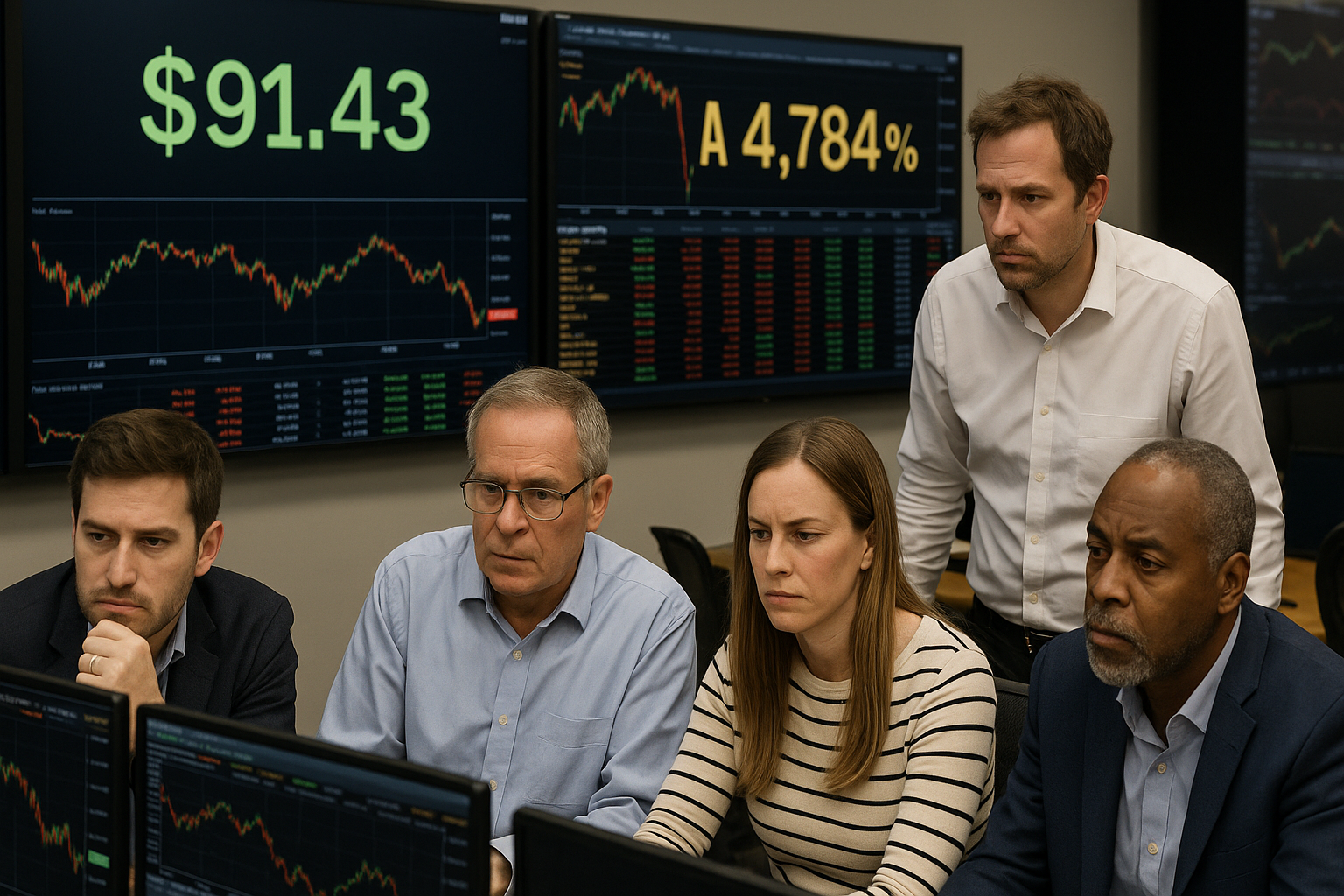
A 4.78% U.S. 10-year Treasury yield is not a market footnote. It is a bill being quietly shoved under the door of every founder, homeowner, borrower and investor who got used to money being cheap.
Oil pushing above $91 a barrel is the accelerant. The nasty bit is that neither problem is likely to stay politely contained inside a Bloomberg terminal. ([uk.marketscreener.com](https://uk.marketscreener.com/news/bond-selloff-pressures-stocks-as-oil-crosses-91-a-barrel-ce7858ddda8ef226?utm_source=openai))
The core story: bonds are doing the yelling
September has started with global investors selling government bonds, lifting yields and knocking equities around. The U.S. 10-year Treasury yield rose to 4.78%, close to a 20-month high. Japan’s benchmark 10-year yield hit 3% for the first time since September 1996. Britain’s 10-year yield moved above 5.24%, its highest since 2008, while Germany’s equivalent reached a 15-year high of 3.36%. ([marketscreener.com](https://www.marketscreener.com/news/bond-selloff-deepens-and-stocks-drop-as-oil-prices-stoke-inflation-fears-ce7858dddf81ff2c?utm_source=openai))
Those are not random lines on a chart. Government bond yields are the reference price for capital. When they rise, mortgages get dearer, corporate refinancing gets nastier, project hurdles rise, private-equity maths gets uglier and expensive shares suddenly look less charming.
At the same time, Brent crude was up about 1.9% in early U.S. trading after renewed Middle East violence raised fears of a more durable energy shock. U.S. equity futures reflected the mood: at 4:46 a.m. Eastern time, Dow futures were down 0.48%, S&P 500 futures were down 0.48%, and Nasdaq 100 futures were down 0.83%. Energy names such as Exxon Mobil and Devon Energy moved higher while growth assets wore the punch. ([investing.com](https://www.investing.com/news/stock-market-news/wall-st-futures-kick-off-september-under-pressure-as-yields-oil-prices-rise-4883662?utm_source=openai))
That split matters. When the price of energy jumps, the market does not merely rotate from software into oil producers. It starts repricing the entire economy around higher inflation, weaker household spending power and central banks that cannot rush back to rescue everyone with lower rates.
That is the real story: the cost of capital and the cost of running the real economy are climbing together.
Kevin Warsh has changed the argument
Federal Reserve Chair Kevin Warsh’s Jackson Hole remarks on August 28 reset expectations. Markets had previously put little chance on a rate increase before December. After his speech, investors moved toward treating a September hike as a serious possibility, with the next Federal Open Market Committee meeting only weeks away. ([latimesnow.com](https://latimesnow.com/2026/09/01/markets-see-warsh-endorsing-a-rate-hike-in-september-not-everyone-is-convinced/?utm_source=openai))
The market is not reacting because Warsh gave some theatrical speech. It is reacting because inflation remains above the Fed’s 2% target and oil is now threatening to add fresh pressure precisely when policymakers want price growth under control. July’s annual headline PCE inflation reading was 3.7%, with core PCE at 3.3%, according to reporting cited by market participants this week. ([latimesnow.com](https://latimesnow.com/2026/09/01/markets-see-warsh-endorsing-a-rate-hike-in-september-not-everyone-is-convinced/?utm_source=openai))
You can see the problem. A central bank can look through a one-week oil spike. It cannot casually ignore an energy shock that filters into freight, food, manufacturing, travel, heating and consumer expectations. Once businesses start assuming input costs will keep rising, they raise prices. Once workers assume prices will keep rising, they demand compensation. That is how a temporary shock becomes a proper inflation headache.
This is why rate-hike expectations have risen even as recent payroll data has been softer. The Fed has two jobs: inflation and employment. When oil is charging higher and inflation is already above target, the room for mercy gets smaller.
Why the 10-year yield matters more than the headline rate
Most people obsess over the Fed funds rate because it is a clean, simple number and television loves a clean, simple number. But founders and operators should watch the 10-year Treasury yield just as closely.
The Fed controls overnight money. The 10-year yield helps shape the price of longer-duration borrowing across the economy. That means home loans, commercial property debt, infrastructure financing, acquisition debt and plenty of business credit ultimately care a great deal about where the bond market lands.
A business can survive a single expensive working-capital facility. It can get into serious trouble when a loan matures, revenue is flat, margins are under pressure and refinancing arrives at a rate two or three percentage points higher than the old deal. That is not a spreadsheet inconvenience. It is a change in the economics of the company.
The same applies to asset values. A business valued on profits expected years into the future is more sensitive to discount rates than a business producing solid cash today. This is why richly priced growth stocks tend to cop it when yields rise. The Nasdaq 100 futures falling more sharply than the Dow futures on September 1 was not a mystery; it was duration risk wearing a hoodie. ([investing.com](https://www.investing.com/news/stock-market-news/wall-st-futures-kick-off-september-under-pressure-as-yields-oil-prices-rise-4883662?utm_source=openai))
The overlooked danger is that government borrowing costs can become self-reinforcing. Investors are not just pricing central-bank policy. They are looking at inflation, fiscal borrowing needs and the supply of government debt they must absorb. Reuters reported that concern over fiscal health was part of the pressure driving Japan’s 10-year yield to 3%. ([uk.marketscreener.com](https://uk.marketscreener.com/news/japan-s-benchmark-10-year-bond-yield-reaches-3-level-for-first-time-in-30-years-ce7858dddd89f72c?utm_source=openai))
For years, Japan’s low yields acted as one of the world’s quiet financial anchors. A meaningful repricing there does not automatically cause a crisis. But it removes another cushion from a global system already dealing with higher U.S. and European yields.
The contrarian view: don’t sell everything because it is September
Here is where people get stupid. They see scary headlines, remember that September has historically been the S&P 500’s weakest month, and decide they should become a part-time macro trader from the kitchen table.
Since 1926, the S&P 500 has lost an average 0.7% in September, according to data cited in Reuters reporting. That is interesting. It is not an investment strategy. ([investing.com](https://www.investing.com/news/stock-market-news/wall-st-futures-kick-off-september-under-pressure-as-yields-oil-prices-rise-4883662?utm_source=openai))
Seasonality is a tendency, not a commandment. And the more obvious it becomes, the less useful it is. Selling a diversified portfolio because a calendar page changed is usually just anxiety dressed up as sophistication.
The better contrarian point is this: higher yields are not automatically bad for every business or every investor. They punish dependence on cheap money. They reward real cash generation, pricing power, sensible balance sheets and management teams that do not need to constantly tap investors for another rescue round.
That is healthy. Painful, yes. Healthy, also yes.
The era of companies being praised for losing money quickly enough to call it “growth” had to end eventually. A higher cost of capital forces the market to distinguish between businesses that create value and businesses that merely consume it with excellent branding.
I would rather own or build the former. Every time.
What this means for founders and operators
If you run a business, stop treating interest rates as something bankers discuss after dessert. Do three things this week.
First, map every debt maturity, floating-rate facility and covenant in your business. Not next quarter. This week. Ask what happens if your borrowing cost is 200 basis points higher at refinance and your revenue is 10% below plan. If the answer is “we would figure it out,” you have not figured it out.
Second, separate costs into three buckets: costs you can pass on, costs you can cut, and costs that will ambush you. Energy, freight, packaging, travel and supplier inputs deserve particular attention when oil is running hard. Do not wait for the monthly accounts to tell you margins have disappeared. Build the early-warning dashboard now.
Third, protect optionality. Cash is not dead capital when the financing environment is tightening. It is negotiating power. A business with liquidity can buy inventory intelligently, take market share from stressed competitors and reject desperate capital. A business with no liquidity calls that same situation “an unexpected macro event.”
What this means for you
For investors, the move is not to panic-sell every growth stock or pile blindly into oil names because crude had a big day. The move is to inspect what you own.
Ask three blunt questions. Does this company generate cash after the story is stripped away? Can it refinance without begging? Can it raise prices without losing customers? If the answer is no, higher yields are not a temporary nuisance. They are a structural problem.
For savers, compare your cash return with your actual debt cost. Pay down expensive variable-rate debt before making heroic bets on volatile assets. A guaranteed saving on punishing interest is often the cleanest return available.
And for everyone: do not confuse a rising market with an easy market. Oil above $91 and the U.S. 10-year at 4.78% are a reminder that the bill for cheap money always turns up eventually. The winners will not be the loudest people predicting the next Fed move. They will be the people and businesses prepared to operate when capital stays expensive for longer than anyone wants. ([uk.marketscreener.com](https://uk.marketscreener.com/news/bond-selloff-pressures-stocks-as-oil-crosses-91-a-barrel-ce7858ddda8ef226?utm_source=openai))