U.S. 10-Year Treasury at 5.29% Is the Bill Coming Due?
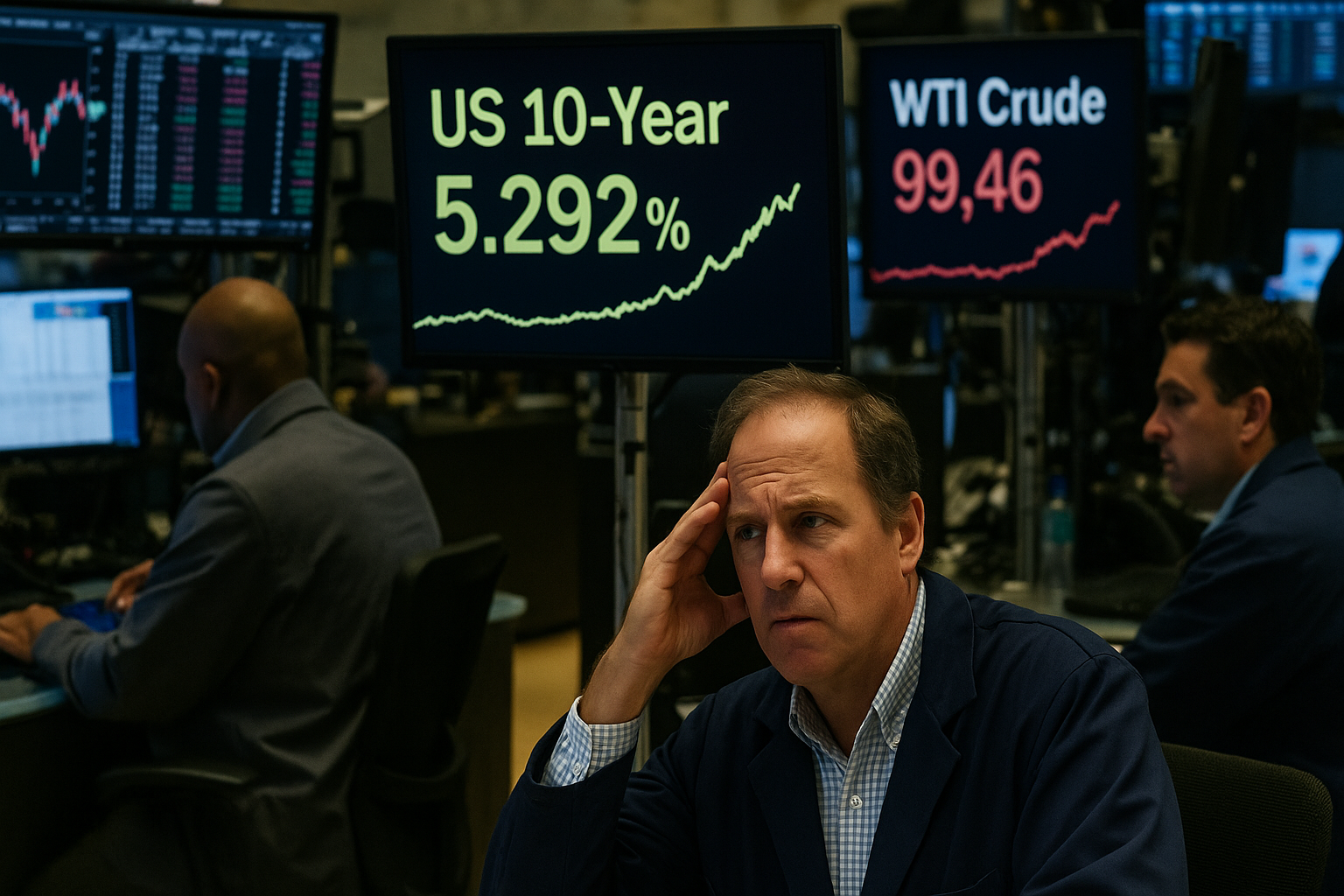
The market’s real problem isn’t a bad day in stocks. It’s that America now needs to pay 5.29% to borrow for 10 years while oil sits near $100 a barrel.
Most founders obsess over the share price. That’s amateur hour. The number that can wreck your plans is 5.29%.
That was the yield on the U.S. 10-year Treasury after another ugly turn in the bond market on October 1. Brent crude settled at $98.03 a barrel. Put those two numbers together and you get a far more serious message than a red day on the S&P 500: money is getting expensive again, inflation is not behaving, and the world’s biggest borrower is finding out that lenders are not charities.
I’ve lost money by treating interest rates as background noise. They are not background noise. They are the price of time. And when that price rises, every business model built on “we’ll grow now and sort out the economics later” gets punched in the mouth.
The bond market is doing the shouting
Shares can throw tantrums. Bonds send invoices.
The 10-year Treasury yield moved as low as 5.20% during the October 1 session before climbing to 5.29%. That is not a minor wobble in a spreadsheet. The 10-year yield is the benchmark that works its way into mortgage rates, corporate borrowing costs, commercial-property finance, valuation models and, eventually, household spending.
The immediate culprit is obvious enough: oil. The ongoing uncertainty around Iran and the ability of crude to move freely through the Middle East has kept energy prices volatile. Brent closed at $98.03 a barrel on October 1 after rising 1.9% on the day.
But blaming the whole thing on oil is too convenient. Oil is the match. The pile of dry timber is government borrowing, stubborn inflation and an economy that has been tougher than markets expected.
Bloomberg reported last week that the 30-year Treasury yield had climbed close to 5.5%, its highest level since 2004, while the 10-year reached 5.21%, its highest since 2007. Those are not normal-looking numbers for investors who spent years trained to believe that rates naturally drift back toward zero whenever markets get nervous.
They do not.
Cheap money was a historical oddity masquerading as a permanent feature of civilisation. Plenty of people built their careers, property portfolios and venture-backed businesses on that misunderstanding.
Why 5% changes the maths everywhere
Here is the brutal bit: a higher “risk-free” rate does not merely make debt more expensive. It changes what every other asset is worth.
If you can earn more than 5% lending to the U.S. government, you need a bloody good reason to fund a speculative property deal, a loss-making software company or a public stock priced on profits it may generate years from now. Investors demand higher returns to take those risks. The way they get them is through lower entry prices, higher profits, or both.
That is why bond yields can spoil a seemingly healthy equity market without a recession arriving first.
The market had been pricing in a meaningful chance of another Federal Reserve rate increase at its October meeting. Reuters reported on September 28 that traders saw a 70.3% chance of at least a 25-basis-point increase, up from 57.6% a week earlier and just 17.7% a month before. Markets can change their minds quickly, of course. But the direction matters: investors have spent recent weeks adding rate hikes back into the conversation, not cuts.
That is a nasty reversal for anyone financing growth.
A one-percentage-point increase in the cost of debt sounds harmless when said quickly. It is not harmless when it hits a business carrying millions in borrowings, refinancing commercial property, funding inventory, or servicing a home loan. It means less cash for hiring, product development, dividends, acquisitions and mistakes. And every operator makes mistakes. The difference is whether you have enough cash to survive them.
The overlooked problem is not inflation. It is the combination.
Most commentary will tell you rising oil creates inflation, inflation creates higher rates and higher rates hurt stocks. True, but incomplete.
The more interesting risk is that America gets hit by three pressures at once:
1. Energy costs lift operating costs and squeeze consumers. 2. Higher Treasury yields lift the cost of capital across the economy. 3. Large government borrowing needs keep adding bond supply to a market already demanding more compensation.
That third point is where people tend to glaze over. Don’t.
The United States can borrow in its own currency and has the deepest government-bond market on earth. That is a gigantic advantage. It is not permission to assume capital will always arrive at yesterday’s price.
When yields rise because growth is strong, it is not automatically bad news. Axios made that useful distinction this week: some of the move in yields can reflect stronger real-growth expectations, rather than inflation expectations alone. A robust economy can handle higher rates better than a weak one.
Fair enough. But founders and investors should not use that as an excuse to relax.
Strong growth and high real yields may be survivable. Strong growth, expensive oil, sticky inflation and rising borrowing costs are much harder to dismiss. They can coexist for a while. Then margins crack, consumers pull back, and the supposedly robust economy discovers that finance costs were doing more work than anyone realised.
The contrarian angle: higher yields may be healthy — for the right people
Here is the bit no one selling you a growth-stock newsletter wants to say: not everyone should hate a 5%-plus Treasury yield.
For savers, retirees, disciplined investors and businesses holding excess cash, higher yields are not a disaster. They are a return on patience.
For years, people were pushed into risk because cash paid bugger-all. That distorted behaviour. Investors bought things they did not understand. Founders raised money too cheaply and spent it too freely. Property buyers assumed rates had only one direction. Everyone called it confidence because “reckless” sounded impolite.
A world where capital has a real price is healthier over the long run. It rewards profitable companies, sensible balance sheets and people who can delay gratification. It punishes business models that require another funding round merely to make it through the year.
That is painful if you are overleveraged. It is excellent if you are cashed up and competent.
The opportunity will not necessarily be buying whatever has fallen hardest. That is how people turn a valuation reset into a permanent loss. The opportunity is to be selective when weaker competitors have no access to capital, sellers need liquidity, and customers start caring about value rather than hype.
That is when proper operators gain market share.
What this means for you
Do not try to forecast the next tick in the 10-year yield. That is trader behaviour, and most traders are just gamblers with Bloomberg terminals.
Instead, use this tomorrow:
- Run your numbers at rates 2 percentage points higher than today. If your business or household breaks, you are carrying too much fragility. - Refinance before you need to. Desperation is the most expensive interest rate in the world. - Keep cash, but give it a job. At yields above 5%, idle cash can finally earn something while you wait for better opportunities. - Audit every investment that depends on distant profits. The further away the cash flow, the more exposed it is to higher discount rates. - Stop confusing revenue with resilience. A business growing 30% while burning cash in a higher-rate world may be weaker than a business growing 8% with fat margins and no debt. - Watch oil and the bond market together. If crude remains elevated and long-term yields keep climbing, assume financing conditions will tighten before the headlines catch up.
The 10-year Treasury at 5.29% is not a prediction that the world ends. It is a price signal. The adults should listen.
The next few years will reward people who can fund themselves, price properly, keep debt under control and buy when others are forced to sell. That is not glamorous. It is how money is actually made.