U.S. 10-Year Treasury at 5.36%: Your ‘Diversified’ Portfolio Is Probably a Lie
The S&P 500 can hit records while your portfolio quietly becomes a one-way bet on Nvidia, cheap debt and lower rates. That party has changed.
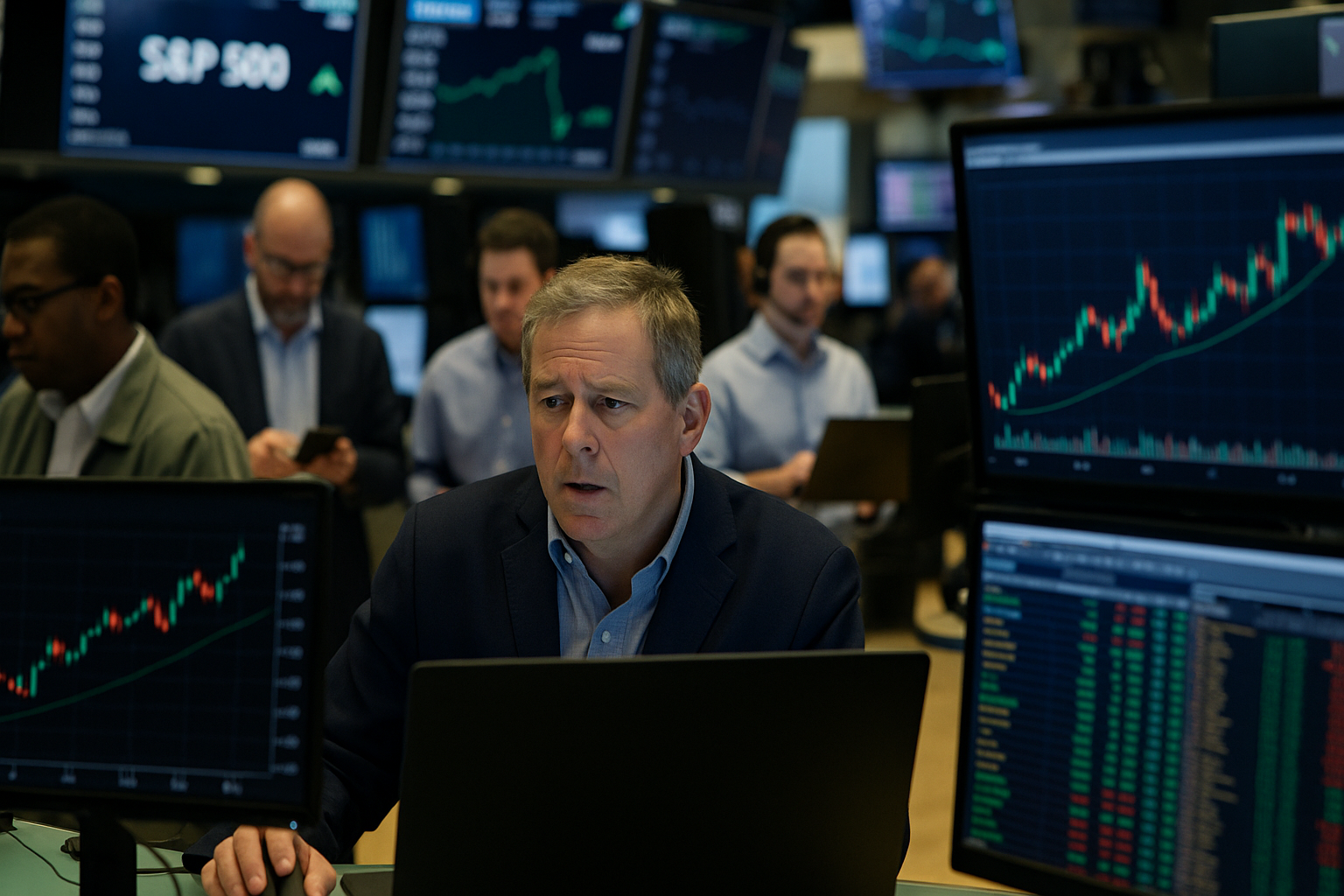
Your portfolio is probably not diversified. It is a leveraged bet that Nvidia keeps climbing, long-term rates stop rising and nobody asks who is paying for all this debt.
That sounds dramatic. It isn’t. On October 7, the U.S. 10-year Treasury yield reached 5.36%, its highest level since 2002. At the same time, the S&P 500 was near a record, but just 25% of its stocks were trading above their 50-day moving average and the top 10 names made up roughly 41% of the entire index. That is not broad-based market health. That is a handful of enormous companies carrying a very large piano upstairs. ([axios.com](https://www.axios.com/economy/2026/10/08))
The market is sending two completely different messages
The headline market says everything is fine. Corporate earnings have been strong enough to keep the S&P 500 elevated, and the AI winners remain absurdly powerful. Nvidia closed October 6 with a market value of about $5.8 trillion, still pushing towards $6 trillion.
The market underneath the headline says something else entirely.
Higher yields are already squeezing smaller companies, which tend to have less room to manoeuvre and more exposure to floating-rate debt. Forward valuations have come down: the S&P 500’s forward price-to-earnings ratio has fallen from 23.5 times expected earnings a year ago to roughly 19.5 times. Meanwhile, only a quarter of index constituents were above their 50-day average despite the index itself making fresh highs. ([axios.com](https://www.axios.com/2026/10/07/sp-high-stocks-rates))
That is the bit ordinary investors need to understand. An index can look calm while a lot of businesses are getting punched in the face.
On Thursday, October 8, the S&P 500 fell 0.5% and the Nasdaq dropped 1.3% as technology shares took the brunt of the selling. Nvidia fell 2.9%, Broadcom dropped 4.3% and Micron slid 4.8%. Brent crude rose 4.1% to $104.28 a barrel, while the 10-year Treasury yield swung from 5.28% to 5.35% before retreating to 5.23% after a solid Treasury auction. ([apnews.com](https://apnews.com/article/6a096d714c874db13632794a32cebaa6))
That is not a normal “stocks up, stocks down” day. It is a live demonstration of the new regime: energy costs are higher, borrowing costs are higher, and the AI trade is now big enough that a wobble in a few giant names can move the entire market.
Why 5.36% matters more than another Nvidia headline
People get excited about stocks because they are fun. They get bored by bond yields because bonds sound like something your accountant mentions before asking for another document.
Bad mistake.
The 10-year Treasury yield is one of the prices that matters most in the world. It influences mortgage rates, business lending, commercial-property finance, government interest costs and the valuation investors put on future corporate profits.
When long-term yields rise, a dollar of profit promised five or 10 years from now is worth less today. That is particularly uncomfortable for expensive growth companies, because much of their value rests on profits investors expect later.
It also matters because this is not merely a U.S. story. On October 7, U.K. 10-year yields reached 5.49%, French 10-year yields hit 4.93%, and the U.S. 10-year yield touched 5.36%. Axios described the force behind the move as a mix of heavy government borrowing, huge capital demand from AI hyperscalers and higher energy prices feeding inflation risk. ([axios.com](https://www.axios.com/economy/2026/10/08))
In plain English: governments want more money, AI companies want more money, and oil is making inflation harder to kill. Everyone is trying to borrow from the same pool.
Capital has a price. It always does. We simply spent a long time pretending otherwise.
The overlooked risk is concentration, not a crash
I am not telling you to sell every share and hide under the doona with tins of beans. People who make big portfolio decisions based on one ugly market week usually end up paying for it twice.
But I am telling you that “I own an S&P 500 ETF” is not the same thing as “I am broadly diversified” when the 10 biggest stocks are about 41% of the index.
You own a lot of the same trade as everyone else: giant AI-linked technology businesses, directly or indirectly. You may own them in your index fund, retirement account, managed fund, super fund, robo portfolio and employer plan. Then you might own individual tech shares on top because they have gone up and your cousin says AI changes everything.
That is how concentration sneaks up on smart people. It does not arrive wearing a shirt that says “reckless speculation.” It arrives disguised as the thing that has worked for the past two years.
The danger is not that Nvidia is necessarily a bad business. It plainly is not. The danger is confusing an exceptional business with an invulnerable investment, then letting it dominate your financial future through six different wrappers.
The same goes for investors treating cash as useless because they remember the zero-rate world. Short-term government debt and cash-equivalent yields are no longer an embarrassment. They are a genuine asset-allocation choice when the 10-year yield is above 5% and market leadership is narrow.
Business Insider’s October 5 survey of eight investment professionals captured the split nicely: some still preferred U.S. stocks and AI-linked sectors, while others flagged short-term Treasurys and gold alongside equities because higher rates and weak consumer confidence have made the backdrop less forgiving. One strategist warned that if the 10-year yield stays around 5.25% through year-end, stocks could face more pain. ([aol.com](https://www.aol.com/articles/where-invest-10-000-now-093001000.html))
That is not a prediction. It is the correct way to think: build for multiple outcomes instead of betting the farm on the one that made you feel clever last quarter.
The other problem: leverage hides until it doesn’t
There is a second-order risk sitting behind both Treasurys and AI shares: leverage.
The International Monetary Fund has warned that hedge funds are increasingly important players in U.S. Treasury securities and AI stocks. According to IMF data highlighted by Axios, hedge-fund assets had doubled since 2020 to nearly $13 trillion, including an estimated $7.7 trillion in borrowing. Hedge funds’ share of the Treasury market rose to 9% in 2025 from about 4% in 2022, largely through leveraged trades. ([axios.com](https://www.axios.com/2026/10/07/hedge-fund-risks-imf))
Why should you care? Because leverage turns an ordinary price move into forced selling.
If a fund borrows heavily, the lender can demand more collateral when markets move against it. The fund sells what it can. Those sales push prices down. Then another fund gets the same call. You do not need a recession, fraud or apocalypse for that chain reaction to hurt markets. You merely need too many people crowded into the same trades with borrowed money.
The contrarian point is this: the most sensible response is not trying to guess the exact day it breaks. Nobody knows. It is refusing to structure your own finances so a market wobble can break you.
That means no margin debt for long-term investing. No financing lifestyle spending with revolving credit-card balances. No buying an investment property that only works if rates fall. No startup plan that relies on refinancing at a cheap rate you have not actually locked in.
Boring? Yes. Also how you stay in the game while the clever clowns are forced to sell.
What this means for you
Here is what I would do this weekend if I were reviewing a household portfolio or a business balance sheet.
First, list every investment by its actual economic exposure, not by account. Put your ETFs, super, pension, brokerage holdings, managed funds and individual stocks on one page. Then calculate what percentage is tied to the biggest U.S. technology names. You may get a nasty surprise.
Second, match your money to its deadline. Cash needed in the next one to three years for a home deposit, tax bill, business runway or emergency fund should not be taking equity-market risk because you got bored. Higher short-term yields mean you are finally being paid something reasonable to wait.
Third, check every debt facility. For households, that means mortgage terms, credit-card rates and any variable-rate loans. For operators, it means lines of credit, loan covenants, refinancing dates and how a one- or two-point increase in funding costs hits cash flow. Do the maths before the bank does it for you.
Fourth, stop treating diversification as a branding exercise. A portfolio with five ETFs can still be one giant bet. Diversify across time horizons, asset types, geographies and sources of return. More importantly, diversify your life: improve your earning power, build cash reserves and avoid fixed costs that force desperate decisions.
Finally, keep buying quality assets if your time horizon is genuinely long. But do it systematically, not emotionally. Regular investing beats waiting for a headline that makes you feel safe, because that headline never arrives.
The era of free money trained people to believe risk was optional. It never was. At 5%-plus long-term yields, the bill is simply becoming visible again.