US 30-Year Treasury: 55 Days Above 5% Is a Warning to Founders
The US 30-year Treasury has closed above 5% for 55 days this year. If your business still relies on cheap money returning, you’re not forecasting — you’re praying.
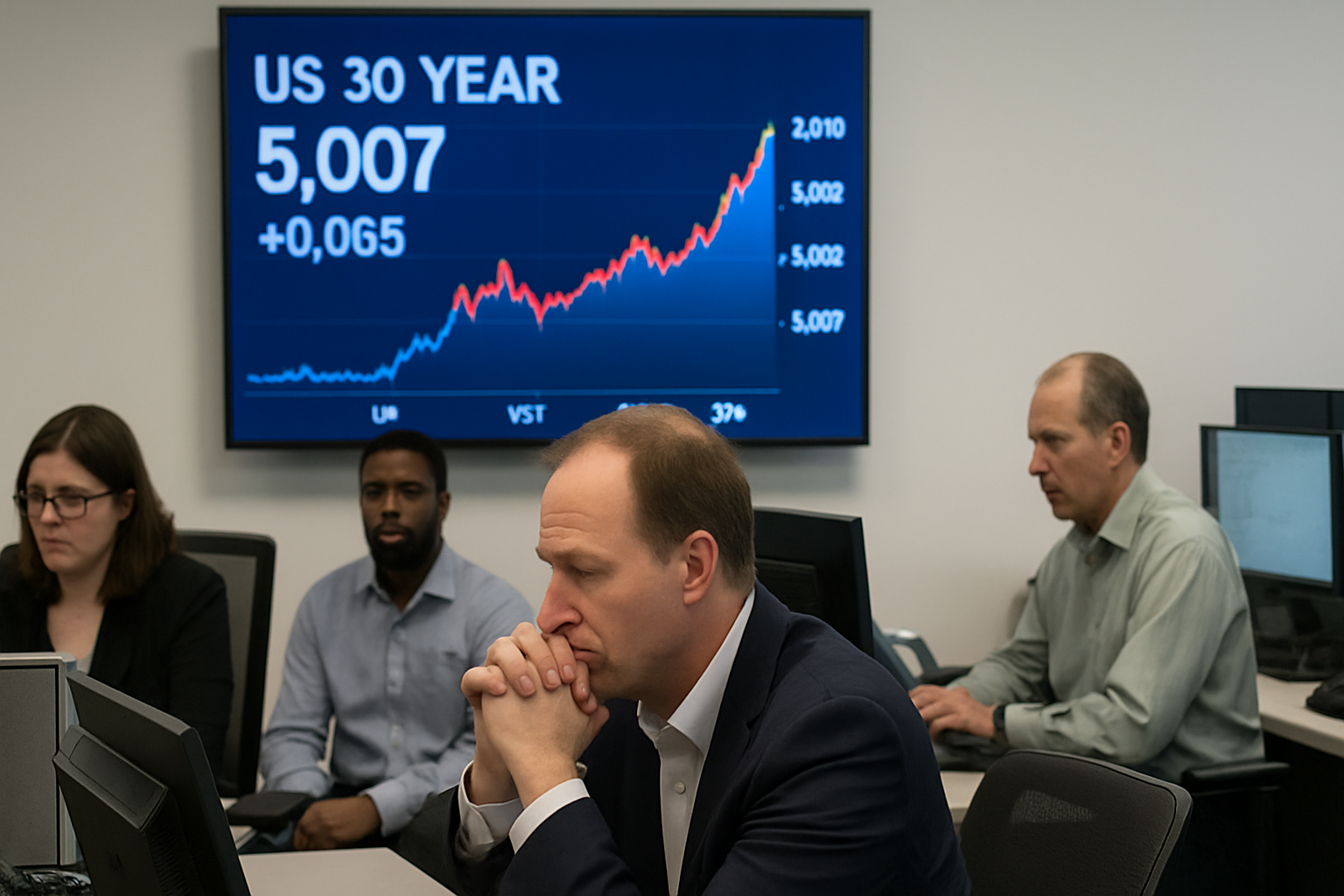
The US 30-year Treasury has closed above 5% for 55 days this year — the most since 2006. If your business still relies on cheap money returning, you’re not forecasting. You’re praying.
I’ve seen plenty of founders treat interest rates like bad weather: annoying, temporary, someone else’s problem. That was tolerable when capital was practically free. It is a dangerous habit now.
The long end of the bond market is telling us, in blunt financial language, that money is likely to stay expensive for longer than most operators, investors and homeowners would prefer. You do not need to become a bond trader to understand why that matters. You just need to understand that the price of money is the floor underneath nearly every valuation, acquisition, property deal and hiring plan in the economy.
The 5% message nobody can refinance away
The US 30-year Treasury yield hit 5.34% in mid-August, its highest level since 2007. By the start of September, it had spent 55 trading days above 5% in 2026. That is not some technical-charting curiosity for men in red braces on CNBC. It is a pricing signal for the entire economy.
When Treasury yields rise, lenders demand more return. Mortgages get dearer. Corporate debt gets dearer. Private-equity models look uglier. Startups with weak cash flow suddenly discover that “we’ll raise again next year” is not a business strategy.
And this is not only about the Federal Reserve.
The Treasury market is wrestling with three things at once: stubborn inflation, a huge supply of government debt, and an avalanche of corporate borrowing — including roughly $215 billion of expected investment-grade debt issuance in September. The AI infrastructure race is part of that corporate borrowing story. Everyone wants data centres, chips, power capacity and fibre. Wonderful. But none of it gets built with vibes. It gets built with debt and equity, both of which have become more expensive.
Treasury Secretary Scott Bessent has expanded buybacks of older bonds to try to ease pressure in the long end. Fine. But buybacks do not make the underlying problem disappear. They are a mop, not a new roof.
Kevin Warsh now has the least enjoyable job in finance
Federal Reserve Chairman Kevin Warsh gave markets a deliberately hawkish message at Jackson Hole in late August: inflation is still not moving convincingly enough towards the Fed’s 2% target, and the central bank may have more work to do.
That was a meaningful shift in tone because the market had spent a long time trained to look for the next rate cut. Investors like rate cuts because they make future profits more valuable today. Founders like them because fundraising gets easier. Governments like them because refinancing massive debt piles hurts less.
Reality does not care what everybody likes.
The Fed held its policy rate at 3.50% to 3.75% in July. Its next meeting is on September 15-16, 2026. By the first week of September, markets were pricing a meaningful chance of another quarter-point increase, not a cut.
Then came the reminder that made the choice harder: a stronger-than-expected US jobs report on September 4. US stocks fell after it increased the prospect that the Fed may need to raise rates to cool inflation rather than rescue a weak labour market. The Dow lost 0.5% and the Nasdaq gave back 0.3%.
This is the part people miss: a strong economy is not automatically bullish when inflation is still running above 3%. Strong employment gives the Fed room to be tougher. And tougher policy is exactly what markets have been trying to avoid.
Oil is the tax nobody voted for
Higher oil prices are not merely a nuisance at the bowser. They contaminate everything.
The disruption around the Strait of Hormuz has pushed energy prices higher, with Brent crude trading above US$92 a barrel earlier this week. Energy runs through freight, manufacturing, food, travel, packaging, heating and consumer confidence. When oil jumps, businesses either absorb it and lose margin, or pass it on and risk losing volume. Usually they get the privilege of doing both.
That is why the inflation argument matters so much. If energy costs remain elevated, the Fed cannot casually declare victory because a couple of data points look less awful. And if the Fed looks hesitant while inflation stays sticky, long-bond investors can demand an even bigger premium for holding debt over 30 years.
That is the nasty loop: higher inflation worries push long yields up; higher long yields tighten financial conditions; then the economy pays for credibility that policymakers did not establish cleanly enough in the first place.
The overlooked angle: this is not a bond problem
Here is my contrarian view: the long-bond sell-off is less a prediction of imminent recession than a referendum on capital allocation.
For years, markets rewarded duration — the promise of profits far into the future. That suited tech stocks, venture capital, property, infrastructure and governments running deficits without much visible restraint. When the discount rate was close to zero, almost any distant payoff looked valuable.
At 5%-plus long-bond yields, the arithmetic gets rude.
A mediocre business with a great pitch deck is worth less. A business with a boring, repeatable cash flow is worth more. The operator who can fund growth from retained earnings has options. The operator who needs a refinancing event to survive has a hostage situation.
This does not mean “sell everything and hide in cash.” That sort of performative panic is just another form of laziness. It means investors should stop pretending that every company deserves the same valuation framework. It means founders should stop treating capital raised as revenue. And it means owners should care more about debt maturity dates than they care about the latest artificial-intelligence press release.
I like ambitious businesses. I am building one myself with Agave Finder. But ambition without financial discipline is just a very expensive personality trait.
What this means for you
If you run a business, do these four things this week.
First, model your next 24 months using borrowing costs that are 1 to 2 percentage points higher than your current base case. Not because that will definitely happen, but because a business that only works under friendly financing conditions does not really work.
Second, pull out every debt maturity, lease commitment and deferred-payment arrangement. Know the exact date, amount, rate and refinancing plan. “We’ll sort it out later” is not a plan. It is how good assets get sold cheaply.
Third, separate growth spending from ego spending. Keep the marketing, people and product investment that creates measurable returns. Cut the subscriptions, vanity campaigns, pointless consultants and pet projects that exist because no one has bothered to kill them.
Fourth, if you are investing, demand cash-flow evidence. Look for pricing power, sensible debt, long-duration customers and management teams that can explain their balance sheet without hiding behind adjusted EBITDA.
The 30-year Treasury above 5% is not the end of the world. But it is the end of one very comfortable assumption: that time automatically fixes bad financial decisions because money will eventually become cheap again.
Maybe it will. But betting your business, portfolio or household on that outcome is not optimism.
It is laziness with a spreadsheet.